


More news on this day
Travelers flying through Washington’s busy airports are becoming early test subjects for a new artificial intelligence system that federal aviation regulators hope will reduce the region’s chronic flight delays and cancellations.
Get the latest news straight to your inbox!
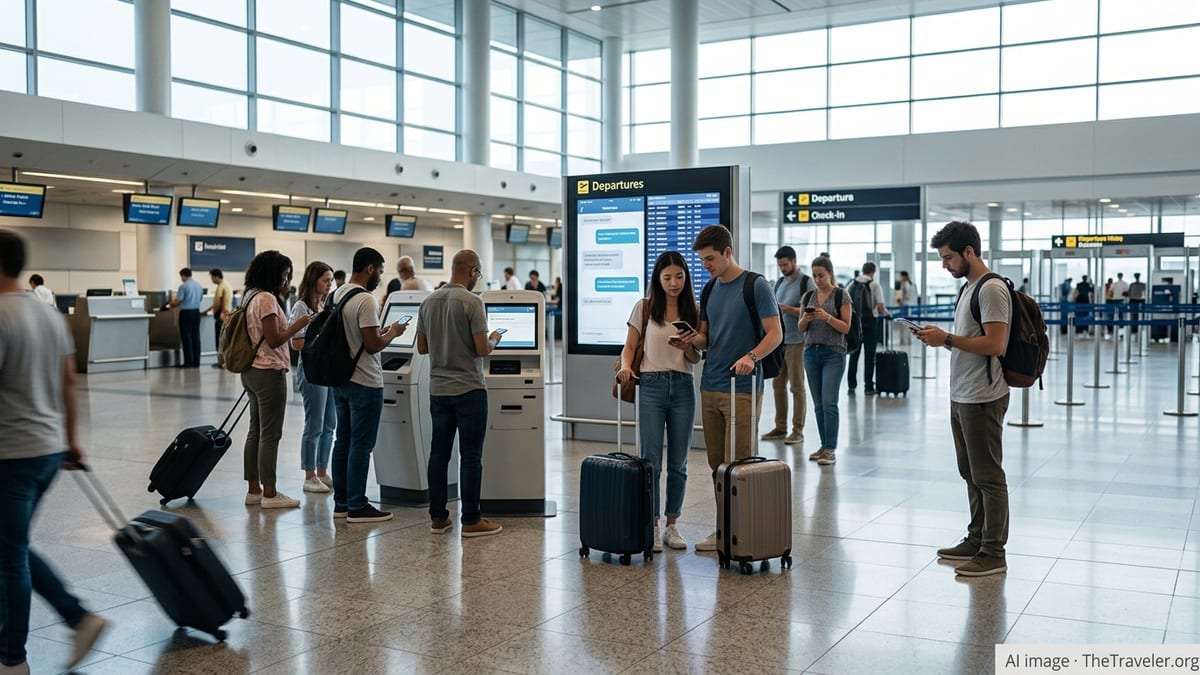
Washington Airports Chosen as First Testbed
Federal aviation regulators have begun a live trial of an artificial intelligence system designed to help manage congestion in the skies above the Washington region. According to publicly available information from the Federal Aviation Administration, the new tool is being introduced first at Ronald Reagan Washington National Airport, Washington Dulles International Airport and Baltimore/Washington International Thurgood Marshall Airport, with plans for a nationwide rollout if the trial is successful.
Published coverage in major outlets describes the initiative as a limited deployment that started this week, following an earlier announcement that the $875 million system would launch in the capital region before expanding to other parts of the country. The Washington-area test is intended to show whether the technology can meaningfully improve on today’s traffic flow programs, which often struggle during peak travel periods and disruptive weather.
The decision to start in the nation’s capital reflects both the complexity and the visibility of the local airspace. The region’s three major commercial airports handle dense business and government travel while operating under strict airspace restrictions and capacity limits that have contributed to persistent delays for flights into and out of Washington.
Regulatory documents and recent briefings indicate that the trial will run for several months, giving the agency time to monitor performance across a full spectrum of conditions, from routine weekday rushes to severe summer thunderstorms that frequently disrupt East Coast traffic.
How the SMART System Is Designed to Work
The new platform, known as SMART, short for Strategic Management of Airspace, Routes and Trajectories, is described in FAA fact sheets as a cloud-based decision-support tool that sits on top of existing traffic flow systems. Rather than directing pilots or issuing clearances, it is intended to give planners earlier and more detailed insight into where bottlenecks are likely to emerge.
According to those materials, the system ingests airline schedules, real-time flight data, forecast and observed weather, airport capacity figures, and information about airspace constraints. It then uses artificial intelligence techniques to predict traffic flows, highlight likely conflicts between demand and available capacity, and propose adjustments such as shifting departure times, rerouting aircraft or metering arrivals into constrained airports.
The tool forms part of a broader modernization effort at the FAA’s Air Traffic Control System Command Center, which oversees traffic management nationwide but pays particular attention to high-density metro areas such as Washington. Public descriptions of the program suggest that SMART’s recommendations are meant to inform human-led decisions about when to impose ground delay programs, reroute flows around storms or slow the overall pace of arrivals into a crowded airport.
Officials have emphasized in publicly released statements that controllers and traffic managers remain responsible for safety and final decisions. The AI system is framed as a planning aid rather than an automated controller, with agency documents stating that new technology should complement rather than replace human expertise in the National Airspace System.
Focus on Reducing Cascading Delays
The Washington region offers a visible example of how a single chokepoint can create nationwide problems. Congressional records and past oversight hearings have documented that once a flight into Reagan National is delayed, the average knock-on delay can stretch to more than an hour as aircraft and crews miss subsequent departures, causing disruptions far from the capital.
By predicting congestion earlier, the SMART system is intended to address that kind of cascading disruption. Reports on the tool’s design indicate that it can flag when a combination of heavy schedules and deteriorating weather is likely to push an airport beyond its sustainable capacity unless planners intervene. In theory, more timely adjustments to departure rates or routings could mean shorter delays overall, even if some flights are slowed or held on the ground before problems fully materialize.
Travel industry analysts note that the system will be judged not only on headline delay statistics for the Washington airports, but also on how reliably it helps airlines stick to revised schedules once they are set. If the AI-driven forecasts prove more accurate than existing models, passengers could see fewer abrupt changes, even when storms or volume still force changes to the original timetable.
Public comments from airline and labor groups highlight a mix of cautious optimism and concern. Some industry voices have welcomed additional tools that might make traffic management more predictable, while union statements have stressed the need to ensure that any new system supports staffing and training rather than serving as a substitute for additional human controllers in busy facilities.
Traveler Impact at DCA, IAD and BWI
For travelers, the most visible changes during the trial are expected to appear in how delays are managed, rather than in new procedures at the gate or on board. Coverage of the launch notes that flights into Reagan National, Dulles and BWI Thurgood Marshall may be sequenced more tightly into short arrival windows or rerouted earlier around storms, potentially reducing the long lines of holding aircraft that sometimes build up at peak times.
Passengers passing through the Washington airports in the early days of the rollout have already encountered a mix of routine operations and unrelated disruptions, including a recent communications outage that affected traffic in the broader Northeast. Publicly available reporting indicates that this outage was separate from the AI program, highlighting the challenge of assessing a new system’s performance amid the usual array of technical and weather issues.
Airport operators in the region have directed questions about the AI system to federal regulators, underscoring that SMART is a national traffic management tool rather than a local airport project. Separate public documents from airport authorities continue to emphasize investments in terminals, ground transportation and customer amenities, with the AI rollout described as one piece of a wider effort to improve the overall passenger experience.
Travelers planning trips through the capital region over the coming months are being advised, in consumer coverage, to continue monitoring flight status closely and to build in extra connection time when possible. While the AI system is designed to reduce the frequency and severity of delays, regulators and airlines have not suggested that it will eliminate them, especially during peak holiday periods or major weather events.
National Rollout and Ongoing Questions
The Washington trial is described in policy and technology briefings as a first step toward a national deployment of AI-assisted flow management by 2028. The broader program includes not only the SMART application but also the development of a new Flow Management Data and Services backbone intended to replace aging infrastructure at the command center and related facilities.
As the system evolves, aviation researchers and oversight bodies are tracking key questions about transparency, accountability and safety. Technical documents point to ongoing work on human factors research, including how to present AI-generated recommendations to controllers and planners in ways that support, rather than overwhelm, decision-making in time-critical situations.
Public reaction in the Washington region and among frequent travelers has ranged from enthusiasm about potential efficiency gains to skepticism about the use of artificial intelligence in such a high-stakes environment. Online discussion forums reflect particular concern about whether the system could introduce new kinds of failure modes, even as it aims to reduce familiar weather and congestion delays.
Regulators have stated in written materials that the trial will be closely evaluated before any decision is made about expanding the AI tool to other metropolitan areas. For now, Washington’s airports are serving as the early proving ground for an attempt to bring advanced data analytics into the core of how the United States manages crowded skies, a shift that could eventually reshape the experience of air travel across the country.