


More news on this day
New daily non stop flights linking major Indian and Chinese cities are reshaping the aviation map of Asia, restoring a critical corridor for trade and travel after a five year suspension of direct services.
Get the latest news straight to your inbox!
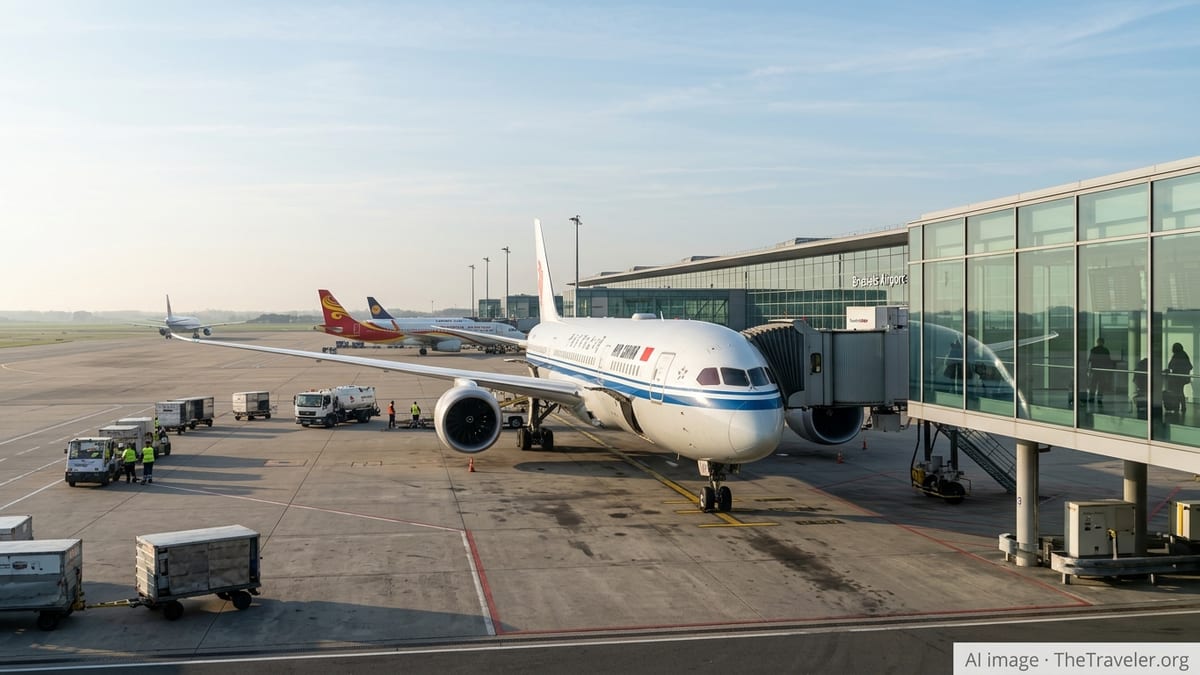
Daily Services Return On Key India China Corridors
After years of limited options requiring time consuming connections via third countries, direct air links between India and China have restarted with a daily rhythm on several core routes. Publicly available schedules and industry reports show that IndiGo has established daily non stop services between Kolkata and Guangzhou, followed by a second daily link between Delhi and Guangzhou in the current winter season.
These routes mark the first sustained daily passenger operations between the two markets since early 2020, when direct flights were halted amid pandemic restrictions and broader diplomatic tensions. Aviation trackers indicate that the renewed services are operating with narrowbody aircraft configured for high density regional traffic, reflecting expectations of strong demand from business travelers, traders and visiting friends and relatives traffic.
On the Chinese side, China Eastern Airlines has reentered the Indian market with a reinstated Shanghai Delhi operation, which industry coverage describes as ramping up to a daily pattern as part of the carrier’s broader international rebuild. Together with Indian operators, this creates a spine of daily connectivity linking Delhi and eastern India to China’s coastal and Pearl River Delta hubs, shortening journey times that had stretched well beyond ten hours when forced through intermediate points.
Forward schedules published by route information platforms also point to additional daily non stop capacity ahead, including announced Shanghai Delhi services by Air India and further China Eastern expansion, underscoring that daily frequencies are becoming the norm rather than the exception on the busiest city pairs.
Economic Stakes Behind Renewed Aviation Links
The restoration of daily flights is widely framed by analysts as part of a broader normalization of economic engagement between the world’s two most populous countries. India and China remain major trading partners, and studies released by international aviation bodies highlight how direct air services typically stimulate trade volumes by lowering logistical barriers and fostering in person business interaction.
Reports tracking bilateral commerce note that Indian exports to China have shown renewed momentum in the current financial year, and industry observers see daily non stop flights as a critical facilitator for sectors ranging from pharmaceuticals and engineering goods to information technology services. By offering late evening departures from Indian gateways and early morning arrivals in Chinese cities, airlines are targeting itineraries that enable same day meetings and tight supply chain connections.
Tourism bodies in both countries also view the new daily flights as an opportunity to rebuild visitor flows. Before 2020, China was an important but still underdeveloped source market for Indian tourism compared with other Asian countries, while Indian travelers increasingly sought Chinese destinations for trade fairs, education and short leisure breaks. With direct services now reintroduced on a daily basis, travel businesses anticipate more predictable itineraries and package offerings, especially around major trade exhibitions and cultural events.
Air cargo planners add another economic dimension. Although passenger belly capacity is currently the main vector, daily narrowbody and prospective widebody operations restore a direct channel for time sensitive freight such as electronics components, fashion items and pharmaceuticals, which previously detoured through hubs in Southeast Asia or the Gulf.
Strategic and Diplomatic Context Of Connectivity Reset
The expansion of daily flights is unfolding against a complex diplomatic backdrop. For several years, published commentary from think tanks and policy outlets highlighted New Delhi’s caution over reinstating direct links in the absence of visible progress on unresolved border issues. Beijing, for its part, repeatedly signaled interest in restoring flights, describing connectivity as a practical confidence building measure.
Over the course of 2024 and 2025, public statements following high level meetings indicated that both sides were prepared to gradually rebuild people to people and commercial ties, including through aviation. The eventual approval of revised air services arrangements and the appearance of daily schedules in global booking systems suggest that air connectivity has been folded into a broader attempt to stabilize relations without resolving every outstanding dispute.
Regional analysts point out that, even at a modest scale compared with China’s links to other large markets, daily India China flights carry symbolic weight. They reduce the dependence of travelers on third country hubs and signal that both governments are willing to separate practical economic cooperation from more contentious strategic issues. At the same time, the limited number of city pairs now enjoying daily frequencies illustrates that the rebuild remains cautious rather than expansive.
Observers also note that the pattern of routes being restored reflects political and economic calculations. The early focus on Guangzhou and Shanghai, rather than a broader spread of Chinese cities, aligns with their roles as commercial centers hosting manufacturing clusters, technology firms and major trade fairs that attract Indian participation.
Implications For Airlines, Hubs And Competing Gateways
The reemergence of daily non stop India China flights is reshaping competition among airlines and hubs that benefited from the previous hiatus. During the years without direct services, carriers based in the Gulf, Southeast Asia and East Asia captured significant connecting traffic, routing passengers through Doha, Dubai, Singapore or Hong Kong on one stop itineraries between Indian and Chinese cities.
With nonstop options again available, Indian and Chinese airlines are seeking to reclaim a share of that market by emphasizing shorter elapsed travel times and simplified transit procedures. Daily frequencies are particularly important for corporate travel policies, which often require flexible return options and minimal layovers, and for small and medium sized enterprises that need to schedule short notice trips around visa and meeting availability.
However, hub carriers are unlikely to disappear from the picture. Analysts quoted across aviation industry coverage argue that one stop routings will continue to appeal to travelers from second and third tier cities that are not yet connected by nonstop India China services. For these passengers, regional flights to a hub combined with a long haul sector may remain more practical than reaching Delhi, Kolkata or Shanghai for a direct service.
The renewed daily pattern therefore points to a more balanced competitive landscape. Nonstop services capture time sensitive and premium traffic on major city pairs, while intermediate hubs continue to serve as consolidators for dispersed demand across South and East Asia.
Outlook: Gradual Expansion From A Strategic Baseline
Looking ahead, aviation planners and policy analysts expect gradual growth from the current baseline of daily services. Historical data from before 2020 shows that the absolute number of India China flights was modest compared with other bilateral markets involving China, especially links to Japan and South Korea. Industry forecasts now anticipate a careful build up of capacity shaped by both commercial performance and the broader geopolitical climate.
Indian low cost and full service carriers are watching load factors and yields on the newly restored routes to decide whether additional daily frequencies or new city pairs such as Kunming, Chengdu or Shenzhen become viable. Chinese airlines face similar decisions as they allocate limited long haul and regional capacity across a wide portfolio of international destinations in Asia, Europe and beyond.
Policy documents and economic studies emphasize that stronger aviation connectivity can contribute to growth in both economies by supporting investment, tourism and educational exchanges. Yet the pace and scope of new daily flights will remain sensitive to developments at the border, domestic political sentiment and the trajectory of wider Asian air travel demand.
For now, travelers and businesses benefit from a level of predictability that was absent for nearly half a decade. The appearance of India China nonstops in global booking engines on an everyday basis signals that, at least in the aviation arena, the two countries are cautiously reknitting a vital strand of their relationship.