


More news on this day
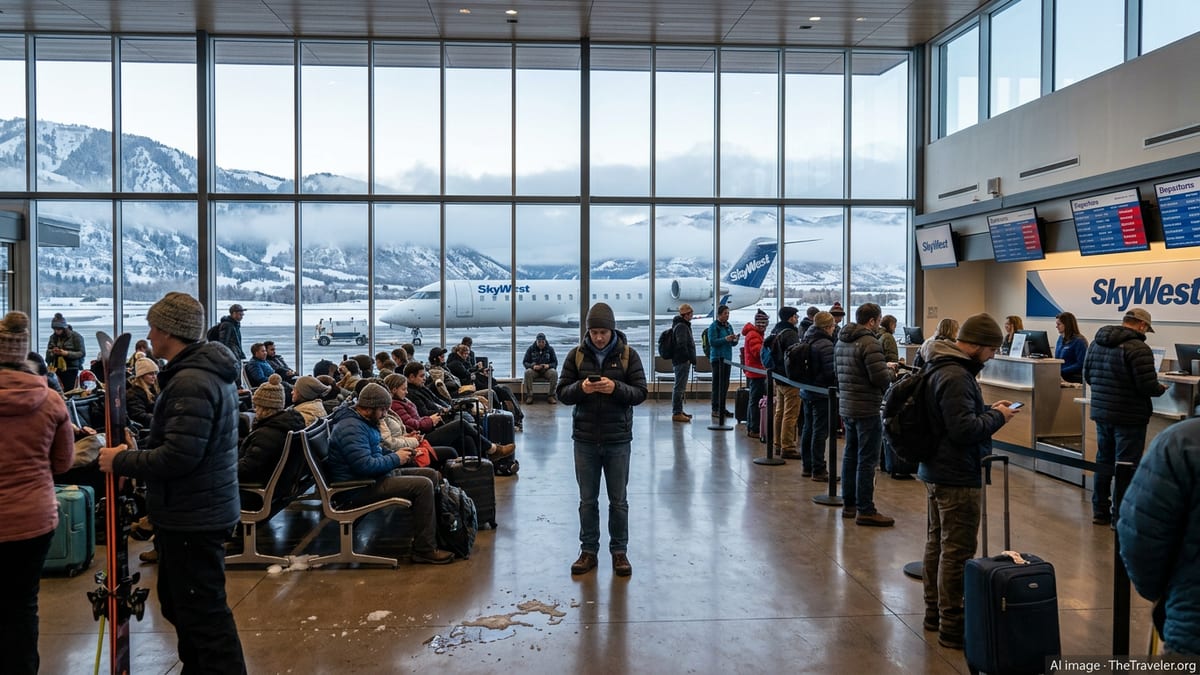
Passengers on a SkyWest Airlines Embraer E175 operating as a Delta Connection service from Atlanta to Aspen experienced an unexpected detour when Flight SKW4011 diverted to Grand Junction, Colorado, instead of continuing to its planned arrival into Aspen’s high-altitude airport.
Get the latest news straight to your inbox!
Mountain Route From Atlanta Takes An Unplanned Turn
The SkyWest-operated Delta Connection flight departed Hartsfield-Jackson Atlanta International Airport bound for Aspen-Pitkin County Airport, one of the more operationally demanding destinations in the Rocky Mountains. Publicly available flight-tracking information shows the aircraft, an Embraer E175 configured for regional operations, following the typical westbound routing toward Colorado before changing course and heading for Grand Junction Regional Airport.
Reports indicate that the aircraft landed safely in Grand Junction, located roughly 90 nautical miles southwest of Aspen by air. The diversion brought the flight to a larger, lower-elevation airfield with a longer runway and more forgiving approach environment than Aspen’s narrow valley setting.
Data available from aviation-tracking and airport information services shows that Grand Junction is a common alternate for Aspen arrivals, particularly when weather, visibility or wind constraints develop in the Roaring Fork Valley. Travelers familiar with the route note that flights into Aspen are more prone to diversions than many other domestic destinations because of its terrain, elevation and strict approach requirements.
At the time of writing, specific operational reasons for this particular diversion have not been detailed in publicly available sources. However, the pattern aligns with standard regional airline practice for flights into mountain airports when conditions fall outside prescribed limits.
Why Aspen’s Airport Creates Frequent Diversions
Aspen-Pitkin County Airport is widely regarded as one of the most challenging commercial airports in the continental United States. The airfield is surrounded by steep terrain, sits at over 7,800 feet above sea level and relies on carefully managed approach and departure paths. Regional jets such as the Embraer 175 can be specially qualified for use at Aspen after additional performance analysis and procedural adjustments.
Industry information on SkyWest’s operations indicates that the airline has worked with partners and manufacturers to adapt certain aircraft, including the E175, for Aspen service. These adaptations focus on performance margins, climb capability and approach profiles suitable for the airport’s one-way-in, one-way-out operating environment dictated by the surrounding mountains.
Weather can change quickly in the central Rockies, affecting visibility, cloud ceilings, crosswinds and runway conditions. Even marginal shifts in wind direction or strength can limit the number of safe approach options into Aspen, and regulations require strict adherence to performance and obstacle-clearance criteria. When conditions no longer meet those thresholds, diversion to an alternate airport is the standard outcome.
Grand Junction, by contrast, sits at a lower elevation on more open terrain, with longer runways and fewer terrain-related constraints. For flights approaching from the east or southeast, it is a logical alternate because it lies relatively close to Aspen yet often enjoys more stable weather and more straightforward instrument approaches.
What The Diversion Means For Passengers
For travelers on Flight SKW4011, the diversion to Grand Junction effectively added a ground segment to a journey that was intended to end in Aspen. Past examples involving Aspen diversions show that airlines and their partners typically assist with onward transport by ground, such as buses or vans, to connect passengers with the Roaring Fork Valley once conditions permit safe highway travel.
Public discussion around similar events suggests that travel times by road from Grand Junction to Aspen can range from roughly two and a half to three hours, depending on traffic and weather. While this delays arrival compared with a direct flight into Aspen, the route via Grand Junction is considered a manageable fallback when airfield conditions in Aspen deteriorate or fail to improve in time.
Regional airline passengers are often reminded in booking and operating information that arrivals into airports like Aspen are subject to weather-related disruption. Diversions such as the one experienced by SKW4011 underscore the importance of flexible schedules for winter and shoulder-season travel, along with contingency planning for lodging or surface transport when conditions are marginal.
Travel industry observers note that while diversions can be frustrating, they reflect a safety-first approach in environments where terrain, altitude and rapidly shifting weather leave little room for compromise. By opting for a nearby alternate like Grand Junction, operators maintain conservative safety margins while still positioning customers relatively close to their intended mountain destinations.
SkyWest’s Role As A Delta Connection Carrier
SkyWest Airlines operates regional flights across the United States on behalf of several major carriers, including Delta Air Lines, under capacity-purchase agreements. In the Atlanta market, SkyWest operates select Delta Connection services using aircraft such as the Embraer 175, linking the hub with regional and specialty destinations including seasonal routes into high-demand leisure markets.
Company fact sheets and network overviews show that SkyWest maintains crew domiciles in major hubs such as Atlanta and Denver, allowing the airline to support complex regional networks that include mountain airports. The Atlanta to Aspen route capitalizes on a strong flow of both leisure and seasonal traffic between the Southeast and Colorado ski country, particularly during the winter and holiday periods.
Embraer 175 aircraft used in Delta Connection service typically carry around 70 to 76 passengers and are equipped for operations into several challenging airports when properly configured and crew-qualified. For mountain destinations, crews receive additional training focused on terrain awareness, performance management and alternate planning to handle exactly the kind of situation that occurred with SKW4011’s diversion.
While diversions attract attention, regional aviation data suggests that they remain a small proportion of the overall flight program. The SKW4011 event nonetheless illustrates how regional partners balance network reach with the operational realities of serving airports situated deep within mountainous terrain.
What Travelers Can Learn For Future Aspen Trips
The diversion of SkyWest Flight SKW4011 offers practical lessons for travelers planning future trips into Aspen and similar mountain airports. Publicly available guidance from aviation resources consistently emphasizes the value of schedule flexibility, particularly during seasons when snow, low visibility or strong winds are common.
Travel planners often recommend allowing additional time on either side of an Aspen arrival or departure, especially for tight connections back through major hubs such as Atlanta. Because diversions frequently involve bus transfers or overnight stays near alternate airports, itineraries that include important same-day events can be vulnerable to disruption.
Passengers are also encouraged to monitor flight status tools and weather updates for both Aspen and likely alternates such as Grand Junction and Denver. Understanding that a diversion to one of these airports is a standard part of the operating plan, rather than a rare emergency, can help set expectations before boarding.
As airlines continue to refine their mountain operations and as regional jets like the Embraer 175 gain expanded capabilities in demanding environments, routes such as Atlanta to Aspen are likely to remain key links between major hubs and high-country destinations. Even so, events like the SKW4011 diversion demonstrate that in the world of mountain aviation, route changes to airports such as Grand Junction will remain a routine, if sometimes surprising, part of the travel experience.