


More news on this day
From stricter rules on beach sunbeds to tighter controls on short-term rentals, a wave of new tourism legislation in Greece is beginning to alter how travelers experience one of the Mediterranean’s most visited destinations.
Get the latest news straight to your inbox!
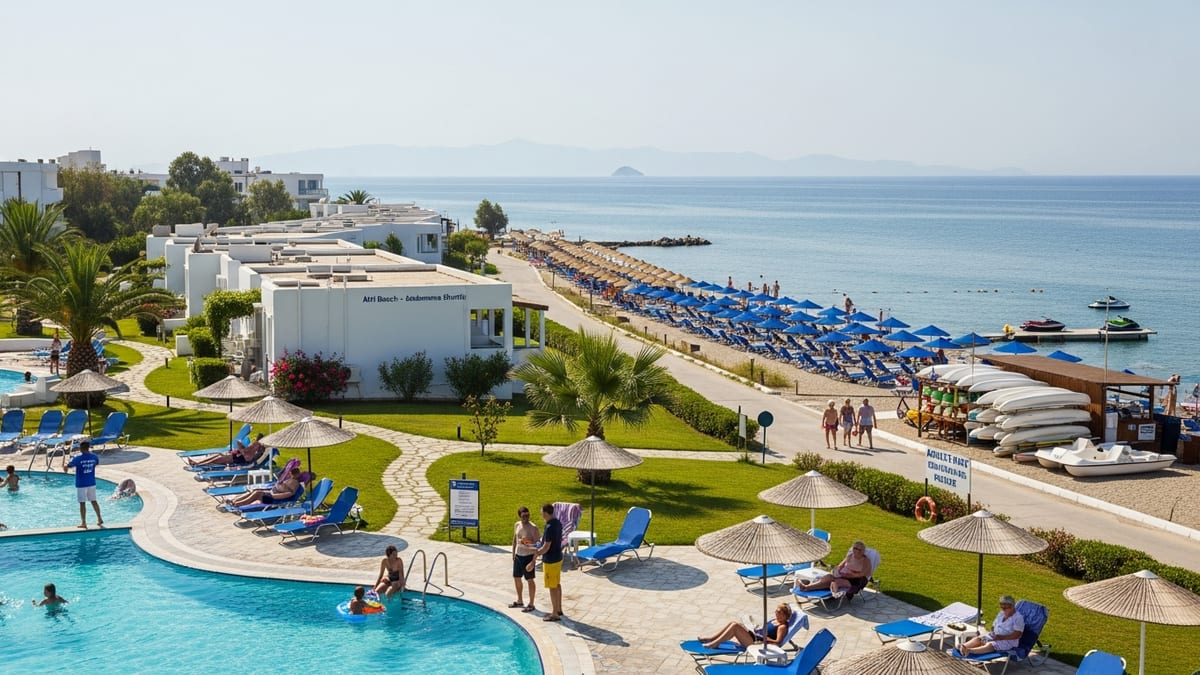
From Free-for-All Beaches to Protected Shores
For decades, Greek beaches became synonymous with densely packed sunbeds and booming beach bars, leaving limited public space and raising concerns about environmental degradation. New legislation adopted since 2024 and reinforced in 2026 is reshaping that model, putting stronger limits on commercial operations along the shoreline and elevating the principle of open access to the coast.
The 2024 coastal development law set the legal framework for how public coastal land can be used, clarifying concession rules and specifying buffer zones that must remain free for swimmers. The law has been contested by environmental groups, which warned of potential loopholes, but subsequent regulatory acts have focused on expanding the number of beaches where commercial activity is tightly restricted or banned.
Recent measures designate more than two hundred so-called “untouchable” beaches where sunbeds, fixed umbrellas and permanent structures are prohibited. Local and national authorities are using tools such as satellite imagery, drones and a public reporting app to monitor compliance and pursue fines or license revocations where businesses are found to be blocking access or encroaching on protected zones.
For travelers, this shift is beginning to change the visual and acoustic landscape of Greek coasts. Popular islands still offer organized beaches with services and amenities, but visitors increasingly encounter coves and stretches of sand left largely in their natural state, with quieter atmospheres and unobstructed views of the sea.
Short-Term Rentals Under Stricter Scrutiny
Parallel to coastal reforms, Greece has tightened the rules for short-term rentals, a sector that has boomed since the rise of platforms such as Airbnb and Booking. Law changes taking effect from 2024 onward have made registration mandatory for virtually all properties rented on a short-term basis and expanded the tax and reporting obligations for hosts.
Under the updated regime, every property used for short stays must be listed in the Short-Term Rental Registry operated by the tax authority, with a registration number displayed on all advertisements. Publicly available guidance explains that hosts are required to submit detailed declarations of stays and revenues, and that failure to register can lead to substantial penalties.
Tax rules have also shifted. Short-term rentals operated by legal entities or at a certain scale can become subject to value added tax, while new surcharges and local levies have been introduced or increased. A key innovation is the Climate Crisis Resilience Fee, a nightly charge that guests pay and hosts collect, with higher rates applied in peak season and in popular destinations. The fee, sharply increased under legislation adopted in 2024, is intended to fund climate adaptation and disaster response projects in tourism areas.
Industry reports indicate that many small property owners are still adapting to the new framework, which includes more frequent inspections and data-sharing obligations between platforms and the tax administration. At the same time, municipal authorities in high-demand areas are exploring additional caps or zoning tools to address housing shortages and quality-of-life concerns for residents.
Heritage Sites and Island Hotspots Recalibrate Visitor Flows
Greece’s global appeal rests heavily on its archaeological sites and photogenic islands, some of which have struggled with extreme crowding. In recent years, new management rules for headline attractions and cruise-heavy islands signal a move toward tighter control of visitor flows.
At the Acropolis in Athens, a system of timed-entry slots and a daily cap on visitor numbers has been progressively implemented and refined since 2023. Publicly available information shows that the scheme limits the number of people who can enter the site each day and spreads visits across hourly windows, seeking to reduce queues, protect the monument and improve the visitor experience.
On islands such as Santorini and Mykonos, local port and municipal authorities have introduced or proposed stricter coordination of cruise ship arrivals, with limits on daily disembarkations and closer monitoring of peak times in village centers. Academic and industry studies point to the pressure that millions of annual air and sea arrivals place on limited infrastructure, while also acknowledging the islands’ dependence on tourism revenue.
These adjustments put Greece in line with a broader Mediterranean trend, as destinations from Venice to the Balearic Islands experiment with entrance fees, time slots and cruise caps. For travelers, the practical effect is a growing need to reserve key sites in advance and to consider traveling in shoulder seasons if they want more space and cooler conditions.
Environmental and Social Trade-Offs Come Into Focus
The new tourism laws also reflect a sharpened debate inside Greece about how to balance economic gains with environmental and social costs. The country welcomed a record number of international visitors in the years leading up to 2023, and tourism has become one of its most important economic pillars. At the same time, local protests against “sunbed takeovers,” noise pollution and the loss of affordable housing have multiplied in several coastal communities.
Environmental organizations have voiced concerns that certain legal changes could encourage more development in sensitive coastal areas if concessions are not tightly controlled. They argue that true protection requires not only setting aside “untouchable” beaches but also limiting large-scale construction in dune systems, wetlands and other fragile habitats.
Housing advocates, meanwhile, point to the rapid expansion of short-term rentals in Athens and on the islands as a factor in rising rents and the displacement of long-term residents. The strengthened registry, higher taxes and potential caps on the number of properties per owner are presented by policymakers as tools to curb speculative activity and bring more of the sector into the formal economy.
Travelers are increasingly aware of these tensions. Surveys and anecdotal accounts suggest a growing willingness among visitors to pay environmental fees, choose certified sustainable accommodations, or explore lesser-known regions if it means lighter crowds and less strain on local communities.
What Changing Rules Mean for Future Mediterranean Travel
Greece’s evolving tourism framework is being closely watched by other Mediterranean destinations that face similar challenges. The combination of coastal protection rules, stricter rental oversight, visitor caps at marquee sites and climate-related fees represents a comprehensive attempt to rein in some of the excesses of mass tourism without undermining its economic benefits.
For the travel industry, these measures require operational changes, from how hotels and rental hosts structure prices and handle paperwork to how tour operators schedule excursions to popular beaches and monuments. Compliance costs are rising, but so too is the incentive to diversify offerings beyond a few overcrowded hotspots, promoting inland villages, lesser-known islands and cultural routes.
For visitors planning trips for the 2026 season and beyond, the practical implications are becoming clearer. Travelers can expect to see more unspoiled sections of coastline, higher nightly taxes on certain types of accommodation, and greater need to book key attractions in advance. Those who venture beyond the most famous islands may find quieter experiences that align with the country’s emerging vision of more balanced tourism.
The broader Mediterranean travel landscape could feel the effects as demand shifts between destinations based on perceived crowding, costs and environmental policies. By tightening its rules while marketing a more sustainable version of paradise, Greece is testing whether careful regulation can preserve the allure of sun, sea and heritage in an era of unprecedented global mobility.