


More news on this day
Lengthy taxiing times and ground congestion at Beijing, Shanghai and Guangzhou airports are emerging as a defining challenge of China’s 2026 summer travel season, increasing door-to-door journey times and strengthening the appeal of the country’s vast high-speed rail network.
Get the latest news straight to your inbox!
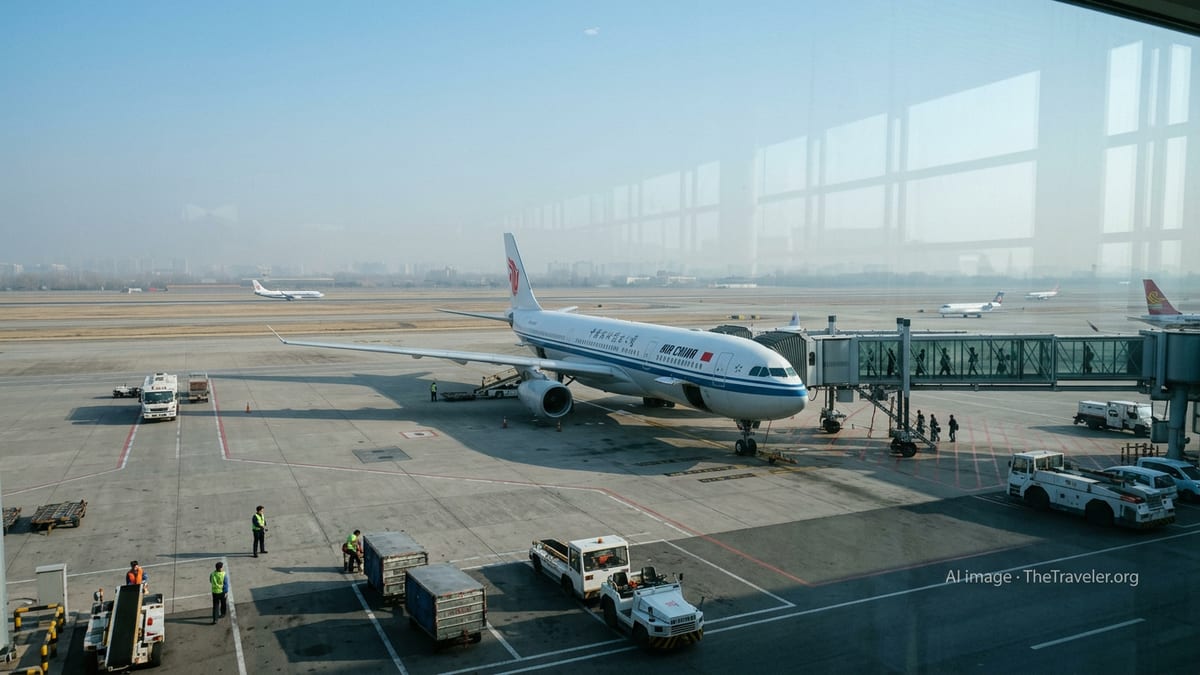
Major Hubs Face Longer Ground Times Ahead of Peak Summer
China’s biggest aviation gateways are entering the busiest months of the year with mounting strain on their runway and taxiway systems. Publicly available operational data and aviation analytics show that Beijing Capital, Shanghai Pudong and Guangzhou Baiyun handled tens of millions of passengers in 2025, with Shanghai Pudong and Guangzhou Baiyun each surpassing 80 million travelers. Growing traffic, tight runway slots and complex airspace are now feeding through into longer periods on the ground before takeoff and after landing.
Recent monitoring of departure punctuality indicates that Guangzhou Baiyun has been among the hardest hit, with some snapshots in April 2026 showing average departure delays extending beyond one hour and a sharp drop in on-time performance. Similar congestion has been reported at Beijing and Shanghai, where queues for takeoff and extended taxi-out times lengthen the overall journey even when flight times themselves remain relatively short.
These patterns are especially visible during evening peaks and weather disruptions, when aircraft can wait in long lines from the gate to the runway threshold. Passengers often experience this not as a single delay notification but as a combination of a slightly late boarding call, a hold at the gate, and then 30 minutes or more creeping along the taxiways before takeoff clearance.
On arrival, bottlenecks can continue as aircraft queue for gates, leading to further waits on taxiways or at remote stands. For travelers heading into city centers, this time is then compounded by transfer journeys of 40 minutes or more to downtown Beijing, Shanghai or Guangzhou, pushing the real door-to-door duration well beyond the advertised flight time.
How Long Taxiing Times Change Door-to-Door Calculations
For years, airlines have promoted headline airborne times of around two to two-and-a-half hours between major Chinese cities such as Beijing, Shanghai and Guangzhou. However, the growing gap between scheduled and actual end-to-end journeys is increasingly evident. When long taxi-out queues, airborne holding and busy immigration halls are all factored in, total travel times for some peak-time flights can stretch to five hours or more from city center to city center.
Beijing and Shanghai illustrate the shift clearly. Typical flight times between the two cities remain in the two-hour range, but passengers must factor in early airport arrival for security checks, potential ground delays and onward surface transport from outlying airports. By contrast, high-speed trains between Beijing and Shanghai typically complete the rail journey itself in approximately four-and-a-half to five hours, with stations directly linked to metro networks and taxis, reducing transfer times at each end.
On the Beijing–Guangzhou axis, the nominal advantage of air travel is also narrowing. A direct flight may spend three to three-and-a-half hours in the air, yet the total experience can be significantly longer once pre-flight arrival, potential departure backlogs and arrival congestion are considered. High-speed rail services on the Beijing–Guangzhou corridor, while longer in pure travel time than flying, benefit from more predictable schedules and fewer last-minute disruptions, a factor that many travelers increasingly prioritize.
Industry analyses of travel behavior in China indicate that delay risk has become a central factor in mode choice on routes where both air and high-speed rail are available. Longer taxiing and higher variability in flight times can push travelers toward rail even when flights appear faster in airline timetables, particularly for trips in the 800 to 1,300 kilometer range.
High-Speed Rail Tightens Its Grip on Competitive Corridors
China’s high-speed rail system is now the world’s longest, and the network maturity on routes linking Beijing, Shanghai and Guangzhou has begun to reshape the competitive landscape. The Beijing–Shanghai high-speed railway in particular has emerged as a flagship example, with frequent G-series services running at up to 350 kilometers per hour and carrying a substantial majority of intercity passenger volume between the two megacities.
Reports analyzing the route indicate that high-speed rail holds a market share well above 50 percent, supported by dense frequencies that can reach train departures every 10 to 15 minutes during daytime peaks. Financial disclosures and sector commentary show that the line has become one of the network’s strongest performers, generating significant revenue and consistent profits, while airlines have responded with fare promotions and bundled services to maintain their foothold.
On the Beijing–Guangzhou and Shanghai–Guangzhou corridors, a similar pattern is emerging. Increases in permitted operating speeds on sections of the Beijing–Guangzhou high-speed line have cut journey times, making rail more competitive for travelers who value reliability and comfort over the marginal time savings that flights can offer when everything runs on schedule. As aviation delays attract more attention, the predictability of high-speed rail is becoming a selling point in its own right.
Academic research on mode choice in China suggests that as delay rates rise in aviation, travelers are more likely to shift to rail, especially on routes where high-speed services already offer journeys of around four to eight hours. In this environment, long taxi-out lines and congested approach paths at the country’s biggest airports are effectively operating as a marketing tool for the rail system, even without formal campaigns.
What Summer 2026 Travelers Should Expect at the Airports
For visitors planning trips through Beijing, Shanghai or Guangzhou during the 2026 summer season, ground conditions at the airports warrant careful consideration. Travelers can expect busy terminals, intensified security and immigration checks, and the possibility of extended taxiing both after pushback and before arrival at the gate, particularly during morning and evening peaks or in periods of heavy rain and thunderstorms.
Reports from recent operational snapshots indicate that in extreme cases, departure delays at Guangzhou Baiyun have averaged more than an hour, while thousands of flights across China have been affected by broader congestion episodes. While not every day will see such severe disruption, the variability means that itineraries with tight domestic or international connections may be exposed to higher risk than timetables alone suggest.
At Beijing’s two main airports and at Shanghai’s Pudong and Hongqiao facilities, travelers may also encounter longer than expected surface journeys into the city, especially during rush hours. Airport express trains and metro links ease some pressure, but travelers with luggage or family groups often rely on taxis or ride-hailing services that are vulnerable to urban traffic congestion, further lengthening effective travel times.
Visitors connecting between air and rail, such as those flying into Shanghai Pudong and transferring to high-speed rail at Shanghai Hongqiao, should build in generous buffers. Published guidance and recent traveler experiences emphasize the importance of allowing several hours between scheduled arrival and onward rail departure to accommodate potential taxiing delays, immigration queues and cross-city transfers.
Choosing Between Flight and High-Speed Rail: Practical Guidance
For travelers deciding between air and high-speed rail on routes linking Beijing, Shanghai and Guangzhou this summer, the key comparison is no longer simply flight time versus train time. Instead, the relevant metric is door-to-door reliability. On the Beijing–Shanghai route, high-speed trains often deliver city-center to city-center journeys in around five to six hours with relatively low variability, while flights promise shorter airborne segments but face higher exposure to congestion in the sky and on the ground.
On Beijing–Guangzhou and Shanghai–Guangzhou itineraries, high-speed rail services generally take longer than flights in absolute terms, yet they can appeal to travelers who prefer predictable departure and arrival times, minimal security hassle and the ability to move around on board. For those with fixed evening commitments or tight onward connections, many travel planners now recommend considering rail as the primary option where journey times remain within a tolerable window.
Budget is another consideration. Airline competition on these trunk routes has led to aggressive pricing at times, narrowing the fare gap with second-class high-speed rail tickets. However, when travelers factor in airport transfers, baggage fees and the cost of potential overnight stays caused by missed connections, rail can remain competitive overall, especially for solo travelers and small groups.
Ultimately, the choice between flight and high-speed rail in China’s busiest corridors has become a nuanced calculation involving time, reliability, comfort and cost. With long taxiing times and airport ground delays increasingly shaping the real experience of air travel, the summer of 2026 is likely to reinforce the position of high-speed rail as a mainstream option for journeys between Beijing, Shanghai and Guangzhou, and a compelling alternative for international visitors navigating China’s evolving transport landscape.