


Few cities wear an architect’s imprint as clearly as Barcelona wears Antoni Gaudí’s. Beyond the soaring towers of the Sagrada Família, his domestic architecture is where you really feel how radically he reimagined everyday life. From rippling stone facades on elegant boulevards to tiled rooftops that look like dragons’ backs, Gaudí’s houses are some of Europe’s most memorable buildings to visit. This guide focuses on the key Gaudí homes in and around Barcelona, how to structure your time, what you can expect to pay, and which ones to prioritize based on your interests and schedule.
Get the latest updates straight to your inbox!
Understanding Gaudí’s Houses in Barcelona
When travelers talk about “Gaudí houses,” they usually mean the residential buildings he designed in Barcelona in the late 19th and early 20th centuries. Several of them are UNESCO World Heritage Sites and are open to visitors as museums today. The most famous set sits along or near Passeig de Gràcia, the city’s grand shopping avenue, but a few stand in quiet neighborhoods or even outside the city limits. Most visits follow a museum format: timed tickets, an audio guide, one to two hours inside, and free time to explore rooftops, courtyards or attics.
Practically, you can think of Gaudí’s houses in three tiers. At the top are Casa Batlló and Casa Milà (La Pedrera), which many visitors treat as non-negotiable highlights. Just behind them are Casa Vicens and Palau Güell, less crowded and slightly cheaper but deeply rewarding. A third tier includes Torre Bellesguard and the Colònia Güell crypt, which require more time but offer a more contemplative and less touristed experience. If you are in Barcelona for three days and love architecture, you can realistically visit four to five Gaudí houses without feeling rushed.
Ticketing is where most first-time visitors get tripped up. Each house is run by a separate foundation or owner, so there is no single “Gaudí pass.” That means separate tickets and time slots, and total costs can add up quickly. Standard adult tickets for the big-name houses often fall in the range of about 25 to 40 euros, with smaller sites more around 10 to 16 euros. Combination tickets sold through agencies may offer modest savings, but they also limit flexibility. In high season, it is safest to prebook at least the most popular houses for mid-morning or late afternoon slots when the light is flattering for photos.
Beyond money and logistics, the houses are also a way to trace Gaudí’s evolution. Casa Vicens shows him at his most eclectic and oriental, Palau Güell experiments with space and light, Casa Batlló turns a dull apartment block into an underwater fantasy, and Casa Milà refines his structural innovations. If you add Colònia Güell’s crypt or Torre Bellesguard, you see how he linked architecture with Catalan history and religious symbolism. Planning your route with this narrative in mind can make each visit feel less like another ticketed attraction and more like chapters of a single story.
Casa Batlló: Gaudí’s Fantastical Masterpiece on Passeig de Gràcia
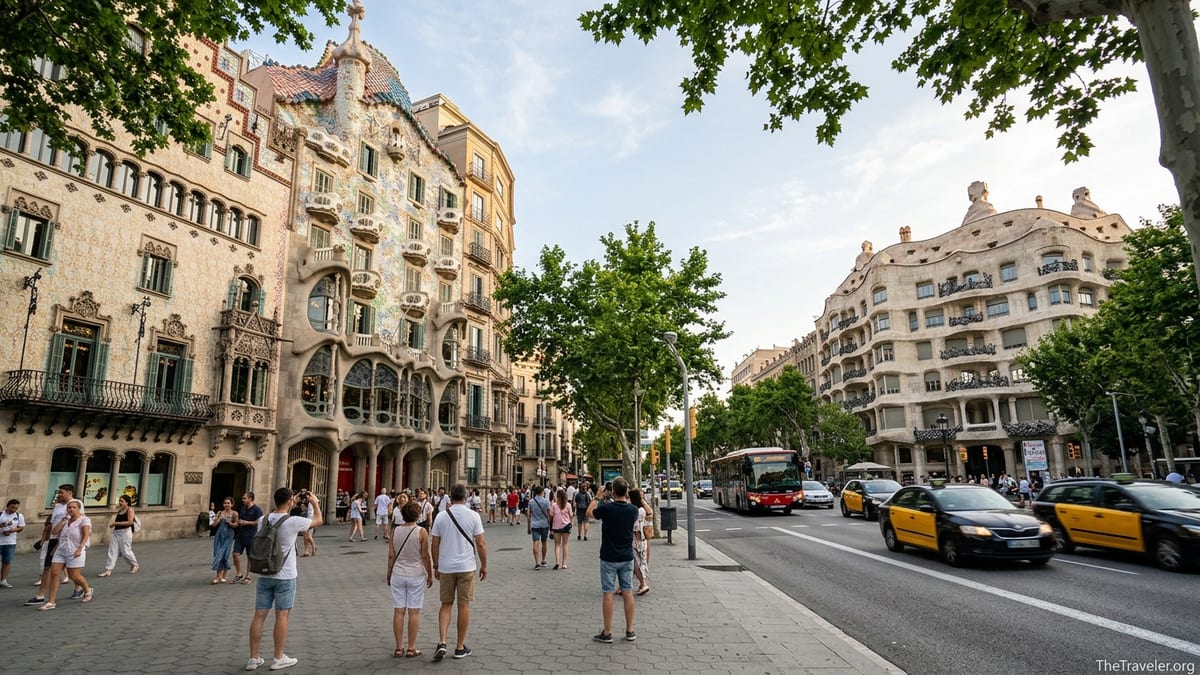
Casa Batlló is the house that turns many casual visitors into lifelong Gaudí obsessives. Located midway along Passeig de Gràcia, its façade ripples with colored glass and ceramic scales that suggest a dragon’s back, while bone-like balconies watch over the street. Inside, the design feels like stepping into a living organism: stair rails flow like vertebrae, ceilings swirl like seashells, and light wells are tiled in gradients of blue so that daylight filters evenly from top to bottom. Even with crowds, the effect can be surprisingly immersive.
Visits typically follow a set circuit: the noble floor where the Batlló family lived, the central light well, the attic with its skeletal catenary arches, and the rooftop with its iconic dragon spine and turreted chimneys. An audio guide is usually included, and in recent years Casa Batlló has added immersive projections and multimedia elements in some spaces. Most guests spend about 60 to 90 minutes inside. Standard adult tickets for basic entry often sit in the high 20s to low 30s in euros, with premium options climbing higher when you add fast-track entry, augmented-reality devices, or special evening visits. It is wise to check the latest categories when booking, since inclusions and names of ticket levels change regularly.
Crowds here are real, especially from late spring through early autumn and during long weekends. If you want a calmer experience, aim for the first entry of the day around opening time, or a late evening slot when available. On weekdays outside school holidays, you may find the main rooms busy but still manageable, and you will often have a few quieter corners in the attic or rooftop to pause and take in details like the hand-carved doors and stained glass without too many people in your frame.
Casa Batlló pairs naturally with a walk along Passeig de Gràcia to see how Gaudí’s creation sits among the other grand apartment buildings of the “Block of Discord.” A very typical real-world itinerary might see you start with a 9 am or 9:30 am entry at Casa Batlló, then stroll ten minutes up the avenue to Casa Milà for a late-morning slot, breaking for a menu del día lunch at one of the nearby brasseries. This pattern lets you maximize your sightseeing while still building in natural pauses to rest your feet and digest what you have seen.
Casa Milà (La Pedrera): Rooftop Warriors and Everyday Modernism
Four blocks uphill from Casa Batlló, Casa Milà is better known in Barcelona as La Pedrera, “the stone quarry,” thanks to its rugged undulating façade. Where Casa Batlló feels almost aquatic, Casa Milà is more geological, with rough-hewn stone and wrought-iron balconies that twist like seaweed. Inside, the house is a masterclass in how Gaudí adapted organic forms to an upscale but practical apartment building for a wealthy family and their tenants.
A typical visitor route includes three main experiences. The first is a recreated early 20th century apartment, furnished down to the toys in the nursery, which gives an immediate sense of how a bourgeois family would have lived in such a space. The second is the attic, with a series of graceful brick arches hosting a compact but thoughtful exhibition on Gaudí’s methods and models. The third and unmissable highlight is the rooftop, populated by sinuous ventilation towers and helmet-like chimneys that many visitors liken to stone warriors. The views sweep across the Eixample district to the Sagrada Família, especially atmospheric around sunset.
Standard adult tickets for daytime visits generally fall in the mid 20s to low 30s in euros. There are also special experiences such as night-time light shows on the rooftop or small-group early access, which naturally cost more. Families often find Casa Milà easier for children than Casa Batlló, thanks to the furnished apartment and a slightly more straightforward layout. Accessibility is reasonably good, with elevators to most levels, though the rooftop involves steps and uneven surfaces, so travelers with limited mobility might focus more time on the interior exhibits.
In practice, many travelers combine Casa Milà with either Casa Batlló or nearby attractions like the boutique shops and cafes of Passeig de Gràcia. If you are visiting in high summer, consider booking Casa Milà for early morning or for an evening roof-top experience to avoid the harshest heat. For example, a 7:30 pm visit in July can give you soft golden light over the city, followed by a late dinner at a nearby tapas bar, which fits naturally with Barcelona’s evening-focused rhythm.
Casa Vicens: Gaudí’s First House and a Quiet Favorite
Casa Vicens, located in the Gràcia district, was Gaudí’s first major house commission and offers a very different mood from his later works. The façade mixes green-and-white tiles with floral motifs and brick stripes, drawing heavily on Moorish and oriental influences. Inside, ceilings are carved and painted with nature themes, and the small garden shows how Gaudí integrated greenery into an urban plot. Because it sits away from the main tourist avenues, Casa Vicens tends to feel calmer than the big Passeig de Gràcia landmarks.
Visitors typically explore the dining and living rooms, bedrooms, smoking room, rooftop and small garden, often with an audio guide included in the ticket. Most people spend roughly an hour to an hour and a half. Standard adult entry often falls in a range around the mid-teens in euros, a bit lower than Casa Batlló or Casa Milà, which makes it appealing for travelers watching their budget. There are occasional guided tours in various languages and temporary exhibitions that highlight aspects of Gaudí’s early career.
In real-world trip planning, Casa Vicens works well either as a stand-alone morning before heading to nearby Park Güell, or as an afternoon stop after a leisurely lunch in Gràcia’s plazas. For example, you might book a mid-morning Park Güell ticket, walk downhill through Gràcia’s narrow streets for a menu del día lunch, then enter Casa Vicens by mid-afternoon when the sun lights up its tilework. This route feels more like a neighborhood wander than a series of blockbuster sights and suits travelers who enjoy a slower pace.
Because Casa Vicens remains somewhat under the radar, same-day tickets at the box office are often possible outside peak weeks, but demand spikes during holidays and high summer. If you are traveling in July or August or on a tight schedule, prebooking still makes sense. Several recent visitors have noted that they were able to reserve online from their phone while already in the neighborhood, then step straight in at their chosen time, which shows how flexible this house can be compared with Barcelona’s headline monuments.
Palau Güell and Torre Bellesguard: For Design Lovers and Repeat Visitors
Palau Güell sits just off La Rambla, near the Boqueria market, and was designed as an urban mansion for Gaudí’s patron Eusebi Güell. From the street, its twin parabolic-arched gateways hint at something unusual inside, but the building truly impresses once you step into its soaring central hall, lit from above by a cone-shaped lantern. The palace blends rich materials like marble and wood with subtle ironwork and stained glass, making it a rewarding visit for travelers who enjoy looking closely at craftsmanship.
The standard route leads through reception rooms, private quarters, a chapel, service areas and a rooftop with a forest of individually decorated chimneys that foreshadow those of Casa Milà and Casa Batlló. Typical visit time is around 60 to 90 minutes. Ticket prices for adults usually sit below the big two houses, roughly in the low to mid teens in euros, and there are discounts for students, seniors and children. Audio guides and occasional themed tours provide context on both architecture and the industrial wealth that funded it.
Torre Bellesguard, also known as Casa Figueras, is one of Gaudí’s lesser-known works, set on the lower slopes of the Collserola hills. Built in the early 20th century on the site of a medieval residence of King Martin of Aragon, it fuses neo-Gothic lines with Gaudí’s modernist sensibility. The result looks almost like a small stone castle, complete with a tall tower topped by a cross and Catalan flag colors. Because it is outside the usual tourist grid, visitor numbers are much lower, creating an almost private feel, especially on weekday mornings.
At Bellesguard, visits may include guided tours or self-guided access to the gardens, some interiors and the rooftop terrace with wide views over Barcelona. Tickets are typically more modestly priced than those for Casa Batlló or Casa Milà, though exact figures fluctuate with the type of visit. Travelers who have already seen the major Gaudí sites often single out Bellesguard as a highlight for its tranquility and historical depth. Combining it with a walk in the nearby hills or a tram ride offers a pleasant half-day away from the city center crowds.
Colònia Güell and the Crypt: A Rewarding Half-Day Trip
About 20 to 30 minutes by suburban train from central Barcelona lies Colònia Güell, a former textile workers’ village where Gaudí was commissioned to design a church. Financial difficulties meant that only the lower part, now known as the crypt, was completed, but it is one of his most intriguing works. The building experiments with sloping columns, irregular stone and colored windows that filter soft light into an intimate, cave-like space. Many architectural historians point to this crypt as a crucial testing ground for ideas that later shaped the Sagrada Família.
Visitors usually start at the village information center, then follow a signposted route through the old industrial colony before reaching the crypt itself. Tickets that include an audio guide for the colony and church are generally priced in the range of single digits to low teens in euros for adults, with small discounts for seniors, youth and students. The site operates with different winter and summer schedules, and it closes on some major holidays, so checking current hours before you plan a half-day trip is important.
For a practical example, a typical morning visit might involve catching a mid-morning train from Plaça d’Espanya, arriving at Colònia Güell station, walking ten minutes to the visitor center, then spending about two hours between the village stroll and crypt interior. Afterwards you can have a simple menu lunch at a local bar on the main square before returning to Barcelona in mid-afternoon. This makes a particularly good outing for travelers who have already visited the core Gaudí sites and want something quieter and more local-feeling.
Because Colònia Güell is outside the city and less commercialized, services are more limited than at Passeig de Gràcia attractions. There are no large souvenir stores or elaborate audiovisual experiences. What you get instead is a compact, atmospheric village and perhaps the most contemplative Gaudí space accessible to the public. Bringing a reusable water bottle, wearing comfortable shoes for cobbled streets and checking train schedules in advance will make your excursion smoother.
Planning Your Gaudí House Itinerary and Budget
With so many Gaudí houses to choose from, the key questions are how much time you have and how much you want to spend. As of 2026, a realistic ballpark for a standard adult ticket is often around 25 to 40 euros for Casa Batlló or Casa Milà, around 14 to 20 euros for Casa Vicens and Palau Güell, and around 10 euros for Colònia Güell’s crypt with audio guide. These figures shift with seasonal promotions, online discounts or premium visit options, so always treat them as indicative rather than fixed. For a couple visiting three major houses plus one smaller site, it is easy for total ticket costs to approach or exceed 150 euros.
One common strategy for a two-day Gaudí-focused stay is to anchor each day around one or two big monuments, then fill the gaps with neighborhood walks or cafes. For instance, Day 1 could start with a morning slot at the Sagrada Família, followed by lunch and a late-afternoon visit to Casa Batlló. Day 2 might pair Park Güell in the morning with Casa Milà in the evening for a rooftop sunset experience. If you have a third day, you might add Casa Vicens in Gràcia and Palau Güell near La Rambla, or choose Colònia Güell for a partial day trip. This structure minimizes backtracking and keeps daily ticket spending predictable.
Timing within the day also matters. Early morning entries often mean fewer people in your photos and a cooler, calmer atmosphere in summer. Late evening visits can offer beautiful light and a more romantic feel, especially on rooftops, but may be less suitable for young children. Midday tends to be the busiest and hottest, so it is sensible to reserve those hours for shaded interiors, lunch breaks or siesta time. Travelers arriving from other time zones sometimes find it easiest to book afternoon slots on their first day while they adjust to the local rhythm.
In terms of purchasing, official sites for each house typically offer the clearest ticket categories and the most secure transactions. Third-party resellers sometimes bundle combinations like “Casa Milà + Casa Batlló + Palau Güell” with small overall savings, but the trade-off is that you must commit to specific time slots across multiple places and coordinate your day around them. Before buying any bundle, quickly sketch out your likely movements on a map and allow generous transit and queueing buffers so you are not rushing from one house to the next.
The Takeaway
Exploring Gaudí’s houses is one of the most rewarding ways to understand Barcelona. Each building shows a different facet of his imagination, from the fairy-tale bone balconies of Casa Batlló to the rugged terraces of Casa Milà, the early experimentation of Casa Vicens and the hidden spiritual intensity of Colònia Güell’s crypt. Together, they chart a trajectory from playful ornament to structural audacity and deep symbolism.
For most travelers, seeing at least two major Gaudí houses and one or two smaller sites will provide a rich overview without overwhelming either your schedule or your budget. Thoughtful planning around time slots, approximate ticket prices and neighborhood logistics will let you enjoy the spaces themselves rather than stress about lines and reservations. Whether your favorite memory ends up being a rooftop view over the Eixample, a quiet moment in a darkened chapel, or the discovery of an unexpected detail in a tiled ceiling, Gaudí’s houses invite you to look up, slow down and see everyday architecture as something almost alive.
FAQ
Q1. How many Gaudí houses can I realistically visit in one day?
Most travelers find that two major houses in one day is a comfortable maximum, especially if you also visit the Sagrada Família or Park Güell. A common pattern is one house in the morning, a long lunch and neighborhood stroll, then another house in late afternoon or early evening. Adding a third house in a single day is possible but tends to feel rushed and tiring.
Q2. Which Gaudí house should I choose if I only have time for one?
If you can only visit one Gaudí house, Casa Batlló or Casa Milà are the strongest choices, as they showcase his mature style and offer memorable rooftop experiences. Casa Batlló is more fantastical and colorful, while Casa Milà is more sculptural and focuses slightly more on how people lived in the building. If you prefer something quieter and less expensive, Casa Vicens is an excellent alternative.
Q3. Do I need to book Gaudí house tickets in advance?
For the most popular houses, especially Casa Batlló and Casa Milà, booking in advance is strongly recommended, particularly between April and October and on weekends or holidays. Same-day tickets sometimes remain early or late in the day, but specific time slots often sell out. For smaller sites like Casa Vicens, Palau Güell or Torre Bellesguard, same-day tickets are more realistic outside peak season, though prebooking still offers peace of mind.
Q4. Are there any money-saving options for visiting multiple Gaudí houses?
There is no single official citywide Gaudí pass, but various third-party agencies offer combination tickets that bundle two or more houses, sometimes with a small discount compared with buying each ticket separately. These can be useful if your dates and times are fixed, but they reduce flexibility and may include houses you are less interested in. Another simple strategy is to prioritize one or two of the most expensive houses and then add a couple of lower-priced sites like Palau Güell or Colònia Güell to balance your budget.
Q5. Which Gaudí house is best for families with children?
Families often do well with Casa Milà, thanks to the furnished apartment that shows daily life, and the rooftop, which children usually find engaging. Casa Batlló can also be enjoyable for its colors and shapes, though it is often more crowded. Casa Vicens and Colònia Güell offer quieter environments where kids can move a bit more freely. In all cases, early morning visits tend to be easier with younger children, and rooftops may require close supervision because of steps and low walls.
Q6. How should I dress when visiting Gaudí houses?
There is no strict dress code for Gaudí houses, but comfort is important. You will walk and stand quite a bit, often on sloped or uneven surfaces, particularly on rooftops, so closed, comfortable shoes are recommended. Interiors are generally climate controlled, but in summer the rooftops and gardens can be hot and bright, so light clothing, sunglasses and a small refillable water bottle are practical choices. In cooler months, bring a layer for outdoor sections.
Q7. Are Gaudí houses accessible for visitors with reduced mobility?
Accessibility varies by house. Most of the major sites provide elevators and accessible routes to many interior spaces, and staff are generally helpful. However, rooftops often involve stairs and uneven surfaces that may not be fully accessible. If accessibility is a priority, it is best to check the latest information for each house and consider focusing on those with clear accessible routes through the main exhibition floors, skipping rooftop sections if necessary.
Q8. Can I visit Gaudí houses in bad weather?
Yes, all Gaudí houses can be visited in rain or cool weather because most of the experience is indoors. Rooftops, terraces and gardens are less pleasant in heavy rain or strong wind, and access may occasionally be restricted for safety. On the other hand, visiting on a rainy weekday can mean fewer crowds inside. If a storm is forecast, consider that your rooftop photos may be limited, but you will still be able to appreciate interiors, models and exhibitions.
Q9. Is photography allowed inside Gaudí houses?
In general, non-flash personal photography is allowed in most Gaudí houses, though tripods, stabilizers and professional equipment are usually prohibited without special permission. Certain areas may restrict photography out of respect or safety, and staff may manage visitor flow in very popular rooms. Always follow on-site signage and instructions, and be mindful not to block passages or other visitors while taking photos.
Q10. How far in advance should I plan a Gaudí-focused trip to Barcelona?
If you are visiting in peak months such as May, June, September or October, booking Gaudí house tickets and major attractions at least a few weeks in advance is sensible, especially for popular time slots and if you are traveling in a group. For shoulder seasons and weekdays, you can often plan with a shorter lead time, but it still helps to sketch a basic itinerary and reserve at least your top-priority houses before you arrive. Accommodation and train tickets should follow similar timelines during busy festivals, major events or long holiday weekends.