


More news on this day
A new direct air route linking Kuwait International Airport with Deir ez Zor Airport in eastern Syria is scheduled to begin operations in August 2026, marking a notable step in the gradual restoration of commercial connectivity to a region long affected by conflict and infrastructure damage.
Get the latest news straight to your inbox!
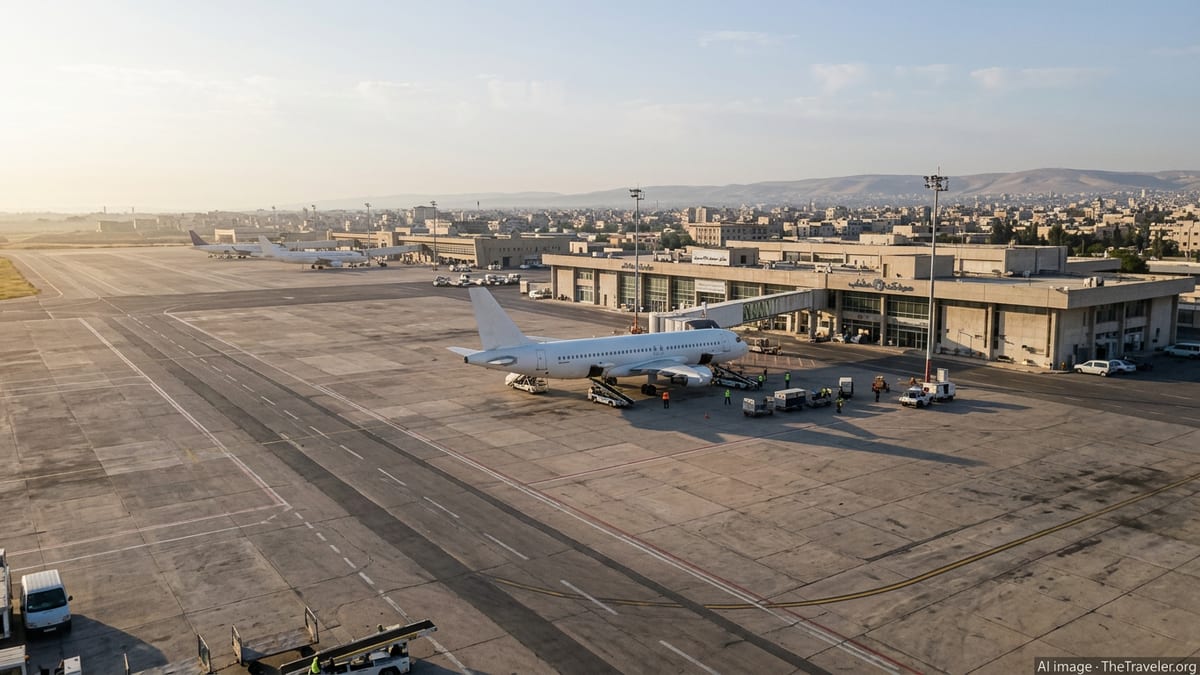
Reviving a Historic Link Between Kuwait and Deir ez Zor
The launch of direct services between Kuwait International and Deir ez Zor revives a historic air connection that existed before the Syrian conflict, when carriers from both countries operated scheduled flights on the route. Publicly available aviation records indicate that Deir ez Zor once formed part of domestic and regional networks serving Syria’s eastern provinces.
In recent years, Deir ez Zor Airport saw only limited or irregular activity while attention focused on the rehabilitation of larger hubs such as Damascus and Aleppo. Flight-tracking data and international airport directories showed no regular commercial flights to or from Deir ez Zor as late as early 2026, underscoring the significance of a confirmed timetable for new operations starting in August of that year.
The renewed link is expected to operate as a nonstop service, cutting journey times between Kuwait and eastern Syria and reducing the need for lengthy overland travel from other Syrian airports. For passengers currently relying on connecting routes via Damascus, Aleppo or foreign hubs, the new schedule offers a more direct alternative to reach Deir ez Zor city and surrounding districts along the Euphrates.
Industry observers note that the development also reflects a broader normalization of regional aviation ties after years of disruption. Airlines based in Kuwait and Syria have steadily rebuilt networks across the Middle East, and the decision to include Deir ez Zor points to growing confidence in the viability of destinations beyond the main Syrian gateways.
August 2026 Start Date and Operational Framework
According to published flight announcements and timetable data, the Deir ez Zor to Kuwait route is scheduled to commence in August 2026, with the first flights expected in the second week of the month. The planned launch date positions the service in the high summer travel period, when demand traditionally rises among expatriate workers, visiting families and religious travelers moving around the region.
Publicly available information suggests that the schedule will feature a limited number of weekly rotations at the outset, reflecting both infrastructure constraints at Deir ez Zor Airport and a cautious ramp-up strategy in a still-recovering market. Aviation analysts anticipate that frequencies could expand if passenger loads prove resilient and ground operations at Deir ez Zor continue to stabilize.
The route is understood to be structured around a short- to medium-haul narrowbody aircraft, consistent with other Kuwait-centered services into Syria. Aircraft of this size allow carriers to balance capacity with operational flexibility, while also matching runway and terminal conditions at regional airports that have undergone partial rather than full-scale modernization.
Scheduling the new link for August 2026 also aligns with Kuwait International Airport’s phased return to full operations after earlier disruptions and capacity adjustments. As terminal infrastructure in Kuwait is upgraded and more destinations return to the departure boards, airlines have gained greater room to add niche regional routes that cater to specific community and business flows.
Strategic Importance for Eastern Syria’s Connectivity
For Deir ez Zor and its wider governorate, the restoration of a direct international passenger route is likely to carry economic and social implications well beyond the airport perimeter. The area hosts oil and gas infrastructure, agricultural communities and growing small-scale commercial activity, all of which rely heavily on reliable access to external markets and services.
Humanitarian and logistics assessments in recent years often identified Deir ez Zor as challenging to reach, with road journeys from Damascus or Aleppo taking many hours and subject to periodic security or weather-related constraints. Regular air links from Kuwait, a key employment and transit hub for Syrians abroad, may gradually reduce travel times for residents, returnees and business travelers heading into the region.
The new air corridor also intersects with broader efforts to rehabilitate Syria’s secondary airports and diversify points of entry. Reports on ongoing works at Deir ez Zor Airport describe runway repairs, terminal refurbishments and upgrades to navigation and safety systems aimed at enabling the resumption of scheduled civil operations after years of primarily military or humanitarian use.
Analysts point out that improved connectivity can help integrate eastern Syria more closely with national transport networks and regional trade flows. While expectations remain tempered by political and security realities, the August 2026 launch is seen as a test case for how renewed commercial traffic might support gradual economic recovery in a province heavily damaged during the conflict.
Implications for Kuwait–Syria Air Relations
The decision to connect Kuwait International with Deir ez Zor adds a new dimension to the evolving aviation relationship between Kuwait and Syria. Over the past two years, carriers based in Kuwait have progressively expanded their Syrian footprints, adding or resuming flights to Damascus and Aleppo and seeking to capture demand from Syrian communities living and working in the Gulf.
Kuwait International Airport serves as a regional hub for onward travel across the Gulf Cooperation Council states, South Asia and parts of Africa, meaning that the Deir ez Zor route will likely function as both an origin-destination link and a feeder connection into broader networks. Travelers flying from the eastern Syrian city will gain access to additional one-stop itineraries through Kuwait, without the need to route via more congested hubs.
For Syrian civil aviation authorities, the establishment of a scheduled link from Deir ez Zor contributes to a strategy of diversifying international access beyond the capital. Public statements and sector analyses have highlighted goals to restore pre-conflict connectivity where feasible, while encouraging regional airlines to consider secondary Syrian cities as potential destinations.
Market specialists expect that performance on the Kuwait–Deir ez Zor route will be closely monitored by other regional operators evaluating possible entry into Syrian markets. Strong load factors and stable operations could open the door to additional services from Gulf or neighboring countries, whereas a slower-than-expected ramp-up might lead to a more cautious approach elsewhere.
Passenger Experience and Market Outlook
For passengers, the most immediate impact of the new connection will be reduced travel complexity. Syrians living in Kuwait and neighboring countries who originate from Deir ez Zor or nearby towns have often faced multi-leg trips involving flights to Damascus or Aleppo followed by lengthy road journeys or internal transfers. A nonstop service to Deir ez Zor is expected to cut both travel time and related costs.
Travel industry observers note that demand is likely to come from a mix of visiting friends and relatives, migrant workers, small business owners and, to a lesser extent, religious and cultural visitors exploring historic sites along the Euphrates. Deir ez Zor sits within reach of archaeological locations and river landscapes that, in more stable periods, attracted regional tourists and domestic travelers.
Pricing strategies are anticipated to play a significant role in shaping the route’s early performance. Competitive fares relative to indirect options via other Syrian or regional airports may encourage travelers to test the new service, especially if booking channels and customer support are clearly communicated in both Kuwait and Syria.
Looking ahead, analysts describe the August 2026 launch as one component of a gradual, uneven but tangible reopening of Syrian skies to regional traffic. While the route between Kuwait International and Deir ez Zor Airport will initially represent a niche segment within the broader Middle East aviation landscape, its success or failure is likely to influence how airlines and passengers perceive the prospects for renewed connectivity into Syria’s historically underserved east.