


More news on this day
Bahrain International Airport is experiencing significant operational disruption, with publicly available flight data showing at least 44 delays and 10 cancellations in a single day, disrupting connections across the Gulf, Europe and Asia as the wider region continues to face security-related airspace constraints.
Get the latest news straight to your inbox!
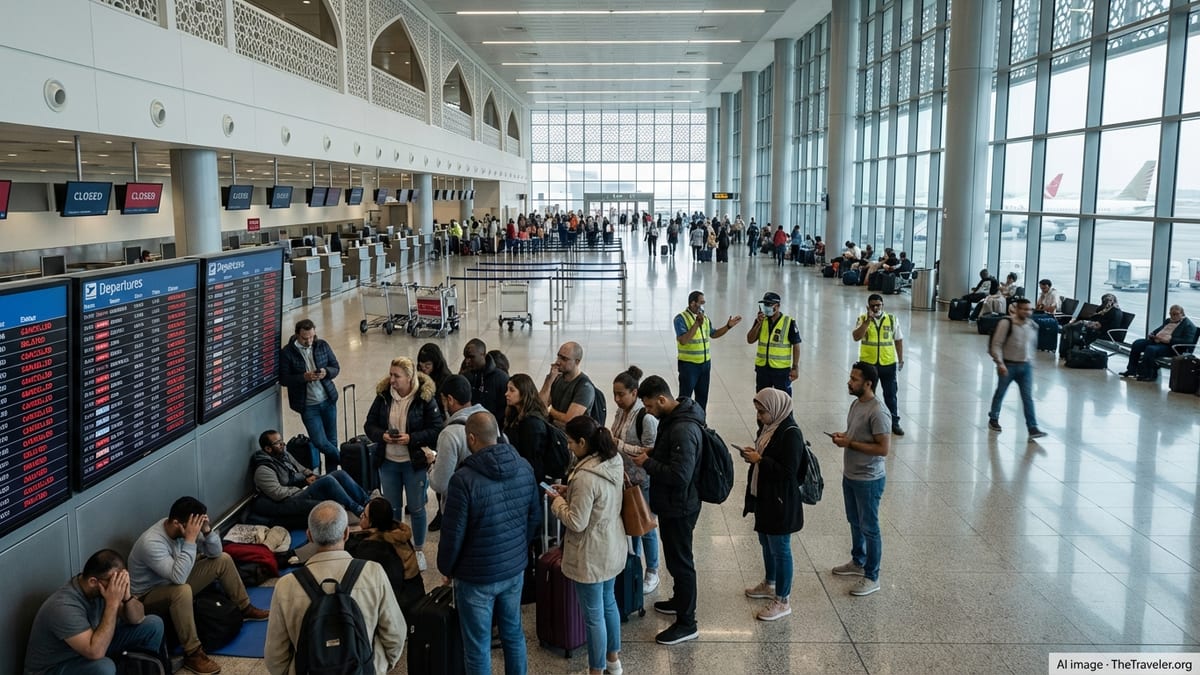
Wave of Disruptions Across a Key Gulf Hub
Recent schedule data for Bahrain International Airport indicates an unusually high number of delayed and cancelled services affecting its role as a regional transfer point. On a day when around 100 departures were scheduled, at least 44 flights showed substantial departure or arrival delays and 10 were cancelled outright, according to live airport and airline tracking platforms that aggregate real-time operational information.
The disruptions are concentrated on short- and medium-haul routes that connect Bahrain with major Gulf neighbours, as well as long-haul services to European and Asian gateways. Flights operated by Gulf-based carriers, including services to Dubai, Abu Dhabi, Riyadh and Doha, have been among those affected, alongside key trunk routes to London and other European cities.
Operational data suggests that many aircraft remained on the ground well beyond their planned departure times, with knock-on effects for inbound rotations. Delays ranging from 30 minutes to several hours have been recorded, with some departures pushed back into late-night or early-morning slots as airlines attempt to reposition aircraft and crew.
While Bahrain International Airport remains open and its core infrastructure has not been reported as damaged, the elevated level of disruption marks a significant challenge for an airport that typically markets itself as a reliable connection point between the Gulf and broader international markets.
Security Backdrop and Regional Airspace Constraints
The current wave of disruption is unfolding against the backdrop of the ongoing 2026 conflict involving Iran and the United States and its allies, which has repeatedly affected aviation across the Gulf. Previous Iranian strikes earlier in the year prompted Bahrain and several neighbouring states to close or restrict their airspace for sustained periods, forcing airlines to reroute or suspend flights and creating long-lasting schedule volatility.
Government travel advisories from a range of countries have flagged the risk of further missile or drone attacks in and around Bahrain and warned that commercial flight schedules may change at short notice. These advisories have pointed to earlier episodes when Bahrain’s airspace was temporarily closed and regional carriers shifted operations to alternative airports, illustrating the fragility of air connectivity in the current environment.
Industry bulletins focused on logistics and supply chains have also highlighted Bahrain as a pinch point within a broader pattern of disrupted routings across the Gulf and Levant. Even when airspace is open, airlines have been required to adopt longer or more complex routing to avoid conflict zones, adding pressure on crew rosters, aircraft availability and fuel planning.
Available public statements from Bahrain Airport Company in recent months have stressed that terminal systems and core airport operations remain functional, with disruptions attributed primarily to external factors such as airspace restrictions and airline-level decisions. The latest pattern of delays and cancellations appears consistent with this picture of a network under strain rather than a local technical failure.
Impact on Gulf, Europe and Asia Connections
The concentration of delays and cancellations at Bahrain International Airport is having a noticeable effect on connections linking the Gulf to Europe and Asia. Bahrain functions both as a gateway for point-to-point travel and as a transfer node for passengers moving between South Asia, the Middle East and European hubs.
Long-haul services have not been spared. Recent tracking data shows extended departure delays on flights from Bahrain to major European destinations, including London, with revised departure times shifting several hours beyond the original schedule. Delays on these flights can cascade into late arrivals in Europe, missed onward connections and aircraft starting their next rotations out of sequence.
On the Asian side, services to key markets such as India and other South Asian destinations have also seen schedule changes, with some flights cancelled and others rescheduled to operate at different times or via alternative routings. Given the heavy reliance on Gulf hubs for South Asia to Europe itineraries, disruptions in Bahrain can reverberate widely across airline networks and passenger journeys.
Within the Gulf, regional hops that typically operate with high frequency have become less predictable. Airlines have had to adjust departure banks, consolidate services or swap aircraft types, reducing the flexibility that passengers and travel planners normally rely on when using Bahrain as a stepping-stone between neighbouring states.
Airlines Adjust Schedules as Passengers Seek Certainty
Airlines serving Bahrain have been adjusting schedules on short notice in response to operational and security constraints. Publicly available reports show individual carriers cancelling certain rotations to and from Bahrain on specific days, particularly where aircraft have been forced to divert or return to origin airports due to temporary closures or restrictions in Bahraini airspace.
Recent coverage of the regional aviation situation has highlighted examples such as Etihad Airways turning back an Abu Dhabi to Bahrain service and cancelling subsequent rotations on the same route, underlining the operational challenges that airlines face when conditions change mid-flight. Similar patterns of last-minute adjustments have been reported among other Gulf and international carriers.
For passengers, the result has been a rise in missed connections, extended layovers and, in some cases, overnight stays while waiting for alternative flights. Travel forums and social media posts from recent days reflect concerns about being stranded in transit hubs, with travellers weighing whether to rebook itineraries to avoid Bahrain or the wider Gulf region altogether.
Airlines and the airport have been directing customers to check real-time flight status information and to stay in contact through official digital channels for rebooking and refund options. Industry advisories continue to recommend that passengers build in additional time for connections and consider flexible fares where possible, given the likelihood of further short-notice changes.
Outlook: Elevated Risk of Further Disruption
While Bahrain International Airport remains operational, the pattern of at least 44 delays and 10 cancellations in a single day points to an environment where disruptions can escalate quickly as conditions in the region evolve. Analysts following the aviation impact of the conflict note that even partial relaxations of airspace restrictions have not restored pre-crisis stability, with airlines still contending with reroutes, crew duty-time limitations and uncertain demand.
Logistics and freight-focused assessments of the Middle East have repeatedly warned that capacity into and out of Bahrain may remain constrained for some time, with limited room for airlines to absorb additional shocks such as technical issues, weather events or new security incidents. Passenger services share the same constrained infrastructure, making them vulnerable to further schedule volatility.
Travel advisories from several governments are likely to remain in place as long as the risk of renewed attacks persists, reinforcing a cautious approach among carriers and travellers alike. For Bahrain International Airport, maintaining operations amid a fragile regional security climate will require continued coordination across aviation stakeholders and the flexibility for airlines to adjust networks rapidly.
For now, publicly available flight information suggests that passengers planning to use Bahrain as a gateway to or from the Gulf, Europe or Asia should be prepared for potential last-minute changes, monitor their itineraries closely and allow for contingency time in their travel plans as the situation continues to evolve.