


More news on this day
A new generation of nonstop routes is rapidly redrawing the world map for U.S. travelers, knitting together beach resorts, cultural capitals and remote island escapes in single, seamless hops that promise more time in paradise and less time in transit.
Get the latest news straight to your inbox!
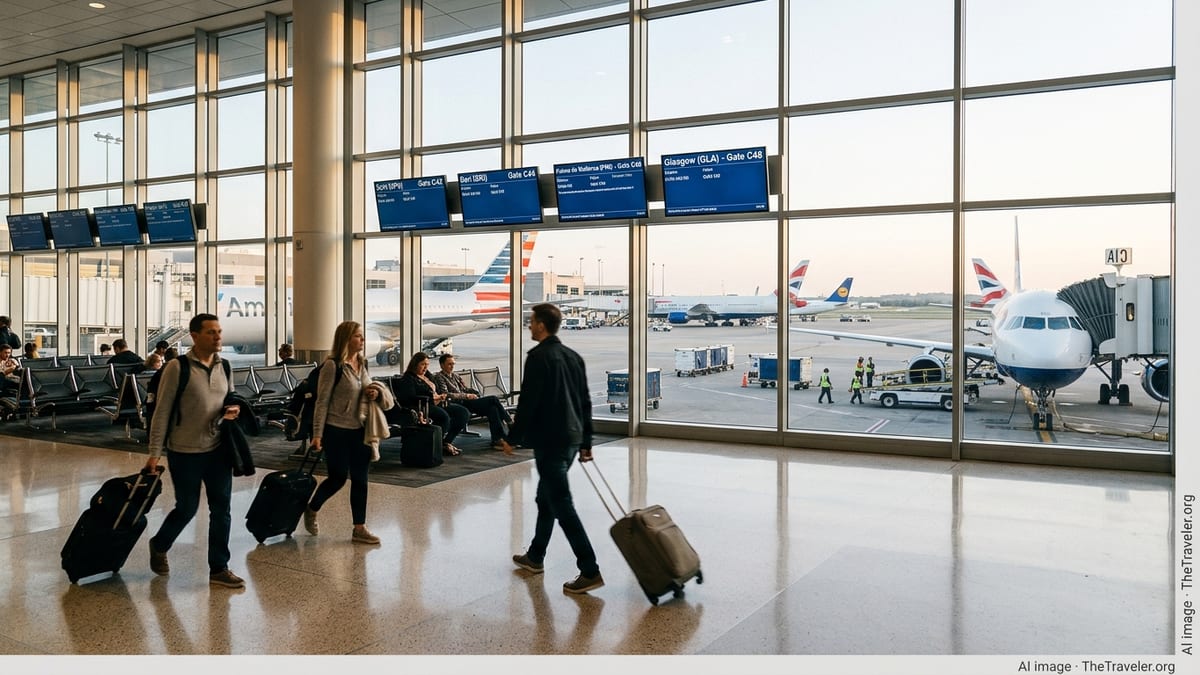
Sun, Sand and a Single Flight
Airlines across North America are sharpening their focus on leisure travelers in 2026, adding point-to-point services that take passengers straight from their home airports to vacation hotspots. Publicly available schedules and airline announcements show a clear tilt toward warm-weather escapes, with new links from U.S. cities to the Caribbean, Mexico and beyond aimed squarely at holidaymakers who want to avoid connections.
In Florida, JetBlue is turning Fort Lauderdale into a stronger launchpad for beach-bound trips. Industry coverage indicates the carrier plans nearly 130 daily departures from the airport this summer, its largest operation there to date, including new nonstop services deeper into Latin America and the Caribbean. The build-up is designed to give South Florida travelers more direct access to island resorts and coastal cities without routing through traditional mega-hubs.
Further north, regional gateways are also getting in on the action. Apple Vacations and sister brands under ALG Vacations have returned to Lansing, Michigan, with charter-style nonstops to Cancun and Punta Cana and a newly introduced link to Los Cabos for 2026, a move local airport announcements describe as a bid to capture Midwestern demand for all-inclusive winter sun packages. These flights effectively turn a smaller Midwestern airport into a seasonal doorway to Mexico and the Dominican Republic.
Canadian travelers are seeing similar trends. Air Canada has outlined an expanded winter 2026–27 program that adds new nonstops from Canada to Tenerife in Spain’s Canary Islands, alongside additional services to Mexican and Central American resorts such as Mazatlán and Roatán. Company statements characterize the new routes as a way to give travelers more one-flight options to “sun destinations” during peak winter escape season.
Coastal Hubs Race to Capture Long-Haul Leisure
Major U.S. coastal hubs are simultaneously extending their reach, increasingly targeting long-haul leisure markets once accessible only through multi-stop itineraries. Delta Air Lines has disclosed plans for 11 new long-haul nonstops in 2026 that deepen its international network at gateways including New York, Boston, Los Angeles and Seattle, responding to what analysts describe as sustained demand for overseas vacations.
Delta’s transatlantic push includes new seasonal nonstops from Seattle-Tacoma to Rome and Barcelona that began operating this spring. Aviation industry reports note that the flights give Pacific Northwest travelers a direct path to two of Europe’s most visited cities, supplementing the airport’s traditional domestic and transpacific focus. The routes are also feeding a broader Delta schedule that now connects Seattle to an expanding mix of European and Asian destinations.
New York’s John F. Kennedy International Airport is seeing its own wave of added choice. Travel industry coverage of Delta’s 2026 schedule highlights fresh nonstop routes from JFK to Porto, as well as planned services to Sardinia and Malta, destinations that blend beach tourism with cultural appeal. By layering these flights atop existing links to major European capitals, airlines are widening the menu of cities that can be reached on a single overnight leg.
American Airlines is moving in a similar direction with a package of new international routes for summer 2026, aimed at connecting more U.S. cities to Europe and South America. According to publicly posted route summaries, these additions are designed to meet strong seasonal demand for transatlantic vacations, while reinforcing the role of Dallas–Fort Worth, Charlotte and other hubs as launch points for overseas trips.
Secondary Cities Step Into the Spotlight
Another defining feature of the current route boom is the elevation of secondary cities, which are gaining nonstops to long-haul and high-end leisure destinations that previously required lengthy connections. Charlotte Douglas International Airport, for example, is preparing to welcome Etihad Airways service to Abu Dhabi in March 2026. Local coverage in North Carolina notes that the new nonstop opens a direct corridor from a key U.S. banking center to the Gulf, with onward access to Indian Ocean resorts and Southeast Asia.
In the United States, smaller carriers and semi-private operators are also experimenting with niche point-to-point links that appeal to affluent leisure travelers. One example is Aero, which in recent seasons has rolled out nonstops between Aspen and the New York area and between Los Angeles’ Van Nuys Airport and Maui, positioning these services as a faster, more exclusive way to reach mountain and Pacific island resorts. Industry observers see such routes as part of a broader move toward bespoke connectivity for high-spend customers.
Outside the United States, leisure-focused expansion is visible in Europe and the Mediterranean. Aer Lingus has mapped out additional summer 2026 direct services from Ireland to destinations such as Nice on the French Riviera, Oslo and Spain’s Asturias region, broadening holiday options from Dublin and Cork. Meanwhile, ITA Airways has flagged a new Rome to Mauritius nonstop for the 2025–26 winter season, directly connecting Italian travelers with one of the Indian Ocean’s signature beach destinations.
Together, these developments suggest that cities once seen as end points in their own right are becoming stepping stones to farther-flung paradises. For many travelers, that means bypassing historic connection points in favor of shorter, more predictable journeys starting closer to home.
Ultra-Long Nonstops Shrink the Globe
At the extreme end of the spectrum, ultra-long-haul flights continue to chip away at the need for stopovers on journeys that span continents and oceans. Advances in aircraft technology, including the Airbus A350 and Boeing 787 families, have enabled airlines to operate nonstop services of 14 hours or more on a commercially viable basis, limiting the need for fuel stops and intermediate connections.
Data compiled by aviation analytics firm SkySonar for 2026 highlights several such routes, including Cathay Pacific’s network of flights that top 14 hours, such as a Dallas–Fort Worth to Hong Kong service that clocked around 17 hours when it launched in partnership with American Airlines. The analysis indicates that sustained high load factors on these flights underscore traveler willingness to trade very long stretches in the air for the convenience of a single hop to distant hubs.
Separate route-tracking resources list a growing roster of ultra-long-haul services operated by carriers in Asia, the Middle East and Europe, connecting cities like Singapore, Doha and Auckland directly to North America and Europe. These flights, often marketed as flagship products, typically feature upgraded premium cabins and refined onboard service aimed at turning enforced time in the sky into part of the travel experience rather than a chore.
For leisure travelers, the practical impact is significant. Destinations that once required a patchwork of connections can now be reached with a single boarding pass, reducing the risk of missed flights and lost baggage while freeing more of a trip for actual time on the ground. As nonstop options proliferate across distance bands, the dividing line between “far” and “near” is increasingly measured in hours rather than stops.
What the New Map Means for Travelers
The surge in nonstop services to leisure destinations carries clear implications for how and where travelers plan their next escapes. Analysts suggest that point-to-point growth from secondary airports may entice more people to start international journeys from their local fields, rather than first driving or flying to traditional hubs. That shift could redistribute passenger traffic across the network and alter which cities gatekeepers to certain regions.
Competition on parallel routes is also likely to influence pricing and product choices. When multiple airlines serve the same beach or cultural destination from different U.S. gateways, travelers often gain more flexibility in departure times and cabin classes. Observers expect that some of the new routes will test the limits of demand; those that fill consistently may become permanent fixtures, while others could be trimmed or shifted as airlines fine-tune their schedules.
Industry commentary points to a broader strategic logic behind the nonstop surge: airlines are chasing higher-yield leisure travelers who are willing to pay for convenience, especially on limited vacation time. By reducing total travel time and removing connections, carriers are positioning these routes as time-saving upgrades that can justify premium fares, even in economy cabins on peak dates.
As the 2026 summer and winter seasons unfold, travelers scanning flight search engines are likely to encounter airport pairs that were simply not on offer a few years ago. From Midwestern runways leading straight to Pacific beaches to Gulf carriers linking Southern U.S. cities with global resort networks, the age of unshackled, nonstop freedom in the skies is increasingly visible in everyday booking options.