


More news on this day
At least 70 flights were cancelled and around 1,477 delayed across major Asian hubs on Tuesday, disrupting travel for thousands of passengers on carriers including Batik Air, AirAsia, PAL Express, Air China and Fiji Airways as operational strains and volatile weather patterns again rippled through the region’s aviation network.
Get the latest news straight to your inbox!
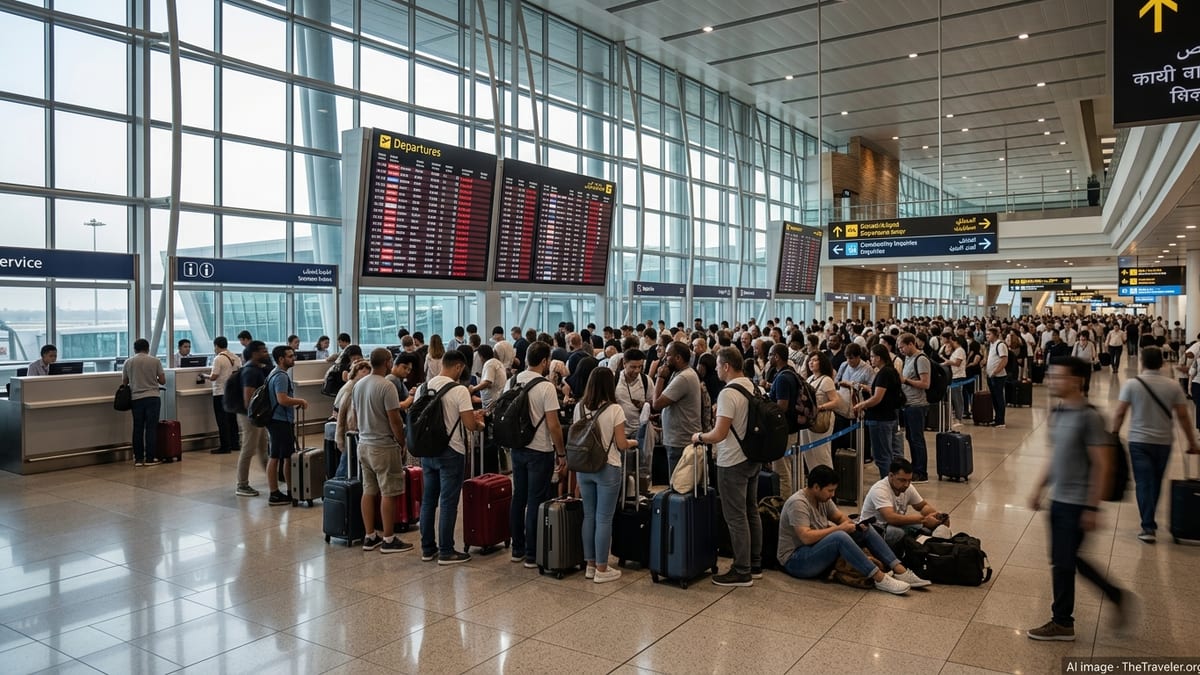
Key Asian Gateways Log New Wave of Cancellations
Publicly available flight-tracking data and regional aviation reports indicate that disruption has intensified at some of Asia’s busiest airports, with cancellations and delays clustering at Jakarta, Johor Bahru, Bangkok, Manila, New Delhi, Beijing and Tokyo. The latest snapshot points to at least 70 outright cancellations and nearly 1,500 delayed departures or arrivals across the network over a 24 hour period, hitting both domestic and international services.
Jakarta’s Soekarno Hatta International, which has been flagged repeatedly in recent months for elevated delay levels, again reported banks of late-running departures, affecting Indonesian carriers such as Batik Air as well as regional services operated by foreign airlines. In Malaysia, Johor Bahru’s Senai International mirrored the pattern, with late departures on routes linking the southern state of Johor to Kuala Lumpur, Bangkok and key Indonesian cities.
In Thailand, Bangkok’s Suvarnabhumi and Don Mueang airports continued to face pressure. Recent schedule reductions and selective cancellations on regional routes, documented in regional aviation coverage, have left limited slack in the system, meaning even modest operational issues can cascade into rolling delays. Passengers connecting through these hubs to India, China and Japan have reported missed onward connections and extended waits in terminals.
India’s New Delhi, China’s Beijing and Japan’s Tokyo, long among the region’s most delay-prone airports on busy days, also recorded fresh disruption. Data reviewed by travel and aviation outlets shows rows of late flights on trunk routes between these capitals and Southeast Asia, magnifying the impact of comparatively small numbers of outright cancellations.
Multiple Airlines Caught in Regional Ripple Effect
The disruption has not been confined to a single carrier or country. Low cost and full service airlines alike have been affected, as tight schedules and high aircraft utilization leave limited buffer to absorb shocks. Tracking data and published reports highlight knock-on effects for Batik Air in Indonesia, AirAsia units based in Malaysia, Thailand and the Philippines, PAL Express in Manila, and major Chinese carriers including Air China.
AirAsia, which has a dense short haul network across Southeast and East Asia, has already drawn attention in recent months for a series of delayed and cancelled flights on routes linking Malaysian, Thai and Philippine cities with China and Japan. Community reports from affected travelers, alongside regional news coverage, describe overnight delays on some sectors and short notice timetable changes on others, contributing to today’s broader pattern of late departures.
In the Philippines, PAL Express and low cost competitors have been juggling schedule adjustments at Manila’s Ninoy Aquino International, where congestion, ground handling constraints and regional weather systems have combined to slow operations during peak hours. Travelers on popular routes to Bangkok, Tokyo and various Chinese gateways have faced a higher than usual risk of missed connections and last minute re-routing.
Chinese and Japanese carriers have also reported scattered cancellations and heavy delays on flights linking Beijing and Tokyo with Southeast Asian leisure markets. Travelers connecting through Beijing Capital or Daxing, as well as Tokyo’s Haneda and Narita airports, have encountered crowded departure halls and rolling gate changes as airlines work to reposition aircraft and crews.
Weather, Volcanic Activity and Operational Strain Drive Disruption
The latest numbers come against a backdrop of unsettled conditions for Asian aviation. In the past two weeks, tropical storm activity in the western Pacific and around Japan has forced airlines to trim schedules and divert flights, while volcanic unrest in parts of Indonesia has periodically affected airspace and airport operations. Aviation and scientific agencies tracking eruptions have noted episodes of ash emission that require conservative routing or temporary airport closures as a safety measure.
Recent eruptions in Indonesia, including renewed activity at several well monitored volcanoes, have previously resulted in intermittent airport shutdowns and diversions. Regional media coverage describes how relatively localized airspace restrictions can trigger far wider disruption, particularly when they affect heavily trafficked corridors or hubs with limited runway and gate capacity.
At the same time, industry analyses point to persistent structural pressures. Airlines in Indonesia, Malaysia, Thailand, the Philippines, India, China and Japan are operating close to pre-pandemic capacity, while still managing uneven aircraft availability, crew rostering challenges and higher fuel and operating costs. Trade publications have reported that some carriers in the region have quietly built more schedule padding and discretionary cancellations into their planning, contributing to days where the headline number of cancellations is modest but the volume of delays is high.
The interaction of these factors means that even when extreme weather or large scale airspace closures are absent, small disturbances, such as a late inbound aircraft or a temporary ground stop, can quickly propagate along multi leg itineraries. This appears to be reflected in the current pattern, where the ratio of delays to outright cancellations is particularly pronounced.
Impact on Travelers from Jakarta to Tokyo
The human impact of the latest wave of disruption is visible at terminals across the region. Travelers passing through Jakarta, Bangkok, Manila, New Delhi, Beijing and Tokyo have described long check in queues, crowded transfer desks and departure boards dominated by yellow and red delay indicators. While only around 70 flights have been fully cancelled in the current episode, the 1,477 recorded delays translate into many more missed meetings, disrupted holidays and extended overnight stays.
Leisure travelers heading to or from Southeast Asian beach destinations via Jakarta, Bangkok or Manila have been among those most affected, particularly where itineraries involve low cost carriers and self connecting tickets. In such cases, even a modest delay on a first leg can lead to a lost onward sector, leaving passengers to negotiate new tickets or wait for later availability on sold out routes.
Business travelers on key corridors between India and Southeast Asia, or China and Japan, have also reported disruption. With some airlines having trimmed frequencies or adjusted departure waves to better match demand and costs, the loss of a single rotation between major cities such as New Delhi and Bangkok, or Beijing and Jakarta, can narrow same day alternatives, forcing schedule changes or overnight stopovers.
Families and tour groups, often traveling on fixed itineraries and tight budgets, may feel the effects most acutely. Reports from regional consumer outlets and online forums suggest a rise in last minute hotel bookings near airports, as well as increased demand for flexible tickets and travel insurance products that cover missed connections and significant delays.
What Passengers Should Watch in the Coming Days
Travel specialists and aviation commentators note that while the specific tally of 70 cancellations and 1,477 delays reflects a single period of disruption, it fits into a broader pattern of volatility for Asian air travel in 2026. Performance data compiled over recent months shows that days with several dozen cancellations and more than a thousand delays are no longer rare at key hubs across the region.
Passengers planning trips involving Jakarta, Johor Bahru, Bangkok, Manila, New Delhi, Beijing, Tokyo and other large Asian hubs in the coming days are being advised by travel media to monitor flight status closely, build additional buffer time into connections and consider earlier departures when itineraries involve important events or cruise and tour departures. Checking airline and airport status pages several hours before leaving for the airport is widely recommended.
Industry observers also highlight the importance of understanding each airline’s disruption policies. Many Asian carriers, including low cost operators, now offer digital tools for rebooking on mobile apps when a flight is cancelled or significantly delayed, and may provide meal or hotel vouchers during extended disruptions when local regulations or company policies require it. However, coverage varies widely by country and carrier, and some travelers may need to rely on travel insurance or credit card protections for additional support.
With the region heading into a busy mid year travel period, the latest episode underscores how quickly conditions can shift for flyers. While most journeys will continue to operate broadly as planned, the combination of weather, natural hazards and operational strain means that irregular operations remain a recurring feature of travel across Indonesia, Malaysia, Thailand, the Philippines, India, China and Japan.