


More news on this day
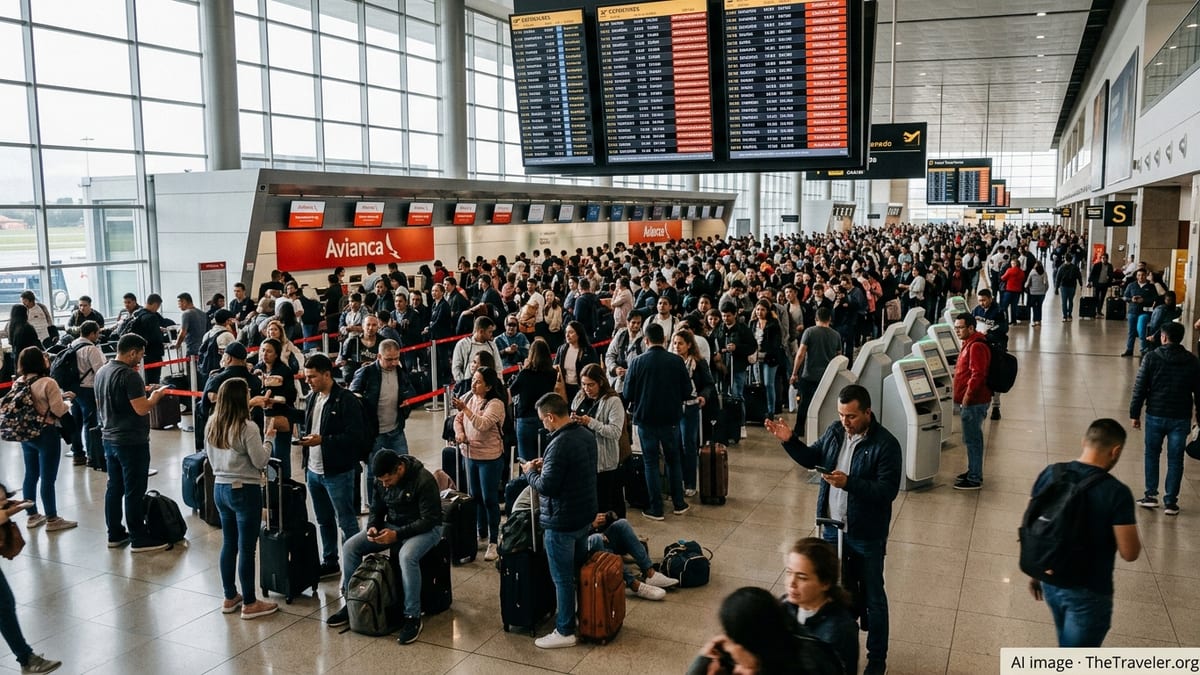
Air travel across Colombia faced fresh disruption on July 2, as at least 19 flights were reportedly cancelled and several more delayed on key domestic and international routes operated by LATAM, Avianca, Copa Airlines, and other carriers serving Bogotá and Medellín.
Get the latest news straight to your inbox!
Widespread Cancellations at Colombia’s Busiest Airports
According to publicly available flight-tracking data and airport disruption summaries, Colombia’s main hubs at Bogotá El Dorado and Medellín José María Córdova have seen a new wave of operational problems, with a cluster of cancellations concentrated on high-frequency routes. Services between Bogotá and Medellín, among the country’s busiest domestic city pairs, appear to be particularly affected.
Reports indicate that at least 19 flights were cancelled across several airlines, alongside a larger number of delays ranging from minor schedule changes to multi-hour disruptions. While the exact mix of causes varies by route, the pattern points to knock-on effects from recent congestion and weather-related disruption, combined with aircraft rotation challenges and tight schedules on popular domestic sectors.
Domestic passengers are bearing the brunt of the problems, with early-morning and late-evening services showing a notable share of schedule changes. Travelers on regional links beyond Bogotá and Medellín, including connections onward to other Colombian cities and international hubs, are also experiencing missed connections and rebookings as airlines attempt to reposition aircraft and crews.
Operational data for the past several days shows repeated adjustments to departure times on core routes linking Bogotá with Medellín and other major cities, suggesting a continuing effort by carriers to stabilize schedules while handling backlogs of affected passengers.
LATAM, Avianca, Copa and Others Adjust Key Bogotá–Medellín Services
LATAM Airlines, Avianca, and Copa Airlines are among the most prominent operators on Colombia’s dense domestic and regional network, and all appear in disruption tallies covering the latest round of cancellations and delays. Flight-status services monitoring LATAM operations between Bogotá and Medellín show altered departure times and selected cancellations on certain recent rotations, reflecting broader pressure on one of the airline’s busiest Colombian corridors.
Avianca, Colombia’s largest carrier, has also featured in reports of disrupted operations on domestic routes, including services linking Bogotá with Medellín and other regional gateways. Historic flight information for some recent Bogotá–Medellín departures shows reduced schedules and unscheduled gaps on particular flight numbers, consistent with short-notice cancellations and rescheduling.
Copa Airlines, which operates a mix of Colombian domestic and international services routed through Panama City and Colombian cities such as Medellín, has recorded individual cancellations affecting onward travel to the United States and other destinations in recent weeks. The latest cancellations in Colombia are adding to that pattern, with passengers on itineraries combining domestic and international segments particularly exposed when one leg is removed from the schedule.
Other carriers serving Bogotá and Medellín, including regional and low-cost airlines, are also navigating crowded airspace and tight turnarounds, which can amplify the impact of any disruption. When aircraft or crews are out of position, schedules on high-frequency routes such as Bogotá–Medellín are among the first to be adjusted in order to recover operational stability.
Knock-on Effects for Passengers Across Colombia and Beyond
The immediate impact of the 19 recorded cancellations and multiple delays is being felt most sharply by domestic travelers commuting between Colombia’s main economic centers. Bogotá–Medellín routes handle a mix of business and leisure traffic, and even small shifts in departure times can cascade into missed meetings, lost hotel bookings, and additional costs for ground transport.
Travelers with onward international connections face added complexity. Bogotá’s El Dorado Airport functions as a regional hub, with passengers often relying on tight transfers to connect from Colombian domestic legs onto long-haul flights. When a short domestic sector is cancelled or heavily delayed, entire itineraries can unravel, forcing passengers to seek rerouting options or overnight accommodation in Bogotá or Medellín.
Reports from recent days also highlight the challenges of rebooking during periods of elevated disruption, as alternative flights can quickly sell out on popular routes. Passengers attempting to shift to earlier or later departures on the same day may find limited options, especially when multiple airlines are contending with the same weather or congestion issues.
For travelers already in transit, delays can mean long waits inside terminals while airlines reorganize operations and crews. At busy times, customer service desks and call centers can become congested, with some passengers turning to airline apps and online channels to manage changes and track updated departure times.
What Travelers Can Do If Their Flight Is Cancelled or Delayed
On Colombian routes, passenger rights and remedies depend on the length of the delay, the cause of the disruption, and the specific airline’s policies. Publicly available tariff documents and customer guidance from major Colombian carriers generally indicate that travelers affected by cancellations or significant schedule changes can request rebooking on the next available flight, a change of date, or a refund for unused segments, subject to fare conditions.
Travelers are encouraged to monitor their flight status closely on airline websites or mobile apps, as same-day schedule changes may not always be communicated immediately by email or text. In the current environment of rolling disruption, checking for updates in the hours leading up to departure can be critical, particularly for early-morning flights that may be affected by aircraft positioning from the previous night.
For those with tight connections in Bogotá or Medellín, leaving additional buffer time between flights can reduce the risk of missed onward segments. When itineraries involve multiple airlines on separate tickets, travelers may have fewer protections if a delay on one carrier causes a missed connection on another, making advance planning especially important.
Passengers who experience long delays or cancellations can also document their disruption by keeping boarding passes, receipts, and screenshots of flight-status changes. This information may be useful when seeking refunds, compensation where applicable, or assistance from travel insurance providers that cover missed connections and additional expenses.
Outlook for Operations at Bogotá and Medellín
The latest round of 19 cancellations and related delays underscores the vulnerability of Colombia’s densely scheduled domestic network to clusters of disruption. With Bogotá and Medellín handling high volumes of short-haul traffic, any combination of adverse weather, airspace constraints, or operational bottlenecks can produce rapid ripple effects across multiple airlines and routes.
Industry commentary and recent operational data suggest that airlines are continuing to adjust their Colombian schedules day by day, refining aircraft rotations and departure times on routes such as Bogotá–Medellín in an effort to restore punctuality. However, travelers in the coming days may still encounter short-notice changes as carriers work through backlogs and reposition aircraft.
For now, passengers flying within Colombia, or connecting through Bogotá and Medellín to regional and long-haul services, are advised to build flexibility into their plans. Allowing extra time, monitoring flights closely, and understanding airline policies on rebooking and refunds can help mitigate the impact of cancellations and delays if disruptions continue to affect these key Colombian hubs.