


More news on this day
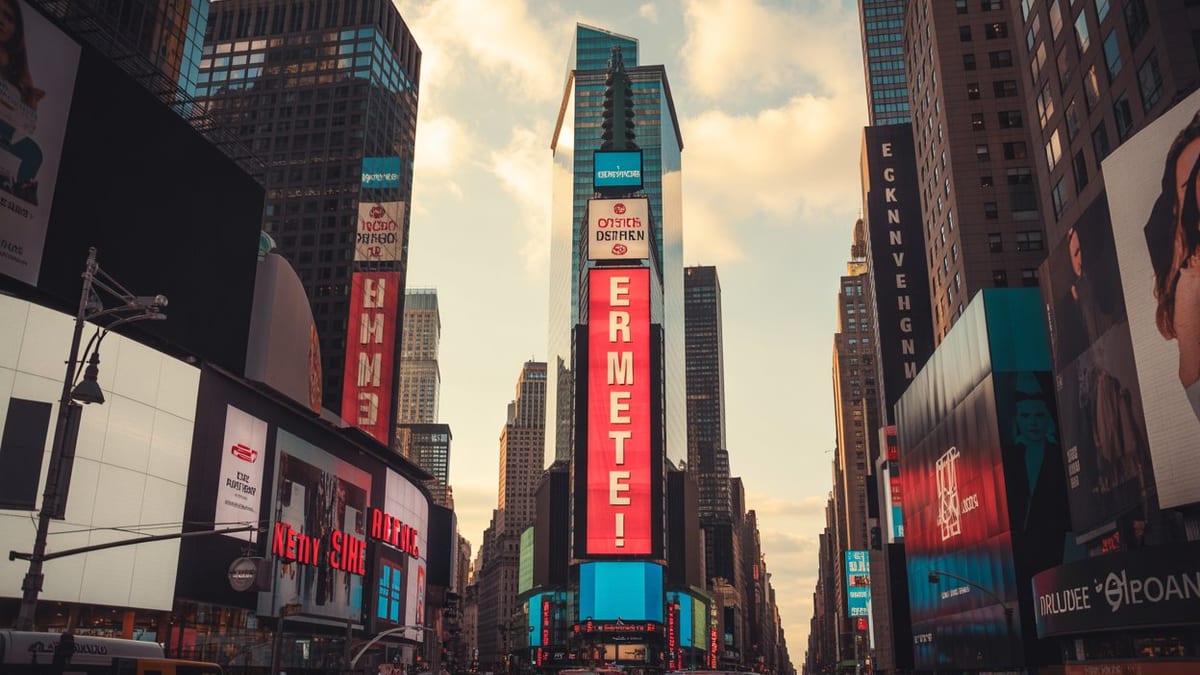
New York City has vaulted past Paris in a prominent global ranking of the world’s best cities, cementing its status as the top-ranked American metropolis and underscoring how strongly the city has rebounded in culture, tourism and economic strength since the pandemic.
Get the latest news straight to your inbox!
A reshuffled global top three
The latest World’s Best Cities report from Canadian-based Resonance Consultancy places London in first position worldwide, followed by New York City in second and Paris in third. The index evaluates the performance and perception of major urban centers across factors such as livability, visitor appeal, culture and economic opportunity, drawing on a mix of statistical indicators and large-scale opinion research.
New York’s climb to the number two spot marks a notable shift in the pecking order of global capitals. Previous editions of the ranking consistently placed Paris ahead of New York, particularly as the French capital leveraged its long-standing reputation for heritage, gastronomy and urban design to dominate perceptions of global attractiveness.
According to published coverage of the report, the latest edition concludes that New York has now edged ahead overall, even as Paris still outperforms on specific tourism-focused categories like landmark appeal and shopping. This change reflects how broader measures of “best city” status increasingly balance classic visitor appeal with economic dynamism, connectivity and quality-of-life indicators.
The result means New York is now the highest-ranked American city in the global index, a symbolic win in the ongoing competition among world metropolises to attract tourists, talent and investment.
How New York pulled ahead of Paris
Publicly available information on the methodology indicates that the World’s Best Cities ranking blends hard data on everything from air connectivity and employment to cultural venues and corporate presence with survey-based perceptions of cities’ livability and appeal. New York’s strong showing across this broad spectrum appears to have been decisive in lifting it above Paris.
Reports on the 2025 and 2026 editions highlight New York’s deep cultural infrastructure as a core advantage. The city scores near the top globally for theaters, concerts and museums, reinforcing its image as a place where cultural production and consumption run at an intense scale year-round. That cultural density, together with a strong calendar of festivals, exhibitions and major events, continues to fuel both tourism and the city’s wider brand.
Economic heft remains another pillar of New York’s ascent. Separate indices, such as global financial center rankings and economic output assessments, frequently place the city at or near the top worldwide, reflecting its role as a dominant hub for finance, media, technology and professional services. That economic profile feeds into the World’s Best Cities scoring on prosperity, business ecosystem and opportunity.
Observers also point to New York’s efforts to upgrade infrastructure, including major investments at key transport nodes and steady improvements in public-space design. While the city still wrestles with housing affordability, congestion and quality-of-life disparities across neighborhoods, the report’s composite scoring suggests that recent improvements have helped bolster its overall standing.
Paris retains its allure, but slips to third
For Paris, sliding to the third spot does not equate to a loss of global appeal. Coverage of the rankings notes that the French capital continues to dominate in categories linked directly to tourism, such as the concentration of iconic sights, architectural landmarks and high-end retail. Euromonitor and other tourism-focused indices have likewise described Paris as one of the world’s most attractive and visited destinations in recent years.
In the lead-up to and aftermath of the 2024 Olympic Games, Paris invested heavily in transport, riverfront redevelopment and neighborhood-scale urban improvements. These initiatives have burnished its image as a model of walkable, compact, “15-minute city” planning, and have contributed to higher scores in areas such as urban environment and quality of life.
However, broader global-city comparisons increasingly weigh economic diversity, corporate presence, demographic momentum and innovation capacity alongside pure visitor appeal. On some of these measures, New York’s larger scale and deeper corporate footprint give it an edge. Population trends and labor market metrics also show New York pulling in a wide mix of international talent, something that directly benefits its performance on surveys of opportunity and dynamism.
Analysts of the rankings suggest that Paris’s move from second to third place may therefore reflect changes in relative economic performance and perception more than any decline in its famed cultural cachet.
What the reshaped ranking means for U.S. urban competitiveness
New York’s rise above Paris has implications beyond civic bragging rights. For U.S. policymakers, destination marketers and economic development agencies, the result underscores how a diversified, globally connected metropolis can convert cultural strength and economic resilience into sustained gains in international perception.
New York is the only American city to appear in the very top tier of the World’s Best Cities list, although reports on the rankings show several other U.S. metros, such as San Francisco and Los Angeles, placing within the broader top 20 or 30. The gulf between New York and its domestic peers in global perception reinforces its role as the primary American gateway in the competition for tourists, students, entrepreneurs and corporate headquarters.
The elevated ranking could translate into tangible benefits. Travel-industry analyses frequently point out that high-profile positions in global city indices can influence route-planning by airlines, location decisions by multinational companies and international travelers’ bucket lists. For New York, already a major destination for overseas visitors, a reinforced “second-best city in the world” label is likely to feature prominently in future marketing campaigns.
At the same time, the result may sharpen debates about how other U.S. cities can improve their own standing. Investments in transit, public realm improvements, cultural infrastructure and sustainability are emerging as common threads among top-ranked global cities, suggesting a roadmap for American metros that aim to climb future lists.
Shifting measures of what makes a city “best”
The reshuffling of New York and Paris in the World’s Best Cities ranking also reflects evolving notions of what makes a city attractive. Earlier generations of “most beautiful” or “most visited” lists tended to focus on postcard views, museum counts or tourism volumes. New indices, such as Resonance’s, integrate these elements with data on social equity, economic opportunity, sustainability and even digital visibility on platforms like Instagram and TikTok.
According to summaries of the methodology, cities are assessed across themes that include livability, lovability and prosperity. That means a thriving art scene, strong job market and robust transit network can, in combination, outweigh a rival’s historical monuments or shopping districts when totals are tallied.
New York’s advantage, in this framework, lies in its breadth. It performs strongly in tourism but also in corporate presence, media reach, university ranking density and global air connectivity. Paris excels in heritage and visitor experience, but New York’s multi-dimensional strength appears to have been enough to push it higher in the composite score.
As more travelers, investors and migrants consult data-driven rankings to guide their decisions, the world’s leading cities face pressure to deliver not just iconic skylines and famous museums, but also inclusive growth, livable neighborhoods and resilient infrastructure. New York’s latest leap past Paris suggests that, at least for now, the American metropolis is setting the pace in that wider competition.