


More news on this day
New York City has edged past Paris in a prominent global ranking of the world’s most attractive cities, signaling a powerful rebound for the United States’ most visited urban destination and reshaping perceptions of where travelers, talent and investors are looking next.
Get the latest news straight to your inbox!
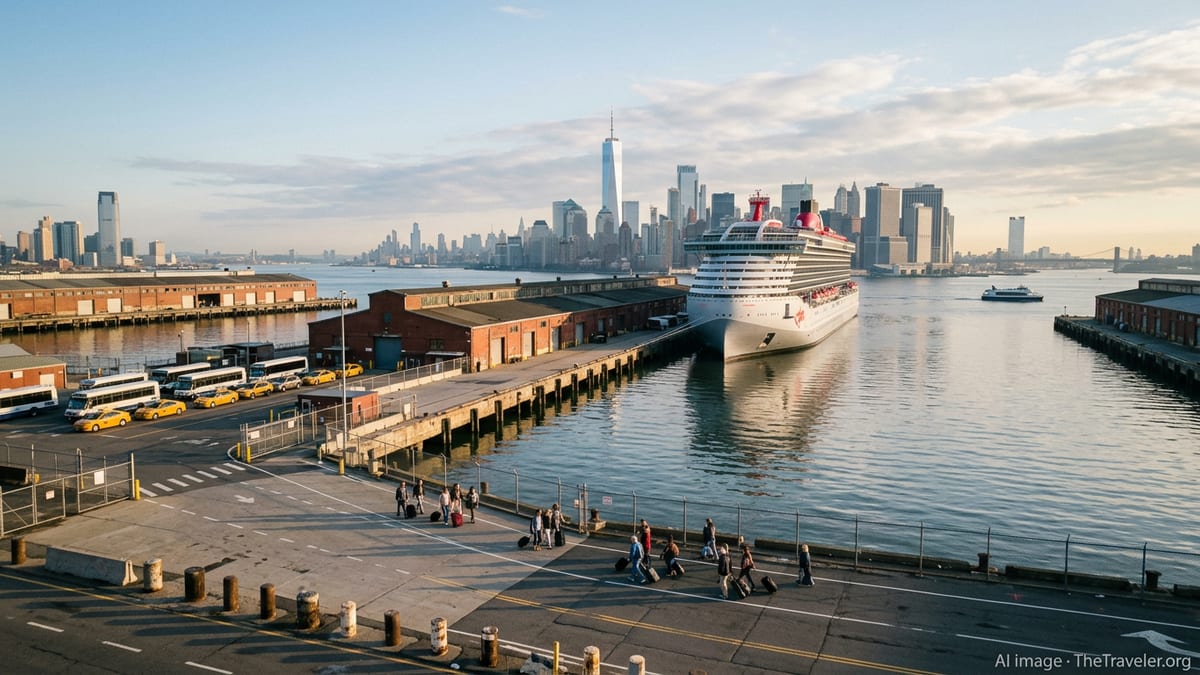
New Global Ranking Puts New York Ahead of Paris
New analysis of the 2025 World’s Best Cities report compiled by destination consultancy Resonance places New York City ahead of Paris for overall urban attractiveness, while London retains the top spot. The ranking evaluates 100 cities worldwide on tourism performance, economic strength, culture, quality of life and global connectivity, positioning New York as the leading city in the Americas and now ahead of its long-standing European rival.
The report highlights New York’s momentum as it passes Paris in the overall table, supported by projections of more than 60 million visitors in 2024 and sustained recovery in international air capacity. The city’s performance in both leisure and business travel, combined with its deep cultural offer and sizable resident wealth base, has strengthened its appeal in a crowded field of global contenders.
Paris continues to dominate several tourism-focused indices and recently topped Euromonitor International’s 2025 list of the world’s most “magnetic” city destinations. Yet in broader multi-criteria rankings that blend livability, investment, innovation and visitor appeal, New York is gaining the upper hand, reflecting a shift in how global urban desirability is measured.
Travel analysts note that different league tables use distinct metrics and methodologies. While Paris remains a benchmark for heritage travel and major events, the latest composite indices show New York consolidating its role as a diversified world city where tourism, finance, tech and culture intersect.
Tourism Surge Underscores New York’s Revival
New York’s climb in the attractiveness rankings is closely tied to its tourism rebound. Publicly available visitor data indicates that the city has recovered most of the international arrivals lost during the pandemic period, with total visitation trending back toward pre-2020 peaks. Large gateway airports, a dense hotel pipeline and strong demand for city breaks from North America and Europe have supported this trajectory.
High-profile cultural institutions, Broadway’s continued draw and a steady calendar of festivals and major sports events have also contributed to New York’s renewed pull. The World’s Best Cities analysis points to the city’s concentration of museums, galleries and performance venues as central to its competitive edge, alongside its reputation for nightlife and dining.
New York’s tourism appeal is increasingly underpinned by its role as a global business hub. The Global Financial Centres Index continues to place the city at or near the top of international rankings for financial services, reinforcing steady inflows of business travelers and corporate events. That combination of leisure and corporate demand provides a level of resilience that purely holiday-focused destinations can struggle to match.
Industry observers suggest that the reopening of key markets in Asia and Latin America could further benefit New York over the next two years. As long-haul air links expand and conference activity resumes at scale, the city’s profile as a default meeting point for multinational firms and global industries is expected to stay strong.
Why Paris Slips Behind in Broader Attractiveness Measures
Paris remains one of the most visited cities on the planet and continues to headline several tourism-specific rankings, particularly those focused on culture, heritage and infrastructure. Euromonitor’s latest Top 100 City Destinations report again places Paris at number one, citing strong performance in visitor numbers, transport, safety and sustainability.
However, in broader indices that aggregate economic competitiveness, innovation ecosystems, talent attraction and long-term liveability, Paris is facing stiffer competition. Urban research compiled by institutions such as IESE and Kearney shows Paris maintaining a high position but not matching New York’s scale in finance, private wealth and global corporate presence.
The 2025 Global Property Handbook from luxury brokerage BARNES, which tracks the most attractive cities for high-end real estate, illustrates this nuance. In that index Paris and New York both fall slightly in ranking compared with the previous year as emerging lifestyle capitals gain ground, yet New York’s deeper pool of ultra-high-net-worth residents and broader investment base underline its enduring magnetism.
Analysts point to factors such as housing affordability pressures, regulatory complexity and slower population growth as structural challenges for Paris. While the city benefited from the international attention of the 2024 Olympic and Paralympic Games and the reopening of major landmarks, these boosts are set against longer-term trends that favor larger, more diversified metropolitan economies.
What Makes New York So Attractive Right Now
The latest rankings emphasize that New York’s appeal is multifaceted. In addition to its established status as a financial capital, the city scores strongly on measures of cultural interaction, nightlife, gastronomy and perceived urban “brand.” Its skyline and neighborhoods are consistently featured in global media, social networks and popular culture, reinforcing its image as a place where new ideas and lifestyles are tested first.
Demographic depth also plays a role. Studies of global wealth distribution identify New York as the world’s wealthiest city in terms of resident high-net-worth individuals, offering a solid foundation for luxury retail, high-end hospitality and real estate. At the same time, a vast student population, immigrant communities and a dense start-up scene feed a sense of dynamism that many travelers now seek in urban destinations.
Infrastructure investments in recent years, from airport terminal upgrades to expanded bike lanes and public space improvements, have gradually reshaped the visitor experience. While New York still faces criticism around cost, congestion and quality-of-life issues, the direction of travel in many indices suggests incremental gains in areas such as safety perception, mobility and environmental performance.
Observers note that travelers are increasingly weighing authenticity, diversity and access to local culture alongside traditional sightseeing. In that context, New York’s mosaic of boroughs and micro-neighborhoods, each with a distinct identity, is becoming a competitive strength, particularly for repeat visitors looking beyond classic postcard views.
Implications for US Tourism and Urban Competition
New York’s rise above Paris in a flagship global attractiveness ranking carries symbolic weight for the wider United States travel sector. For international audiences, the city often functions as the primary gateway to the country’s broader tourism offer, from national parks and small cities to beach and ski destinations. A stronger global profile for New York can therefore support marketing efforts across multiple states and regions.
The shift also illustrates how the criteria used to assess cities are changing. Rather than focusing purely on arrival numbers or hotel capacity, composite indices now track a blend of sustainability, innovation, talent retention and social cohesion. By those measures, large US cities that can pair economic scale with lifestyle improvements may gain more traction in future global tables.
For Paris and other European capitals, New York’s latest result underlines the intensity of competition for high-spending visitors, skilled workers and international students. While Paris continues to dominate in heritage and style, the next phase of urban rivalry is likely to center on climate resilience, digital infrastructure and how well cities manage overtourism pressures.
Travel planners and industry stakeholders are already watching the next editions of major rankings to see whether New York can sustain its lead over Paris and close the gap with London. With new cultural venues opening in Manhattan and Brooklyn, large-scale waterfront developments under way and a busy calendar of events, the city is aiming to hold its place near the top of the global urban hierarchy for years to come.