


More news on this day
New Zealand has joined a growing list of governments urging citizens to reconsider non-essential international trips in 2026, as soaring airfares, conflict-driven flight disruptions and fuel volatility reshape the global tourism landscape.
Get the latest news straight to your inbox!
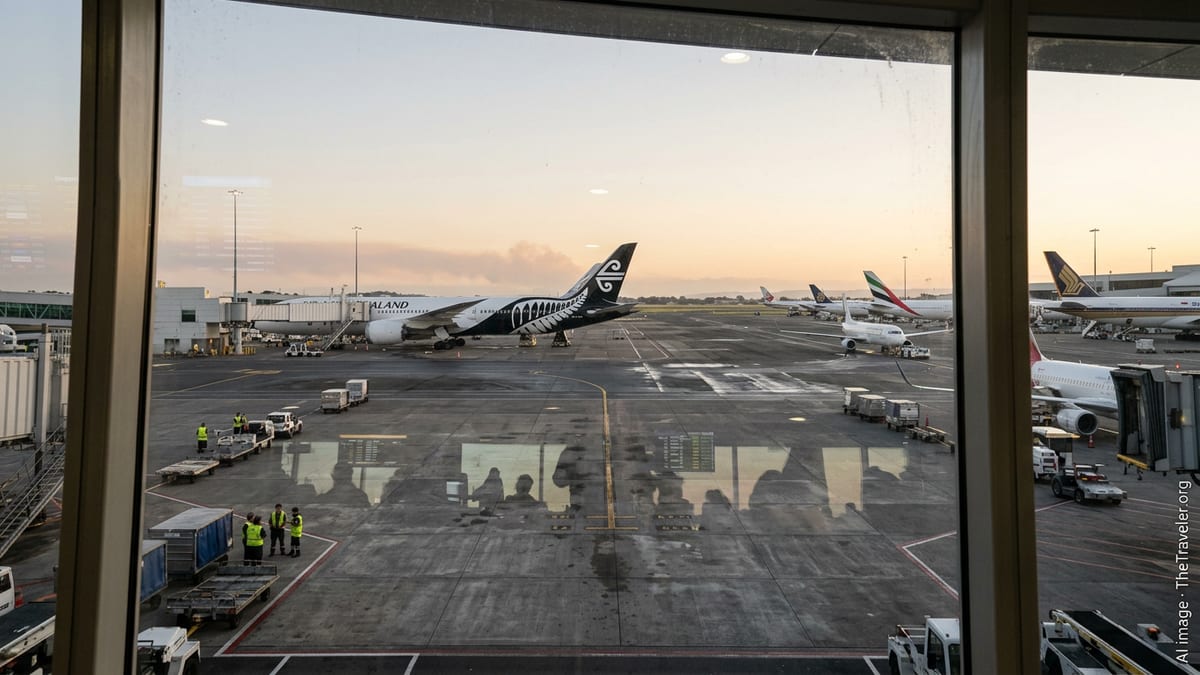
Wellington Tightens Travel Advice Amid Mounting Risks
Updated guidance on New Zealand’s official SafeTravel platform in early 2026 highlights a more cautious stance toward long-haul leisure trips, particularly those requiring transit through volatile regions. Publicly available information shows language that places greater emphasis on disruption risks, extended journey times and higher costs for international itineraries. While the advice falls short of a blanket ban, it frames overseas holidays as increasingly unpredictable undertakings.
The move brings New Zealand into closer alignment with partners such as Canada, the United States, Australia, the United Kingdom and India, where advisories and consular notices now routinely flag complex routing, potential delays and rapidly changing entry or transit conditions. For many travelers from the Southern Hemisphere, reaching Europe, North America or parts of Asia typically involves at least one long-haul sector through hubs that have been at the heart of recent aviation turbulence.
New Zealand agencies have also drawn attention to rising border and processing charges at home, which are embedded in ticket prices and add to already elevated fares. Alongside warnings about the operational situation overseas, the combined message to would-be tourists is that 2026 travel plans may demand more money, more time and a higher tolerance for last-minute change.
Middle East Airspace Closures Ripple Across Global Networks
Conflict in the Middle East since late February 2026 has triggered some of the most extensive flight disruptions since the pandemic era, according to published coverage from aviation analysts and industry groups. Airspace closures and restrictions over Iran, Iraq, Israel, Qatar and several Gulf states have forced carriers to cancel services outright or divert aircraft over longer, less direct routes.
Reports on flight-tracking data and airline schedules show that major hubs such as Dubai, Abu Dhabi and Doha have faced either temporary shutdowns or sharply curtailed operations as hostilities escalated. Thousands of flights across Europe–Asia and Australia–Europe corridors have been canceled or rerouted, with some long-haul journeys extended by three to five hours due to detours over Africa, the Caucasus or the Indian Ocean.
Because these Gulf airports function as vital connectors between continents, disruption has reached far beyond the immediate region. Travelers departing from or heading to New Zealand, Australia, India and Southeast Asia often rely on Middle Eastern carriers for one-stop links to Europe and North America. The ongoing instability in those corridors has therefore become a central factor in government travel messaging for 2026, reinforcing calls to carefully assess transit routes and contingency options before departure.
Soaring Airfares and Volatile Fuel Costs Squeeze Leisure Trips
The latest analyses from aviation consultancies and trade bodies indicate that ticket prices on many international routes remain significantly higher than pre-pandemic levels, even where headline forecasts had suggested a period of relative stability. Travel industry reports in 2026 describe a market in which demand is resilient but capacity is constrained by aircraft delivery delays, maintenance bottlenecks and crew shortages, keeping load factors high and limiting opportunities for discounting.
Overlaying these structural pressures, the conflict-related shock to oil markets has driven renewed volatility in jet fuel prices. Industry data repeatedly underline that fuel can account for around a quarter or more of an airline’s operating costs, meaning sudden price swings are quickly reflected in fares. As carriers are forced to fly longer routes around closed airspace, additional fuel burn compounds the financial strain and further erodes the economics of marginal services.
For New Zealanders and other long-haul travelers, the effects are most visible on popular intercontinental leisure routes to Europe and North America. Travel media coverage notes that return economy tickets on some peak-season itineraries are now priced at levels that would previously have bought premium cabin seats, particularly when purchased close to departure. Governments caution that expectations of last-minute bargains in 2026 are increasingly out of step with market realities.
Canada, US, UK, Australia and India Reframe Travel Expectations
Across North America, Europe and the Asia Pacific, governments have been revising their public-facing travel advice to reflect a more fragile aviation environment. Updated notices from Canada, the United States, the United Kingdom, Australia and India highlight a combination of factors: conflict-related airspace closures, staffing and infrastructure challenges at airports, and the risk of cascading delays when major hubs experience disruption.
Publicly available guidance from these countries increasingly encourages travelers to build in extra time for connections, monitor airline communications closely and consider the financial implications of sudden itinerary changes. Some advisories also draw attention to the limitations of travel insurance in scenarios involving war, civil unrest or government-imposed airspace restrictions, urging citizens to read policy fine print before committing to expensive trips.
New Zealand’s latest posture sits within this broader shift. Rather than focusing solely on security risks at specific destinations, the emerging consensus among these governments is that the global aviation system itself is under unusual stress in 2026. That framing supports a more cautious narrative about non-essential long-haul tourism, particularly where alternatives such as domestic or short-haul regional travel are available.
Tourism Industry Faces a Patchy and Uneven Recovery
While international arrivals are recovering in many regions, the path is far from uniform. Tourism bodies and airline associations have reported that destinations heavily reliant on long-haul visitors, especially those connected via Middle Eastern hubs, are seeing bookings affected by the combination of higher costs and uncertainty. Travel trade publications describe a landscape in which demand can shift rapidly away from itineraries perceived as complex or risky.
New Zealand’s own tourism sector has been working through this new reality. Businesses that depend on long-haul visitors from Europe and North America face a more volatile outlook, while operators oriented toward domestic travelers or shorter regional routes may prove more resilient. Similar patterns are visible in Canada and Australia, where regional and intracontinental trips have partially offset softer interest in far-flung destinations requiring multiple long-haul legs.
The broader implication of the 2026 disruptions is that global tourism flows may become more concentrated along routes and regions perceived as reliable and affordable. Government advisories that explicitly highlight cost, routing complexity and the potential for sudden disruption are reinforcing that shift. For now, travelers contemplating big international journeys out of New Zealand and its peer countries are being encouraged to approach those plans with more research, more flexibility and a clearer understanding of the risks than in previous years.