


More news on this day
TUI Cruises’ Gulf program has been thrown into turmoil as the ongoing Strait of Hormuz crisis strands Mein Schiff 4 in Abu Dhabi and Mein Schiff 5 in Doha, underscoring how Iran’s showdown with Western powers is rippling through key tourism hubs in the United Arab Emirates and Qatar.
Get the latest news straight to your inbox!
Gulf Cruise Season Unravels as Security Crisis Deepens
The 2026 Strait of Hormuz crisis has transformed what was meant to be a routine winter cruise season in the Arabian Gulf into an open-ended shutdown for TUI Cruises and other major lines. Publicly available information shows that cruise itineraries requiring transit through the narrow waterway have been suspended as war-risk levels surged and commercial shipping traffic slowed to a near standstill.
Reports from maritime trackers and industry outlets indicate that at least six large cruise ships from several brands remain confined to ports around the Gulf after Iran’s military actions and subsequent Western responses disrupted normal passage. Mein Schiff 4 is laid up in Abu Dhabi, while Mein Schiff 5 is berthed in Doha, unable to safely reposition out of the region.
The timing is particularly sensitive for operators that had planned to relocate ships to Europe for the summer season. TUI Cruises had scheduled Mein Schiff 4 and Mein Schiff 5 for Eastern Mediterranean and Northern Europe deployments, but those plans now depend on when, and under what conditions, the Strait of Hormuz can be considered safe for passenger traffic again.
While some cargo vessels have navigated the corridor under military escort, recent incidents involving missile and drone attacks on merchant shipping have reinforced cautious guidance from insurers and flag states. In this environment, cruise companies face strong pressure to avoid exposing guests and crew to elevated operational risk.
TUI Cruises’ Mein Schiff Fleet Caught on the Wrong Side of the Strait
Prior to the latest escalation, TUI’s Mein Schiff 4 and Mein Schiff 5 had already completed at least one transit of the Strait of Hormuz during their repositioning voyages, according to ship-tracking data and previous trade coverage. Those movements took place during a brief window when risk assessments suggested that escorted passages might be feasible.
The situation changed sharply as the Iran conflict intensified and Iran’s assertive posture in and around the strait prompted new warnings about military activity, sea mines and potential attacks on commercial vessels. As the risk picture deteriorated, TUI Cruises joined other operators in cancelling remaining Gulf sailings and freezing further repositioning plans that would depend on a safe exit route.
Mein Schiff 4, which had been operating regional cruises from UAE ports, is now tied up in Abu Dhabi, a city that has become an inadvertent parking lot for stranded ships. Mein Schiff 5, similarly blocked from heading toward the open ocean, remains in Doha after earlier voyages serving Qatar’s growing cruise market.
These immobilized vessels highlight how quickly a geopolitical flashpoint can upend finely tuned deployment plans. Each ship represents thousands of lower-berth beds that were expected to generate revenue in other regions within weeks. Instead, they are idle in the Gulf, awaiting clarity on a maritime corridor that has turned into a global chokepoint.
Iran’s Central Role and the Expanding Reach of the Crisis
Iran’s role in the current disruption is central. The crisis grew out of the broader conflict involving Iran and Western powers, with Tehran leveraging its geographic control over much of the Strait of Hormuz to influence global shipping patterns. As missile launches, drone strikes and naval confrontations mounted, the perceived risk to commercial vessels increased dramatically.
Analysts note that although the primary targets have been tankers and container ships, the collateral effect on passenger shipping is profound. Cruise lines are especially sensitive to security alerts, because they must consider not only the safety of crews and assets but also the expectations of leisure travelers who have limited tolerance for perceived danger.
The result is that Iran, even without directly targeting cruise vessels, has become a decisive factor in the fate of ships like Mein Schiff 4 and Mein Schiff 5. Industry observers point out that any sustainable recovery of Gulf cruising will depend on a durable reduction in threat levels and clearer navigation protocols agreed with Iranian authorities and international partners.
For now, Iran’s stance and the patchwork of naval escorts and advisories have produced a climate of uncertainty. That uncertainty is cascading through itineraries, forcing lines to recast deployment plans, reroute ships and, in some cases, pull back from the region entirely for the coming seasons.
United Arab Emirates and Qatar Face Tourism and Port Disruptions
The grounding of Gulf cruise operations has immediate implications for regional tourism economies, particularly in the United Arab Emirates and Qatar. Both have invested heavily in cruise infrastructure, berths and terminal facilities, expecting growing flows of winter sun passengers and repositioning voyages.
In Abu Dhabi, the presence of Mein Schiff 4 and other laid-up vessels underscores how those expectations have been upended. Hotel bookings linked to cruise turnarounds, shore excursion revenue and local spending from transit calls have all been sharply reduced by the suspension of sailings. Dubai, another major homeport in the region, is seeing similar impacts as cruise calls disappear from schedules.
Qatar, which has worked to position Doha as a boutique gateway for Gulf itineraries, is grappling with the same pattern. With Mein Schiff 5 and other ships remaining pier-side, the anticipated flow of cruise visitors to museums, cultural sites and shopping districts has been replaced by a prolonged lull. Port operators remain active handling other cargoes where permitted, but the absence of cruise turnover is widely visible along the waterfront.
Travel trade reporting suggests that local authorities and tourism boards are focusing on near-term mitigation, promoting domestic and regional travel and exploring ways to support impacted suppliers. However, many in the sector see the ultimate recovery of cruise tourism as tied directly to developments in the Strait of Hormuz and broader regional security talks.
Passengers, Crew and Future Bookings Caught in Limbo
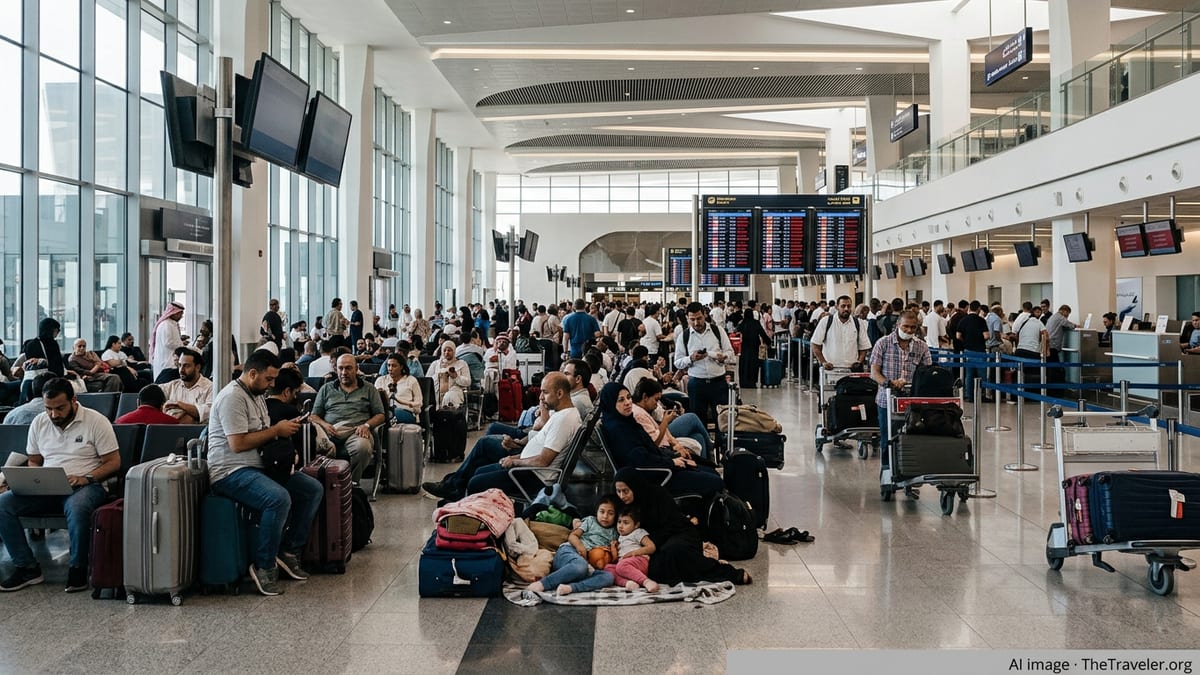
For passengers and crew, the Strait of Hormuz crisis has translated into a mix of disrupted plans, extended stays and ongoing uncertainty. Earlier in the conflict, thousands of passengers were reported to be stranded on multiple ships around the Gulf before gradual disembarkation and repatriation arrangements could be organized.
Most current voyages have now been cancelled, with cruise lines working through rebooking and refund policies. Travelers who had planned late-season Gulf cruises or repositioning sailings into the Mediterranean are instead being offered future cruise credits or alternative itineraries, depending on the operator’s policies.
Crew members aboard ships such as Mein Schiff 4 and Mein Schiff 5 face a different set of challenges. Extended layups can mean contract extensions in port rather than at sea, altered rotation schedules and a focus on maintenance and hotel operations rather than traditional cruise programming. While ships alongside in Abu Dhabi and Doha benefit from relatively stable port conditions, the prolonged immobility still strains onboard logistics and morale.
Forward bookings for Gulf cruises are already under review as lines await clearer guidance on navigational safety and insurance coverage through the Strait of Hormuz. Many itineraries for the 2026 to 2027 winter season may be restructured around alternative regions, continuing a broader realignment that began with previous flashpoints in the Red Sea and Eastern Mediterranean.
Industry Watches for Ceasefire Gains and Safe Passage Frameworks
Across the cruise and wider maritime industries, attention is now fixed on diplomatic efforts and security negotiations that could eventually normalize traffic through the Strait of Hormuz. Recent reports on naval escort operations and tentative ceasefires have offered some hope that a structured regime for safe commercial passage might emerge.
However, shipping advisories continue to describe the risk environment as highly volatile, citing recent attacks on tankers and cargo ships as evidence that the situation could deteriorate quickly. Insurers and flag states remain cautious, keeping war-risk premiums elevated and recommending extreme prudence for nonessential voyages.
Cruise operators are therefore proceeding on the assumption that the Gulf will remain a complex operating environment in the short term. Strategic planning now centers on diversified deployment, with an emphasis on regions where geopolitical and security conditions allow more predictable itineraries.
For TUI Cruises, the eventual movements of Mein Schiff 4 and Mein Schiff 5 will be closely watched as a bellwether of the Gulf’s reopening to leisure travel. Until those ships can safely clear the Strait of Hormuz and rejoin global deployment patterns, the crisis will remain an acute reminder of how maritime chokepoints can reshape the map for international tourism.