


More news on this day
Central Malaysia’s role on the country’s main north–south railway has been strengthened with the completion of upgrade works on the Gemas–Mentakab section, a key stretch that promises more reliable journeys for passengers and freight moving between Johor Bahru, Kuala Lumpur and the east coast hinterland.
Get the latest news straight to your inbox!
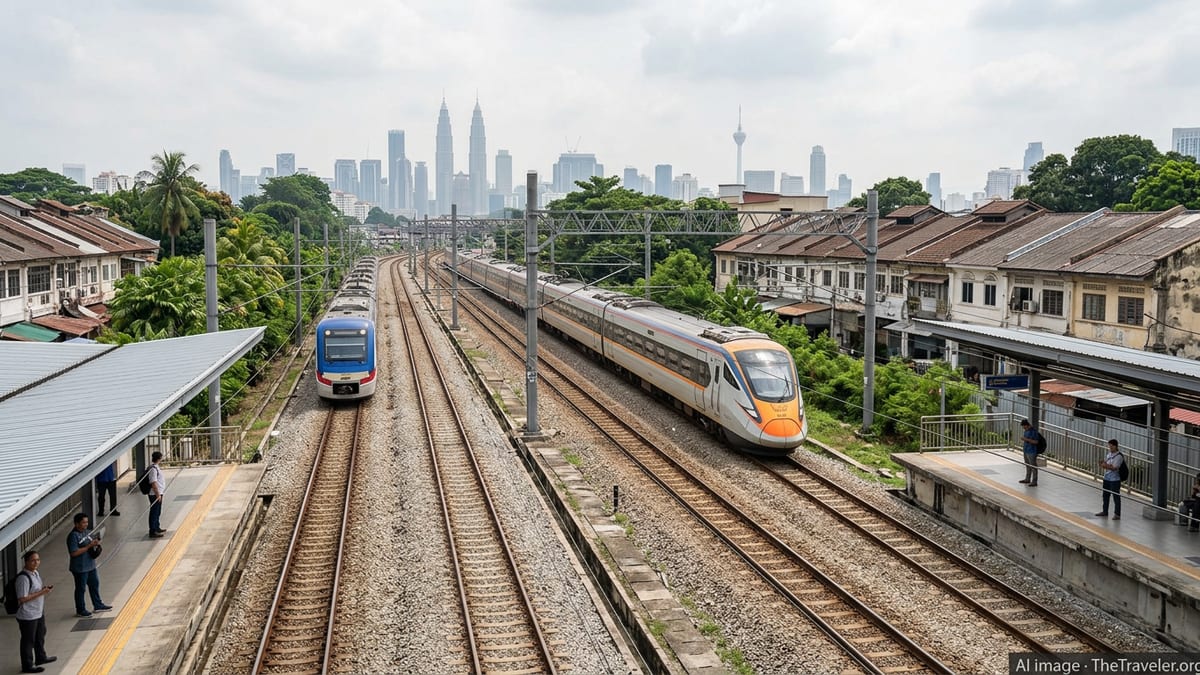
Strategic Link in Malaysia’s Rail Spine
The Gemas–Mentakab corridor sits on the central portion of Malaysia’s historic main line, carrying long-distance KTM Intercity and shuttle services across Negeri Sembilan and Pahang. Publicly available information indicates that rehabilitation and upgrading works between Gemas and Mentakab have now reached a major milestone, with one of the principal work packages declared complete in late July 2026.
The project involves extensive renewal of rails, sleepers and ballast, improvements to bridges and culverts, and associated civil engineering to stabilise embankments and cuttings. According to recent coverage from Malaysian news outlets, the works are designed to increase permitted speeds, reduce delays caused by infrastructure failures and allow heavier trains to operate more efficiently across the central states.
The upgraded stretch also improves connectivity with the fully electrified and double-tracked southern main line between Gemas and Johor Bahru, which entered full operation in December 2025. With the southern corridor modernised and the central section now substantially refreshed, rail operators gain a more resilient backbone linking Johor Bahru with the Klang Valley and beyond.
Mentakab’s position as a junction for routes towards the east coast widens the impact. The renewed tracks are expected to support smoother cross-country services that link central Peninsular Malaysia with Kuantan and other Pahang destinations, a particular benefit for domestic tourism and regional logistics.
Part of a Wider Wave of Rail Upgrades
The Gemas–Mentakab works form one element of a broader national effort to modernise the KTM network. In the south, the Gemas–Johor Bahru Electrified Double-Tracking Project has completed Malaysia’s electrified west coast spine, enabling KTM ETS services to extend from Gemas all the way to Johor Bahru and shortening end-to-end journey times along the peninsula.
In the Klang Valley, the ongoing Klang Valley Double Track Phase 2 programme is rehabilitating busy commuter corridors between Abdullah Hukum and Port Klang as well as Salak Selatan and Seremban. Transport sector statements and local media reports note that these works are scheduled to run through the latter half of the 2020s and are already prompting timetable changes for KTM Komuter services to accommodate construction.
Together, these initiatives are reshaping how passengers move around Peninsular Malaysia. The modern electrified southern route, strengthened central main line and overhauled commuter tracks are progressively replacing ageing infrastructure that has served since colonial times. For travellers, this translates into quieter rides, fewer disruptions and a growing network of high-frequency services.
Industry analyses of Malaysia’s transport sector highlight rail as a key pillar in national plans to ease highway congestion, cut emissions and support more balanced regional growth. Investment in central sections such as Gemas–Mentakab is presented as essential to unlocking the full benefits of flagship projects near the major cities.
Implications for Passengers and Tourism
For day-to-day travellers, the most immediate impact of the Gemas–Mentakab upgrade is expected in reliability and comfort rather than dramatic speed increases. Newly laid track and refurbished structures should reduce temporary speed restrictions and unplanned maintenance closures, allowing timetables to stabilise and connections to be more predictable.
Tourism stakeholders in Negeri Sembilan and Pahang are watching closely. Towns such as Bahau, Triang and Mentakab itself sit within reach of forest reserves, highland retreats and small-town cultural attractions that remain comparatively under the radar for international visitors. Improved punctuality and smoother rides may help travel agencies and independent travellers alike to build more rail-based itineraries through central Malaysia.
With the Gemas–Johor Bahru electrified line already drawing interest among rail enthusiasts and leisure travellers, the refreshed central main line adds another piece to a longer scenic journey. Travellers can now combine fast electric trains in the south with classic locomotive-hauled services through the interior, creating varied routes between Johor Bahru, Kuala Lumpur and the east coast.
For communities along the line, better rail connections often translate into easier access to jobs and education in larger centres. While precise service patterns will depend on operational decisions by the operator, the upgraded corridor increases the potential for more frequent and dependable stopping services.
Freight and Regional Development Prospects
The central main line has long been an important freight artery, linking industrial hubs in the Klang Valley and southern Johor with inland towns and agricultural regions. Engineers involved in similar Malaysian rail projects have previously highlighted that renewed track and bridge structures can support heavier axle loads, allowing longer and more efficient freight trains.
On the Gemas–Mentakab section, the upgraded permanent way is expected to improve running conditions for container, plantation and bulk commodity traffic. Smoother, higher-quality track reduces wear on wagons and locomotives, while more reliable infrastructure gives logistics planners greater confidence to shift freight from road to rail on suitable corridors.
Regional economic studies frequently underline the role of mid-corridor towns such as Mentakab as logistics nodes that can capture added value from passing trade. Enhanced rail capacity and reliability support the development of rail-linked industrial parks and distribution centres, particularly where land remains more affordable than in the Klang Valley.
For central Malaysia’s smaller communities, the prospect of more dependable freight movements can also improve supply chains for everyday goods, from construction materials to consumer products, as operators make fuller use of the renewed infrastructure.
Next Steps on the Central Main Line
With the current upgrade package between Gemas and Mentakab reported as complete, attention is likely to turn to fine-tuning operations and integrating the rehabilitated section with neighbouring projects. Testing and monitoring during the early months of full operation will be critical to validate ride quality, track geometry and structure performance under regular traffic.
Observers of Malaysia’s rail modernisation note that further enhancements, such as signalling upgrades or future electrification on parts of the central and east coast network, remain under consideration in national planning documents. Any such investments would build on the foundation provided by the newly renewed track between Gemas and Mentakab.
For now, the completion of this central stretch marks a visible step forward for rail travellers crossing peninsular Malaysia’s interior. It signals that, alongside high-profile projects in the major cities and at the country’s borders, the quieter but crucial main line through the heart of the peninsula is also moving into a new era of more dependable service.