


More news on this day
Slovenia’s high-profile Divača–Koper rail expansion, a flagship upgrade linking the Port of Koper with the European hinterland, has remained broadly within its planned budget envelope, according to the latest European-level audit of the project’s finances.
Get the latest news straight to your inbox!
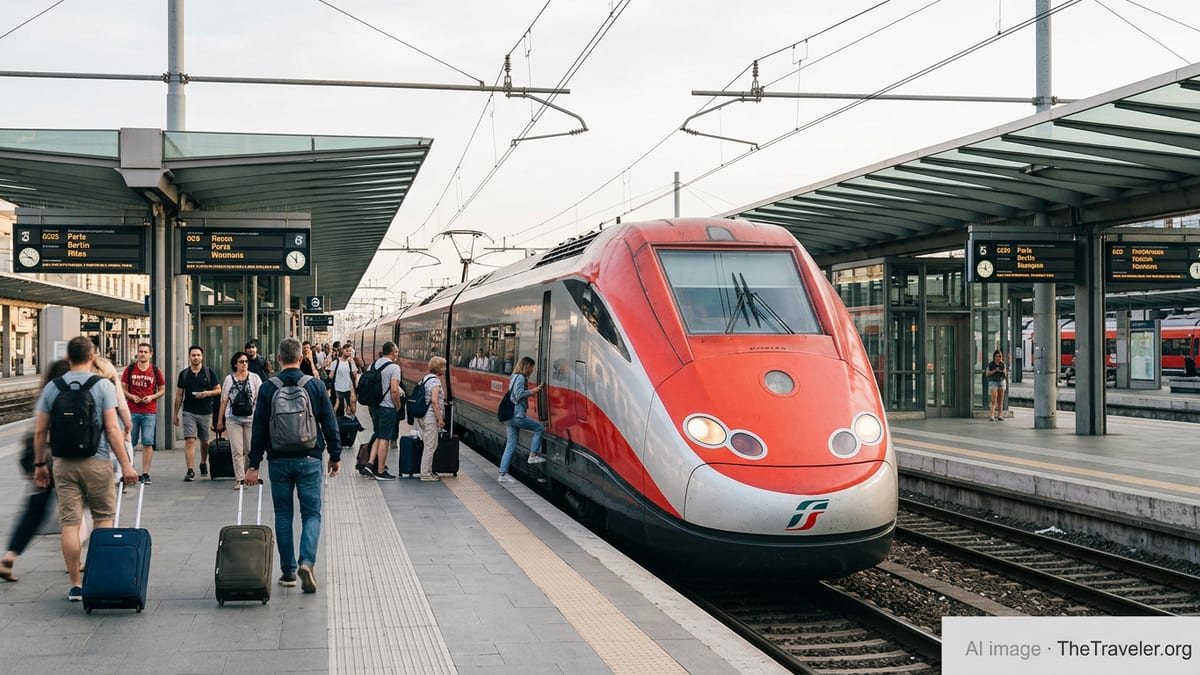
Audit confirms disciplined spending on strategic rail link
The European review examined funding flows and cost trends for the Divača–Koper rail scheme, a major capacity upgrade along one of Slovenia’s most important freight corridors. Publicly available information indicates that the auditors found no systemic cost overruns that would push the project beyond its agreed financial framework, a notable outcome in a sector where large transport infrastructure often exceeds initial estimates.
The project is one of the largest rail infrastructure investments in Slovenia and has drawn close scrutiny since its inception, particularly because it combines national resources with substantial European support. The latest findings suggest that contractual commitments, indexation clauses and contingency allocations have so far functioned as intended, keeping the project’s total value aligned with the financial plan despite inflationary pressures and construction-market volatility across Europe.
According to published coverage of the audit, spending controls and staged procurement appear to have played a key role in maintaining budget discipline. The review points to the use of competitive tendering for major construction and supervision contracts, as well as systematic monitoring of cash flows, as factors that helped prevent substantial deviations from the approved cost envelope.
While the auditors highlight some risks related to remaining works and market conditions, they describe these as manageable within the existing financial structure. The conclusion that the project remains within budget is therefore interpreted as a vote of confidence in both the financial governance of the scheme and the broader oversight of EU-supported rail investments in the region.
Port of Koper and wider EU network stand to benefit
The Divača–Koper project is designed to transform rail access to the Port of Koper, one of the Adriatic’s key freight gateways serving Central and Eastern Europe. The existing single-track line has long been considered a bottleneck, constraining train paths and limiting the port’s ability to expand rail-based hinterland services.
The new infrastructure, centred on a modern alignment between Divača and Koper, is expected to significantly increase line capacity and allow more frequent and heavier freight trains, alongside faster passenger services. Project documentation made available through European institutions indicates that the upgraded route shortens the rail distance between the two points and supports higher operating speeds, with a corresponding reduction in travel time for both cargo and passengers.
For the Port of Koper, budget stability on the rail project reduces uncertainty around future capacity planning and commercial agreements. Market analyses cited in European policy papers have long stressed that reliable, high-capacity rail access is critical if the port is to compete effectively with North Adriatic and Northern European rivals, particularly for containerised and automotive traffic bound for landlocked EU member states.
The project also fits into the wider Trans-European Transport Network, serving as a key link in the Mediterranean and Baltic–Adriatic corridors. By keeping the scheme’s finances on track, the audit findings reduce the risk of knock-on delays or funding gaps that could undermine coordinated upgrades along these strategic routes.
Public scrutiny shaped financing and oversight
The Divača–Koper line has been at the centre of political and public debate in Slovenia for more than a decade, including parliamentary discussions and national referendums focused on the legal and financial framework for the second track. These debates brought questions about cost estimates, governance, and potential overruns into the national spotlight long before construction entered full swing.
According to national planning documents and explanatory reports, the financing structure combines state contributions, European co-financing and borrowing from international financial institutions. The participation of European bodies has required compliance with common procurement rules, environmental safeguards and transparency standards, putting the project under a higher level of formal scrutiny than many purely domestic schemes.
Published material on the audit process indicates that this layered oversight has continued throughout implementation, with regular reporting on contract values, awarded tenders and disbursement schedules. The latest European review effectively consolidates this information into an external assessment, giving policymakers and investors an updated picture of how the project is performing financially.
The confirmation that the scheme remains within budget is likely to feature prominently in domestic discussions about future transport investments. Observers have noted that the Divača–Koper experience could serve as a reference point for subsequent large-scale rail or road projects, especially in terms of funding models and risk allocation between the state, EU mechanisms and potential private partners.
Cost control challenges in a high-risk sector
Rail megaprojects across Europe frequently confront cost escalation driven by complex geology, demanding technical standards and fluctuating construction prices. The Divača–Koper upgrade is no exception, involving extensive tunnelling and viaduct construction through challenging terrain, all while maintaining traffic flows on the existing line.
Background studies on European transport infrastructure show that large rail schemes have historically been prone to exceeding initial budgets, in part because of optimistic early-stage assumptions and difficulties in forecasting market conditions over long implementation periods. Against this backdrop, the European audit’s finding that the Divača–Koper project is still tracking within its planned financial envelope stands out as a relatively strong performance.
Project documentation suggests that several design adjustments and risk-management measures were adopted during preparation and early construction to reduce potential overruns. These include more detailed geotechnical investigations, phased works scheduling and efforts to align technical solutions with standardised European requirements where possible, helping to avoid costly redesigns at later stages.
Even with these measures, the auditors acknowledge that residual risks remain, particularly as the project moves through its most construction-intensive phase. However, the assessment that current contingencies and funding commitments are sufficient signals that any additional pressures are expected to be absorbed without breaching the agreed budget ceiling.
Implications for travelers and freight operators
Once completed, the Divača–Koper rail project is expected to deliver tangible benefits for both travelers and freight operators along the corridor. Journey times between the hinterland and the coast should fall significantly, with more frequent services and improved reliability compared with the existing single-track line.
For international passengers, the upgraded route will provide a faster, more comfortable rail option linking Slovenia’s coastal region with inland hubs and onward connections into neighbouring countries. For freight customers, higher capacity and improved gradients are anticipated to support longer and heavier trains, lowering unit transport costs and making rail more competitive with road haulage for key commodity flows.
From a broader travel and sustainability perspective, European policy papers highlight the project as part of a wider shift from road to rail on key transnational corridors. By demonstrating that a technically demanding rail scheme can be delivered while remaining within its financial plan, the Divača–Koper case may encourage further investment in similar projects aimed at reducing congestion, cutting emissions and strengthening cross-border connectivity.
The latest audit findings therefore carry significance beyond Slovenia’s borders. For travelers, logistics companies and policymakers across the region, they signal that one of the Adriatic’s most important new rail links is advancing with its finances under control, reinforcing confidence in the route’s future role within Europe’s evolving transport map.