


More news on this day
Heavy monsoon showers in Mumbai have led to widespread disruption at Chhatrapati Shivaji Maharaj International Airport, delaying multiple flights on busy routes from the United Arab Emirates and stranding hundreds of passengers on both sides of the Arabian Sea.
Get the latest news straight to your inbox!
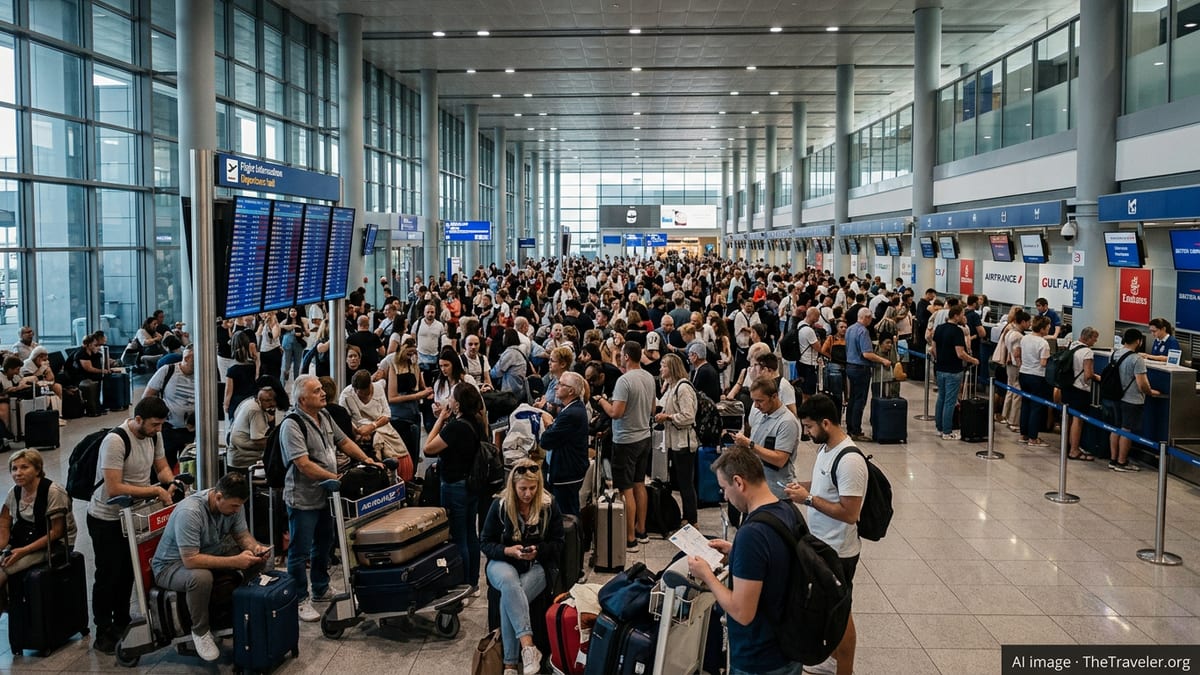
Operations at Mumbai airport under pressure
Publicly available information from Indian media indicates that flight operations at Mumbai’s Chhatrapati Shivaji Maharaj International Airport have been heavily affected since the weekend, with runway activity periodically curtailed as intense rainfall and gusty winds reduced visibility. Local coverage describes a combination of cancellations, diversions and long delays as airlines attempt to manage congested airspace and backlogs on the ground.
Reports indicate that dozens of services were delayed through Sunday and into Monday as bands of heavy rain moved across the city. Some arrivals were placed in holding patterns over the Arabian Sea, while others were diverted to alternate airports such as Ahmedabad, Hyderabad, Bengaluru and Vadodara when weather conditions deteriorated around Mumbai.
Indian media reports also note that more than 200 flights have faced delays of varying lengths, with some departures pushed back by several hours as airlines and airport operators worked through accumulated congestion. Short suspensions of runway operations because of poor visibility and strong crosswinds have further contributed to the knock-on impact across the domestic and international network.
The airport, one of India’s busiest international gateways, routinely experiences strain during the peak monsoon period, but this latest episode has coincided with strong travel demand on regional routes, including those linking Mumbai with major cities in the United Arab Emirates.
UAE–Mumbai routes see cascading delays
According to published schedules and airline updates monitored on Monday, services between the UAE and Mumbai have been among those caught up in the disruption. Flights from Dubai, Abu Dhabi and Sharjah headed for Mumbai have encountered arrival delays, with some aircraft forced to circle or divert when weather conditions worsened around the city.
Publicly available tracking data shows that delayed arrivals have, in turn, affected return departures from Mumbai back to the UAE, as aircraft and crew rotated later than planned. On certain rotations, departure times from Mumbai slipped by one to three hours, with corresponding delays on the onward legs to Gulf hubs.
Travel advisories issued by major Indian carriers highlight that flights “to and from Mumbai” are experiencing weather related disruption, directly impacting popular UAE–India city pairs. Low-cost and full-service operators serving the Gulf market have urged passengers in public posts to reconfirm timings and allow extra time to reach the airport because surface transport in Mumbai has also been hampered by waterlogging and slow-moving traffic.
Industry observers note that strong demand on UAE–Mumbai routes during the current travel season leaves airlines with limited slack in their schedules. When disruptions of this scale occur at a hub like Mumbai, recovery can take several rotations, prolonging inconvenience for travelers even after weather conditions begin to improve.
Red alert and wider transport disruptions in Mumbai
According to coverage from Indian outlets, the India Meteorological Department has issued a red alert for Mumbai and surrounding districts, warning of very heavy to extremely heavy rainfall over a 24-hour period. The advisory has coincided with intense downpours across the Mumbai metropolitan region, affecting not only air traffic but also suburban rail services and road connectivity.
Local news reports describe waterlogging on key arterial roads, slower highway traffic and intermittent disruptions to sections of the city’s suburban rail network. These parallel challenges have complicated access to the airport for departing passengers and ground crews, adding another layer of difficulty to efforts to stabilize flight schedules.
With the monsoon expected to remain active in the coming days, Indian meteorological forecasts point to the possibility of further heavy spells. Travel industry analysts say that while Mumbai’s aviation infrastructure is accustomed to seasonal rain, prolonged intense episodes over consecutive days can strain runway capacity, air traffic management and ground handling, particularly during morning and evening peaks.
Airlines operating on the UAE–Mumbai corridor are therefore likely to retain schedule buffers and continue issuing rolling advisories until clearer weather patterns emerge. Passengers connecting onward from Mumbai to other Indian cities may face further disruptions if missed connections require rebooking on later services.
Airlines respond with advisories and waivers
Publicly available information from airline communication channels shows that multiple Indian carriers, including those with large operations linking Mumbai to Gulf destinations, have issued travel advisories in response to the weather related disruption. These notices urge customers to monitor real-time flight status and factor in additional travel time to reach the airport.
Several airlines have also publicized limited flexibility measures, such as allowing passengers booked on affected flights to change to alternative dates or services without change fees, subject to fare conditions and seat availability. Such measures are aimed at easing congestion during the most affected periods and providing options for travelers with non-essential or flexible itineraries.
Carriers have additionally highlighted that seat availability on later flights is constrained because of strong seasonal demand, especially on routes between Mumbai and Gulf hubs like Dubai and Abu Dhabi. As a result, same-day rebooking is not always possible, and some passengers may need to consider travel on subsequent days if conditions do not improve quickly.
Airport and airline operations teams are reported to be coordinating to prioritize flights with large numbers of connecting passengers and those operating to long-haul destinations. However, given the volume of traffic at Mumbai, industry commentators suggest that delays on popular regional routes, including services to and from the UAE, may persist even after the heaviest rain subsides.
What travelers between the UAE and Mumbai should expect
Based on current reporting and forecast conditions, travelers planning to fly between the UAE and Mumbai over the next one to two days should be prepared for the possibility of continued disruption, especially in the form of rolling delays rather than complete cancellations. Even when flight operations remain technically open, intermittent bursts of heavy rain can trigger spacing restrictions on arrivals and departures, slowing throughput.
Passengers already holding tickets are being encouraged, through publicly posted advisories, to stay in close contact with airlines via official apps and customer channels for updated departure and arrival times. Travel planners note that those with critical connections or time-sensitive commitments may want to consider building in extra buffer time in case of last-minute schedule changes.
At the same time, aviation analysts point out that Mumbai airport has generally demonstrated the ability to recover from weather disruptions within 24 to 48 hours, provided extreme conditions do not persist. Once rainfall intensity eases and visibility improves, the immediate backlog of delayed flights can gradually be cleared, allowing international services, including those from the UAE, to return closer to their normal operating patterns.
Until then, passengers on the busy UAE–Mumbai corridor are likely to face a combination of longer journey times, crowded terminals and occasional diversions as airlines navigate one of the most intense monsoon spells of the season so far.