


More news on this day
A Canadian National Railway freight train derailed near Montreal, triggering a Transportation Safety Board of Canada investigation and raising fresh concerns about rail safety in densely populated corridors, according to publicly available information released on July 6.
Get the latest news straight to your inbox!
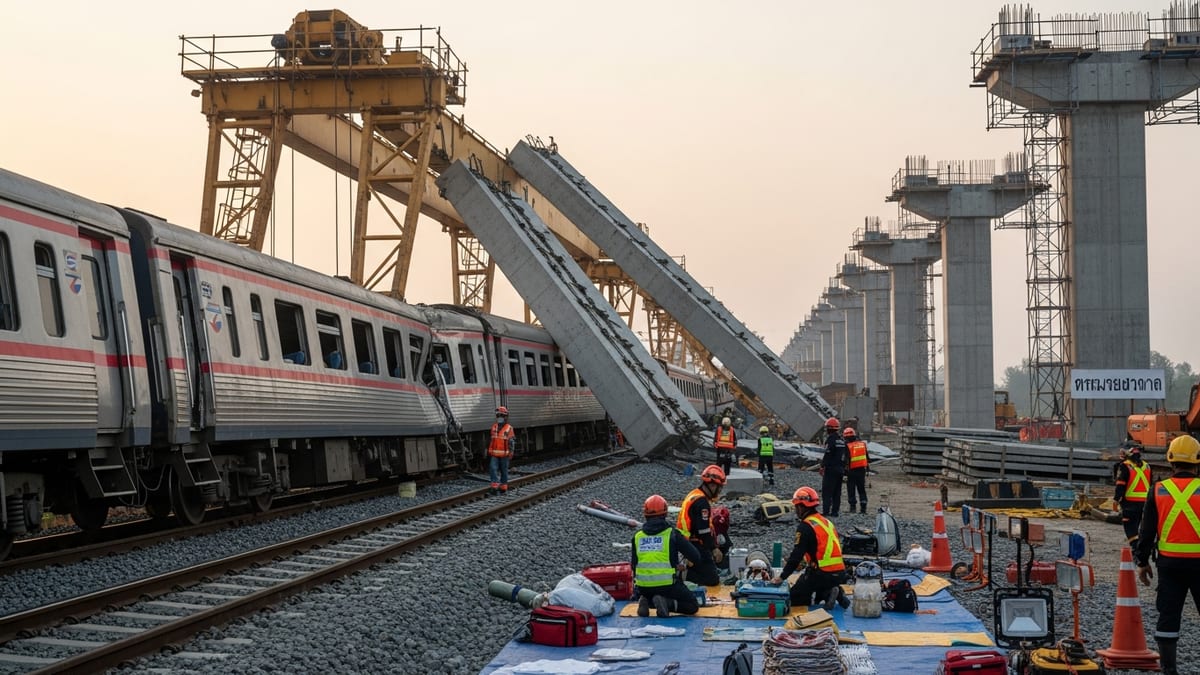
Freight train derails in Repentigny north of Montreal
Published coverage indicates that about 45 cars of a CN Rail freight train left the tracks on Sunday in Repentigny, a community northeast of downtown Montreal along the St. Lawrence River. The derailment occurred near the Le Gardeur district, close to residential streets and local road crossings.
Reports indicate that no injuries were reported among train crew or nearby residents. Local police and fire services implemented temporary perimeters and detours while railway crews and emergency responders assessed the scene, but there were no wider evacuation orders for the surrounding neighbourhoods.
According to information cited in national and local outlets, several of the derailed cars had previously carried diesel fuel but were empty at the time of the incident. Early reports state that no leaks of hazardous materials were detected and that environmental monitoring of the site was initiated as a precaution.
CN Rail has indicated through public statements that it is working to clear the wreckage and restore normal operations on the affected line. Rail traffic through the area has been disrupted, with freight movements temporarily rerouted while track repairs and inspections continue.
Transportation Safety Board opens rail occurrence investigation
The Transportation Safety Board of Canada, the independent federal agency that examines air, marine, rail and pipeline occurrences, has launched a rail transportation safety investigation into the Repentigny derailment. The case will be handled under the Board’s standard rail occurrence process, which focuses on identifying causal and contributing factors rather than assigning fault or liability.
Publicly available information from the Board’s recent rail files shows that investigators typically begin by documenting the accident site, examining track conditions, train handling data and the condition of rolling stock and signalling systems. They may also review data from locomotive event recorders and relevant inspection and maintenance records from the railway.
The Board’s online summaries of past rail investigations in Quebec and elsewhere in Canada indicate that it can take months before a full investigation report is released. In some cases, the agency issues safety advisories or letters during the process if it identifies pressing risks that warrant immediate attention from regulators or railways.
Once the Repentigny investigation progresses, the Board may publish a brief occurrence description or a more detailed report, depending on the complexity and safety implications of the derailment. Any findings or recommendations would be directed at reducing the likelihood and consequences of similar events in the future.
Urban rail safety concerns resurface around Montreal corridor
The CN Rail derailment near Montreal has renewed public attention on the volume of freight traffic moving through urban and suburban communities in the region. Published coverage of past Transportation Safety Board work highlights that the Montreal area has seen a number of rail incidents over the years involving both freight and passenger operations, although most have not resulted in serious injuries.
Recent Board summaries reference investigations into derailments and operational occurrences in Quebec that were linked to factors such as track conditions, equipment components and operating practices. While each case is unique, these findings have repeatedly underscored the importance of robust maintenance programs, effective inspection regimes and clear communication protocols between railway personnel.
Advocates for rail safety often point to the potential consequences when long freight consists move close to homes, businesses and critical infrastructure. Even when, as in Repentigny, no hazardous materials are released and no one is hurt, disruptions to local mobility and concerns about what could have happened tend to intensify calls for stronger safeguards in busy rail corridors.
Municipal officials in communities along the Montreal rail network have in the past cited Transportation Safety Board findings when pressing for upgrades such as improved crossing protection, better land use planning around rail lines and stronger emergency preparedness measures. The latest derailment is likely to add weight to those discussions as the investigation unfolds.
Focus turns to track conditions, train handling and equipment
While the cause of the Repentigny derailment has not yet been established, previous Transportation Safety Board reports on other CN Rail occurrences offer a sense of the technical issues investigators typically examine. Past investigations into freight train derailments in Quebec and Ontario have cited factors including localized track defects, rail stress and buckling, equipment component failures and train handling under demanding operating conditions.
Board findings from other grain and mixed-freight derailments in Canada have drawn attention to the way heavy, long trains can amplify forces on curves, grades and older infrastructure. Investigators have often looked closely at how track geometry, ballast condition and recent maintenance work interact with seasonal temperature swings that can affect rail alignment.
Equipment is another key focus area. In earlier cases, investigators have scrutinized couplers, wheelsets, brake systems and tank car integrity, especially when dangerous goods are involved. Even when cars that once carried fuel or chemicals are empty, Board documentation notes that their condition and securement remain important to preventing secondary damage or spills if a train leaves the tracks.
Operational data, including speed, throttle settings and brake applications, typically help investigators understand how a train was being handled in the moments leading up to a derailment. If issues related to procedures, training or workload emerge, these can lead to broader recommendations that apply beyond a single line or railway.
Next steps for cleanup, service recovery and public transparency
In the short term, CN Rail is concentrating on clearing the derailed equipment, repairing infrastructure and restoring service through the Repentigny area. Reports indicate that crews have been deployed to re-rail cars where possible, cut and remove damaged rolling stock and replace affected sections of track and ballast.
Cleanup efforts also include monitoring for potential environmental impacts along the right of way. Even in the absence of an identified spill, standard practice described in past Transportation Safety Board material and railway guidelines includes soil inspection and, if needed, removal of contaminated material, as well as checks on nearby drainage and waterways.
Once the immediate recovery is complete, attention is expected to shift more fully to the findings of the Transportation Safety Board inquiry and any follow up actions from regulators and the railway. Past cases show that the Board’s recommendations, while not binding, often influence changes in railway operating rules, maintenance standards and government oversight frameworks.
Residents along the Montreal area rail corridor are likely to watch closely for updates on the investigation and any safety measures that emerge. The Repentigny derailment, with its combination of visible disruption and fortunate absence of injuries, is poised to become a reference point in ongoing debates about how Canada balances the efficiency of its freight rail network with the safety expectations of the communities it serves.