


More news on this day
Extreme heat across the Northeast has triggered a cascading meltdown on New Jersey Transit’s rail network, with widespread cancellations, lengthy delays and mounting commuter frustration just as the July 4th holiday rush gets underway.
Get the latest news straight to your inbox!
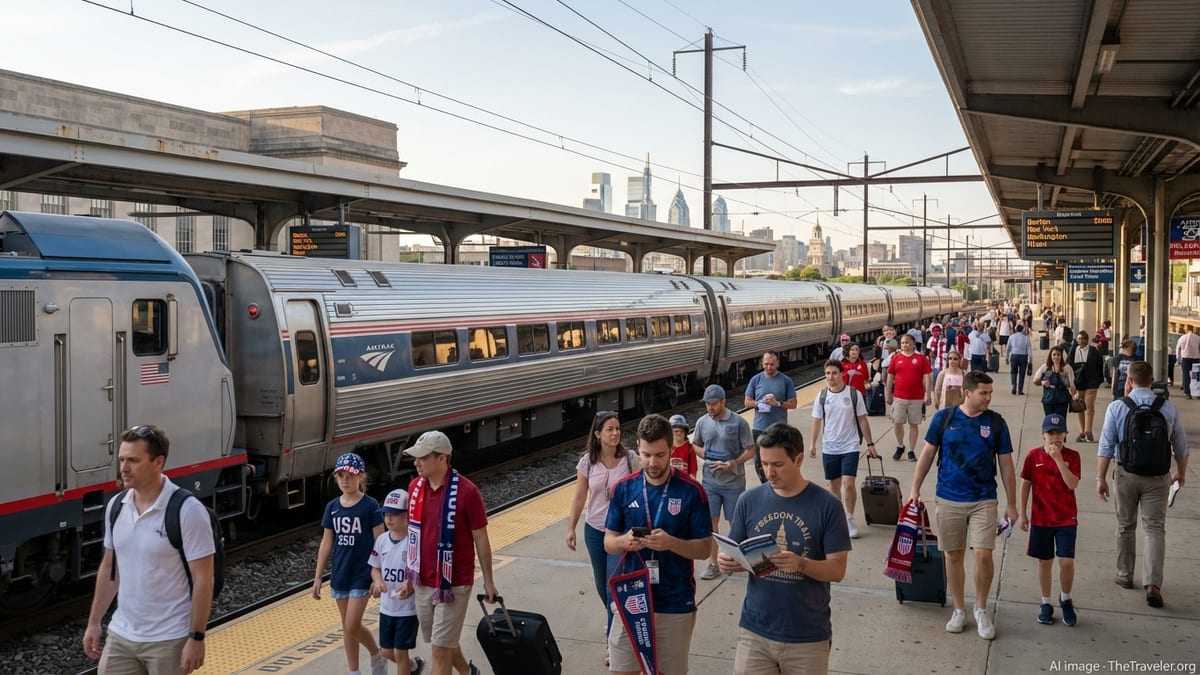
Heat wave exposes vulnerabilities in regional rail network
Publicly available information shows that NJ Transit rail service has been operating with delays of up to an hour and cancellations of selected trains since midweek, as temperatures climbed into the upper 90s and beyond across New Jersey and the New York metropolitan area. Service alerts from the agency indicate that equipment issues associated with the extreme heat are forcing trains to operate at reduced speeds, cutting capacity and extending travel times at the height of the evening rush.
Coverage from regional outlets describes electric trains slowed by heat-related stress on overhead power systems, tracks and rolling stock. In some cases, trains were taken out of service entirely when on-board systems overheated, compounding congestion as remaining services struggled to absorb crowds. Passengers on already crowded Northeast Corridor and North Jersey Coast Line trains reported standing-room-only conditions and minimal air conditioning as multiple departures were removed from the schedule.
The disruptions have coincided with the lead-up to the Independence Day weekend, when NJ Transit typically adds extra “getaway” trains for beach and suburban destinations. This week, however, a portion of that additional capacity has been offset by unplanned cancellations, undercutting the agency’s effort to manage an expected spike in leisure travel.
Systemwide delays, cancellations and diverted trains
According to NJ Transit’s online travel alerts, rail customers on Thursday and Friday have faced systemwide delays and intermittent cancellations across several lines, including the Northeast Corridor, Morris & Essex, Gladstone Branch and Montclair-Boonton routes. In North Jersey, a disabled train near Newark Broad Street further snarled operations, temporarily suspending service on three lines and forcing a series of rollover delays as crews worked to clear equipment and reset schedules.
Published coverage indicates that, at the height of the disruption, NJ Transit urged rail customers to consider alternate ways of getting home if possible. Rail tickets were cross-honored on NJ Transit and private-carrier buses, on PATH at Newark Penn Station, Hoboken and 33rd Street in Manhattan, and on certain ferry routes, as the agency tried to relieve pressure on the most heavily affected rail corridors.
On the Morris & Essex Lines, Midtown Direct trains that normally run directly into New York Penn Station were temporarily diverted to Hoboken, requiring riders to transfer to PATH or ferries to complete their journey into Manhattan. While this diversion is a standard contingency during infrastructure disruptions, heat-related slow orders and crowding at transfer points turned routine commutes into multi-leg odysseys lasting several hours for some riders.
Even after suspended lines resumed, NJ Transit cautioned that residual delays and additional cancellations were likely through Friday evening, noting in public advisories that extreme temperatures could continue to affect train performance and schedule reliability through the holiday.
Commuter frustration flares alongside the temperatures
For many riders, the latest heat-induced service problems have intensified longstanding frustrations with reliability on one of the nation’s busiest commuter rail systems. Social media feeds and commuter forums filled with accounts of missed connections, packed platforms and unclear information as departure boards at New York Penn Station and Hoboken cycled through delay and cancellation notices throughout the evening peak.
Regular riders described leaving work early to catch trains that never arrived, or watching multiple scheduled departures disappear from the board while crowds swelled on concourses. Some recounted being instructed to board one train, only to be told to disembark minutes later because the equipment would not be operating, adding confusion to already stressful commutes in sweltering conditions.
These experiences follow months of recurring disruptions related to infrastructure work, overhead wire problems and disabled trains on shared tracks used by both NJ Transit and Amtrak. Publicly available board materials and recent performance summaries from the agency highlight persistent challenges with equipment reliability and weather-related incidents, suggesting that the current heat wave is amplifying systemic strains rather than creating them in isolation.
Holiday travel plans upended across New Jersey
The timing of the rail meltdown has been particularly disruptive for travelers heading to and from shore communities and suburban destinations for the July 4th weekend. NJ Transit had previously promoted early-getaway rail options and special holiday timetables, but the combination of planned schedule adjustments and unplanned heat-related outages has made it more difficult for riders to predict when and how they will reach their destinations.
Reports indicate that some shore-bound passengers opted to switch to buses or drive after monitoring a steady stream of rail alerts and cancellation notices. Others attempted to travel earlier in the day to avoid the hottest hours when speed restrictions and equipment failures were most likely, crowding normally quieter off-peak trains.
Travelers heading to Newark Liberty International Airport also faced knock-on effects, as delays on the Northeast Corridor line complicated connections with the separate airport rail link. With airlines already advising passengers to arrive early for holiday flights, extended trip times on NJ Transit added another layer of uncertainty for those relying on rail to reach the terminals.
Calls grow for heat resilience and clearer communication
The latest episode has renewed discussion about the resilience of the region’s rail infrastructure in an era of more frequent and intense heat waves. Railroad operators across the Northeast, including Amtrak and other commuter agencies, routinely implement heat-related speed restrictions to protect tracks and equipment. However, the scale and persistence of NJ Transit’s delays during this week’s heat wave have prompted questions from riders and transportation advocates about whether enough has been invested in modernizing rolling stock and power systems for extreme weather.
According to NJ Transit’s recent planning and board documents, the agency is pursuing large-scale capital projects, including new bridges and upgraded signal systems, aimed at improving reliability and capacity. Yet many of these upgrades are still years from full completion, leaving current commuters to contend with the limitations of aging infrastructure when temperatures spike.
Communication has emerged as another flashpoint. While NJ Transit has expanded its use of mobile apps, social media feeds and station announcements to push real-time alerts, riders frequently report that information arrives late or lacks specific guidance about alternative routes. During this week’s disruptions, some passengers described monitoring multiple channels simultaneously to piece together the fastest option home, only to find that conditions on the ground had already shifted.
As the heat wave continues into the holiday weekend, publicly available alerts from NJ Transit continue to warn of potential delays and equipment issues, advising riders to allow extra travel time and monitor service updates before heading to stations. For thousands of New Jersey commuters and visitors, the episode has underscored how quickly extreme weather can turn routine trips into ordeals when rail systems are operating on the edge of their capacity.