


The New Jersey Performing Arts Center in Newark is one of the region’s premier venues, hosting everything from New Jersey Symphony concerts and Broadway tours to big-name comedians and dance companies. With that prestige can come sticker shock, especially when you start clicking through premium seats for a popular Saturday night show. The good news: if you understand how NJPAC is laid out and how its pricing typically works, you can land excellent seats without paying top-tier prices. This guide walks you through real-world strategies, from choosing the right section to timing your purchase and trimming the add-on costs that sneak onto your bill.
Get the latest updates straight to your inbox!
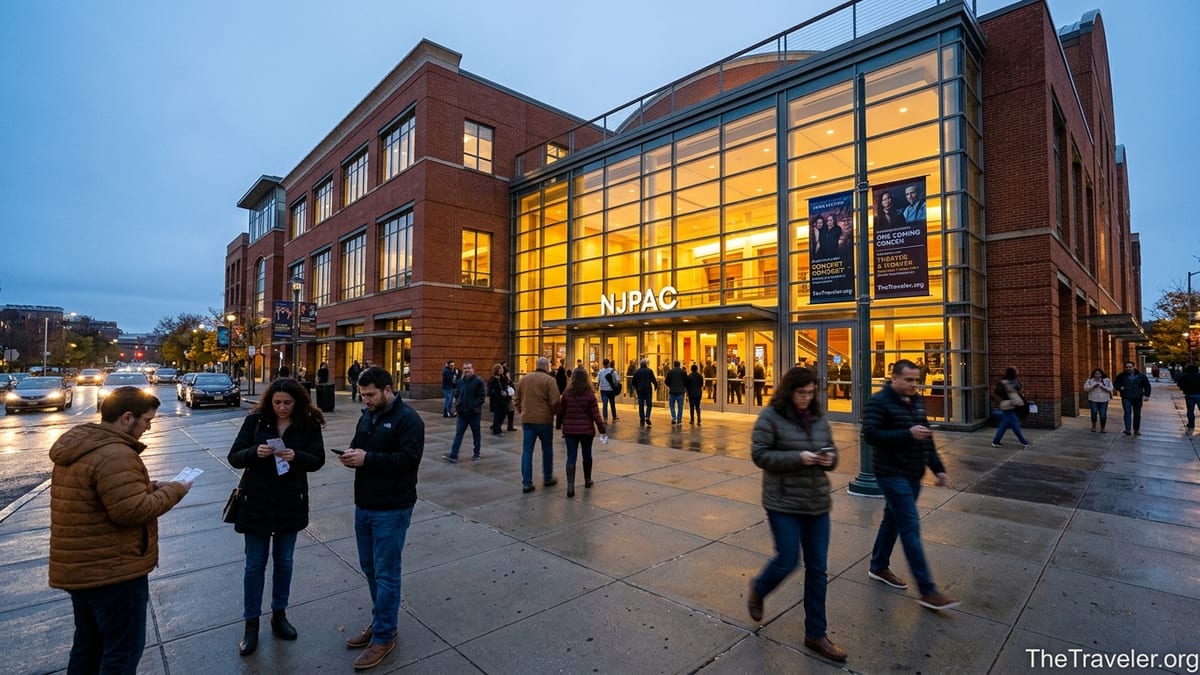
Understanding NJPAC’s Layout Before You Buy
Before you worry about price, it helps to know what you are actually buying. NJPAC’s main Prudential Hall is a classic multi-level theater with an orchestra level close to the stage, a mid-level tier (often labeled as grand tier or mezzanine), and an upper balcony. The exact labels on the seating chart can vary slightly by event presenter, but the concept is the same: the lower you are and the more centered you are, the higher the base price is likely to be. For a touring Broadway show or a headline comedian, you might see the first 10 to 15 rows of the orchestra center priced in the highest category, with prices stepping down as you move back or to the sides.
Because NJPAC works with multiple presenters and ticketing partners, you will usually find a color-coded seat map when you go to buy, either through NJPAC’s own site or a primary ticketing platform such as Ticketmaster. On a typical Saturday New Jersey Symphony program, for example, the orchestra center might be designated as the top price zone, the rear orchestra and front mezzanine or grand tier slightly cheaper, and the upper balcony the value section. Study that map for a moment before clicking on anything: small price differences can translate into noticeable changes in view or comfort.
Another key factor is that NJPAC hosts several performance spaces, including Prudential Hall and the more intimate Victoria Theater. A “row L, center” seat in Prudential Hall feels very different from row L in a smaller hall. Always confirm which venue your event is in, and then open the specific seating chart for that hall rather than assuming all NJPAC shows share the same layout.
If you are not familiar with the venue at all, it can help to look up photos of Prudential Hall’s interior in addition to the schematic seating chart. Photos will give you a sense of how steep the balcony is, how far back the last rows sit, and whether overhangs affect the rear orchestra. Even a quick glance at audience snapshots from recent concerts can translate abstract seat numbers into a more concrete mental picture of what your view might be like.
Where the Value Seats Usually Are
At NJPAC, like in most major performing arts centers, there are certain “sweet spot” locations where you get most of the viewing and listening benefits of premium sections without the highest price. For symphony concerts or dance, that sweet spot is often the mid-orchestra or lower mezzanine. As a real-world example, if a Saturday-night orchestra center seat in row F is selling for around 150 dollars, you might find seats in row P or R of the same center block for closer to 90–110 dollars for the same performance. You are only a few meters farther back, but you have saved a substantial amount per ticket.
Side orchestra can also offer surprisingly strong value. For a comedy show where being close to the performer matters, you might see orchestra center row G priced at a premium level, while orchestra left or right in the same row is 20–30 dollars cheaper. Unless the event uses extensive side-stage screens or sets, the view from those slight angles is very similar. If you are buying four tickets for a family outing, that difference can easily cover your parking or a pre-show drink.
For big vocalists, jazz, or amplified pop acts, the front of the mezzanine or grand tier is often an excellent compromise. You gain more of a “whole stage” view without being pushed all the way to the back wall. On some event maps, you will see that the first two or three rows of the mezzanine are classed in the same or a slightly lower price band than mid-orchestra. If the orchestra is already heavily picked over, a front mezzanine seat at 85 dollars can feel like a much better deal than an extreme side orchestra seat at 95 dollars.
Balcony seats at NJPAC are typically the budget option. For certain events such as children’s shows, dance recitals, or where your main goal is simply to be in the room, upper balcony center can be a smart way to bring the cost down. You might see balcony center tickets in the 40–60 dollar range for events where orchestra center is priced two or even three times higher. Just be mindful that the very back rows of the balcony are noticeably far from the stage; if you have flexibility, aim for the first five or six rows of the balcony center block rather than the last ones by the aisle doors.
How Pricing and Fees Actually Work
NJPAC uses dynamic pricing for many popular events, meaning the ticket price changes as demand rises or falls. On a high-demand weekend show, the same orchestra seat that sold for 120 dollars early in the sales cycle might climb to 150 or more closer to showtime. Conversely, for a midweek performance that is not selling briskly, you may see prices hold steady or even drop slightly in certain sections as the date approaches. That is why checking prices a couple of times over a week, rather than buying impulsively at the first glance, can help you sense whether you are facing upward pressure or a stable market.
Service fees are the other major piece of the cost puzzle. When you purchase online through a major ticketing platform, you should expect per-ticket service charges and sometimes an order processing fee. For a 100 dollar seat, the combined fees can easily add 15–25 dollars per ticket. If you are buying four tickets, that might mean 60–100 dollars in fees alone, turning what looked like a 400 dollar cart into something closer to 500.
To keep these fees under control, check whether NJPAC’s box office offers reduced-fee options. Buying in person at the box office during business hours often carries smaller surcharges than buying online, especially if you are paying by card and not requesting shipping. If you live or work within reach of downtown Newark, a quick lunchtime visit to the box office can be worth it. Even reducing fees by 10 dollars per ticket on a pair of 120 dollar seats saves you 20 dollars, which is essentially your parking paid for the night.
Watch out as well for delivery method charges. Some sellers still add a small fee for mailing paper tickets or premium digital delivery. When “mobile entry” or print-at-home is available at no extra cost, choosing that option keeps a few more dollars in your pocket without affecting your seat location.
Smart Strategies for Picking Seats
Once you understand the general pricing layout, the next step is to apply some practical tactics. First, zoom all the way into the seating map and look for individual unsold seats in otherwise full rows. Those “orphans” often indicate that dynamic pricing has not yet caught up to demand in that tiny cluster. For example, you may notice a single seat in orchestra row K priced the same as seats in row N because it was left behind when a block sale cleared out the row. If you are attending solo, that kind of single can be a best-in-the-house deal.
Second, think carefully about what matters most to you: proximity, angle, or legroom. If you value legroom, you might deliberately select an aisle seat in the rear half of the orchestra instead of a tighter center seat closer to the stage. Many theaters, including NJPAC, tuck extra legroom on some aisle seats or near cross-aisles between sections. That could mean paying, for example, 85 dollars for an aisle in row T instead of 110 dollars in row L center, and actually being more physically comfortable for a long symphony.
For families with children, avoid the very first row of the balcony and the extreme sides if your kids are short. The balcony railing and the angle of the seating can make it hard for them to see when adults sit in front. Instead, look for seats a few rows back in the center section, where the rake of the seats improves sightlines. The price difference between front and mid balcony is usually minimal, so it is better to optimize for view rather than obsess over being in the first possible row.
If you or someone in your party has mobility or sensory considerations, call NJPAC Ticket Services before you purchase. The venue notes that guests with disabilities are encouraged to contact Ticket Services in advance to discuss accessible seating and other accommodations. In practice, that conversation can help you find seats near elevators, on step-free aisles, or in wheelchair-accessible locations that may not be obvious on the standard online map, often at the same price as nearby non-accessible seats.
Timing Your Purchase and Avoiding Overpaying
Timing can be as important as seat location when you are trying not to overspend. For blockbuster weekend shows with national tours or TV-famous comedians, buying early usually works in your favor. The initial price levels are often set conservatively, and as sections sell, the remaining seats are repriced upward. If you know, for instance, that a Saturday night concert at 8 p.m. during the winter holiday season will be popular, snapped up seats in your target section as soon as tickets go on sale or within the first week is generally wise.
On the other hand, for midweek events, lecture series, or programs aimed primarily at local audiences, prices can stay more stable. You might see a Wednesday evening performance where orchestra rear seats hover in the 60–75 dollar range for weeks. In such cases, waiting a bit may let you monitor sales. If you see large swaths of unsold seats a week before the show, you can buy then without much risk of a sudden surge.
Keep in mind that third-party resale sites list tickets at a mix of above- and below-face prices. If a given show is not sold out, those resale listings sometimes undercut the primary price in non-premium sections. For example, a balcony center seat that is 55 dollars plus fees at face value might appear on resale for 40–45 dollars if an earlier buyer’s plans changed. Always compare the final “checkout” totals, including fees, rather than just the headline ticket price when you decide whether a resale is truly cheaper.
If you live nearby and are flexible, you can sometimes take advantage of last-minute choices. Check same-day availability on the morning of a show; if there are still many unsold seats, especially for a Thursday or Sunday evening, you may see either modest price softening or at least the option to move into a better section for only a small premium compared with what you would have paid weeks earlier. The trade-off is that you give up the certainty of sitting in a specific row with a large group.
Parking, Transportation, and Other Hidden Costs
Controlling your total night-out cost at NJPAC means thinking beyond just the ticket face value. Parking is one of the biggest add-ons. The primary official option is the Military Park Garage, a three-level garage under Military Park directly across from the main entrance to NJPAC. Event parking there is typically set as a flat rate, often reported in the range of about 10 to 28 dollars depending on the night and event type. For a sold-out Saturday concert, pre-booked parking may sit near the top of that range.
Because the Military Park Garage is so close, it is also the most congested after a show. That convenience premium may mean sitting in your car for 20–30 minutes in a slow-moving line. To save money and time, many seasoned visitors look a few blocks farther out. Garages such as One Newark Center, Hahne & Co., or the Green Street Garage in downtown Newark are typically within a 5–10 minute walk of NJPAC and often advertise event rates a few dollars lower than Military Park on third-party parking apps. Reports of 11–16 dollar event prices at these alternatives are common for non-peak nights, which can shave a noticeable amount off your total bill.
If you are traveling from elsewhere in New Jersey or New York, consider using NJ Transit or PATH to Newark Penn Station and walking or taking a short rideshare to NJPAC. A round-trip rail fare plus a brief rideshare can cost less than paying for both a higher ticket and premium parking, especially for solo travelers or couples. For instance, two people coming from a nearby suburb might spend roughly 20–30 dollars total on off-peak rail and a short rideshare instead of 25 dollars to park plus highway tolls and gas.
Do not overlook food and drink as part of your budget. Buying a round of cocktails or craft beers in the lobby can easily add 30–40 dollars for two people. One money-saving tactic is to have a relaxed, moderately priced meal at one of the many restaurants in downtown Newark or the nearby Ironbound district before the show, then simply grab water or a single drink inside the venue. That way, most of your spending supports a local restaurant experience, and you avoid impulse purchases at lobby bars.
Real-World Booking Scenarios
To see how these strategies play out, imagine a couple planning to attend a Saturday evening jazz concert at Prudential Hall in autumn. When tickets first go on sale, they see orchestra center rows F through J priced around 145 dollars, rear orchestra around row T at 95 dollars, front mezzanine at 105 dollars, and balcony center at 65 dollars. Rather than reflexively choosing the priciest option, they compare the seating chart and audience photos online. They decide that rear orchestra center around row T gives them a comfortable view and easy aisle access. Buying two seats there costs 190 dollars before fees, versus 290 dollars for two premium seats. Their 100-dollar savings comfortably covers parking and dinner.
They also check the box office hours and realize they can stop by in person one afternoon. By purchasing directly at the box office, they incur smaller per-ticket fees than through the online platform. Suppose the online service fee would have been 20 dollars per ticket; at the box office, it might be closer to 10 dollars per ticket. That saves them an additional 20 dollars, bringing their total ticket outlay to roughly 210–220 dollars instead of 330 or more for top-tier orchestra seats bought online.
In another scenario, a family of four wants to see a Sunday matinee of a dance company. The parents initially look at orchestra center seats at 120 dollars each, which would total 480 dollars before fees, and balk. Checking the mezzanine, they find a block of four front-mezzanine seats at 85 dollars each. They verify via photos that the view from that level is excellent for staging and formations. Their ticket cost drops to 340 dollars, a 140 dollar savings, and they still enjoy a premium vantage point. To keep the night affordable, they park at a slightly more distant garage for 14 dollars instead of in Military Park at a higher rate and bring the kids for a pre-show pizza nearby instead of a full-service meal.
Finally, consider a solo visitor in town on business who decides at noon to catch an evening symphony concert on a Thursday. A quick check shows plenty of availability, with balcony center tickets in the 45 dollar range and mezzanine in the 75–80 dollar bracket. Instead of paying extra for a last-minute orchestra purchase, they opt for a front balcony seat that still offers an excellent acoustic experience. Because they arrive via train and walk from Newark Penn Station, they skip parking costs entirely. Their entire evening, including a light dinner and a single drink at intermission, stays under 100 dollars.
The Takeaway
Booking the best seats at the New Jersey Performing Arts Center without overspending is less about hunting for a secret deal and more about making informed choices at each step. When you understand how Prudential Hall is laid out, where the value sections tend to be, how dynamic pricing and service fees affect your total, and how parking and extras can inflate a night out, you can shape a plan that fits both your preferences and your budget.
In practice, that often means trading a few rows of proximity for a significant price drop, considering side orchestra or front mezzanine instead of only center orchestra, and being strategic about when and how you buy. Pair those seat choices with sensible decisions about transportation, parking, and pre-show dining, and you can enjoy world-class performances in Newark with comfort and clear sightlines, without feeling like you have overspent before the curtain even rises.
FAQ
Q1. What are the best value seats at NJPAC for most performances?
The best value is often mid-orchestra or front mezzanine or grand tier, where you still have a strong view and sound but pay noticeably less than front orchestra center.
Q2. Are balcony seats at NJPAC worth it?
Balcony seats can be a smart budget choice, especially balcony center for symphony or dance. Aim for the first several rows rather than the very back so the distance does not feel extreme.
Q3. How much should I expect to pay in fees on top of the ticket price?
On major ticketing platforms, combined service and order fees can easily add 15–25 dollars per ticket on a 100 dollar seat. Buying at the NJPAC box office can sometimes reduce those add-ons.
Q4. Is it cheaper to buy NJPAC tickets at the box office?
Often, yes. The base ticket price is usually the same, but in-person purchases typically carry lower service fees than online orders, which can save you several dollars per ticket.
Q5. When is the best time to buy tickets for popular NJPAC shows?
For high-demand weekend events, buying early in the sales window is usually best, before dynamic pricing pushes premium seats higher. For less busy weeknight shows, you may have more time to decide.
Q6. How much does parking typically cost for an event at NJPAC?
Official event parking at the Military Park Garage across from NJPAC often falls somewhere around the low teens up to the high twenties in dollars, depending on the event and whether you pre-book.
Q7. Are there cheaper parking options than the Military Park Garage?
Yes. Garages a few blocks away in downtown Newark, such as those near Mulberry Street or Green Street, often offer event rates a few dollars lower, at the cost of a slightly longer walk.
Q8. Is it better to sit in side orchestra or rear center orchestra?
For many events, rear center orchestra provides a more balanced view and sound, while side orchestra puts you physically closer but at an angle. If prices are similar, many guests prefer rear center for overall comfort.
Q9. How can I avoid obstructed or uncomfortable views?
Check the seating map carefully and avoid extreme side seats or the last rows of the highest balcony if you are sensitive to distance. When in doubt, call NJPAC Ticket Services and ask about potential sightline issues in specific sections.
Q10. Are there discounts available for students, groups, or subscribers?
For certain shows, NJPAC or its presenting partners may offer student, senior, or group discounts, and subscription packages can lower per-ticket prices over a season. It is worth checking the event’s details or asking the box office before you buy.