


More news on this day
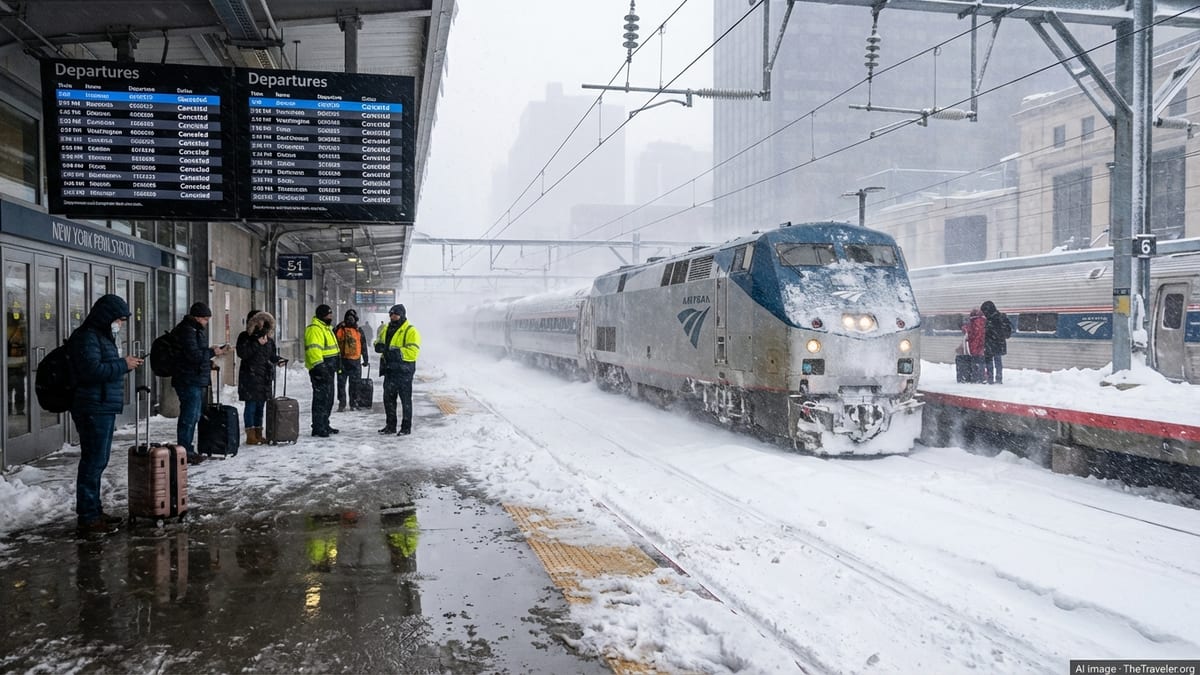
Reports of trains being cancelled with little or no warning have stranded passengers on platforms and onboard stalled services in recent weeks, sharpening scrutiny on how rail operators communicate disruptions and move travelers to alternatives.
Get the latest news straight to your inbox!
What travelers are reporting when service is pulled at the last minute
Across several rail networks, the core complaint is similar: passengers arrive expecting to board, only to learn a train has been cancelled or short-turned with minimal notice, leaving them to scramble for replacement options. While the underlying causes vary from mechanical failures to infrastructure incidents, the immediate impact is often the same: crowded stations, long waits for the next departure, and uncertainty about whether tickets will be honored elsewhere.
In Southern California, published coverage described a Metrolink incident on July 18, 2026, in which a train breakdown in the Anaheim Hills area stranded hundreds of passengers. Coverage indicated a relief train was sent and that Metrolink arranged onward ground transportation for some riders after the rescue movement ended short of all final destinations.
In the United Kingdom, disruption bulletins and transport coverage in early September 2026 described passengers being evacuated from a stranded Elizabeth Line train following an incident linked to an electricity supply failure associated with a lineside fire near the Paddington area. The event underscored how quickly a routine trip can shift into a welfare situation when trains stop between stations and passengers must be moved safely.
The practical problem: rebooking, refunds, and getting home
When cancellations happen at short notice, the immediate question for most travelers is not why, but what next: whether there is an alternative train, whether their existing ticket will be accepted, and how to get a refund if they abandon the trip. The problem becomes more acute late at night, when staffing levels and onward transit options can be limited.
In California, Metrolink publishes a “Quality Service Pledge” that lays out when reimbursement may be available if the agency cannot provide alternative transportation within a set window. The policy also describes what documentation riders need for reimbursement and sets a per-passenger cap for self-arranged rides, which can matter when passengers resort to taxis or rideshare after a disruption.
In the UK, National Rail disruption pages typically outline ticket validity, including when a ticket can be used on nearby services around a cancelled train and how to seek a refund if travel is no longer desired. Those rules can be helpful, but they also require passengers to find the right notice quickly, which is difficult if the cancellation appears close to departure time or a planned service disappears from journey planners.
New UK protection launches September 20, 2026: switching operators after cancellations
One of the most concrete developments for passengers arriving today is a newly announced UK scheme that begins on Sunday, September 20, 2026. Publicly available government information shows that when a train is cancelled, passengers with a valid ticket will be able to transfer to another participating operator’s service to complete their journey at no additional cost, within a two-hour window before or after the original cancelled departure, using a direct or reasonable alternative route.
The same announcement indicates the expansion includes operators on key intercity routes, listing CrossCountry, Great Western Railway, Avanti West Coast, and Chiltern Railways as being brought into the scheme. Cross-operator ticket acceptance already existed across publicly owned operators, but the new arrangement is designed to reduce the “stuck on the platform” problem when passengers need a fast alternative and do not want to risk being charged again.
For travelers, the key takeaway is that the protection is specifically tied to cancellations and is structured around a defined time window. That means passengers may still need to check whether the alternative service they want to board falls within the allowed time band and follows a reasonable route, especially during major disruptions when services are rerouted or running less frequently.
Why “no notice” disruptions keep happening and what to check before leaving
Last-minute cancellations can stem from sudden equipment problems, infrastructure faults, emergency incidents near tracks, or network-wide issues. For example, UK transport coverage in early September referenced a lineside fire affecting power supply and causing significant service disruption around Paddington, while other European reporting in mid-September described a major Dutch rail outage that disrupted rush-hour service.
Separate from unplanned faults, there are also cases where travelers are caught out by planned but major engineering work or emergency repairs. Network Rail issued a public notice about emergency bridge work near Watford affecting the West Coast Main Line on Sunday, September 20, 2026, including impacts to services between London Euston and Watford Junction during part of the day. Even when such work is publicized, passengers who do not recheck closer to departure may still be surprised by a missing train.
For passengers trying to reduce the risk of being stranded, the most reliable step is to recheck service status shortly before departing for the station using the operator’s own updates and National Rail Enquiries in the UK, or the relevant agency alert channels in North America. If a train is cancelled, travelers should also capture the proof they may later need, such as screenshots of the cancellation notice or app status and any receipts for replacement transport, because reimbursement policies often depend on documentation.