


More news on this day
The United States has intensified travel caution messaging for Americans across the Middle East as fighting between Saudi Arabia and Yemen’s Houthi movement escalates, with public U.S. travel guidance emphasizing the potential for fast-changing security conditions, flight disruptions, and periodic airspace closures across key regional hubs.
Get the latest news straight to your inbox!
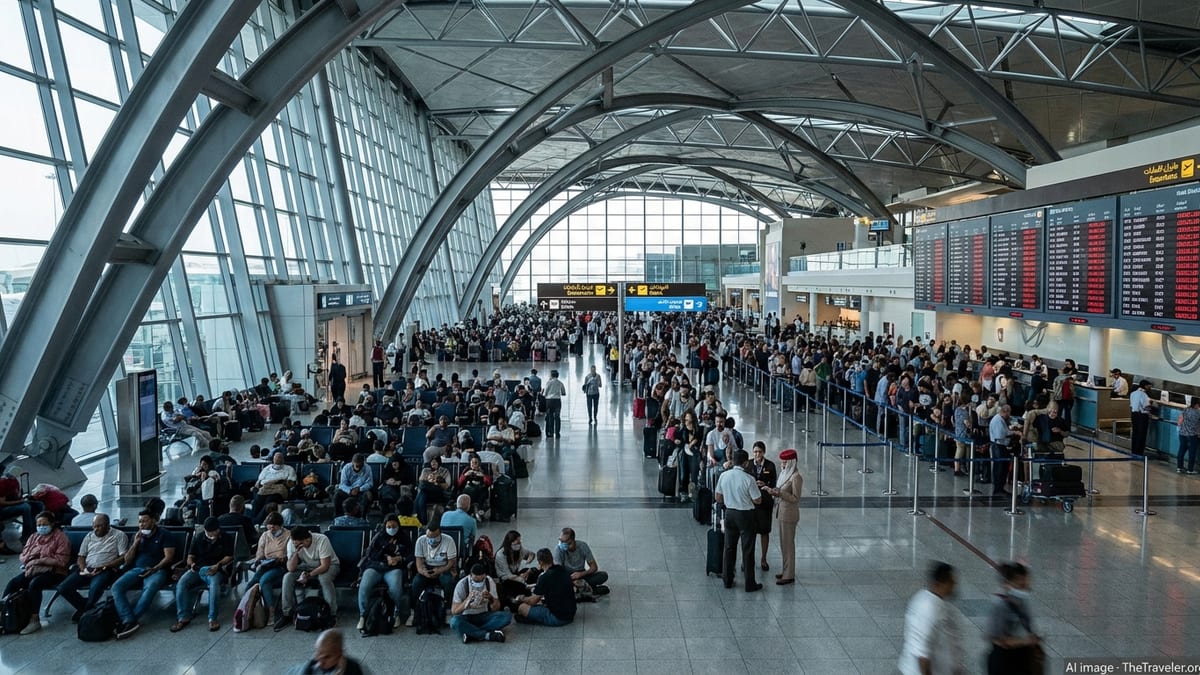
Which 10 destinations are included in the current US warning
Public U.S. travel guidance in late September 2026 reflects elevated concern across a set of 10 destinations frequently used by Americans for business travel, family visits, and long-haul flight connections: Bahrain, Iraq, Israel, Jordan, Kuwait, Lebanon, Oman, Qatar, Saudi Arabia, and the United Arab Emirates.
Across the Gulf specifically, U.S. State Department country advisories currently place Bahrain, Kuwait, Qatar, Oman, Saudi Arabia, and the UAE at Level 3 (Reconsider Travel). The advisory language highlights the risk of armed conflict and the potential for drone or missile activity tied to broader regional tensions, along with the practical impacts travelers notice first: disrupted commercial flight patterns and the possibility of sudden route changes.
Several nearby destinations carry higher-level warnings. Iraq and Lebanon are listed at Level 4 (Do Not Travel) in current State Department country pages, reflecting the higher risk environment and the limited ability for routine assistance in certain conditions. Yemen is also at Level 4, but it is not part of the 10-nation set referenced in the latest Middle East-focused warning package because the U.S. messaging is currently emphasizing spillover risk and disruptions across the surrounding travel network rather than only the conflict zone itself.
Why the Saudi-Houthi flare-up matters for travelers right now
Published coverage over the past week indicates a sharper pace of cross-border missile and drone activity linked to the Saudi-Houthi confrontation, including attempts to target Saudi territory and infrastructure. This matters for travelers because kinetic activity, even when intercepted, can trigger airport operational pauses, rerouting, and precautionary airspace restrictions that ripple across the region’s busiest corridors.
The Red Sea and adjacent chokepoints also remain central to the current risk picture. The Saudi-Houthi fight intersects with wider maritime-security concerns that can influence airline route planning, insurance decisions, and scheduling reliability, especially for flights that normally use air corridors near conflict-sensitive areas.
In practical terms, the U.S. government’s current travel messaging has focused less on advising most travelers to cancel trips outright to Gulf hubs and more on warning that conditions can change quickly. For Americans, that often translates to short-notice flight cancellations, diverted arrivals, longer routings, and uncertainty around onward connections even when a destination airport remains open.
What the advisories say about air travel, airspace, and disruption risk
U.S. advisory pages for several Gulf countries explicitly reference the possibility of significant disruptions to commercial flights and note that civil aviation risk can rise during periods of regional military tension. In Qatar’s advisory, for example, the State Department also flags that U.S. aviation authorities have issued regional notices for civil operators, reflecting concern about hazards to aircraft operations in a dynamic security environment.
Travelers should understand that airspace changes can be geographic rather than countrywide. A flight can be affected by restrictions hundreds of miles away if airlines need to avoid a corridor, adjust fuel loads, or add technical stops. That is why disruption can hit even travelers transiting major hubs such as Doha, Dubai, Abu Dhabi, or Manama, not just those headed to border regions.
For travelers already in the region, the U.S. Worldwide Caution message from July 22, 2026 remains relevant because it highlights the possibility of periodic airspace closures and urges heightened vigilance in the Middle East. The key takeaway is logistical: keep itineraries flexible, monitor airline notifications closely, and be prepared for last-minute gate changes, reroutes, and rescheduled departures.
Destination-specific risk language travelers should not ignore
Beyond the headline advisory levels, several country pages include specific risk indicators and internal travel restrictions that can shape a trip. Saudi Arabia’s current Level 3 advisory emphasizes the risk environment tied to armed conflict and missile and drone threats, and it also underscores that local laws and online activity can carry serious legal consequences, including for social media posts made before, during, or after travel.
Oman’s Level 3 advisory includes a clear geographic warning to avoid travel to the Yemen border area, and Jordan’s Level 3 advisory identifies specific locations and border areas where travel is discouraged due to heightened risk. These kinds of sub-national advisories matter because a traveler may be compliant with an itinerary in Amman or Muscat while still inadvertently booking a side trip into a higher-risk zone.
In Kuwait and Bahrain, U.S. guidance highlights both the armed conflict risk environment and constraints that can affect assistance and movement, including tighter rules around government employee travel. While those restrictions are written for official personnel, they often serve as a signal of how quickly a security posture could tighten for everyone.
How Americans can plan trips while the situation remains fluid
For Americans planning travel to or through the Middle East in the coming weeks, the most useful approach is to treat flights and hotel bookings as potentially unstable. That means choosing fares with change options when possible, allowing longer connection windows for transits, and planning contingencies if a route is diverted or an airport experiences short-term operational pauses.
Travelers should also review the most current State Department country advisory for every stop on their itinerary, including transit points, and enroll in the Smart Traveler Enrollment Program to receive embassy alerts in real time. The advisories can change by date and can also change by region within a country, so a quick pre-departure check is not enough if a trip is scheduled weeks out.
Finally, travelers should ensure they have appropriate travel insurance that covers trip interruption and medical care abroad, confirm passport validity and entry requirements for any unplanned reroute country, and keep digital and paper copies of key documents. In a period marked by rapid escalation risk, those preparations can reduce the scramble if schedules shift with little notice.