


More news on this day
The United States has renewed an urgent security warning affecting travelers in the Middle East, with new or updated embassy alerts in 11 countries cautioning that flight cancellations, airspace closures, and sudden travel disruptions remain possible as regional tensions continue to evolve.
Get the latest news straight to your inbox!
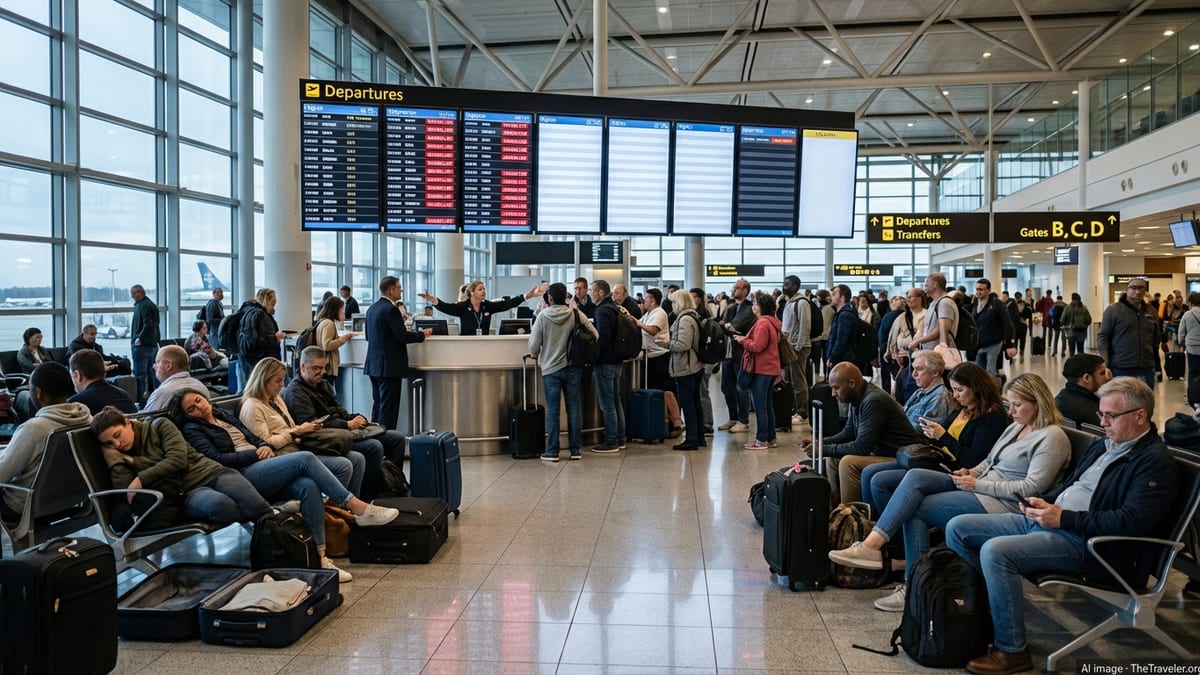
What the warning means for travelers right now
Published coverage indicates the latest U.S. messaging is focused less on routine tourism risks and more on the practical realities of moving around the region during a fast-changing security environment. The central theme is disruption: travelers may face last-minute flight cancellations, rerouted itineraries, or temporary limits on overflight and airport operations.
The renewed alert also underscores that even travelers who are not heading into conflict zones can be affected. Major hubs often used for connections between North America, Europe, Africa, and Asia can experience knock-on impacts from shifting airspace rules, changing airline decisions, and heightened security postures at airports.
For Americans already in the region, the advisory framing emphasizes readiness: maintaining flexible plans, keeping travel documents accessible, and monitoring official updates that can change within hours. For those with upcoming trips, the update functions as a prompt to reassess whether travel is essential, and to confirm whether airlines are offering waivers or rebooking options.
The 11 countries referenced in recent embassy alerts
Recent embassy notices tied to the broader regional security environment have circulated across multiple Middle East destinations. The countries commonly referenced in published roundups of the newest alerts include Bahrain, Iraq, Israel, Jordan, Kuwait, Lebanon, Oman, Qatar, Saudi Arabia, the United Arab Emirates, and Yemen.
While the underlying security landscape differs sharply from country to country, these alerts have been grouped together because disruptions can spread across borders quickly. Air corridors, maritime routes, and major airports are interconnected, meaning a change in one area can ripple into neighboring states.
Travelers should avoid treating the list as a single, uniform risk category. The State Department’s destination pages assign different advisory levels (from Level 1 to Level 4) based on country-specific conditions, and those levels can differ substantially even among nearby countries.
Travel advisories vs. short-notice security alerts
Many travelers confuse travel advisories with emergency-style security messages. Travel advisories are standing, country-by-country risk summaries that include an overall level and risk indicators, and they are reviewed on a set cadence with additional updates when conditions shift. Separate “alerts” can be issued more quickly to flag time-sensitive events such as disruptions, heightened tensions, or operational changes at a U.S. diplomatic post.
That distinction matters because an “urgent warning” circulating in headlines may reflect a cluster of fresh, short-notice embassy alerts even when the underlying country travel-advisory level has not changed the same day. In other cases, an advisory level can be updated as conditions evolve, with the destination page reflecting new language about risks that affect travelers.
One example of how detailed these advisories can become: Saudi Arabia’s current advisory includes specific language tied to the post-February 2026 U.S.-Iran hostilities and the risk of drone and missile activity affecting American interests, and it lists an updated issuance date in mid-September 2026. Travelers using the advisory system should read beyond the headline level and review the “summary” and “read the entire advisory” sections for actionable detail.
Air travel disruptions: what to check before you fly
The most immediate traveler impact flagged in recent alerts is the potential for airspace changes that affect both direct flights and connections. If you are transiting through major Gulf hubs or routing around conflict-affected airspace, even a short disruption can cascade into missed connections, overnight delays, or unplanned returns to your origin city.
Before departure, travelers should confirm whether their route crosses any airspace currently subject to restrictions or airline avoidance policies, and double-check the operating status of their flights on the airline’s day-of-travel tools. For complex itineraries, it is also worth verifying whether separate tickets are involved, because protections can differ if a missed connection is not on a single reservation.
Travelers should also re-check entry requirements and airport procedures, including whether additional screening, earlier arrival recommendations, or temporary changes to terminal access are in effect. In periods of elevated regional tension, publicly available information can change quickly, and airport guidance may differ from normal conditions.
Practical steps for Americans with upcoming trips
Americans planning travel to any of the affected countries should start by reviewing the State Department destination page for their specific itinerary, including side trips and layovers. Travelers should also consider enrolling in the Smart Traveler Enrollment Program, which can help ensure they receive official updates relevant to their destination.
Given the warning’s emphasis on disruption, itinerary flexibility is a key planning tool. Consider refundable or changeable bookings where possible, keep digital and printed copies of critical documents, and make sure you can access funds if payment systems or transportation networks are temporarily interrupted.
Finally, travelers should make a clear distinction between leisure travel and essential travel. In a volatile security environment, the safest option may be postponement, particularly for travelers who would have limited ability to pivot quickly due to tight budgets, fixed tour schedules, or complex multi-country routes.