


More news on this day
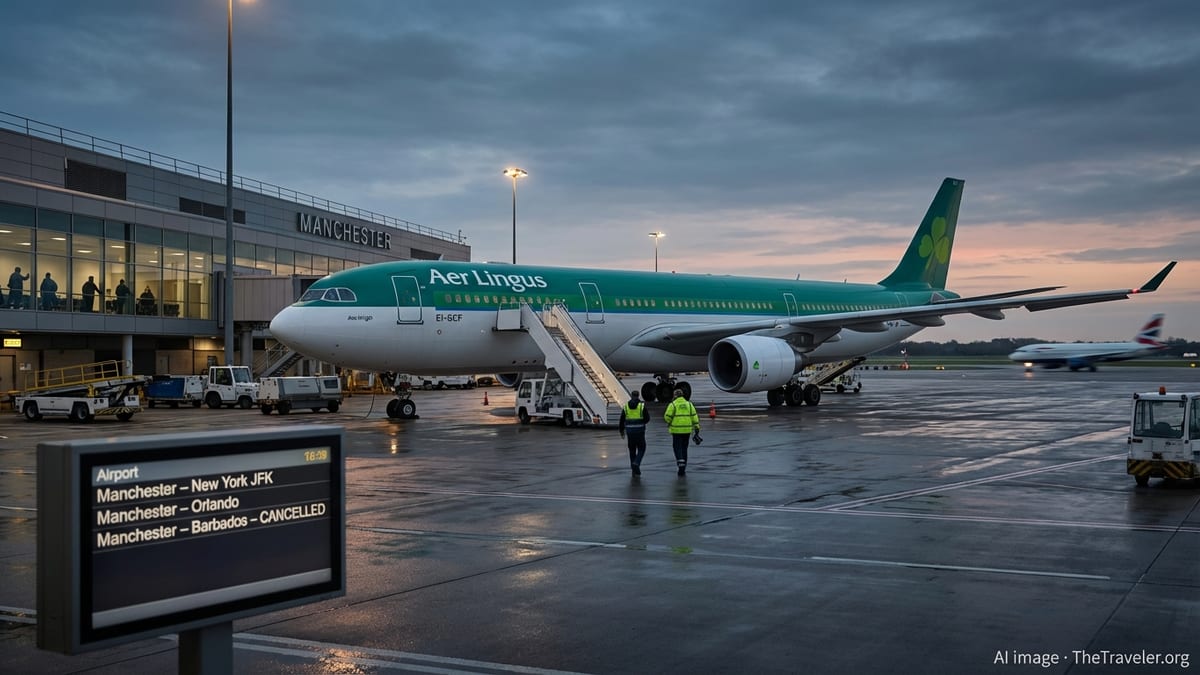
Manchester Airport passengers continue to see knock-on delays after scheduled overnight runway maintenance earlier this month reduced the airfield to single-runway operations, with fresh disruption layered on by a short runway restriction reported on September 19.
Get the latest news straight to your inbox!
Why routine overnight works can disrupt the following day
Manchester Airport publishes an annual timetable of planned overnight maintenance for its primary runway, a schedule that typically concentrates closures overnight when flight volumes are lower. Publicly available airport information shows that during these windows the airport relies on its other parallel runway as the sole runway, reducing flexibility if arrivals bunch up or departures face late pushbacks.
In September 2026, the published maintenance window for the airport’s primary runway ran on the nights of September 8 to September 10, from 23:30 to 06:00 local time. That timing can be especially sensitive because early-morning departures and first-wave arrivals tend to arrive close together, and a compressed overnight schedule can ripple into the morning if aircraft rotations start late.
Even when maintenance finishes on time, the operational effect can linger. A single runway limits how quickly an airport can recover from small delays, and any additional factors such as stand congestion, late inbound aircraft, or constrained air-traffic flow rates can make the schedule harder to rebuild.
New disruption added by a brief runway restriction on September 19
Published UK coverage on Saturday, September 19, 2026 linked a new wave of delays at Manchester to a runway surface defect that was widely described as a “hole in the runway.” Reports indicated one runway was closed for a short period while maintenance activity took place, after which operations resumed but with significant knock-on disruption.
Travel reporting around the incident described average departure delays of roughly 50 minutes at one point during the disruption window, reflecting the backlog that can build quickly when capacity drops at a busy hub. Even a short restriction can force aircraft to wait for departure slots, delay inbound sequencing, and create late crew and aircraft positioning for later services.
For travelers, the sequencing matters as much as the initial incident. Once aircraft and crews fall out of rotation, airlines may need to swap aircraft, retime later sectors, or delay departures to wait for inbound aircraft to arrive, extending disruption well beyond the original maintenance period.
What the runway maintenance schedule shows for the weeks ahead
Manchester’s publicly listed runway-closure calendar indicates additional planned overnight maintenance later in 2026, including October 4 to October 8, again scheduled for 23:30 to 06:00 local time. These works are described as routine maintenance for the runway and adjoining taxiways, which can include inspections and housekeeping tasks needed to keep surfaces in good condition.
While the planned closures are overnight, the operational impact is not always confined to those hours. If late-evening flights arrive behind schedule or early-morning banks are tightly packed, operating on one runway can make it harder to absorb disruptions without pushing delays into daytime schedules.
Separately, publicly available EUROCONTROL information has referenced ongoing airfield works at Manchester affecting Taxiway Delta from September 1, 2026, described as a diversion in place pending reconstruction and limited to certain aircraft categories. Taxiway constraints do not automatically reduce runway capacity, but they can influence how efficiently aircraft move between stands and the runway system, which can matter during recovery from delays.
What passengers can do now: timing, connections, and compensation basics
With delays lingering, passengers can reduce risk by monitoring airline flight status closely on the day of travel and treating scheduled departure times as provisional when disruption is active. When an airport is working through a backlog, boarding times and gate assignments may change, and inbound aircraft swaps can shift timings at short notice.
Travelers with onward connections, especially those built on separate tickets, may want to increase buffer time or consider rebooking to itineraries with more slack if options are available. Knock-on delays can be particularly damaging to separate-ticket itineraries because a missed second flight may not be protected by the airline operating the first segment.
For compensation, UK and EU-style passenger-rights rules can hinge on the cause of the delay, the length of the delay at arrival, and the route. A runway surface defect and required maintenance can be treated differently than airline-controllable operational issues, and eligibility often depends on the specific circumstances. Passengers are generally best placed to document delay length, keep receipts for reasonable out-of-pocket expenses, and use airline channels to request reimbursement where applicable.
As the airport moves through late September and toward the next scheduled overnight maintenance period in early October, the practical takeaway for travelers is to allow extra time and keep plans flexible, particularly for early departures and tight connections that are most exposed when single-runway operations or brief restrictions reduce capacity.