


More news on this day
The United States has issued a new security warning for Americans in the Middle East, pointing to rising Saudi-Houthi tensions and the possibility that the region’s already volatile security situation could escalate quickly and disrupt travel.
Get the latest news straight to your inbox!
What the new US advisory covers and why it matters for travelers
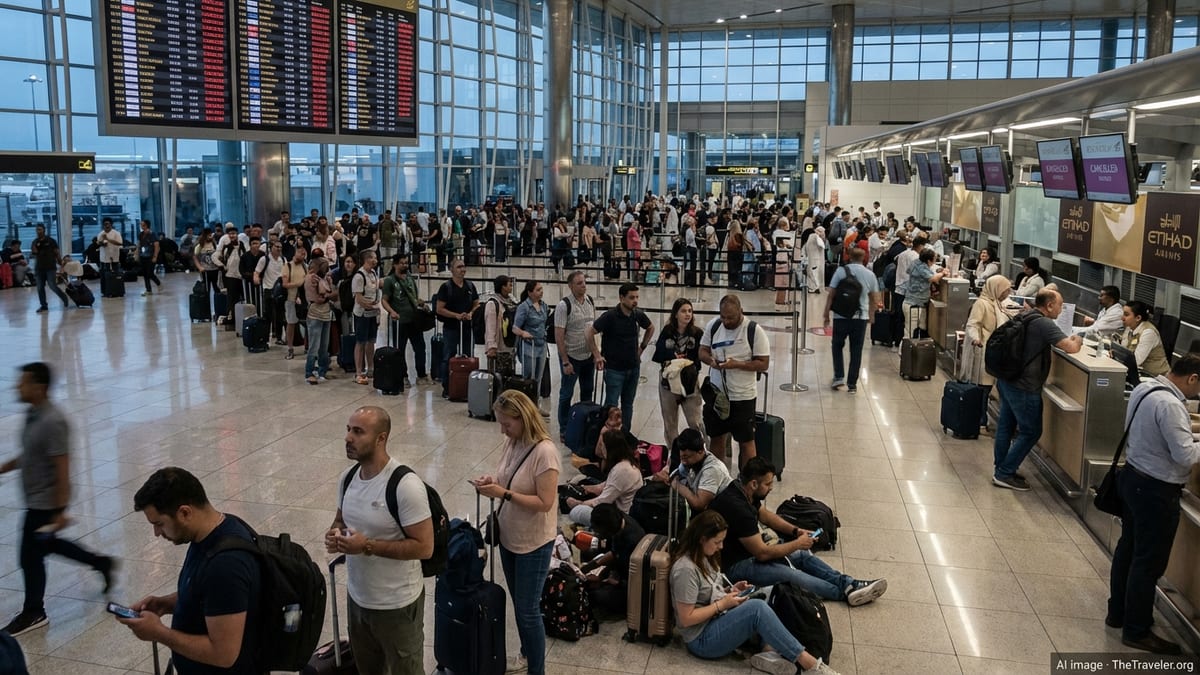
Published coverage indicates the State Department’s updated guidance is framed as a regional security alert rather than a single-country notice, emphasizing that travelers transiting major aviation hubs could face sudden operational changes. The warning highlights the potential for flight cancellations, airspace closures, and knock-on travel disruptions that can strand passengers or force last-minute reroutes.
The notice applies broadly across the Middle East, including key transit points commonly used by US travelers for onward connections between North America, Europe, Asia, and Africa. For many itineraries, that means a disruption in one airspace corridor can cascade into missed connections, rebookings, and longer layovers, especially when airlines consolidate passengers onto fewer flights.
Alongside the regional alert, publicly available State Department guidance continues to underscore elevated risk inside Saudi Arabia. The department’s current Saudi Arabia Travel Advisory remains at Level 3, “Reconsider Travel,” citing risks that include drone and missile threats, armed conflict, terrorism concerns, and the possibility of exit bans under local legal processes.
Saudi Arabia’s travel risk level: what “Level 3” means right now
The State Department’s Saudi Arabia advisory, updated September 15, 2026, sets expectations for what travelers might encounter in a heightened security environment. The advisory notes that drone and missile attacks in Saudi Arabia have, at times, targeted infrastructure and airports, and that debris from interceptions can also pose hazards.
Separately, the advisory flags legal and administrative risks that can affect mobility. The guidance warns that exit bans can prevent travelers from leaving the country and may be linked to disputes or ongoing cases, and it cautions that social media activity may be scrutinized under local laws. For visitors, that combination can turn an otherwise routine trip into a prolonged and complicated situation if issues arise.
For certain regions inside the kingdom, travel restrictions are more explicit. The advisory states that the Yemen border area is designated “Do Not Travel,” and it outlines internal limits that apply to US government personnel, including restrictions near the Yemen border and added authorization requirements for travel to provinces including Jizan, Asir, Najran, and Qatif.
What’s driving the renewed alert: Saudi-Houthi escalation and regional spillover risk
Recent reporting describes an intensifying cycle of attacks and counterstrikes linked to Yemen’s Houthi movement and Saudi Arabia, with the conflict’s tempo increasing in September 2026. Coverage in multiple outlets has pointed to cross-border missile and drone activity as a core driver of traveler risk, particularly where aviation, airports, and critical infrastructure are involved.
In the past several days, published accounts have described attempted or claimed strikes aimed at Saudi targets, including incidents involving ballistic missiles and drones. Some reports have also focused on the sensitivity of attacks near or toward major population centers and religious sites, which can heighten the likelihood of rapid security measures, including restrictions around airfields and transportation corridors.
Regional complexity is also part of the alert’s logic. The State Department’s broader “Worldwide Caution” guidance has emphasized that Iran and Iran-aligned groups may target US-linked interests internationally. In practice for travelers, this framing often translates into warnings to avoid large gatherings, remain attentive to local developments, and plan for disruptions that can occur with little notice.
Practical travel impacts: flights, airspace, and transit hubs
The most immediate traveler-facing risk referenced in the US warning is disruption to air travel. When airspace constraints are imposed, airlines may be forced into longer routings that increase flight times, alter fuel planning, or require technical stops. For passengers, that can mean re-timings, missed connections, and limited rebooking inventory on peak routes.
US guidance also points travelers toward monitoring airline and airport operations closely. That is particularly relevant in the Gulf, where many travelers rely on large hub airports for long-haul connections. If security conditions shift, carriers may temporarily suspend routes, adjust schedules, or consolidate departures, and airport-side disruptions can ripple into hotel availability and ground transportation demand.
For those already in the region, the State Department’s Middle East consular information page directs Americans to enroll in STEP for updates and to follow local embassy security messages. The same page provides State Department contact numbers for travelers seeking assistance from abroad or from the United States and Canada, a practical backstop when conditions change quickly.
How travelers can reduce exposure without canceling every trip
For travelers weighing whether to proceed, the State Department’s advisory language suggests focusing on route and itinerary resilience rather than relying on a single plan. That can include choosing tickets with flexible change terms, avoiding tight connections, and considering routings that do not depend on a single airspace corridor when alternatives exist.
Travelers who continue with plans to Saudi Arabia are likely to benefit from a tighter risk-management approach than they might use for leisure travel elsewhere. The current advisory encourages situational awareness around transportation hubs and large gatherings, and it also highlights legal and administrative considerations, including the possibility of delays in consular access under local procedures.
Finally, those traveling through the region can reduce disruption stress by planning for communication and documentation issues. Keeping digital and paper copies of passports and itineraries, maintaining access to airline apps and verified airport status channels, and identifying backup lodging options near transit hubs can make a significant difference if flights are delayed or rerouted on short notice.