


For more than a decade the Halifax Clarity credit card has been the go to plastic in many British wallets for trips abroad. I have carried it from Lisbon to Los Angeles and from Tokyo metro ticket machines to Greek island cash machines, and it has quietly earned a reputation as one of the most reliable no frills travel cards around. This is not a theoretical round up of features but an honest review based on using the Clarity overseas, combined with up to date information on how it now works in 2026 so you can decide if it still deserves a place in your passport wallet.
Get the latest updates straight to your inbox!
Key Features of the Halifax Clarity When You Travel
The core attraction of the Halifax Clarity is simple: no fees from Halifax on foreign currency purchases or foreign currency cash withdrawals abroad. You pay the Mastercard exchange rate for the day, which is usually very close to the wholesale interbank rate, and Halifax does not add a typical 2.75 to 3 percent foreign usage fee that many standard UK credit cards still charge. In practice, that means if you tap your Clarity to pay a €40 restaurant bill in Spain, you will only see the sterling equivalent at the Mastercard rate on your statement, without an extra overseas loading margin quietly added on top.
There is no annual fee for holding the card and no fee from Halifax for using an overseas ATM for local currency cash. Compared with many mainstream UK cards that might charge a cash fee of around 3 to 5 percent plus a foreign loading fee, the Clarity’s pricing structure is refreshingly straightforward for travel. Halifax offers up to 56 days interest free on purchases when you clear your statement in full, although the exact representative APR on purchases will depend on your personal circumstances and credit profile.
The card is issued on the Mastercard network, which gives it broad global acceptance. I have used it successfully at small family run trattorias in Italy, independent riad guesthouses in Morocco, contactless metro barriers in Paris and New York, and big hotel chains in the United States. In many destinations, especially where American Express acceptance is patchy, having a Mastercard like Clarity is often the difference between being able to tap to pay or hunting for the nearest ATM at the worst possible moment.
One important limitation for heavy cash users is the daily cash withdrawal cap, which Halifax and independent reviewers report as around £500 per day in local currency equivalent. That is more than enough for normal holiday use, but if you are paying for a long term rental in cash in Thailand or settling a large medical bill in a clinic that will not accept cards, the cap is something to plan around in advance.
How the Clarity Performs in Real Travel Scenarios
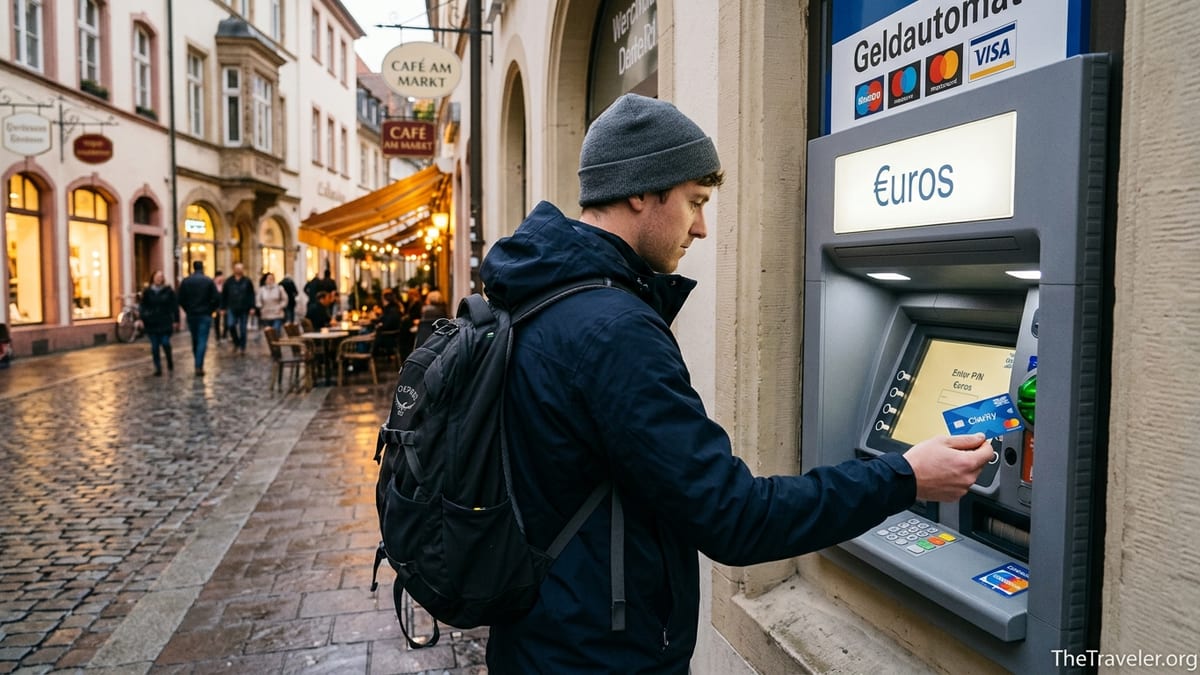
To understand how the Clarity card behaves abroad, consider a long weekend in Lisbon. You arrive at Humberto Delgado Airport and need cash for your Airbnb host who only accepts euros. You withdraw €200 from an airport ATM using your Clarity. The machine does not add its own fee, and you refuse its "guaranteed" conversion into pounds by choosing to be charged in euros. On your statement a few days later, that withdrawal appears at the Mastercard rate, which in a typical period might be around €1.15 to £1, so about £174. The crucial point is that Halifax has not added a separate ATM fee or foreign currency loading on top.
However, interest on that €200 cash advance begins from the day of withdrawal, not from the statement date. If your purchase APR is, for example, around 23.9 percent representative variable, daily interest will accrue on the cash portion until it is fully repaid. If you transfer enough money to your Clarity card the same day or the next day using online banking, the total interest cost for that withdrawal might only be well under a pound. If you forget and leave the balance sitting there for a full month, you will see several pounds of interest added on your next statement.
Now compare that with paying for everyday purchases. On the same Lisbon trip you might tap your Clarity for a €3.50 pastel de nata and coffee, a €24 return metro and train ticket to Sintra, and a €60 dinner for two in Bairro Alto. All of those purchases will post at the Mastercard rate, without any overseas loading, and will be interest free until the statement due date as long as you clear the full balance. In effect, you are borrowing in sterling to fund your trip at a standard purchase APR, but you are not leaking money through extra bank fees on each transaction.
On a longer trip, like three weeks backpacking across Southeast Asia, the differences can be dramatic. Using a typical high street UK credit card that charges around 3 percent in foreign usage fees and a cash advance fee on top, you might easily lose £50 to £100 in fees on a £2,000 trip. With the Clarity card, assuming you only withdraw moderate amounts of cash and pay off those withdrawals promptly, your extra costs can stay in the low single digits in interest instead of becoming a meaningful line item in your travel budget.
Exchange Rates, Fees and the Small Print That Matters
The Clarity card uses the Mastercard wholesale exchange rate for processing non sterling transactions. In most markets this rate is very competitive compared with the tourist rates offered by airport bureaus or hotel currency exchanges. For example, if the mid market rate on the day is €1.17 to £1 and the Mastercard rate applied is close to that, you will see a fair conversion on your statement. The key is that Halifax does not add its own separate percentage spread for the convenience of spending overseas.
Where travellers still need to be careful is with overseas ATMs and merchants offering dynamic currency conversion. Many cash machines and card terminals abroad will offer to bill you directly in pounds, sometimes with friendly language like "lock in your rate now" or "no exchange risk." In practice, these offers often include a steep hidden markup, sometimes equivalent to 4 to 6 percent or more. With a card like Clarity that already gives you a competitive Mastercard rate without an extra fee, you will almost always be financially better off selecting to pay in the local currency and letting Mastercard handle the conversion.
There is also the matter of third party ATM operator fees. While Halifax itself does not levy a charge for foreign currency cash withdrawals overseas, the local bank that owns the machine may apply its own fixed fee, which is typically displayed on screen before you confirm. In the United States, for example, it is common to see ATM fees of around $3 to $5 per withdrawal, regardless of card issuer. In parts of Europe and Asia, many major bank ATMs are still free for foreign cards, but independent "white label" machines in tourist hotspots may charge. Spreading your withdrawals into fewer, larger amounts can reduce the impact of such fixed fees.
Finally, while purchases can enjoy up to 56 days interest free if you clear the statement in full, cash withdrawals are treated differently. Interest starts from the day the cash leaves the machine until it is repaid. Halifax and experienced card users confirm that if you make a manual payment to clear the cash balance quickly, you only pay interest for those few days, rather than being stuck with interest until your next full statement date. For organised travellers who log on to online banking from their hotel Wi Fi and immediately pay off a withdrawal, the cost is tiny. For those who rarely check statements and only make minimum payments, the cost of cash withdrawals can quietly escalate.
Strengths That Still Make Clarity a Top Travel Card
The first major strength is simplicity. There is no annual fee, no foreign usage fee on purchases, and no separate cash withdrawal fee abroad in foreign currency. That means you can confidently use the card for most day to day spending on your trip without running mental calculations about an extra percentage cut for the bank each time. If you plan a £1,500 city break to New York, paying for your hotel, restaurant meals and museum tickets on Clarity rather than a typical fee charging card can realistically save you around £40 to £50 in foreign loading charges alone.
The second strength is global acceptance. Because Clarity rides on the Mastercard network, it has worked for me in small Spanish tapas bars, European motorway toll booths, contactless readers on buses in Vancouver, and online bookings with foreign airlines based in Asia. In destinations where local card terminals have trouble with UK debit cards, the Clarity has often been the reliable backup that just works. For travellers who still like to combine cards and cash, being able to walk up to almost any bank branded ATM in a city like Bangkok or Berlin and know that your credit card will be accepted is a genuine comfort.
Another important benefit is consumer protection. Because this is a credit card, eligible purchases of more than £100 and up to £30,000 can qualify for statutory protections under UK law, which can be extremely useful for travel. If your £800 hotel booking in Greece is not honoured or the small tour operator in Iceland collapses after taking full payment on your card, having that potential route to claim a refund is valuable. Many of the newer app based debit cards that also offer good exchange rates do not provide the same level of protection on large purchases.
Lastly, the Clarity’s lack of rewards is, paradoxically, part of what makes it effective as a pure travel tool. There are no complex points schemes or teaser cashback offers to distract from the basic question of how much your holiday spending will really cost. For travellers who already have a separate rewards card for everyday UK use, the Clarity fills a specific niche as the dedicated card that only comes out when the passport does, keeping overseas spending clearly separated from day to day domestic budgeting.
Drawbacks and Hidden Catches You Need to Know
Despite its strengths, the Clarity card is not perfect. The most important drawback is how it treats cash. Interest on cash withdrawals starts immediately, and while there is no Halifax cash fee abroad for foreign currency, the daily interest meter can counteract some of the savings if you rely heavily on ATMs and fail to repay quickly. On a long trip, a pattern of withdrawing the local currency equivalent of £200 every few days and only making a minimum payment each month could leave you with a noticeable interest bill by the time you get home.
Another limitation is that the card offers no reward points or cashback. For some travellers, especially those who spend significant sums each year on flights and hotels, a specialist airline or cashback credit card might deliver more overall value, even if it charges a small foreign usage fee. For example, if you put £5,000 of overseas spending per year on a card that earns generous rewards, the value of those points could outweigh a 1 or 2 percent fee. Clarity’s appeal is strongest for people who prioritise low friction low fee use over rewards.
The representative APR on purchases is also not especially low; it sits in the typical band for UK mainstream credit cards and your personal rate will depend on your credit history. If you regularly carry a balance from month to month, any savings on overseas fees could be outweighed by the cost of interest on that carried balance. In that situation, a low APR credit card or an alternative way of funding travel might be more appropriate than a specialist travel card such as Clarity.
Lastly, because Clarity is a credit card, your usage pattern can influence your wider credit profile. Taking occasional cash advances overseas with quick repayments has not, in my experience, caused visible issues on credit reports, but very frequent cash withdrawals or long periods of being close to your credit limit might be viewed less favourably by some lenders. Travellers who expect to apply for a significant mortgage or large loan soon after a big trip might prefer to limit unnecessary experiments with cash withdrawals on any credit card, including Clarity.
How Clarity Compares With Other Travel Spending Options
To see whether Clarity still makes sense in 2026, you need to compare it with alternatives, especially newer fee free debit cards and other specialist travel credit cards. Many UK app based banks and digital accounts now offer no foreign transaction fees and competitive exchange rates on debit card purchases abroad. Some even waive ATM withdrawal fees up to a certain monthly limit. For a casual traveller who mainly pays by card and occasionally needs a small amount of cash, a modern app based debit card can be perfectly adequate and avoids the idea of running up a credit card balance at all.
Where Clarity pulls ahead is when you value a credit line plus consumer protection and are organised enough to handle cash withdrawals smartly. If you are booking long haul flights, car hire with a sizeable security deposit, or an £1,800 villa rental in Spain, putting those transactions on a credit card like Clarity gives you both protection and a buffer on your current account cash. You can then use a fee free debit card or local cash for smaller everyday purchases such as coffee, public transport and market snacks, combining the strengths of multiple products.
Compared with other specialist travel credit cards that also waive foreign usage fees, the Clarity card remains competitive. Many rivals offer similar zero fee spending overseas but still charge cash advance fees on ATM withdrawals or require that you hold a linked current account to access the best terms. The absence of a foreign ATM fee from Halifax, combined with the straightforward ability to apply as a standalone credit card, still sets Clarity apart for some travellers, especially those who like to rely more on cash in destinations where card acceptance is patchy.
If your travel pattern involves frequent long trips and you are comfortable managing multiple products, a common strategy is to hold Clarity as the dedicated emergency and large purchase card, while using a modern fee free debit account for everyday spending and cash where possible. That way you benefit from the best bits of each, rather than trying to make any single card solve every travel money problem.
Practical Tips for Using Halifax Clarity Abroad
The Clarity card works best when you treat it as a focused travel tool rather than an everyday spending card. Before you leave, make sure your online and mobile banking are set up so you can log in securely from abroad and make manual payments. Many travellers also set up a standing order to pay off the full statement balance each month, then use extra manual payments mid cycle to clear cash withdrawals promptly. For example, if you withdraw the equivalent of £250 in local currency from an ATM in Mexico, you might log in that evening from your hotel room and transfer £260 from your current account to cover the withdrawal and a small buffer for interest.
When faced with a choice at a foreign card terminal or ATM, always opt to pay or withdraw in the local currency rather than pounds. This allows the Mastercard rate on your Clarity to do its job and avoids the poor value dynamic currency conversion markups that many terminals apply. In practice, this means pressing "decline conversion" or "charge in local currency" when asked. Getting into this habit can save you an extra few percent on almost every transaction compared with travellers who accept the default on screen offer.
It is also sensible to carry a backup payment method alongside Clarity. Even though Mastercard is widely accepted, technical glitches or rare local quirks can leave you temporarily unable to use a particular card. For example, on a recent trip through rural France, one petrol station’s unattended card pump refused my UK credit card but accepted a local debit card, while a nearby supermarket terminal had the opposite behaviour. Carrying a mix of a fee free debit card, a second credit card and a small stash of emergency local currency notes is a safer strategy than depending entirely on a single product, no matter how reliable.
Finally, remember that a credit card is still borrowed money. It is easy, especially when the sun is shining in Greece or Thailand, to view a fee free travel card as "free holiday money." The Clarity card is at its best when you have a clear plan for repaying your spend, ideally in full, soon after your trip. Used in that disciplined way, it becomes a powerful tool to cut costs and smooth your travel finances. Used casually without a plan for repayment, it is still a standard credit card with a representative APR that will bite into your budget over time.
The Takeaway
After years of real world use and a review of the most recent terms and independent commentary in 2026, the Halifax Clarity credit card still earns its reputation as one of the most practical and cost effective options for UK travellers. Its simple structure of no foreign usage fees on purchases and no Halifax cash withdrawal fee abroad, combined with Mastercard exchange rates and solid global acceptance, makes it a reliable companion for everything from quick city breaks to multi country backpacking trips.
Its biggest weakness, interest on cash withdrawals from the day you take money out, is manageable with a little discipline. Travellers who log in to online banking and clear those withdrawals quickly will pay pennies in interest, while those who rely heavily on ATMs and only make minimum payments will erode much of the benefit. The lack of rewards is a trade off, but for many people the absence of complex point schemes in exchange for cleaner, lower overseas costs is a fair deal.
In a world where app based fee free debit cards and rival travel credit cards continue to multiply, Clarity is no longer the only game in town. Yet it remains a strong choice as a specialist travel credit card, particularly for larger bookings and situations where credit card protection matters. If you pair it with a modern fee free debit account and use both thoughtfully, you can significantly reduce the hidden costs of travelling with plastic and keep more of your money for the experiences that actually matter.
FAQ
Q1. Does the Halifax Clarity credit card charge foreign transaction fees on purchases abroad?
For non sterling purchases made abroad, Halifax does not add a separate foreign transaction fee to the Mastercard exchange rate, which means you avoid the typical 2.75 to 3 percent foreign loading that many standard UK credit cards still charge.
Q2. Is there a fee for using the Halifax Clarity card to withdraw cash from overseas ATMs?
Halifax does not charge its own ATM withdrawal fee when you take out cash in a foreign currency abroad, although local ATM operators may apply their own fixed fee, which is usually displayed on screen before you confirm the transaction.
Q3. When does interest start on cash withdrawals made with the Clarity card?
Interest on cash withdrawals begins from the date you take the money out of the ATM and continues until that cash balance is fully repaid, so making a manual payment shortly after each withdrawal can keep the total interest cost very low.
Q4. Can I avoid paying interest entirely on cash withdrawals if I repay my Halifax Clarity balance in full each month?
Even if you clear your full statement balance each month, interest is still charged on cash withdrawals for the days between the withdrawal and repayment, unlike purchases, which can qualify for an interest free period when the statement is settled in full.
Q5. What exchange rate does Halifax Clarity use for foreign transactions?
The Halifax Clarity card uses the Mastercard exchange rate for converting foreign currency purchases and cash withdrawals into pounds, and Halifax does not add an extra percentage loading on top for non sterling transactions abroad.
Q6. Is the Halifax Clarity credit card good for everyday spending in the UK?
You can certainly use Clarity for spending in the UK, but since it does not offer rewards or cashback and is primarily designed around low cost foreign use, many people prefer to reserve it for travel and use a separate card for domestic purchases.
Q7. How much cash can I withdraw per day with the Halifax Clarity card when I am abroad?
Independent reviews and user reports indicate a typical daily cash withdrawal limit of around £500 in local currency equivalent, although your exact limit will depend on your individual credit limit and Halifax’s internal settings.
Q8. Will frequent cash withdrawals on my Clarity card harm my credit score?
Occasional overseas cash withdrawals that you repay quickly are unlikely to be a major issue, but persistent heavy cash use or regularly nearing your credit limit might be viewed less positively by some lenders when they assess your overall credit behaviour.
Q9. How does Halifax Clarity compare with app based fee free debit cards for travel?
App based debit cards can also offer excellent exchange rates and no foreign fees, but the Clarity card adds the benefits of a credit line and consumer protection on eligible larger purchases, which make it particularly valuable for flights, accommodation and car hire.
Q10. Who is the Halifax Clarity credit card best suited for as a travel tool?
The card is best for UK travellers who want a simple, low fee way to spend abroad, value credit card protection on bigger purchases and are organised enough to manage cash withdrawals by repaying them promptly to keep interest charges to a minimum.