


More news on this day
Rail operator Northern has issued a rare “do not travel” warning across much of its North West England network as Storm Boelo sweeps through the United Kingdom, bringing destructive winds, flooding and widespread disruption to trains, roads and power supplies.
Get the latest news straight to your inbox!
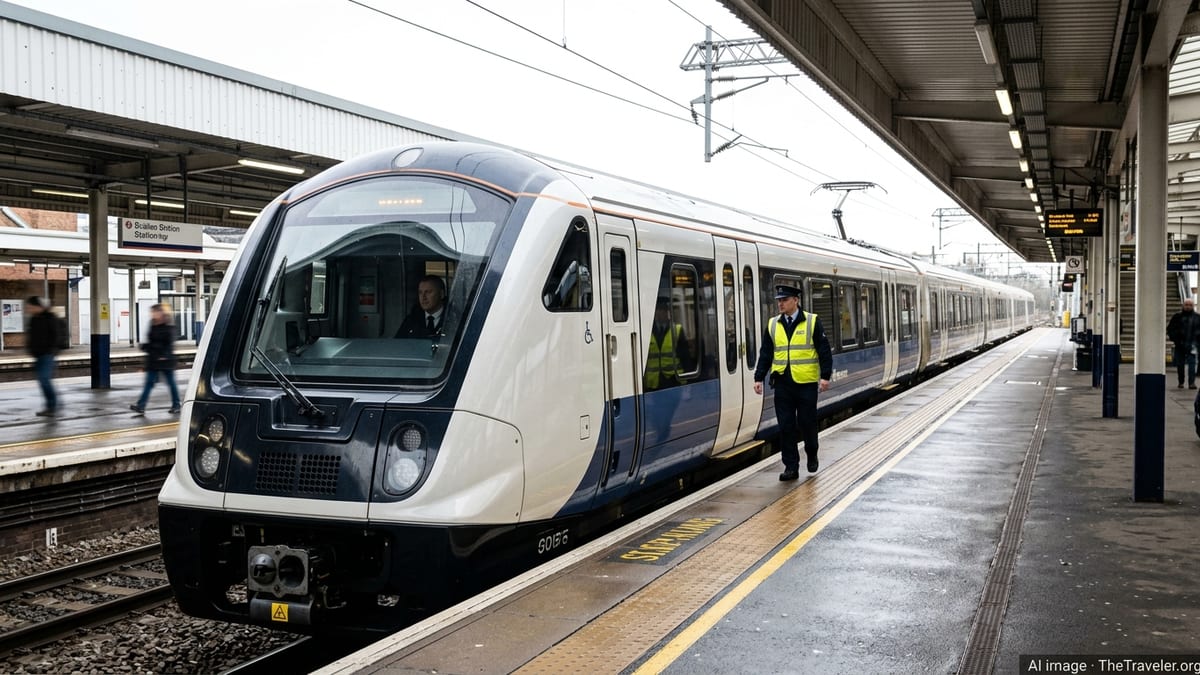
Storm Boelo batters northern routes with damaging winds
Published coverage from national and regional outlets shows Storm Boelo driving gusts above 70 to 80 mph across parts of Scotland, Northern Ireland and northern England, with heavy rain and large waves along exposed coasts. Amber and yellow wind warnings from meteorological agencies cover much of the northern half of the UK over the weekend, with advice highlighting a risk of falling trees, debris and damage to infrastructure.
Reports indicate that the strongest impacts so far are being felt in western coastal areas and higher ground, where onshore winds and saturated ground have combined to bring down trees and power lines. Local media describe homes without electricity, surface water flooding on key approach roads and very challenging driving conditions even away from the immediate shoreline.
Travel disruption has quickly followed. Airlines have cancelled a number of flights into and out of airports across the central belt and north of England, while ferry operators have adjusted or suspended sailings on more exposed routes. Rail remains one of the hardest hit modes, with Northern’s decision to issue a blanket “do not travel” message standing out as one of the strongest pieces of public guidance linked to the storm.
According to information made public by operators and infrastructure managers, the intensity and geographic spread of the storm have made it difficult to maintain normal timetables, and services that do appear on journey planners remain vulnerable to short notice cancellation as conditions evolve.
‘Do not travel’ alert covers key Northern rail corridors
Northern’s advisory focuses on its North West England network, a dense web of commuter and interurban routes that typically links cities such as Manchester, Liverpool, Preston, Blackpool and Carlisle, as well as communities along the Cumbrian Coast. Public journey updates show multiple routes either fully closed or operating only a skeleton service because of debris on the track, flooding and damage to overhead power equipment.
Coverage compiled by rail industry and regional news outlets indicates that sections of the Cumbrian Coast Line have been closed where tracks run close to the sea, with concerns over waves, drifting sand and blown debris. Inland, trees have been reported down on lines feeding into Manchester and Preston, while exposed stretches of the West Coast Main Line are operating with severe speed restrictions or temporary suspensions.
As part of the “do not travel” message, Northern is advising passengers in affected areas to postpone journeys and to seek refunds or travel on alternative days once checks and repairs are complete. Published information explains that replacement buses are difficult to arrange on the most exposed roads, where high-sided vehicles would face similar wind risks to trains and could themselves be forced to turn back or delay.
Other operators that share parts of the same infrastructure have also scaled back services. Reports on Avanti West Coast and TransPennine Express show both companies urging customers to avoid nonessential journeys on routes that pass through the worst affected parts of northern England and southern Scotland, reducing the range of backup options usually available to stranded travellers.
Met Office warnings signal wider UK transport disruption
According to nationally published forecasts, Storm Boelo follows an earlier system that had already left ground saturated and some rivers running high, increasing the risk of flooding as the new band of rain and wind moved in. Meteorological briefings highlight the possibility of power cuts, uprooted trees, flying debris and coastal overtopping, all of which can have direct impacts on transport corridors.
Road networks across Scotland and northern England are experiencing a mix of surface water, fallen branches and overturned or stranded vehicles, particularly on higher level routes and exposed bridges. Police and highway agencies are using social media and traffic bulletins to urge drivers to slow down, leave greater stopping distances and avoid unnecessary journeys while the strongest gusts pass.
For aviation, crosswinds and low cloud have resulted in delays and cancellations at several UK airports. Available flight information for hubs such as Manchester, Glasgow and Edinburgh shows services bunched around short weather windows, with airlines consolidating departures where possible and encouraging passengers to check the status of flights close to departure time.
Maritime services in the Irish Sea and along Scotland’s west coast are also affected. Ferry operators have adjusted timetables to steer away from the worst of the weather, with some sailings cancelled outright and others subject to extended crossing times. Travellers relying on combined rail–ferry or rail–air itineraries face particular uncertainty as each mode responds differently to changing local conditions.
What rail passengers in the North West should do now
For travellers who had planned to use Northern and other operators in the coming days, publicly accessible guidance emphasises the importance of checking live information before setting out rather than relying on printed or previously downloaded timetables. Many rail industry updates are being issued on an hourly basis as engineers assess damage and reopen lines section by section.
Where journeys cannot reasonably be postponed, passengers are being urged through published advice to allow extra time, prepare for long waits and carry essentials such as water, snacks and warm clothing in case of extended delays. Keeping mobile phones and backup battery packs fully charged can be particularly important if travellers become stranded on a train between stations while debris is cleared ahead.
Reports from previous UK windstorms show that once winds begin to ease, rail infrastructure managers usually need several hours to inspect tracks, signalling and overhead line equipment before restoring full line speeds. This means that disruption can persist well beyond the period covered by the formal weather warning, especially on rural or coastal routes where access for maintenance teams is more challenging.
Accommodation providers in key city hubs such as Manchester, Liverpool and Leeds may see increased same day demand as passengers abandon attempts to complete longer journeys and opt to stay overnight. Travellers with flexible bookings are likely to benefit from monitoring cancellation policies closely, as some hotels and guesthouses may relax penalties when severe weather is a contributing factor.
Outlook for the coming days as clean up begins
Forecasts suggest that the most intense phase of Storm Boelo will pass within roughly 24 hours, but that strong winds and showers could linger into the start of the working week. Public briefings from agencies focusing on flood risk indicate that coastal and riverside communities in Scotland and northern England may continue to see elevated water levels even after wind gusts subside.
For rail users, this pattern points to a staggered return to normality. Trunk routes serving larger cities are usually prioritised for inspection and repair, while more remote branches, including some parts of the Cumbrian Coast and rural lines in Lancashire and Yorkshire, may take longer to resume regular service. Travellers planning leisure trips to areas such as the Lake District or the North Pennines may therefore wish to delay arrivals until service patterns become clearer.
Travel insurers will be an important reference point for many international visitors and domestic holidaymakers. Policy wording published by major providers commonly treats severe weather as a valid reason to claim for unused tickets or unavoidable additional accommodation and transport costs, provided travellers keep receipts and evidence of disruption such as screenshots of cancellation notices.
With Storm Boelo still affecting large parts of the UK, the central message for anyone considering a journey on Northern’s affected network is to heed the “do not travel” guidance where possible, remain flexible and put safety ahead of fixed itineraries. As rail and road teams work to clear debris and restore power, conditions for travellers are expected to improve, but only gradually, over the days that follow.