


More news on this day
The United Kingdom is keeping its Iran travel warning at the highest level, with updated guidance on 27 October 2026 again advising against all travel as security risks, regional tensions and infrastructure damage continue to affect the country and wider Middle East.
Get the latest news straight to your inbox!
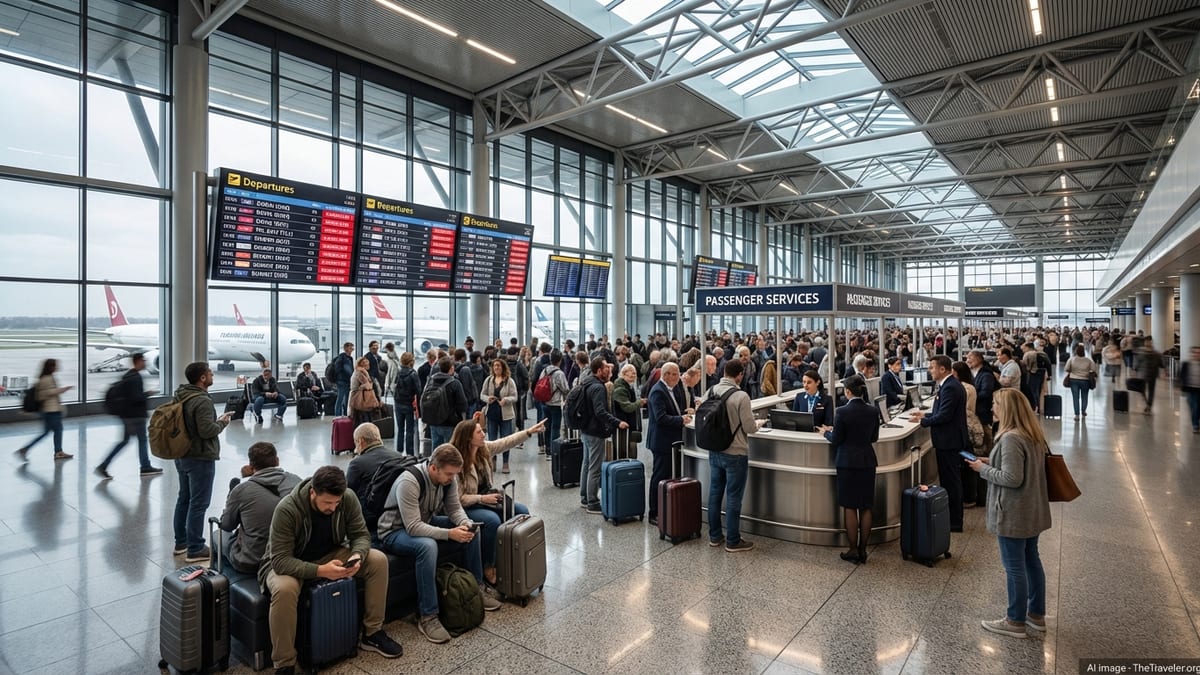
Highest Alert Level Confirmed in Latest FCDO Update
The Foreign, Commonwealth & Development Office travel page for Iran continues to display a clear warning advising against all travel, the most severe level in the UK’s risk scale. The advisory, marked as still current at 27 October 2026, underscores that British nationals already in Iran should “carefully consider” their presence and the risks involved in remaining in the country.
Publicly available information on the government portal highlights that British and British-Iranian dual nationals face a significant risk of arrest, questioning or detention. Having a British passport or links to the UK is described as sufficient for Iranian authorities to detain an individual, a risk that has been a consistent feature of UK guidance in recent years and remains central to the current warning.
The advisory also notes that if security conditions deteriorate, assistance options are extremely limited. Guidance documents and earlier government responses state that in an emergency involving serious unrest or violence, the UK government is not in a position to provide face-to-face consular help in Iran or to carry out evacuations, a constraint that remains in effect under the present alert posture.
Insurance implications are also spelled out. The FCDO warns that travelling against official advice can invalidate standard UK travel insurance policies. For travellers who disregard the warning and enter Iran, this can leave them personally liable for medical costs, emergency evacuation arrangements and other losses that would normally fall under an insurance policy.
Regional Conflict and Strikes on Iranian Infrastructure
The latest update to the Iran advisory draws a direct connection between the heightened alert level and the wider regional crisis. Government travel pages refer to a “deeply unpredictable” Middle East situation and a high risk of sudden escalation. Since conflict escalated in early 2026, Iranian statements about targeting locations associated with the United States and Israel have been highlighted in the UK’s public advisory language.
Recent open-source reporting describes strikes and retaliatory attacks affecting civilian and military infrastructure across the region, including within Iran. The FCDO summary notes that ports, roads, railways, bridges, energy facilities, oil production sites, water systems and airports have all been reported as impacted, contributing to an unstable operating environment for both residents and visitors.
Other governments have adopted similarly strong positions. The United States continues to list Iran at Level 4 “Do not travel” on its global advisory system, most recently updating its notice on 23 October 2026 with references to terrorism, unrest, kidnapping and wrongful detention risks. Canada and Australia also maintain their own highest-risk classifications for Iran and advise citizens already in the country to leave if they can do so safely.
This alignment of travel advice from several major outbound markets has sharply curtailed mainstream tourism and business trips to Iran, reinforcing the UK decision to keep its own advisory at the most restrictive level and to frame Iran as part of a broader pattern of high-risk destinations linked to the Middle East crisis.
Practical Impact on Flights, Borders and Mobility
For travellers who remain in or near Iran, mobility constraints are a key concern. The FCDO notes that air, land and sea routes are under Iranian government control and that ports and border crossings can close at short notice. Episodes of airspace disruption and flight cancellations have been a recurring theme in regional reporting since early 2026, and the UK guidance warns that British nationals across the Middle East should be prepared for sudden changes to flight schedules and airspace status.
Commercial connectivity between the UK and Iran is heavily reduced. The UK government’s advice points out that there are no direct flights from Iran to the United Kingdom and only a limited number of international services departing Iranian airports. Travellers transiting via hubs in the Gulf or Turkey are advised to monitor airline updates closely and to keep departure plans under constant review.
Land routes are presented as equally uncertain. The travel advice emphasizes that any decision to cross a land border should only be made after checking both the on-the-ground security picture and the entry rules of neighbouring states. Separate UK advisories currently caution against all travel to parts of Pakistan bordering Iran, underlining how conditions on both sides of frontier regions can affect potential exit routes.
Connectivity inside Iran is also described as unreliable. The FCDO warning references ongoing disruption to communications and internet access, a factor that complicates contact with family, employers and consular services, and which can slow the flow of safety information to those attempting to leave.
Detention Risks for Dual Nationals and Those With UK Links
One of the most prominent elements in the current UK travel warning is the focus on detention and legal risk, especially for dual nationals. Official travel advice reiterates that British-Iranian dual nationals, as well as individuals perceived to have links to the UK, are at particular risk of being detained or subjected to extended questioning.
Past cases, including the execution of a British-Iranian national in 2023 and other high-profile detentions, are referenced in the UK’s safety and security notes for Iran. These cases are cited in public documents as context for the present assessment that arrest and detention risks remain “very high” and are a primary driver of the advice against all travel.
The UK does not have a fully functioning resident embassy operation in Iran capable of delivering normal consular support. Publicly available policy statements and parliamentary material stress that options for UK intervention in individual cases are extremely limited. This gap has prompted repeated guidance that British nationals should not rely on consular services being able to resolve legal or immigration issues if they travel against advice.
For foreign visitors more broadly, the general trend among Western governments has been to warn that ordinary tourist or business activities could be misinterpreted by local security bodies. Photography, meeting contacts, or possessing certain communications equipment may attract unwanted attention, which is one of the reasons given in multiple national advisories for classifying Iran at the most restrictive travel level.
What the Highest Alert Level Means for UK-Based Travellers
For travellers and travel businesses in the United Kingdom, the decision to keep Iran at the highest warning level has immediate consequences. Many UK travel insurers exclude cover when the FCDO advises against all travel, meaning package providers, tour operators and corporate travel departments generally cannot service trips to Iran without bespoke arrangements.
Industry assessments of the Middle East crisis note that Iran remains grouped with a small cluster of destinations rated “Do not travel” or equivalent by multiple governments, alongside countries such as Iraq, Syria, Yemen and Ukraine. Travel management companies tracking government advisories describe this cluster as effectively closed to mainstream leisure and business travel, with only a small number of specialist or essential journeys still proceeding subject to strict internal risk controls.
For UK residents with personal or family ties to Iran, the advisory has more complex effects. Those already in the country are encouraged by public guidance to make contingency plans, ensure passports and visas remain valid, and consider exit options in case the security situation worsens further. Those considering travel for urgent reasons are advised to weigh the lack of consular access, the risk of arbitrary detention and the possibility of border closures or airspace disruptions.
Operationally, the UK government continues to recommend that anyone who is in Iran or travelling through nearby states sign up for email alerts on travel advice changes and monitor local and international media for developments. For now, however, the overall message from London is unchanged: Iran remains at the highest alert level, and UK nationals are urged not to travel.