


More news on this day
Amid heightened tensions and shifting advisories across the Middle East, publicly available UK government guidance shows that the United Kingdom continues to apply its highest travel warning level to Iran, contradicting suggestions that restrictions have recently been lifted.
Get the latest news straight to your inbox!
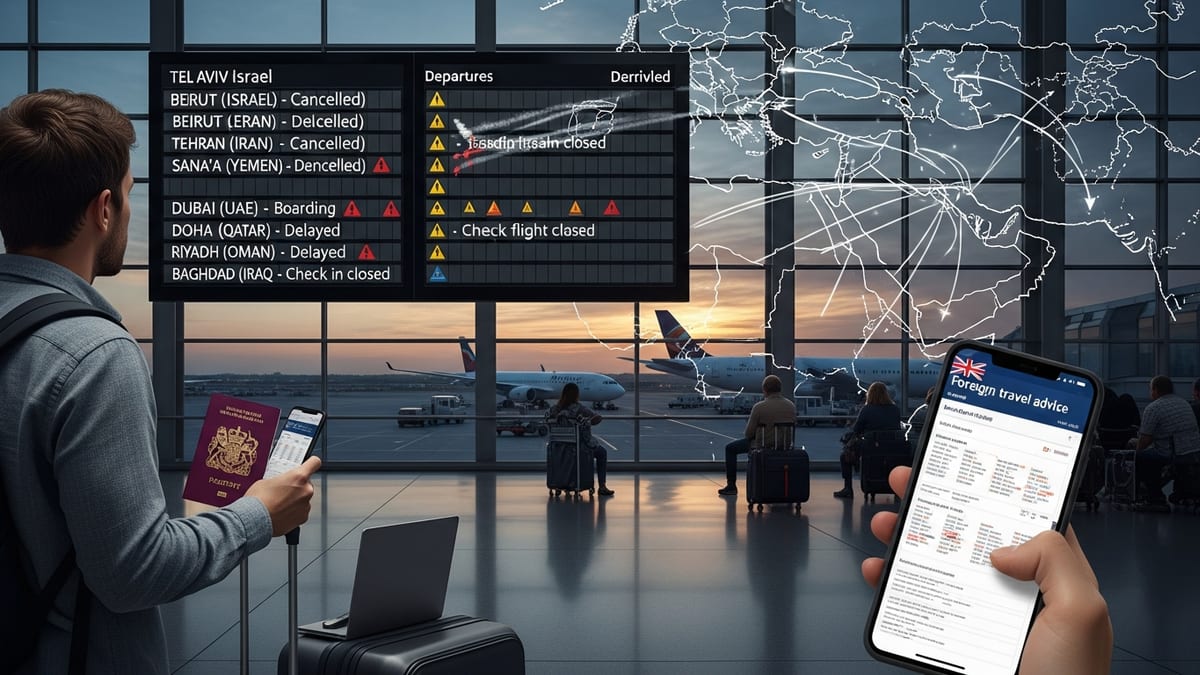
Current UK Travel Advice for Iran Remains at Maximum Level
The latest Foreign, Commonwealth and Development Office travel advice for Iran, updated on 27 October 2026, states that the UK "advises against all travel" to the country and highlights a significantly elevated risk environment for British nationals. The warnings section notes that travel insurance may be invalidated if travellers choose to ignore this guidance, underscoring the seriousness of the advisory.
The Iran page on the UK government’s foreign travel advice service lists the entire country under this highest warning level, citing risks such as arbitrary detention of foreign nationals, limited options for consular support and complications at land borders. British and British-Iranian dual nationals are singled out as facing a particularly acute risk of arrest, questioning or detention, even where there is no indication of criminal activity.
Additional government publications, including written parliamentary material and briefing documents from recent years, show a consistent pattern of caution that has not been relaxed in 2026. These documents reiterate that assistance for UK nationals in Iran is “extremely limited” and recommend that those already in the country carefully reassess their presence and consider options to leave while commercial routes remain available.
Independent aggregators that track official advisories from multiple governments also reflect a “do not travel” position for the United Kingdom with respect to Iran. Composite indices that draw on UK, US, Canadian and Australian data currently classify Iran at the highest risk tier, reinforcing the message that no substantive easing of UK advice has taken place.
How Confusion About a ‘Lifting’ of Warnings Emerged
Recent online claims that the UK had “lifted” its Iran travel warning appear to stem from narrower, technical changes rather than any downgrade of the core security assessment. Update trackers that monitor line-by-line edits to the Iran advisory record a June and August 2026 removal of references to the temporary withdrawal of certain UK embassy staff and the embassy’s remote operating posture.
Those adjustments reflected an operational shift rather than a change to the red “advise against all travel” status that applies to the entire country. The core headline warning remained intact, and subsequent official news pages summarising UK policy towards Iran continued to refer back to the full travel advisory for detailed guidance.
Specialist travel and insurance platforms that summarise FCDO changes for tour operators also recorded the removal of embassy staffing notes, alongside unrelated updates for destinations such as Indonesia and Bahrain. Read in isolation or via social media reposts, these partial summaries may have been interpreted as a broader softening of Iran advice, even though the highest-risk classification was unchanged.
The persistence of Level 4 or equivalent warnings from other Western governments has further undercut the notion of a UK policy shift. Current travel advisories from the United States, Canada and Australia likewise urge citizens not to travel to Iran, citing the risk of armed conflict, regional spillover from the 2026 Iran war, and ongoing cases of foreign nationals being detained on security-related charges.
Implications for Travellers, Airlines and Insurance
For UK-based travellers and the wider travel trade, the continued “against all travel” warning has practical consequences that go well beyond government messaging. Travel insurers commonly state that policies may not provide cover when a trip goes ahead against explicit FCDO advice, and industry-facing guidance stresses that customers should verify both their policy wording and the live Iran page on the government site before making any bookings.
Package tour operators and specialist adventure firms generally use FCDO red ratings as a hard stop when planning itineraries. Industry digests produced for corporate travel managers in 2026 list Iran alongside Iraq, Syria and parts of Lebanon as destinations where mainstream leisure and business travel programmes are effectively suspended. Where essential travel is contemplated for critical business or media assignments, companies typically apply enhanced risk assessments and bespoke insurance arrangements.
Commercial air links into Iran have also been affected by the security picture. Schedules have periodically been disrupted by military activity in the wider region and by airspace restrictions linked to the 2026 Iran conflict, and route networks serving Tehran and other cities remain relatively limited compared with pre-2018 levels. Travellers attempting to reach neighbouring countries by transiting over or near Iranian airspace have at times needed to adjust itineraries due to rerouting or last-minute cancellations.
For individual travellers considering overland travel involving Iran’s borders, government advisories recommend examining the separate travel advice pages for adjacent states. For example, UK guidance for parts of Pakistan that border Iran carries its own serious warnings, while Canadian and Australian advisories encourage detailed planning and confirmation of local conditions before approaching any crossing points in the region.
Regional Context Keeps Risk Levels Elevated
The decision to maintain the highest warning level for Iran is closely tied to the broader security situation across the Middle East in 2025 and 2026. Publicly available timelines describing the 2026 Iran war refer to multiple attacks on maritime traffic, a build-up of foreign military assets in nearby waters and documented incidents targeting energy infrastructure and shipping routes, all of which contribute to a fragile regional environment.
UK travel advice operates on a risk-based model set out in the FCDO’s guidance on how advisories are compiled. Under this framework, red “advise against all travel” ratings are reserved for situations of extreme and imminent danger or where threats are sufficiently widespread to have a severe impact on British nationals. The criteria list terrorism, armed conflict, wrongful detention and serious civil unrest among the factors that justify the highest warning level.
Diplomatic constraints also play a role. While the UK maintains an embassy presence in Tehran, previous drawdowns of staff and limits on movement have highlighted how rapidly the ability to provide consular assistance can be curtailed. The Iran advisory stresses that no face-to-face consular support can be guaranteed in an emergency and that the UK government may not be able to intervene should a British national encounter legal or security problems in the country.
Looking across international partners, there is currently a rare degree of alignment in how Iran is classified. The United States, Canada and Australia each list Iran in their own highest risk categories, typically labelled as “Do not travel,” and cite overlapping concerns, from arbitrary detention and hostage-taking to the risk of sudden border closures or broader conflict escalation.
What Prospective Travellers Should Watch For
For travellers following developments, the key indicator of any genuine easing would be a change in the headline wording of the UK’s Iran advisory. A shift from “advise against all travel” to “advise against all but essential travel,” or the removal of red shading from certain provinces on the advisory map, would represent a material downgrade in perceived risk. As of 28 October 2026, no such change has been recorded.
Government communications stress that travel advice is kept under constant review and that warnings can move in either direction as circumstances evolve. Updates can include additions, clarifications or removals of operational details without altering the underlying risk category, underlining the importance of reading the full advisory rather than relying on snippets circulating on social media or in brief third-party summaries.
Prospective visitors with cultural, family or business ties to Iran are therefore encouraged, by publicly available guidance, to monitor official travel advice channels closely and to consult insurers and travel providers before finalising plans. Where individuals are already in Iran, advisories recommend registering contact details with consular services where possible and developing contingency plans for rapid departure if the security situation deteriorates further.
Until a clear shift appears in the formal wording of the UK travel advisory, Iran remains subject to the United Kingdom’s strictest travel warning, and the practical landscape for tourism and discretionary travel to the country remains effectively closed for most British nationals.