


More news on this day
Britain has sharply tightened its travel advice for citizens considering trips to Iran, warning of a high risk of sudden escalation in the Middle East and reiterating that the government advises against all travel to the country.
Get the latest news straight to your inbox!
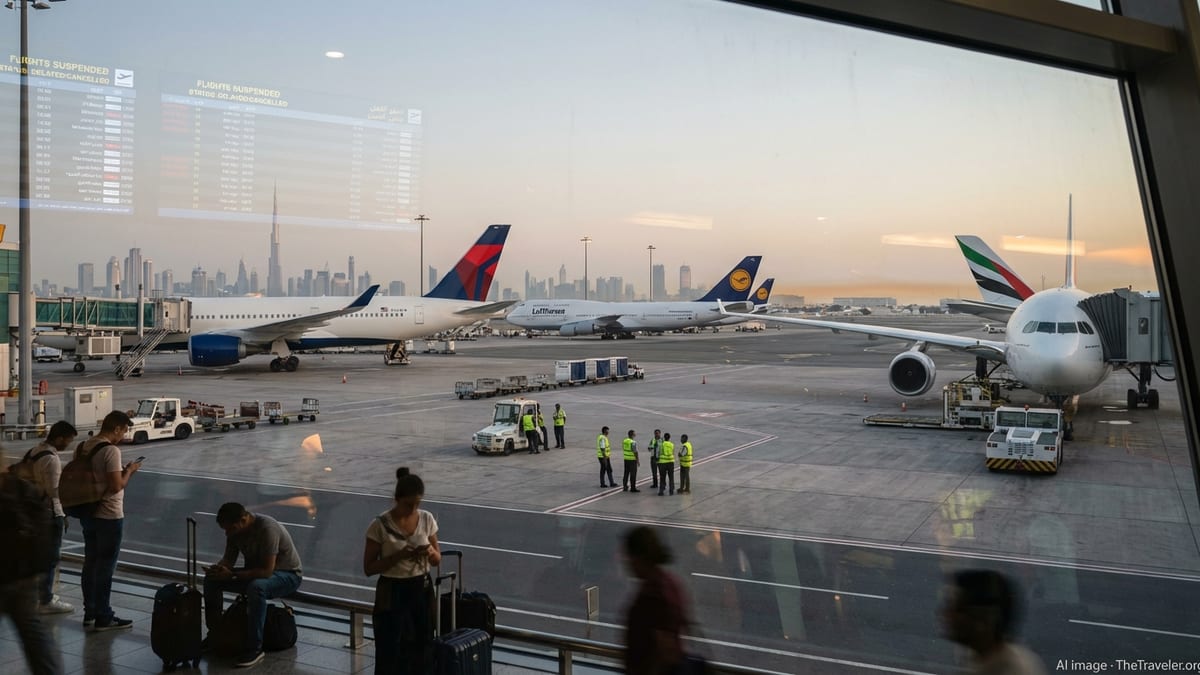
Updated advisory highlights risk of sudden escalation
The latest change to the United Kingdom’s official travel advice for Iran, published on the Foreign, Commonwealth and Development Office (FCDO) website on 27 October 2026, reinforces an existing recommendation against all travel and adds stronger language on regional instability. The section on regional tensions now states that the context in the Middle East remains deeply unpredictable and that the risk of sudden escalation is high.
Reporting by regional outlets, including Al Jazeera, early on Wednesday 28 October indicated that Britain’s updated wording was issued against the backdrop of ongoing conflict involving Iran and heightened military activity across the region. The change places renewed emphasis on the potential for fast-moving developments that could severely disrupt civilian travel, including short-notice airspace closures and route changes.
The advisory notes that British nationals who choose to enter or remain in Iran do so against official guidance and should be aware that travel insurance may be invalidated when visiting a destination under an “against all travel” warning. Publicly available analyses of government advisories point out that such a designation reflects both the direct security threat inside the country and the wider regional environment.
The updated text also underlines that, if security conditions deteriorate further, commercial options to leave could become extremely limited. In recent months, separate assessments of the wider Middle East crisis have documented reductions in airline operations and route suspensions linked to conflict-related risk, adding to the concern over reliable exit options from Iran.
No consular evacuation if crisis deepens
The FCDO warns that in the event of serious violence, unrest or a rapid deterioration in the security situation, the UK government will not be able to provide face-to-face consular assistance inside Iran. Official material openly acknowledges that there would be no capacity to evacuate British nationals from the country in an emergency.
This stance reflects long-standing operational constraints on consular work in Iran and an assessment that any crisis could escalate too quickly for large-scale organised departures. Previous parliamentary publications discussing Iran policy have already underlined that those who decide to travel to or remain in the country are doing so with very limited prospects of direct governmental support if circumstances worsen.
For travellers and expatriates, the implication is that contingency planning must rely primarily on private arrangements. UK travel advice urges anyone still in Iran, including dual nationals, to consider leaving while commercial routes remain available and to avoid overland exit options that traverse other high-risk border areas unless there is no alternative and risks are fully understood.
Business travellers are singled out for additional caution. The FCDO guidance advises companies sending staff into Iran, despite the warning, to take extra steps to protect sensitive commercial and personal data on electronic devices, reflecting broader concerns about security, surveillance and arbitrary detention.
Global warnings converge on Iran and the wider region
The British move aligns with similarly stark messages from other governments. Current advisories from Canada, Australia and several European states classify Iran as a destination to avoid altogether, citing volatile security conditions, the risk of arbitrary detention and the potential for spillover from regional conflict.
In recent weeks, a series of international notices have also highlighted broader risks for travellers across the Middle East. The United States continues to maintain a global caution related to heightened tensions, advising its citizens that unforeseen escalation could lead to flight cancellations, periodic airspace closures and sudden changes to airport operations in multiple countries.
Specialist risk assessments tracking government notices record that Iran remains at the highest alert level in the UK system, alongside a small group of states affected by war, severe internal conflict or a comparable threat environment. In the case of Iran, that classification is driven by a combination of internal political tensions, the legacy of the 2026 war, recent attacks on shipping in the Strait of Hormuz and the risk that further military incidents could rapidly broaden.
Parallel advisories from European governments and Japan also continue to stress the danger of being caught up in demonstrations, reprisals or security operations. Travellers are urged to avoid all gatherings, protests and politically sensitive locations, and to minimise movement if they are unable to depart.
Practical implications for travellers and airlines
For those planning trips involving Iran, the strengthened UK language has direct practical consequences. Many travel insurers explicitly exclude coverage for destinations that fall under a formal “do not travel” or “against all travel” designation, meaning policies purchased by British residents may offer no protection if a claim is linked to a journey into or through Iran.
Air connectivity has already been significantly reduced since the onset of the regional crisis. Industry assessments of the Middle East travel and hospitality sector note that several major carriers have either suspended their Tehran routes or imposed additional restrictions on flights using Iranian airspace. Data collected during the 2026 Strait of Hormuz shipping crisis shows that commercial operators are willing to curtail operations quickly when perceived risks rise, suggesting that remaining air links could be withdrawn at short notice.
Passengers transiting the region without entering Iran are also advised to monitor airline announcements closely. Global travel alerts encourage travellers to register contact details with their carriers, enable notifications and check booking status frequently in the days before departure. Even flights that do not touch Iranian territory can be affected by rerouting decisions or temporary airspace closures.
Tour operators that once marketed cultural itineraries in Iran had already scaled back activity in response to earlier waves of unrest and sanctions-related complications. The reinforced UK guidance, combined with similarly restrictive positions from other governments, is expected to keep mainstream leisure tourism to Iran effectively on hold for the foreseeable future.
What UK nationals currently in Iran are being told
Publicly accessible FCDO material advises British nationals who are already in Iran to stay away from demonstrations, political events, religious processions and any sites associated with security forces or critical infrastructure, including energy facilities and transport hubs. The guidance stresses the importance of following local developments through trusted news outlets while also keeping a close watch on official travel advisories, which may change with little warning.
Those who decide to leave are encouraged to use commercial flights while they are still operating, to maintain flexible itineraries and to be prepared for last-minute timetable changes. Passengers are advised to arrive at airports earlier than usual, carry essential documents and medications in hand luggage and retain sufficient funds to cover unexpected overnight stays or rebooked journeys if disruptions occur.
For individuals who, for personal or professional reasons, cannot depart immediately, safety recommendations focus on reducing exposure to potential flashpoints. Guidance encourages limiting non-essential movement, informing trusted contacts outside the country of travel plans and ensuring that copies of key documents are stored securely online or with a third party.
Across all of its publicly available material on Iran, the UK government reiterates that conditions could change quickly and without warning. With regional tensions already elevated and international advisories converging on a message of extreme caution, British travellers are being urged to reconsider any non-essential presence in Iran and to avoid new trips until the security picture improves.