


Co branded cruise credit cards promise free onboard spending, discounted sailings and extra perks at sea, but the details can make or break the value you actually get. I put the Norwegian Cruise Line World Mastercard and the Carnival World Mastercard side by side, looking at how they earn rewards, what those rewards are really worth and how each card fits the way real travelers cruise today.
Get the latest updates straight to your inbox!
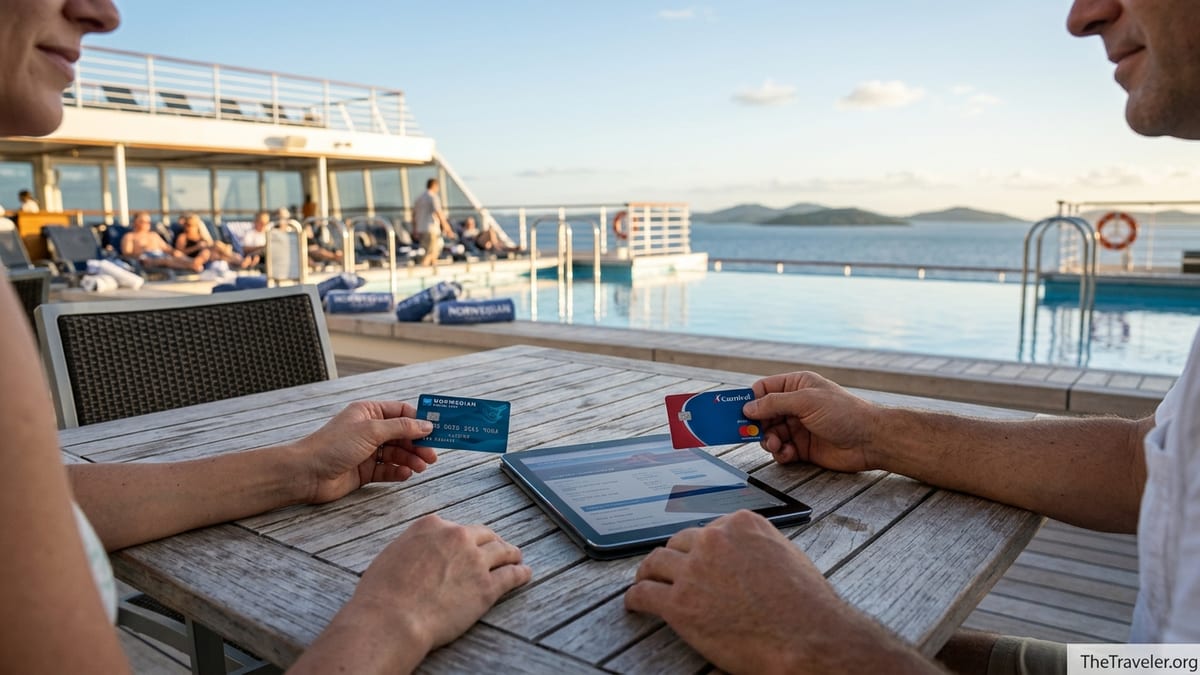
Card Basics: What Each Cruise Line Mastercard Offers
The Norwegian Cruise Line World Mastercard is issued by Bank of America and is designed for guests who sail primarily with Norwegian. Recent terms highlight no annual fee and no foreign transaction fees, which already makes it appealing for Americans who like to charge purchases in Europe or the Caribbean without an extra percentage tacked on. The card earns bonus points on Norwegian purchases, as well as on select travel categories like airline and hotel spending, making it function both as a cruise card and as a general travel card for some expenses.
The Carnival World Mastercard, issued by Barclays, also charges no annual fee and targets loyal Carnival guests. Its signature hook is a generous welcome bonus: a recent public offer has been 30,000 FunPoints after you spend 1,000 dollars in the first 90 days, redeemable for 300 dollars in Carnival onboard credit or toward eligible Carnival purchases. It also includes a promotional 0 percent introductory APR for six months on Carnival cruise bookings, a feature that can effectively give you short term financing on a family sailing.
In everyday use, both cards are standard World Mastercard products, so cardholders get the usual payment network protections and World level benefits such as certain travel and purchase protections that are common across many issuers. Where they differ is in how their proprietary currencies work: Norwegian’s WorldPoints versus Carnival’s FunPoints. Understanding those currencies, and how easily they translate into real discounts on cruises, is the key to choosing between them.
For a traveler who books one seven night Caribbean cruise every year and uses the card moderately at home, the absence of an annual fee on both products means you are not under pressure to “earn back” a fixed cost. Instead, your decision should rest on which redemption options line up better with the way you actually cruise and spend.
Earning Points: How Quickly Do Your Sea Days Add Up?
Norwegian’s World Mastercard focuses its highest earning rates on Norwegian Cruise Line itself. Current marketing materials emphasize three points per dollar on Norwegian purchases, including cruise fares and many onboard charges when properly linked to the card. The card also now commonly offers two points per dollar on eligible airline and hotel purchases, and one point per dollar on everything else. For example, if you charge a 2,500 dollar Norwegian Mediterranean sailing plus 500 dollars in onboard spending to the card, that 3,000 dollar total could earn roughly 9,000 points at three times earning, which is often enough for around 90 dollars in onboard credit or a modest discount on a future cruise, depending on the redemption option you choose.
The Carnival World Mastercard traditionally awards two FunPoints per dollar on Carnival purchases and one point per dollar on everything else, although targeted promotions can occasionally boost onboard earning rates for a given sailing. On paper that looks weaker than Norwegian’s three times multiplier, but Carnival attempts to compensate with a richer introductory bonus. Spend 1,000 dollars in the first three months on anything from groceries to gas and you can hit the 30,000 point threshold, which recently has been redeemable for about 300 dollars in onboard credit or toward an eligible cruise booking.
Consider two similar travelers who each book a 2,000 dollar cruise. The Norwegian guest charges the fare to the NCL World Mastercard and earns 6,000 to 9,000 points, depending on how much of the total is treated as Norwegian spend versus general travel. The Carnival guest books a 2,000 dollar fare and earns roughly 4,000 FunPoints at two times earning. On ongoing spending alone the Norwegian card tends to build points a little faster on cruise charges. However, the Carnival cardholder who times their first cruise after opening the account could walk onboard with the 300 dollar bonus already in hand, plus the base points.
For everyday expenses back home, both cards fall back to one point per dollar on non bonus categories. That means putting, for example, 10,000 dollars a year of general household spending on either card yields only about 100 dollars to 150 dollars of cruise value at best. In practice, most frequent travelers will be better off charging non travel purchases to a strong flat rate cash back or general travel card, and reserving these cruise cards for the cruise fares themselves and associated expenses.
Redeeming Rewards: Onboard Credit vs Cruise Discounts vs Cash
Norwegian’s WorldPoints can be redeemed in several ways that matter to cruisers. A core use is onboard credit, often at a straightforward rate such as 5,000 points for 50 dollars onboard, 10,000 for 100 dollars and so on. That means your 20,000 point balance might become 200 dollars to spend on specialty dining, shore excursions or spa treatments on your next Norwegian sailing. Points can also be applied as discounts off cruise fares, with award charts that roughly mirror those onboard credit levels, and occasionally for last minute cruise deals that offer outsized value if your travel schedule is flexible.
Norwegian allows points to be redeemed for more general travel rewards too, including flights, hotels, car rentals and gift cards. In those categories the value per point is usually closer to a simple cash back equivalent, often around one cent per point. So if you prefer, that same 20,000 points could help pay for a 200 dollar domestic flight to your embarkation port instead of a massage on the ship. The flexibility to choose between cruise specific and general travel redemptions is one of Norwegian’s advantages, especially for travelers who do not cruise every single year.
Carnival’s FunPoints are more narrowly focused on the line itself, but can deliver strong value when used exactly as intended. Redemptions typically start around 5,000 points for a 50 dollar onboard credit or a similar amount applied as a statement credit against eligible Carnival purchases made in the last several months. The key detail is that when you redeem points against a recent Carnival purchase, the effective value can sometimes beat one cent per point. For example, travelers report that applying 30,000 points against a 300 dollar cruise deposit or onboard pre purchase can effectively stretch further than a flat cash back redemption, particularly when combined with periodic promotions.
On the everyday side, FunPoints can be redeemed as statement credits for other travel purchases, but those redemptions often carry a slightly lower value per point than when used directly on Carnival products. That means if you are a flexible traveler who might cruise Carnival one year and take land based vacations the next, the Carnival card’s value between cruises is more limited than Norwegian’s broader travel options. The card really shines for guests who cruise Carnival often enough to spend their points regularly on sailings, upgrades and onboard fun.
Fees, Foreign Transaction Charges and Financing Perks
One of the strongest features of the Norwegian Cruise Line World Mastercard for international travelers is the lack of foreign transaction fees. If you frequently extend a Mediterranean or Baltic cruise with extra days in Barcelona, Rome or Copenhagen, paying for meals, train tickets and local tours in the local currency with your NCL card will generally not trigger the typical 3 percent surcharge that many basic credit cards charge. For a couple who spends 2,000 dollars abroad in a year, that alone can save about 60 dollars compared with a card that does impose foreign transaction fees.
The Carnival World Mastercard, by contrast, is not consistently marketed as a no foreign transaction fee product. Travelers who take Carnival’s European itineraries or use the card heavily overseas should double check the current terms and conditions before relying on it for international spending. If foreign transaction fees apply, using the card for purchases in euros or pounds between sailings could erode some of the value of the rewards you are earning.
Both cards share the positive of no annual fee, which keeps the carrying cost minimal for infrequent users. Where Carnival stands out instead is in its short term financing feature. The card has offered a six month 0 percent promotional APR on Carnival cruise bookings, allowing a family, for example, to pay off a 3,500 dollar Caribbean sailing over half a year without paying interest if they are disciplined. That can be useful if you are planning a once a year vacation and prefer a little breathing room in your budget, although it is still safer to book only what you know you can pay off within the promotional window.
Norwegian’s card does not lean on a specific 0 percent cruise financing perk in the same way, instead acting more like a standard travel rewards card with a variable APR on all purchases. For some travelers who pay in full each month, that makes little difference. But for cruisers who value flexibility in how quickly they pay off a big family sailing, Carnival’s promotional APR can tip the scales provided they also keep a close eye on interest rates once the promotion ends.
Real World Scenarios: Which Card Wins for Different Cruisers?
To see how these differences play out, imagine a couple from Texas who cruises with Norwegian every other year, often choosing a seven night Caribbean itinerary and occasionally a longer Mediterranean sailing. In off years they tend to fly to national parks or take road trips. For them, the Norwegian World Mastercard lines up neatly with their habits. They can earn accelerated points on Norwegian bookings and then decide whether to redeem those points for onboard dining packages on their next cruise or to offset airfare to Miami or Barcelona between cruises. The no foreign transaction fee benefit also makes it a smart choice for the days spent dining ashore in European ports, when many basic cards would charge extra.
By contrast, consider a family that is firmly loyal to Carnival out of Galveston or Port Canaveral, sailing almost every summer and sometimes on short weekend getaways. With that pattern, the Carnival World Mastercard’s big welcome bonus and cruise specific financing could be very appealing. Opening the card six months before a planned 2,500 dollar Caribbean cruise, hitting the 1,000 dollar spend requirement quickly with normal bills, and then redeeming 30,000 FunPoints for 300 dollars onboard credit might essentially pay for the kids’ arcade credits, a steakhouse dinner and a beach excursion without additional cash out of pocket.
There are also travelers who primarily care about minimizing fees and maximizing simplicity rather than juggling specialized cards. A solo traveler who moves between lines, sailing Carnival this year, Norwegian next and perhaps another brand later, might be better served by a strong general travel card from a major bank that earns transferable points on all travel rather than splitting spending between two niche products. They could still hold one cruise card, perhaps Norwegian’s, for its no foreign transaction fee feature and targeted cruise discounts, but keep most everyday purchases on a more flexible card.
In the end, neither cruise Mastercard is likely to be the single best card in a frequent traveler’s wallet. Their main value is in adding incremental perks and discounts on a cruise line you already love. The more consistent your loyalty to one brand, the more each card’s unique structure will reward you over time.
Beyond the Ship: Perks, Protections and Limitations
Because both products carry the World Mastercard label, cardholders typically receive a baseline set of travel related protections. These can include benefits such as secondary rental car coverage when you pay with the card, access to certain travel assistance services and some purchase protection on new items. While these perks are not as rich as those found on premium travel cards with annual fees, they do modestly improve the experience for cardholders who rent a car to drive from Orlando to the port, or who buy a new camera for their Alaska cruise and want a bit of extra coverage.
The Norwegian card’s ability to redeem for flights, hotels and general travel gift cards effectively makes it a hybrid between a cruise only card and a simple travel reward card. For example, a traveler could use their points to book a one night airport hotel in Seattle before an Alaska sailing, or apply them to a rental car used for a pre cruise road trip in Florida. That helps keep the card relevant during years when you are not boarding one of Norwegian’s ships.
The Carnival card, on the other hand, is structurally more focused on onboard fun. Cardholders commonly use their FunPoints for drink packages, specialty dining, internet packages or spa treatments. Someone sailing on Carnival Celebration might redeem points for a full cheers beverage package, knowing that it will cover their cocktails at the pool bar all week without additional charges to their onboard account. Outside of Carnival purchases, however, the card does not compete well with general travel credit cards in the broader market, especially once you factor in potential foreign transaction fees.
Both cards also lack some of the marquee cruise line perks that travelers sometimes expect from co branded cards, such as automatic cabin upgrades, free priority embarkation or waived gratuities. These higher value benefits are increasingly tied more to loyalty programs and cabin type than to cardholder status. Travelers who are hoping for VIP style treatment purely by holding a cruise credit card may be disappointed; these products are mainly about incremental savings rather than elite level privileges.
The Takeaway
When you strip away the marketing language and look at how the numbers work in practice, the Norwegian Cruise Line World Mastercard is stronger for travelers who want a flexible, no fee travel card that happens to favor Norwegian purchases. Its three times earning on Norwegian, two times on airline and hotel spending and no foreign transaction fees make it a solid companion for cruisers who mix ship based vacations with regular land based travel, and who appreciate the option to redeem points for flights or hotels when a cruise is not on the calendar.
The Carnival World Mastercard, by contrast, is more of a specialist. It is at its best for families and couples who cruise Carnival repeatedly and want to wring every bit of value from the 30,000 point welcome bonus and cruise specific financing offers. Used strategically, that initial 300 dollars in onboard credit can meaningfully reduce the out of pocket cost of a week at sea, especially when combined with occasional point multipliers on onboard charges.
Neither card is ideal as a one card solution for all your travel and everyday spending. Savvy cruisers will often pair a strong general travel credit card with one of these co branded options, using the cruise card for fares and onboard charges where the multipliers are highest and a more flexible card for everything else. Before applying, it is wise to map out your next couple of years of travel: if you see multiple Carnival sailings in your future, the Carnival World Mastercard can be a fun, focused tool. If your plans are more varied or lean toward Norwegian and international travel, the Norwegian World Mastercard offers broader, more flexible value at no annual cost.
FAQ
Q1. Which card is better overall, the Norwegian Cruise Line World Mastercard or the Carnival World Mastercard?
The better card depends on how you travel. Norwegian’s card is stronger for flexible travel and international spending, while Carnival’s card is best for loyal Carnival guests who will fully use the 30,000 point welcome bonus and promotional cruise financing.
Q2. Do either of these cruise credit cards charge an annual fee?
No. Both the Norwegian Cruise Line World Mastercard and the Carnival World Mastercard typically have no annual fee, so you are not paying a yearly charge just to keep the card open.
Q3. Which card earns more points on cruise purchases?
Norwegian’s card often earns three points per dollar on Norwegian purchases, while Carnival’s card commonly earns two points per dollar on Carnival purchases. However, Carnival sometimes makes up the difference with a larger upfront welcome bonus.
Q4. Can I use the rewards for anything other than cruises?
Norwegian’s WorldPoints can usually be redeemed for flights, hotels, car rentals and gift cards in addition to cruise related rewards. Carnival’s FunPoints deliver the best value on Carnival purchases and onboard credit, with less attractive value on general statement credits.
Q5. Which card is better for international travel?
The Norwegian Cruise Line World Mastercard is generally better for international travel because it is marketed with no foreign transaction fees. Carnival’s card may charge foreign transaction fees, so it can be less cost effective for purchases made in other currencies.
Q6. How valuable is the Carnival World Mastercard welcome bonus in practice?
The common offer of 30,000 FunPoints after 1,000 dollars of spending can translate into roughly 300 dollars in Carnival onboard credit or cruise discounts, enough to cover a drink package for one person, a specialty dinner for a family or a popular shore excursion.
Q7. Is it smart to finance a cruise with the Carnival World Mastercard 0 percent APR offer?
It can be useful if you are disciplined. The six month 0 percent APR on Carnival cruise bookings allows you to spread out payments without interest, but you must be confident you can pay the balance in full before the promotional period ends to avoid expensive finance charges later.
Q8. If I only cruise every few years, which card makes more sense?
If you cruise infrequently, Norwegian’s card is usually more practical because its points can be used for flights, hotels and other travel. That keeps rewards from sitting unused for years between sailings, something that can happen more easily with Carnival’s more cruise focused currency.
Q9. Can I combine these card rewards with loyalty program benefits from Norwegian or Carnival?
Yes. Credit card rewards are separate from cruise line loyalty programs, so you can earn points or FunPoints on your card while also collecting status nights and points in the cruise line’s loyalty program, potentially stacking onboard benefits and discounts.
Q10. Should I use these cards for everyday non travel spending?
You can, but it is rarely optimal. Because both cards usually earn only one point per dollar on everyday purchases, a strong cash back or general travel rewards card will typically give you better value for groceries, gas and other non travel expenses, while you reserve the cruise card for fares and onboard charges.