


You have the flights booked, the Airbnb reserved and your out-of-office ready. The last box to tick is travel insurance, and two names keep popping up: Allianz Travel Insurance and World Nomads. They both promise peace of mind when trips go wrong, but they are built for slightly different kinds of travelers. Understanding those differences before you buy can mean the difference between a smooth claim and an expensive surprise.
Get the latest updates straight to your inbox!
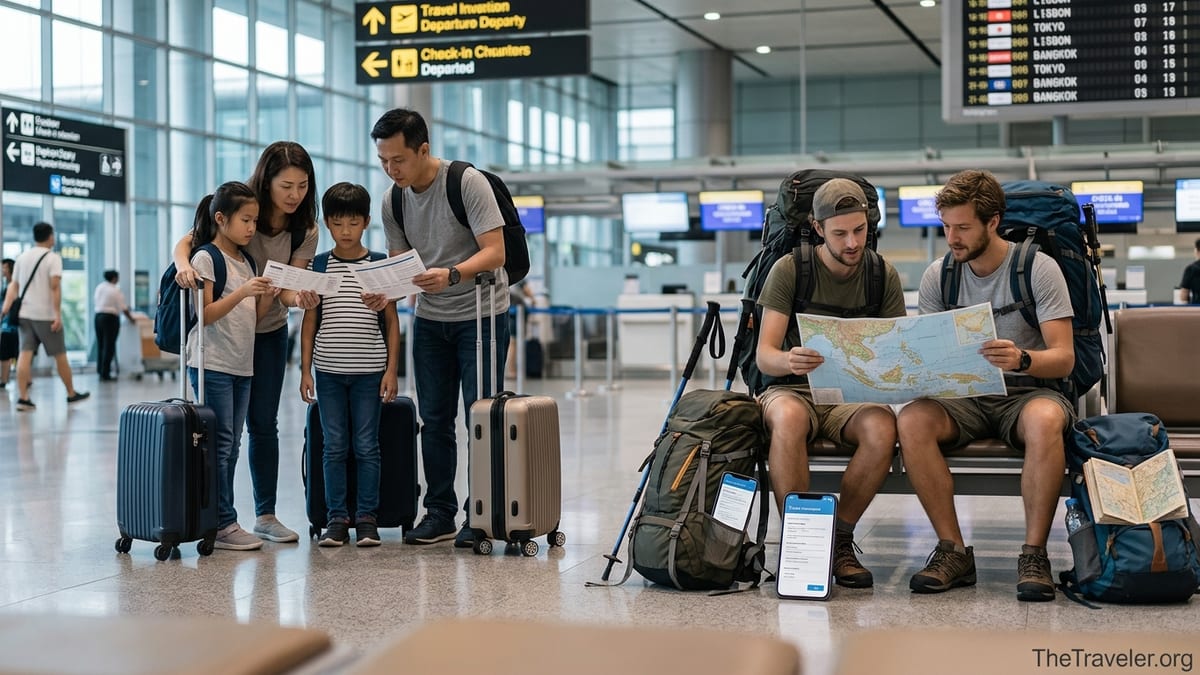
Allianz and World Nomads in a nutshell
Allianz Travel Insurance is part of Allianz Partners, a global insurance group that works closely with airlines, cruise lines and major travel agencies. In practice, that means you often see Allianz offered when you book a flight on a large US airline or a cruise with a major line. Its strengths are structured, tiered plans, strong trip cancellation and interruption coverage, plus options for both single-trip and annual multi-trip policies that suit frequent travelers and families.
World Nomads is a travel insurance brand originally founded in Australia and now underwritten in many markets by large insurers such as Chubb. It built its reputation targeting backpackers, long-term travelers and adventure-seekers who want to cover activities like scuba diving, trekking or mountain biking that many traditional policies exclude. Its policies are typically sold directly online rather than through airlines, and are best known for flexible coverage and broad activity lists.
Both Allianz and World Nomads offer the core benefits most travelers expect: emergency medical coverage, trip cancellation for specific covered reasons, trip interruption, baggage protection and some level of travel delay coverage. The key differences show up in how those benefits are structured, what kinds of trips they match, and how easy it is to buy, extend or claim on each policy.
For a typical American couple booking a one-week beach vacation in Mexico with flights through a major US airline, Allianz often appears naturally in the checkout flow and tends to be competitively priced for that straightforward trip. For a solo traveler planning a three-month backpacking loop through Thailand, Vietnam and Indonesia with rock climbing and scooter rentals along the way, World Nomads is more often the better fit because of its adventure-ready design.
Plan types and when each insurer fits best
Allianz organizes most of its products into OneTrip plans for a single itinerary and AllTrips plans that cover unlimited trips in a year. For example, a US resident booking a two-week trip to Italy might look at OneTrip Basic, Prime or Premier depending on how much trip cancellation coverage they need and how much they spent on flights and accommodations. A consultant who flies domestically twice a month and takes two international trips a year might instead choose an AllTrips Prime annual plan so they do not have to buy coverage with each booking.
World Nomads keeps its structure simpler, usually offering two levels: Standard and Explorer. A 30-year-old American heading to Southeast Asia for 30 days might see a rough price range of about 80 to 150 US dollars for the Standard plan and 120 to 220 dollars for the Explorer plan, depending on states of residence and exact coverage. The Standard plan suits many budget travelers who do not need high limits for expensive gear, while Explorer increases limits and adds coverage for more extreme sports.
In real life, this plays out like the following. A family of four from Chicago flying to Orlando for a spring break theme park trip has relatively low medical risk and moderate nonrefundable costs. They may get more value from an Allianz OneTrip Prime policy that bundles strong trip cancellation with free coverage for children 17 and under when traveling with a parent on that plan, which is a common selling point on Allianz’s US site. By contrast, a pair of friends planning to hike the Inca Trail near Cusco and then surf in northern Peru may find that World Nomads Explorer covers more of their planned hiking and water activities under one policy.
If you mostly take short, pre-planned holidays, work trips or cruises with fixed itineraries, Allianz’s structure and integration with airlines and cruise lines are often convenient. If your travel style leans toward open-ended journeys, lots of on-the-ground activity and changing plans mid-trip, World Nomads tends to be more forgiving and flexible.
Coverage highlights: medical, cancellation and adventure sports
Medical coverage is often the most critical piece of any travel insurance, especially for Americans leaving the country. World Nomads is particularly known for high emergency medical limits. A typical Standard plan for US residents often shows coverage in the millions of dollars for emergency medical and evacuation, with Explorer sometimes providing even higher caps or unlimited evacuation wording in some markets. This can matter if you are trekking in remote Nepal and need an air evacuation or are injured in a motorbike accident in Bali and require intensive care.
Allianz plans for US travelers usually offer more moderate but still substantial medical limits, structured by tier. A OneTrip Prime plan, for example, commonly includes emergency medical benefits that are adequate for common issues like a broken ankle in Paris or appendicitis in Mexico, but may be lower than the upper tiers of World Nomads Explorer. For most mainstream vacation and business travel, these limits are sufficient, particularly in destinations with reasonable medical costs.
Trip cancellation is an area where Allianz often shines. Its single-trip plans are designed around reimbursing prepaid, nonrefundable trip costs if you cancel for a covered reason, such as a serious illness, injury, death in the family, or certain natural disasters. Allianz also offers a Cancel Anytime upgrade on some plans like OneTrip Prime and Premier that can reimburse up to a percentage of trip costs if you cancel for reasons not otherwise covered, such as a breakup or simply deciding not to travel, subject to timelines and conditions. This upgrade can be useful for high-cost trips like a 7,000 dollar European river cruise booked a year in advance.
World Nomads also covers trip cancellation and interruption for defined reasons like serious illness or injury, but it does not typically market a broad cancel-for-any-reason style upgrade in the same way. Where it excels is in adventure sport coverage. Activities like scuba diving to a certain depth, licensed bungee jumping, whitewater rafting within specified grades or multi-day trekking are often either directly listed or available at the Explorer level, making it popular among travelers planning more active itineraries.
Real-world examples: what you might actually pay and claim
Consider a concrete scenario. A couple in their early forties from Denver books a ten-day trip to Portugal in September with 3,500 dollars total in prepaid costs. They compare options on the insurer websites. Allianz shows a OneTrip Prime policy priced in the low hundreds of dollars for both travelers combined, offering trip cancellation up to the full trip cost, emergency medical coverage likely in the tens of thousands to low hundreds of thousands of dollars range, and travel delay and baggage benefits that would cover a missed connection in Lisbon or a lost suitcase at Porto Airport.
On World Nomads, that same couple might each need their own policy. A Standard plan for a ten-day trip to Western Europe for a traveler in their forties can easily fall somewhere between about 80 and 150 dollars per person, depending on state of residence, for strong medical coverage and solid interruption benefits but generally less focus on high trip cancellation caps tailored to exact trip cost. If they care more about potential medical emergencies and plan on renting surf gear in the Algarve, World Nomads could be worth the additional cost. If they mainly worry about having to cancel before departure because of a parent’s illness, Allianz’s cancellation-centric design is attractive.
Now imagine a 29-year-old graphic designer from New York who quits her job to travel for three months through Thailand, Laos and Vietnam, booking most guesthouses along the way rather than prepaying months in advance. With relatively low prepaid costs but a high risk of scooter crashes, foodborne illness and hospital visits, she gets a World Nomads Standard quote in the rough range of 200 to 400 dollars for the full three months. The high emergency medical limit and ability to extend or adjust coverage mid-trip are particularly compelling.
For that same traveler, Allianz does offer single-trip plans that could technically cover a three-month journey, but pricing may be less favorable when the main risk is medical rather than prepaid cancellations. Allianz’s AllTrips annual plan could be an alternative if she expects multiple international trips in the same year, but many long-term backpackers still lean toward World Nomads because of its focus on long-duration adventure travel.
Claims, customer experience and fine print to watch
Claims experiences can vary widely and are influenced by how well a traveler documented their situation and whether the reason is clearly listed as covered. Allianz’s large scale and long-standing partnerships mean it processes an enormous number of flight and cruise-related claims each year. Real-world reports from travelers often mention that straightforward medical claims, such as reimbursement for urgent care abroad or documented trip cancellations for surgery, can be paid in a matter of weeks, but more complex scenarios or incomplete documentation can drag on and require follow-up.
World Nomads, working with underwriters like Chubb, tends to attract younger, more adventurous travelers who may test the edges of policy wording. Travelers who clearly fit within listed activities and provide thorough medical or police reports after an incident often report satisfactory outcomes, but there are also stories of denied claims when an activity fell outside the covered list or when a traveler ignored local safety rules, such as riding a motorbike without a proper license or helmet where law requires it.
With both Allianz and World Nomads, pre-existing conditions and timelines are critical. Many Allianz plans include a pre-existing medical condition waiver if you purchase the policy within a set number of days, often around two weeks, of your first trip payment and meet other conditions such as being medically able to travel when you buy. If you wait until two months after booking to buy the policy, coverage for issues related to a chronic heart condition or recent surgery might be excluded. World Nomads also has specific language around pre-existing conditions and stability periods that you need to read for your state or country.
Another common friction point is documentation. For example, a traveler who cancels a cruise because of a new diagnosis must be prepared to supply medical records or a doctor’s letter with exact dates, airline or cruise cancellation receipts and proof of nonrefundable payments. Some Allianz customers have reported frustration when digital portals were confusing or when additional documents were requested multiple times. World Nomads claimants occasionally run into delays when filing from remote locations or when local medical providers issue sparse paperwork. In both cases, organized records and clear timelines are your strongest asset.
COVID-19 and modern risk coverage
Both Allianz and World Nomads have adapted their policies since the early days of the pandemic, but how COVID-19 is covered still depends heavily on your specific plan, residence and purchase date. World Nomads typically treats COVID-19 as any other covered illness under its medical benefits for many residents, which means that if you become sick with COVID-19 while traveling, medically necessary treatment and, if needed, evacuation may be covered, subject to policy terms and limits. They also describe scenarios where a doctor ordering you not to travel due to COVID-19 can trigger trip cancellation or interruption coverage, again within defined conditions.
Allianz’s approach, like many major insurers, is more detailed and can vary by plan. In broad terms, getting sick with COVID-19 before or during your trip can be considered a covered reason for trip cancellation or interruption on many US policies, as long as a physician confirms the diagnosis and advises against travel. However, fear of travel, border closures, or government advisories alone may not be covered unless you purchased an eligible Cancel Anytime upgrade. Some plans sold through airlines focus more tightly on transportation costs and may have narrower pandemic-related benefits than comprehensive plans bought directly from Allianz.
For a practical example, imagine you are flying from Los Angeles to Tokyo with an Allianz policy attached to your air ticket. One week before departure, you test positive for COVID-19 and your doctor tells you not to fly. If you cancel your flights and submit your positive test result and physician’s note, your Allianz trip cancellation benefit may reimburse the nonrefundable portion of those tickets. If you only feel nervous about higher case numbers in Japan without a diagnosis, standard trip cancellation would usually not apply unless you had a Cancel Anytime style benefit that partially covers cancellations for nonlisted reasons.
With World Nomads, a backpacker in Colombia who tests positive halfway through a trip, is ordered to isolate and ends up rebooking flights home might claim medical costs for treatment and some additional accommodation and transportation expenses if they meet the plan’s definitions. In both systems, everything hinges on policy wording, documentation and whether your loss was sudden and unforeseen, so you should always read the COVID-19 sections of the policy for your state or country before purchase.
Choosing between Allianz and World Nomads for your trip
Choosing between Allianz and World Nomads is less about which brand is better in the abstract and more about which one aligns with your specific itinerary, risks and budget. Start by listing your main concerns. If your top worry is losing several thousand dollars in prepaid cruise or safari deposits if a family member gets sick, Allianz’s structure around trip cost and strong cancellation and interruption benefits for defined reasons will often be the more efficient match.
If what keeps you up at night is the thought of being injured in a scooter crash in Thailand, twisting an ankle trekking in Patagonia, or needing helicopter evacuation while hiking in the Rockies, World Nomads’ higher medical and evacuation limits and broad activity coverage usually look more reassuring. Even if premiums are higher than some basic policies, many long-term or adventure travelers view that as fair value for the peace of mind.
Your travel frequency also matters. A frequent flyer who takes at least four or five trips a year, domestic and international combined, may get more consistent value out of an Allianz AllTrips annual plan that automatically covers every qualifying trip over the next twelve months, including last-minute work conferences and weekend city breaks. A digital nomad who spends six months at a time living abroad may instead find that a longer World Nomads policy or a mix of World Nomads and other expat-focused medical coverage is more suitable.
Budget is a final filter. If you are trying to protect a relatively modest trip cost with limited adventure plans, an entry-level Allianz plan bought through an airline or directly can be a good balance of cost and protection. If you are investing in a once-in-a-decade climbing expedition, backcountry skiing trip or multi-country motorcycle tour, plan to spend more on a policy like World Nomads Explorer that actually covers the things you intend to do.
The Takeaway
Allianz Travel Insurance and World Nomads both sit in the top tier of global travel insurers, but they serve slightly different niches. Allianz is the reliable workhorse that excels at protecting prepaid trip costs for traditional vacations, cruises and business travel, with convenient add-ons like Cancel Anytime on select plans and annual policies for frequent travelers. World Nomads is the adventure-focused specialist designed for people who measure trips in months, not days, and who want to surf, dive, trek and ride motorbikes far from home without worrying as much about medical limits.
For a typical week-long city break or a family beach holiday, especially if you book through a major airline or cruise line, Allianz will often be the more natural and cost-effective choice. For long-term backpacking, multi-country itineraries and activity-heavy trips where your main concern is getting good medical treatment and evacuation if something goes wrong, World Nomads tends to offer more generous coverage for the way you actually travel.
The best way to decide is to price both options for your exact dates, destinations, ages and trip costs, then read at least the benefits summary and the sections on medical coverage, exclusions, pre-existing conditions and COVID-19. Ten extra minutes of comparison now can prevent months of stress later if you ever have to file a claim.
FAQ
Q1. Which is cheaper, Allianz or World Nomads?
In many cases, Allianz is cheaper for short, straightforward trips with moderate medical needs, while World Nomads can be more expensive but offers higher medical limits and adventure coverage, especially for longer itineraries.
Q2. Is World Nomads better for backpackers?
World Nomads is often a strong fit for backpackers and long-term travelers because it offers high emergency medical limits, covers many adventure sports and allows you to buy or extend coverage while already abroad in many situations.
Q3. Does Allianz offer cancel for any reason coverage?
Allianz does not label it exactly as cancel for any reason, but some OneTrip plans offer a Cancel Anytime upgrade that can reimburse a percentage of nonrefundable trip costs if you cancel for reasons not otherwise covered, subject to terms and deadlines.
Q4. Can I get COVID-19 coverage with both Allianz and World Nomads?
Both providers offer some COVID-19 related benefits on many current plans, typically treating COVID-19 like any other covered illness, but coverage details vary by plan and jurisdiction, so you need to read the specific policy for your residence.
Q5. Which insurer is better for adventure sports?
World Nomads generally provides broader built-in coverage for activities like scuba diving, trekking and certain adventure sports, especially on its Explorer plan, while Allianz may exclude or limit higher-risk activities unless specifically included.
Q6. Are annual travel insurance plans available from both?
Allianz offers AllTrips annual plans that cover multiple trips over a year and are popular with frequent travelers; World Nomads focuses more on single continuous trips or defined trip periods rather than classic multi-trip annual packages.
Q7. How do claims compare between Allianz and World Nomads?
Both pay valid claims, but experiences vary and often depend on documentation and whether the situation falls clearly within covered reasons. Allianz processes large volumes tied to flights and cruises, while World Nomads often deals with adventure and medical claims from independent travelers.
Q8. Can I buy coverage after I start my trip?
World Nomads is known for allowing many travelers to buy or extend coverage after departure, subject to local rules, while Allianz policies for US residents generally need to be purchased before or very near the time of your first trip payment.
Q9. Which is better for families with children?
Allianz can be attractive for families because some OneTrip plans commonly include free coverage for children 17 and under traveling with a parent or grandparent, while World Nomads usually requires separate policies and pricing for each insured person.
Q10. How should I choose between Allianz and World Nomads?
Match the policy to your real risks: pick Allianz if your priority is protecting prepaid trip costs for relatively structured vacations and business travel, and lean toward World Nomads if high medical limits and adventure activity coverage for longer, more flexible trips matter more.