


Spend enough nights on the road and patterns start to emerge. Among frequent travelers, one of the clearest is how often the InterContinental name shows up on repeat itineraries. Business road warriors, points obsessives and long-haul leisure travelers all seem to keep circling back to the brand. After digging into the history, talking with road-tested guests and looking closely at what InterContinental is doing in 2026, it starts to make sense why.
Get the latest updates straight to your inbox!
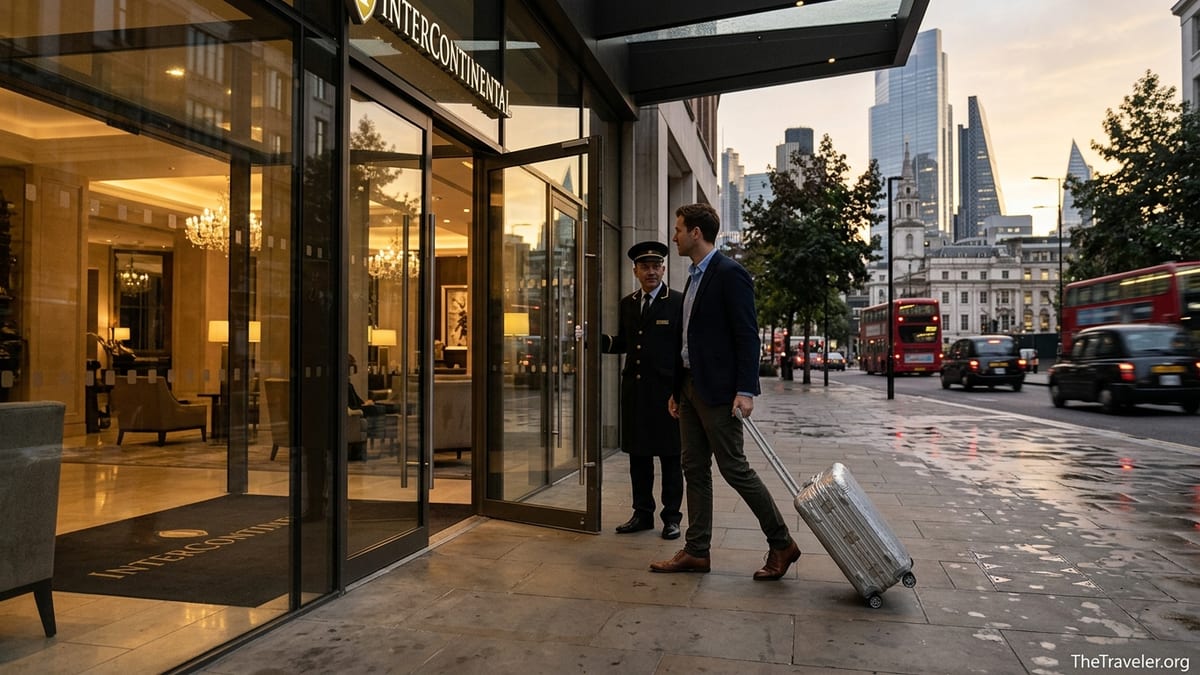
A Legacy Brand That Grew Up With Global Travel
InterContinental Hotels & Resorts traces its roots to 1946, when Pan Am founder Juan Trippe launched the brand to house the emerging era of international air travelers. The idea was simple and ambitious: create reliable luxury hotels in key gateway cities so passengers could land in Caracas, Beirut or Tokyo and know exactly where to stay. That early focus on global hubs means many InterContinental properties today occupy coveted addresses that newer luxury brands would struggle to secure.
In practice, that history shows up in very specific ways. The InterContinental Paris Le Grand, for example, opened in the 19th century and today overlooks the Palais Garnier opera house, making it a favorite for travelers who want to step straight into classic Parisian streetscapes the moment they leave the lobby. In London, the InterContinental London Park Lane sits between Hyde Park and Green Park on one of the city’s most prestigious stretches of real estate, in a spot once occupied by a royal residence. Frequent guests do not need a map to get their bearings when they arrive in these cities; they simply book the same hotels they have trusted for years.
Scale matters too. As part of IHG Hotels & Resorts, InterContinental belongs to a portfolio that now runs to well over 6,000 properties across more than 100 countries, with the luxury and lifestyle segment steadily expanding. That reach allows the brand to be a recurring thread in very different types of trips. A traveler might stay at the InterContinental San Diego during a West Coast business swing, then redeem points at the InterContinental Bora Bora Resort & Thalasso Spa for a honeymoon overwater villa, all while dealing with the same loyalty program and broadly similar service expectations.
For road-tested travelers, this combination of heritage, location and scale is what turns a hotel name into a habit. When you fly into a city late, jet-lagged and behind on email, it is easier to default to a brand you already understand than to gamble on something new.
Consistent Comfort Without Cookie-Cutter Sameness
What keeps frequent guests returning is not just the address but what happens after check-in. In recent years, InterContinental has pushed a brand evolution that treats each property as its own “experience-driven” concept while keeping core standards for beds, bathrooms and service. The result is that a room in Hanoi feels unmistakably InterContinental in comfort, yet its design, artwork and restaurant menus are grounded in Vietnam rather than copied from a template in New York.
Take the InterContinental Danang Sun Peninsula Resort in central Vietnam. Perched in a private bay outside Da Nang, it has terraced pavilions designed by a star architect, a cable car connecting different levels of the resort and a destination French restaurant led by a Michelin-starred chef. Compare that to the InterContinental Los Angeles Downtown, which crowns one of the tallest towers in the city with a rooftop bar, high-tech guestrooms and sweeping skyline views. Both feel luxurious and unmistakably InterContinental, but they respond to very different reasons for travel.
For guests who log dozens of nights a year, this balance between familiarity and local flavor is the real hook. You know your bed will be supportive, the blackout curtains will actually block light and the shower will have strong water pressure. At the same time, breakfast might feature congee and dim sum in Hong Kong, street-food inspired dishes in Bangkok, or house-made pastries facing the Champs-Élysées in Paris. There is enough consistency to make sleep and work predictable, and enough variety that repeat stays do not blend into a blur.
Several frequent guests describe a specific pattern. They may experiment with boutique brands or new openings when traveling for leisure, but on compressed business trips with tight schedules, they default to InterContinental because they do not have to think about basics. Knowing that the room will be quiet, the desk usable and the internet reliable removes a layer of risk from the travel equation.
Room to Work, Room to Breathe
InterContinental’s history as a business traveler brand shows up clearly in its room design and shared spaces, and frequent travelers notice. Standard rooms at city properties typically feature large desks with multiple power outlets, task lighting and ergonomic chairs, along with comfortable armchairs or sofas that let you change posture during long evenings of work. It sounds minor, but after a week of trying to work on a laptop at a tiny cafe table elsewhere, it stops feeling minor.
Consider a common scenario: an executive arriving in New York from London on a Sunday evening for Monday morning meetings. At the InterContinental New York Times Square, they can check in late, plug in multiple devices at the desk without hunting for adapters, print materials through the business center and use the blackout curtains and quiet room design to grab six hours of solid sleep before a full day. For that traveler, getting the basics right repeatedly is as important as any luxury detail.
Shared spaces often play a similar dual role. Lounges, lobbies and bar areas are designed so guests can hold informal meetings without shouting over nightclub-level music, but they still feel like social spaces rather than sterile waiting rooms. At the InterContinental San Diego, for example, many business travelers blend into leisure guests in the lobby bar that opens onto the waterfront, where it is common to see laptops and contract folders alongside cocktails during late afternoons.
For families and leisure travelers, “room to breathe” takes on a different meaning. Many resort properties, such as InterContinental Phu Quoc or InterContinental Fiji Golf Resort & Spa, emphasize wide beaches, multi-bedroom villas and kids’ clubs that allow parents genuine downtime. For frequent travelers who often see hotels only as a blur of corridors and elevators, these resorts provide a welcome contrast within the same brand family, making it easier to justify coming back on vacation.
Loyalty That Feels Tangible: IHG One Rewards and Ambassador
The other big reason frequent travelers keep returning to InterContinental is simple: the loyalty math works. InterContinental participates in IHG One Rewards, which has been overhauled in recent years to emphasize on-property benefits like breakfast, lounge access and suite upgrades alongside points. For many repeat guests, reaching Platinum or Diamond Elite status has become a core part of their travel strategy.
At the Diamond Elite level, for example, members can choose free hot breakfast for two as their welcome amenity at most brands, including InterContinental, which removes a recurring daily cost that quickly adds up on a week-long business trip. Diamond and high Platinum guests also have a realistic chance at complimentary upgrades to better view rooms or, at some hotels and on non-peak nights, club-level floors. Travelers on industry forums regularly report being moved from standard rooms to Club InterContinental floors in cities such as Hong Kong or Singapore, gaining lounge access and evening canapes in the process.
IHG’s Milestone Rewards, earned every 10 qualifying nights starting at 20 nights a year, are another hook. A traveler who spends 40 to 50 nights annually at IHG brands can select rewards like annual Club lounge membership, food and beverage credits or confirmable suite upgrades. Crucially, those lounge passes typically work at many InterContinental and Crowne Plaza properties for the rest of the current year and the full following year, which means a single heavy travel year can unlock two years of lounge breakfasts, snacks and quiet workspaces across multiple trips.
On top of that sits InterContinental Ambassador, a paid program that focuses specifically on the brand. Ambassador membership usually includes a guaranteed room upgrade on paid stays at InterContinental hotels, a complimentary weekend night on a two-night stay booked at qualifying rates and a late checkout benefit. For travelers who plan two or three weekends a year at InterContinental properties, that free night can quickly offset the annual fee. Many frequent guests stack Ambassador with IHG One Rewards elite status, using elite benefits for business nights and Ambassador perks for personal weekend breaks.
The Quiet Power of Club InterContinental
For many veteran travelers, Club InterContinental is the real differentiator and a key reason they steer their stays back toward the brand. At properties with a Club lounge, eligible guests or those paying for access gain a semi-private space with breakfast, afternoon tea and evening canapes, along with meeting tables and attentive staff. In busy financial centers, those lounges can effectively replace a coworking membership for the duration of a trip.
At the InterContinental Grand Stanford Hong Kong, for instance, Club guests can start the day with a buffet and made-to-order dishes while surrounded by harbor views, then return in the evening for light dinners and drinks. In cities like Bangkok or Kuala Lumpur, Club lounges are often generous with both food and hours, making them particularly attractive for long-haul travelers arriving at odd times. Frequent guests with annual lounge passes describe structuring their travel days around lounge access: eating breakfast there, catching up on work in a quiet corner midafternoon, then holding one or two short meetings before heading out into the city.
The practical value becomes most obvious when something goes wrong. When a flight cancellation in winter strands travelers in London, Club InterContinental guests at Park Lane have a calm space to rebook flights, charge devices and eat something decent without joining the chaos in airport food courts. Lounge staff are used to dealing with these situations and can often help with printing new boarding passes, contacting airlines or simply offering a quiet chair and a cup of tea.
Financially, the numbers can add up quickly. A business traveler spending five nights a month at properties with good lounges, combined with a Milestone-earned lounge membership, might easily save the cost of daily restaurant breakfasts and some evening meals. Over the course of a year, that difference can outweigh the annual fee of a premium IHG credit card or the time spent aiming for elite status, which is why seasoned travelers keep feeding their nights into the same ecosystem.
Designed for the Realities of Long-Haul Travel
InterContinental’s recent brand evolution has leaned into the realities of modern long-haul travel. Many properties now integrate wellness and circadian-friendly design, from better blackout curtains and quieter HVAC systems to partnerships with tools like the Timeshifter jet lag app, which some InterContinental hotels offer so guests can plan light exposure and sleep around flight times using current circadian science.
On the ground, this sensitivity shows up in operational details. In major transit hubs such as Doha, Dubai or Frankfurt, InterContinental properties commonly respond to early-arriving long-haul flights and late-night departures by offering flexible check-in or paid day-use rooms, so guests can shower, rest and work between flights. In Asia and the Middle East, 24-hour gyms and late-night in-room dining are treated as essentials rather than afterthoughts, recognizing that guests are often operating on multiple time zones.
Frequent travelers also appreciate practical features like plenty of universal outlets and USB ports, large showers, decent coffee machines in-room and thoughtful minibars. At high-end resorts such as InterContinental Bora Bora or InterContinental Maldives, that might mean in-villa espresso machines and deep soaking tubs overlooking the water. In urban properties like InterContinental Tokyo Bay, it might mean a compact but efficient room with a good work area and a bathroom stocked with quality amenities so guests can land, reset and head straight into meetings.
None of these touches are revolutionary on their own, but taken together they signal a brand that has spent decades watching how people actually travel. For those spending 50 or more nights per year away from home, the accumulation of small conveniences is often what tips repeat bookings in favor of one brand over another.
The Takeaway
Frequent travelers rarely stay loyal to a hotel brand out of sentimentality. They come back if a name on the door consistently translates into easier trips and better value. InterContinental’s long history with international travel, prime locations and focus on both comfort and local character have given it a built-in advantage in that respect. Layer on top a loyalty ecosystem that increasingly rewards on-property experiences, and the brand becomes more than just a place to sleep.
For a consultant flying between New York, London and Hong Kong, InterContinental might mean quiet rooms, workable desks and a Club lounge where they can eat breakfast, hold informal meetings and manage jet lag. For a couple planning a special anniversary, the same brand might mean redeeming a bundle of IHG points for an overwater villa in Bora Bora. For a family, it might mean using a complimentary Ambassador weekend night to make a city break in Paris more affordable.
In a hotel market where new concepts appear every season, that combination of reliability, thoughtful design and tangible rewards explains why so many seasoned travelers quietly default back to InterContinental when it really matters. Once you have experienced how much smoother your trips can feel with that familiarity on your side, it becomes much easier to understand why people keep returning.
FAQ
Q1. Is InterContinental a good choice for business travelers who need to work from their room?
Yes. Most InterContinental hotels prioritize large desks, ample power outlets, strong Wi-Fi and quiet rooms, so guests can comfortably work for hours without having to leave the room.
Q2. How does InterContinental fit into the IHG One Rewards program?
InterContinental is one of IHG’s flagship luxury brands, and every qualifying stay earns IHG One Rewards points. Elite members can enjoy perks like bonus points, upgrades and, at higher tiers, free breakfast or lounge access at many properties.
Q3. What is InterContinental Ambassador and is it worth paying for?
InterContinental Ambassador is a paid status that focuses on InterContinental stays, typically including a guaranteed room upgrade, late checkout and a free weekend night on eligible rates. It tends to be good value for travelers who plan at least one or two paid InterContinental weekends each year.
Q4. Do all InterContinental hotels have a Club InterContinental lounge?
No. Many city and resort properties offer a Club lounge, but not all. Where it exists, Club InterContinental usually includes daily breakfast, evening canapes and a quiet place to work or relax, so it is worth checking when you book.
Q5. Can I earn and redeem IHG points at every InterContinental property?
Almost all InterContinental hotels participate in IHG One Rewards, so you can both earn and redeem points, although exact redemption rates and availability vary by date and location.
Q6. Are InterContinental hotels only for luxury travelers with big budgets?
InterContinental sits in the luxury segment, but prices vary widely by city and season. In some markets, especially in parts of Asia or the Middle East, nightly rates can be surprisingly competitive, particularly when using points or off-peak promotions.
Q7. What kind of benefits can I expect as a Diamond Elite member at InterContinental?
Diamond Elite members generally receive bonus points, priority check-in, a welcome amenity that can include free breakfast for two, and better odds of receiving room upgrades or lounge access where available, though benefits can still differ slightly by hotel.
Q8. Are InterContinental resorts family-friendly?
Many InterContinental resorts are designed with families in mind, offering kids’ clubs, family pools and multi-bedroom villas. Parents who travel frequently for work often use their points to book these resorts for family vacations.
Q9. How does InterContinental handle very early arrivals or late departures on long-haul trips?
Policies vary by property, but many InterContinental hotels offer early check-in or late checkout when occupancy allows, especially for elite or Ambassador members, and some will arrange paid day-use rooms so long-haul travelers can rest between flights.
Q10. Why do frequent travelers choose InterContinental over newer boutique brands?
Experienced travelers appreciate that InterContinental combines reliable comfort, strong locations, and a loyalty structure that delivers real-world value. They still enjoy boutique hotels occasionally, but for high-stakes or fatigue-heavy trips, familiarity and dependable benefits often win out.