


More news on this day
American Airlines is preparing a sweeping refresh of its narrowbody cabins, with plans to install seatback entertainment screens throughout much of the fleet while significantly increasing the number of first class and extra-legroom seats in the coming years.
Get the latest news straight to your inbox!
Reversing Course on Seatback Entertainment
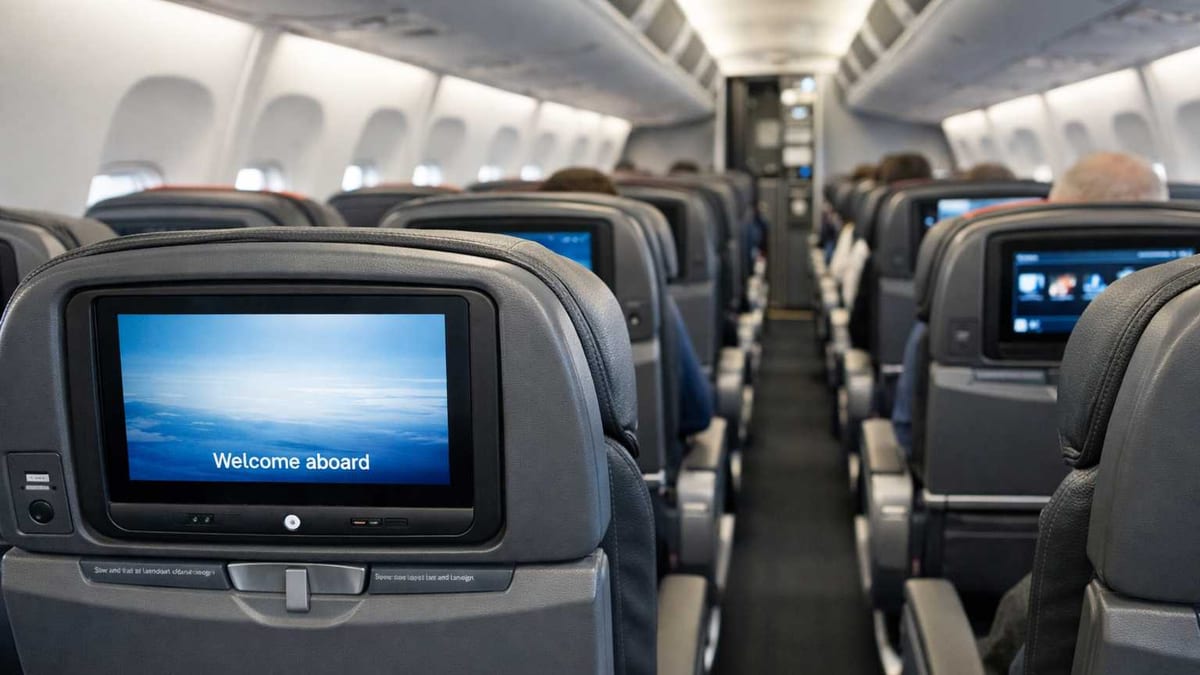
American has spent much of the past decade moving away from built-in inflight entertainment on domestic aircraft, instead promoting high speed Wi Fi and streaming to passengers’ own devices. Publicly available information and internal communications shared online now indicate the carrier is pivoting, outlining plans to install new generation seatback screens across its narrowbody fleet beginning later this decade.
According to published coverage of the airline’s latest fleet strategy, the new entertainment systems are scheduled to arrive first on future deliveries of Airbus and Boeing single aisle jets and then on retrofitted aircraft already in service. Reports indicate that installations are expected to start with new aircraft deliveries around 2028, followed by an extended retrofit program.
American’s planned screens are described in company materials as 4K resolution units with Bluetooth connectivity for personal headphones and built in power options such as USB C charging. The airline has also highlighted an expanded entertainment library and tighter integration with its mobile app, positioning the screens as part of a broader push to modernize the onboard experience.
The shift would bring American closer in line with competitors that have made seatback entertainment a core feature of their domestic mainline fleets. For years, the absence of screens on many American jets has been a frequent point of comparison with rivals offering a more visibly “premium” cabin product.
More First Class and Extra Legroom Seats
The seatback screen rollout is just one element of a wider cabin overhaul that places a strong emphasis on premium seating. Investor presentations and fleet planning documents show American targeting substantial growth in the share of premium seats on its narrowbody departures over the next several years.
Company disclosures indicate that premium seating, including domestic first class and extra legroom economy, currently accounts for roughly one quarter of seats on narrowbody flights. Planning materials cited in industry analysis suggest that proportion is expected to rise to around 40 percent as new layouts are introduced and existing aircraft are reconfigured.
American is already in the process of retrofitting its Airbus A319 and A320 fleets to add an additional row of first class, increasing the number of premium seats at the front of the cabin. Future Boeing 737 MAX 10 deliveries are described as arriving with 24 first class seats, a notable increase compared with many of the airline’s existing 737 configurations. The Airbus A321neo fleet is also slated for reconfiguration to include more first class seating and an expanded Main Cabin Extra section.
These moves reflect a broader strategy across the industry, where airlines are devoting more real estate to higher yielding seats while carefully managing total capacity. For American, the combination of extra first class rows and more extra legroom seats is intended to give frequent flyers and higher spending customers more opportunities to secure preferred seating.
Cabin Retrofits Span Multiple Aircraft Types
The latest narrowbody changes sit alongside a parallel premiumization effort on American’s long haul fleet. Over recent years the airline has announced new interiors for Boeing 787 9 and 777 300ER aircraft, the future Airbus A321XLR, and selected other widebodies, pairing updated business class suites with refreshed premium economy and main cabin seats.
Regulatory filings and official news releases describe plans to increase the number of business class seats on certain international aircraft while phasing out traditional international first class in favor of more consistent, high density premium cabins. At the same time, premium economy cabins are being expanded, offering a mid tier option between standard economy and business class.
On narrowbodies, retrofit programs extend beyond seating counts. American has been fitting many aircraft with larger overhead bins, updated sidewalls and lighting, and new seat designs intended to balance slim profiles with added storage and power outlets. These updates are designed to bring older cabins closer in appearance and functionality to the airline’s newest jets.
Regional jets that operate under the American Eagle brand are also undergoing interior refreshes, including new upholstery and the installation of USB power at each seat, according to information shared by employees and travelers. While these aircraft are not currently slated for seatback entertainment, they form part of the same broader push to standardize a more modern aesthetic and amenities across the network.
Competitive Pressures and Customer Expectations
Analysts note that American’s renewed focus on built in entertainment and premium seating follows years of criticism from some travelers who viewed the carrier’s domestic cabins as comparatively basic. As Delta Air Lines and United Airlines invested heavily in seatback screens and refreshed interiors, American’s emphasis on bring your own device streaming drew mixed reactions.
Industry commentary suggests that the visual impact of seatback screens, even for passengers who primarily use their own devices, plays an outsized role in shaping perceptions of quality. The presence of a modern screen, integrated power and a well designed seat can make a cabin feel more upmarket, even when legroom and width remain similar.
By increasing the overall share of premium seats, American is also aligning with a broader trend in which airlines seek to capture more revenue from travelers willing to pay for extra space and amenities. Business travelers, frequent flyers and leisure customers on longer flights all represent segments that airlines hope to attract with larger first class cabins and more extra legroom rows.
Customer reaction will likely hinge on how the changes affect comfort in the standard main cabin. Past reconfigurations focused on dense layouts without screens drew criticism from some passengers for reduced legroom and thin seat padding. As American implements its new plans, observers will be watching closely to see whether the airline balances added premium capacity with a stable or improved experience for economy travelers.
Timeline and Implementation Questions
While key elements of the strategy have been outlined, many details about timing and aircraft level specifics remain in flux. Public documents and reporting point to a multi year rollout, with new deliveries arriving with updated interiors and entertainment from around 2028 and retrofits following in stages across existing fleets.
Given the size of American’s mainline operation, which includes hundreds of narrowbody aircraft from multiple Airbus and Boeing families, the project is expected to extend well into the next decade. The airline has not yet publicly detailed the sequence of individual fleets beyond highlighting A319, A320, 737 MAX 10 and A321neo changes, leaving open questions about how quickly other subfleets will receive seatback systems.
Supply chain conditions, maintenance capacity and evolving technology could all influence the pace of installations. Airlines have often adjusted interior programs in response to shifting demand patterns, economic cycles and new product offerings from seat and equipment manufacturers. Observers note that any large scale retrofit effort must be coordinated with regular heavy maintenance checks and aircraft downtime.
For now, American’s outlined plans signal a clear intent to reclaim ground in the race to offer a more visibly premium domestic product. If executed as described in investor and company materials, the combination of seatback screens, larger first class cabins and expanded extra legroom seating would mark a significant evolution from the minimalist narrowbody interiors that defined much of the airline’s past decade.