


More news on this day
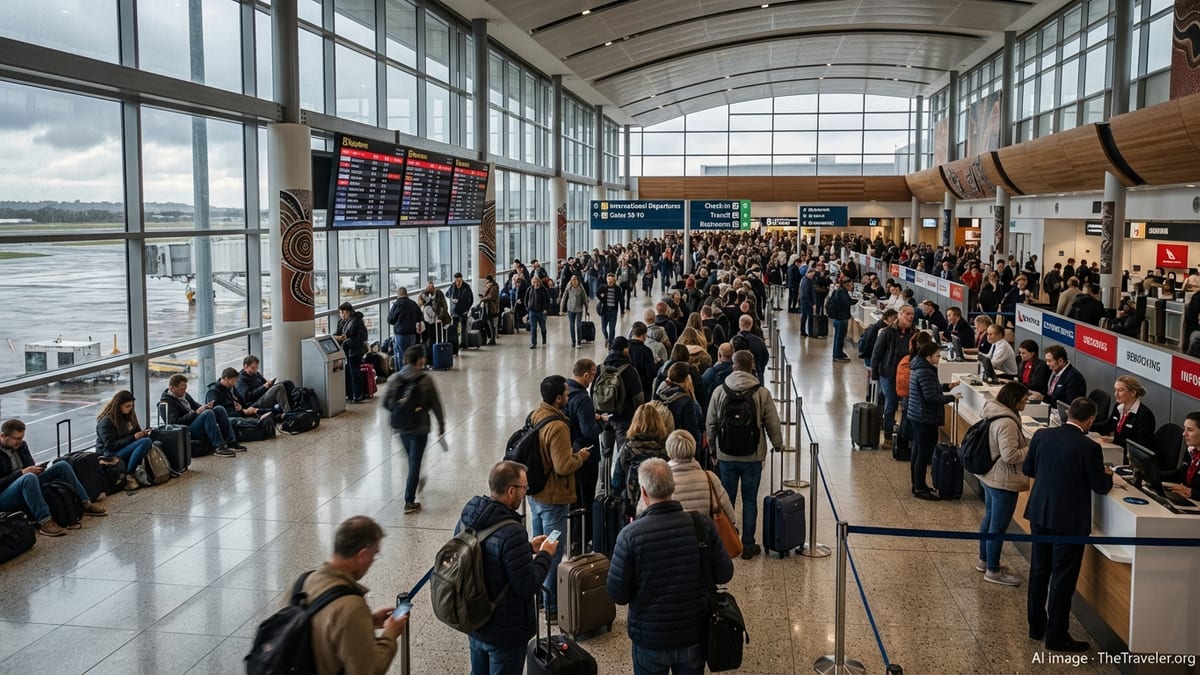
Travellers across Oceania are encountering a renewed bout of flight delays and cancellations as airlines juggle volatile fuel prices, industrial action, weather disruptions and lingering capacity constraints across the region.
Get the latest news straight to your inbox!
Australian networks hold steady but feel new pressure
In Australia, recent government monitoring suggests that overall on time performance and cancellation rates have improved compared with the peaks of disruption seen in 2022 and 2023, yet pressure on the system is building again. Reports from the national competition regulator indicate that domestic airlines have kept cancellation rates below long term averages so far in 2026, even as demand remains strong on trunk routes linking Sydney, Melbourne and Brisbane.
Behind those headline figures, however, capacity reductions and schedule tweaks are emerging as airlines respond to rising jet fuel costs and shifting international demand. Publicly available information shows that Qantas has begun trimming a portion of domestic services in order to redeploy aircraft to long haul routes that are seeing strong bookings, particularly to Europe where airlines are adjusting to changed airspace patterns. These moves can translate into fuller aircraft, fewer frequency options and less resilience when weather or air traffic control issues arise.
Network reports from Australia’s air navigation provider also point to pockets of congestion at major hubs such as Sydney, especially during peak periods. While overall delay minutes have eased from earlier spikes, minor disruptions can cascade quickly when schedules are tightly wound and spare aircraft are limited. Travellers on popular east coast corridors are being advised by airlines to allow longer connection times and to monitor booking updates closely in the days before departure.
Industry analysis in Australia further notes that smaller regional routes remain vulnerable when carriers rebalance fleets. When aircraft are pulled from marginal services, towns that depend on a single daily connection to a capital city can find themselves facing sudden schedule changes, reduced frequencies or, in some cases, short notice cancellations if operational snags emerge.
New Zealand grapples with strikes, fuel issues and weather
New Zealand has experienced some of the most visible disruption in Oceania this year, with the country’s main carrier contending with simultaneous industrial, operational and fuel related challenges. Published coverage in February described how a two day strike by international cabin crew at Air New Zealand led to the cancellation of dozens of long haul services, affecting roughly 9,500 passengers over a 48 hour period. The airline concentrated resources on maintaining Tasman and Pacific Island links, but many long distance travellers still faced rebookings and extended journeys.
At the same time, Air New Zealand has been reshaping its schedule in response to global jet fuel volatility and a constrained supply situation at Auckland, the country’s primary international gateway. According to recent media and stock exchange disclosures, the airline has raised fares and outlined plans to trim a modest share of flights through late April and early May, a move expected to touch tens of thousands of bookings. The carrier has emphasised that it is working within fuel uplift limits while aiming to protect key domestic and regional connections.
Weather has compounded the strain. Transport ministry data for early 2026 highlights how a run of storms, heavy rain and high winds forced repeated delays and diversions, particularly at Wellington, an airport known for its challenging conditions. Anecdotal accounts from tracking services and traveller reports describe periods in April when Wellington ranked among the most disrupted airports globally by percentage of affected flights, with short haul domestic services bearing the brunt.
Despite these setbacks, there are signs of medium term relief for New Zealand’s network resilience. Government announcements this year confirmed that Ohakea in Manawatū will be developed as a permanent alternative airport with full time air traffic control services, creating additional diversion capacity for the lower North Island. Air New Zealand has also indicated that grounded widebody aircraft will progressively return to service by mid 2026, which could ease pressure on long haul scheduling and reduce the risk of cascading cancellations when individual jets are unavailable.
Pacific Islands balance growth with vulnerability
Across the wider Pacific, carriers and governments are trying to expand connectivity while managing the region’s acute exposure to weather and infrastructure constraints. Business council briefings and airline updates point to new and resumed routes linking Fiji, Samoa and other island nations more closely to Australia and New Zealand, including planned services from Gold Coast to Nadi and additional frequencies to key tourism gateways.
This growth is welcome for economies that rely heavily on visitor arrivals, but it also raises questions about reliability. Many Pacific routes operate with small fleets where each aircraft flies multiple sectors per day across long overwater stretches. When a single airframe goes out of service for maintenance or is delayed by storms, knock on cancellations can quickly ripple through the schedule, particularly during peak holiday periods.
Recent climate and aviation briefings from regional organisations underline how tropical cyclones, intense thunderstorms and rapidly changing wind patterns are an increasing factor in flight disruption. The 2026 cyclone season has provided stark reminders, with severe systems prompting temporary airport closures and precautionary groundings in several island states. In response, meteorological and aviation authorities in the Pacific have launched new collaborations aimed at improving forecasts and aligning contingency planning, in an effort to reduce last minute cancellations and diversions.
For travellers heading to resort destinations, these dynamics mean that even as more routes become available, flexibility remains important. Airlines serving the Pacific commonly advise that itineraries built with generous layovers and travel insurance that explicitly covers weather and operational disruption provide a better buffer against the region’s inevitable bouts of schedule upheaval.
Fuel markets and global supply chains reshape schedules
Volatile jet fuel prices, influenced in part by ongoing geopolitical tensions, are another thread connecting disruption across Oceania. Air New Zealand’s decision to suspend its detailed earnings outlook and raise fares earlier this year, citing unprecedented swings in fuel markets, is one high profile example of how carrier planning horizons have shortened. Similar concerns have been flagged by Australian airlines, which have warned that their annual fuel bills could climb significantly if current price trends persist.
When fuel costs spike, airlines often respond by fine tuning networks, consolidating flights on routes where demand can sustain larger aircraft and thinning out services where planes are flying with more empty seats. These adjustments can reduce total scheduled departures even if headline capacity, measured in seats, remains stable. Travellers then encounter fewer departure time options and less redundancy when disruptions do occur, increasing the likelihood of rebookings that depart many hours or even days later.
Supply chain constraints continue to play a role as well. Maintenance backlogs and slow deliveries of new aircraft mean carriers have less spare capacity with which to absorb unscheduled repairs or extend heavy maintenance checks. Air New Zealand’s latest interim financial disclosures explicitly link its recent losses to global engine maintenance delays and higher system costs, a pattern echoed by other airlines that rely on the same narrowbody and widebody engine families.
While these issues originate far beyond Oceania, their impacts are highly visible in the region’s departure boards. Even when there is no headline weather event or labour dispute, a combination of late arriving aircraft, extended maintenance and fuel related route changes can cause pockets of disruption that feel, to individual travellers, much like the more dramatic cancellations driven by storms or strikes.
What travellers can expect through mid 2026
Looking ahead to the middle of 2026, publicly available data suggests that overall reliability in Oceania is unlikely to collapse, but nor is it poised to return to the relative predictability that frequent flyers recall from before the pandemic. Industry performance reports show modest improvements in cancellation rates in Australia and a gradual strengthening of fleet capacity in New Zealand, yet they also highlight persistent stress points ranging from weather volatility to infrastructure bottlenecks.
Airlines and airports around the region are promoting incremental measures to bolster resilience, such as diversifying diversion options, refining crew rostering and investing in better real time communication tools for passengers. Governments in New Zealand and the Pacific have also announced targeted upgrades to air traffic management and meteorological services, aiming to give operators more lead time when storms or high winds threaten key routes.
For travellers, the practical takeaway is that delays and cancellations will remain a feature of flying in Oceania, even as connectivity grows and new routes launch. Travel advisers and consumer advocates are urging passengers to build in extra time for connections, pay close attention to fare rules around changes and refunds, and keep an eye on airline schedule adjustments in the weeks before departure, particularly on routes that rely on a small number of daily flights.
With tourism demand across Australia, New Zealand and the Pacific forecast to remain strong, the balance between growth and reliability will be central to the region’s aviation story for the rest of the year. How airlines, regulators and infrastructure providers manage fuel costs, fleet constraints and climate related risks will help determine whether the most disruptive waves of delays and cancellations begin to recede, or become a more entrenched feature of Oceania’s skies.