


More news on this day
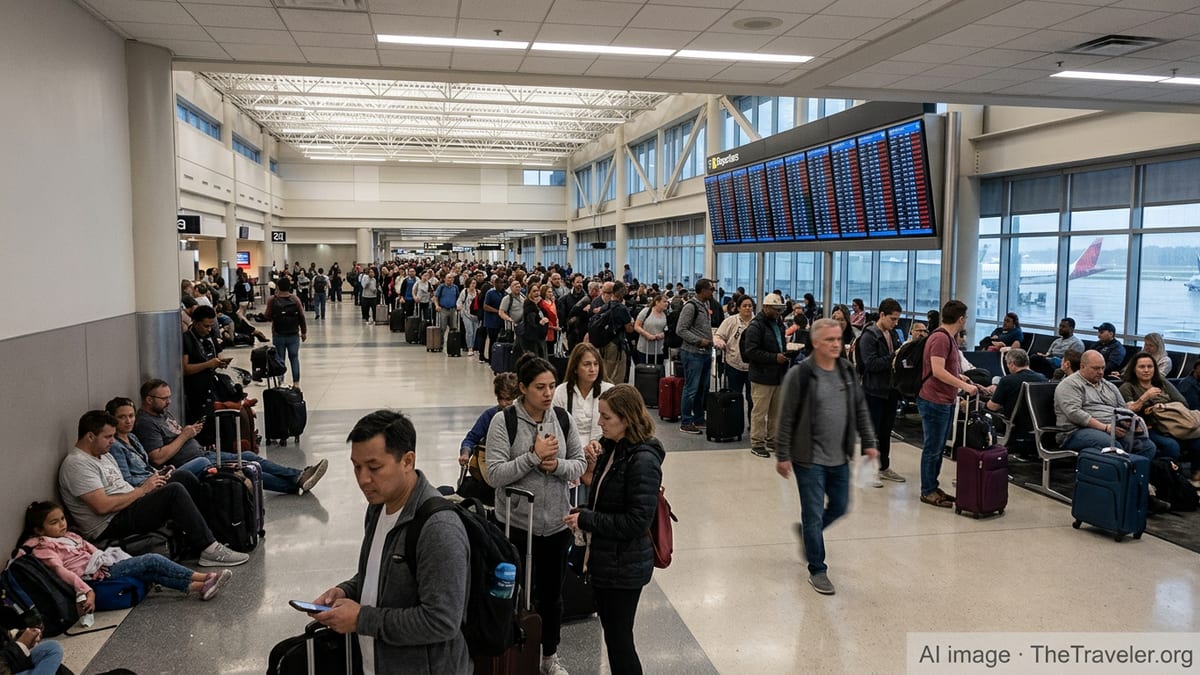
Hundreds of passengers traveling through Chicago O’Hare International Airport on July 7 faced major disruption as operational issues and wider system congestion contributed to 17 cancellations and 252 delays affecting flights across the United States, Canada, Europe, the Middle East and Asia.
Get the latest news straight to your inbox!
Network Disruptions Centered On Chicago O’Hare
Publicly available flight tracking data and airport dashboards indicate that O’Hare functioned as a major pressure point in a wider web of delays, with late-arriving aircraft and congested departure banks compounding schedule problems throughout the day. While some flights operated close to on time, a significant share experienced rolling delays in the 30 to 90 minute range, creating uncertainty for passengers with onward connections.
Data from live tracking services show a pattern of schedule changes on key departures and arrivals, including multiple adjustments to estimated runway departure times for United and American services into and out of O’Hare. Regional affiliates such as Republic Airways and SkyWest, operating flights under the American Eagle and United Express brands, also saw shifts in departure slots as aircraft and crew were repositioned.
Information posted by the Chicago Department of Aviation highlights that disruptions were not confined to a single carrier or route. The hub’s role as a primary connecting point for domestic and international traffic meant even modest hold-ups on early morning and evening departures quickly cascaded across the network, affecting flights arriving from and bound for Canada, Europe, the Middle East and Asia.
Although local weather around O’Hare varied over the day, tracking platforms largely attributed the bulk of delays to late inbound aircraft and overall system congestion, a recurring pattern at major North American hubs during busy summer travel periods.
Multiple Airlines And Regional Partners Affected
The 17 reported cancellations and 252 delays were spread across a mix of mainline and regional operators, including Republic, American, United, SkyWest, Jazz and Etihad, with additional impact on codeshare partners that market seats on the same flights. This meant that a single disrupted operation often affected customers booked under several different airline brands.
Republic Airways, which operates feeder services for both American and United, featured prominently among the affected regional operators. Flight history pages for several Republic-operated services into O’Hare show adjustments to scheduled departure and arrival times, underscoring how disruptions in the regional network can quickly affect mainline banks and onward international departures.
SkyWest, another large regional carrier flying on behalf of United and other major airlines, also appeared in delay statistics linked to O’Hare. When regional aircraft arrive late at the hub, they can delay the turnaround of connecting flights, including those serving mid-sized cities across the Midwest and Great Lakes regions.
On the international side, carriers such as Etihad and Jazz, the latter operating under the Air Canada Express umbrella, were part of the broader pool of airlines contending with schedule pressure. Long-haul operations linking Chicago with hubs in Europe, the Middle East and Asia are highly sensitive to departure timing, as missed slots can extend delays and complicate crew duty planning on both ends of the route.
Global Knock-On Effects For Connecting Passengers
Because O’Hare is a central connecting point in several global airline alliances, the immediate disruption had far-reaching consequences for travelers who were not originally starting or ending their journeys in Chicago. Passengers flying between smaller U.S. cities and overseas destinations via O’Hare, for example, were at particular risk of misconnecting as delay minutes accumulated.
Travel data aggregators tracking day-of operations showed that once a delay exceeded an hour, the likelihood of missed connections rose sharply, especially for international flights that close boarding earlier for additional security checks and documentation. Travelers connecting from regional jets operated by Republic and SkyWest onto long-haul services to Europe or the Middle East were among those facing the greatest uncertainty.
Reports from airport information channels indicated that some passengers were rebooked onto later departures the same day, while others were shifted to next-day flights when onward services were already operating at or near capacity. This was particularly challenging on routes with limited daily frequencies, where a canceled or heavily delayed flight can significantly reduce alternatives.
The wave of delays also impacted baggage handling and aircraft allocation. When connecting times shrink, ground services have less margin to transfer luggage between aircraft, increasing the risk that checked bags do not make the same flight as their owners, especially on complex multi-stop itineraries spanning several continents.
Causes Rooted In Late Inbounds And Summer Congestion
Operational analytics published by aviation data platforms for O’Hare on July 7 point to late-arriving aircraft as the leading driver of departure delays. When inbound flights land behind schedule, outbound services using the same aircraft are pushed back, creating a chain reaction that can stretch throughout the day.
This pattern aligns with long-term statistics released by transportation authorities, which show that late inbound aircraft and national airspace system issues consistently rank among the most common causes of delays in the United States. Regional carriers such as Republic and SkyWest, which operate tight, high-frequency schedules on smaller aircraft, can be particularly vulnerable to such knock-on effects.
Summer travel peaks intensify these risks, as higher passenger volumes leave airlines with less flexibility to absorb disruptions. Even relatively small disturbances in the schedule can quickly translate into long queues at check-in, security and customer service desks, while aircraft and crew are reassigned to cover gaps elsewhere in the network.
Industry analysts note that while technology and data-sharing between airlines and airports have improved in recent years, sudden bursts of congestion at major hubs like O’Hare remain difficult to manage in real time, particularly when constraints in crew availability, maintenance windows and air traffic flow management intersect.
What Travelers Can Expect In Coming Days
Looking ahead, aviation data services suggest that schedules at O’Hare are expected to gradually normalize if no new weather or airspace issues emerge. However, residual delays may continue into subsequent days as airlines work through repositioning of aircraft and crew that were displaced on July 7.
Passengers scheduled to connect through Chicago in the near term may still encounter tighter-than-usual connection windows on specific routes, especially where aircraft rotations remain out of their regular sequence. Industry guidance commonly recommends that travelers on multi-leg itineraries check their flight status frequently on day of departure and allow extra time for connections during peak summer periods.
Consumer advocates point to existing passenger rights frameworks, which differ depending on whether flights are domestic or international, and by country of departure. While compensation rules vary, publicly available information from regulators emphasizes that travelers should retain documentation of delays and cancellations, along with receipts for additional expenses, in case they choose to pursue claims later.
For airlines operating at O’Hare, the episode illustrates the continuing fragility of complex global networks during busy seasons. With carriers such as Republic, American, United, SkyWest, Jazz and Etihad closely intertwined through codeshares and hub structures, disruptions in one part of the system can rapidly be felt by passengers far beyond Chicago itself.