


More news on this day
Russian travelers connecting through Kyrgyzstan were among hundreds of passengers stranded at Bishkek’s Manas International Airport on July 7 after a TezJet aircraft suffered a landing gear failure and tipped onto its wing, forcing a temporary shutdown of the country’s main air hub.
Get the latest news straight to your inbox!
TezJet Flight Incident Halts Operations at Manas Airport
According to publicly available information, the TezJet aircraft was operating a domestic service between Bishkek and Osh on July 7 when a problem occurred with the rear landing gear during the takeoff roll. Airport and aviation notices describe how the aircraft tilted to the left, striking the runway with its wing and coming to a stop on the strip.
Reports indicate that there were around 181 passengers and six crew members on board at the time of the accident. Video shared on social platforms and in regional media shows the aircraft resting at an angle with visible damage to its left side, while passengers are evacuated onto the runway and moved away from the jet.
Initial statements from the airport operator and civil aviation bodies describe the event as an emergency situation linked to a landing gear malfunction rather than a runway overrun or collision with another aircraft. Early assessments from these publicly available reports emphasize that the aircraft remained on the runway, which subsequently had to be blocked for technical inspection and recovery.
Several passengers were reported to have sustained minor injuries, but there were no early indications of life‑threatening trauma. Emergency teams working at the airport transported injured travelers to medical facilities in Bishkek, while others were escorted to the terminal for further checks.
Russian Passengers Face Unexpected Layovers and Cancellations
The closure of Manas Airport effectively brought departures and arrivals to a standstill for much of July 7, leaving connecting passengers from Russia and other countries stranded in the terminal. Regional coverage notes that the airport was expected to remain closed until at least late evening local time while specialists assessed the runway and prepared to remove the damaged aircraft.
Manas Airport serves as a key link between Russian cities and destinations across Central and South Asia, with multiple carriers operating routes that use Bishkek as a transfer point. Russian holidaymakers and labor migrants traveling between Russia and Kyrgyzstan, as well as onward to third countries, suddenly faced missed connections, overnight delays, and uncertainty about when flights would resume.
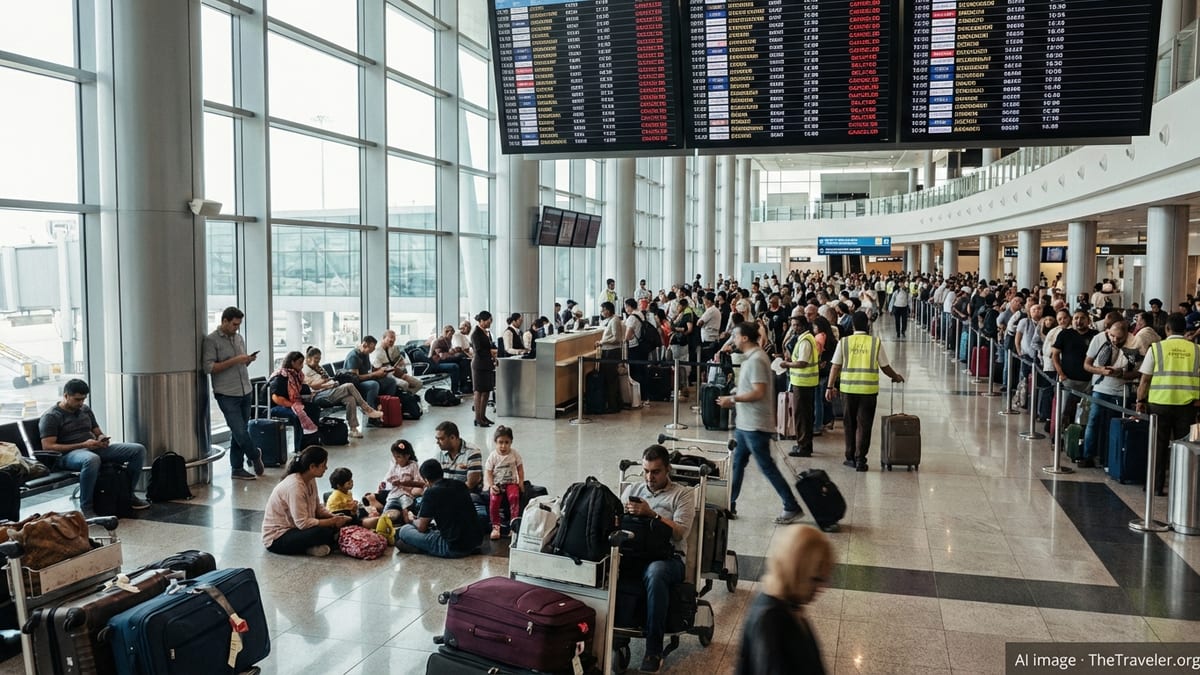
Footage circulated by local outlets and users on social media shows long lines forming at check-in desks and information counters as travelers sought clarity on their options. Some passengers reported being instructed to wait inside the terminal while airlines worked on rebooking or delaying services, while others described being informed that their flights had been postponed until the runway reopened.
Travel industry observers in the region note that the incident in Bishkek comes amid an already strained aviation environment for Russian passengers, who have experienced diversions, extended routings, and occasional equipment changes on international flights in recent years. The sudden shutdown of a major regional hub added another layer of disruption for those using Bishkek as a relatively convenient connection point.
Safety Response and Early Investigation Efforts
Publicly available information from Kyrgyzstan’s civil aviation authorities indicates that a formal investigation has been opened into the TezJet incident. Early summaries describe a failure or collapse of a rear landing gear strut during takeoff, which led the aircraft to tip onto its left wing and leak aviation fuel onto the runway.
Aviation specialists commenting in regional media highlight that any fuel leakage in such circumstances requires an immediate and cautious response, including deployment of firefighting teams and a full runway inspection. In this case, visible fire was not reported in initial coverage, but the presence of fuel on the surface necessitated a prolonged closure to ensure there was no damage to the pavement or residual contamination that could endanger subsequent flights.
Manas International Airport has previously dealt with other serious aviation events over the past two decades, and analysts note that emergency planning for runway incidents has been reinforced over time. The rapid evacuation of passengers and the absence of serious injuries in this latest case are being described in local analysis as a positive sign that on-site procedures and coordination between airport and airline personnel functioned as intended.
At the same time, the investigation is expected to focus closely on the maintenance history of the aircraft, the condition of its landing gear components, and any operational factors that might have contributed to the failure. Depending on the findings, regulators may consider additional inspections or directives for similar aircraft operating within Kyrgyzstan and the wider region.
Knock-On Effects for Regional Flight Networks
The grounding of movements at Bishkek created a ripple effect across airline schedules on July 7, with Russian carriers and tour operators forced to adjust operations on short notice. Some inbound flights reportedly entered holding patterns or diverted to alternative airports in neighboring countries while waiting for an update on the status of Manas.
Travel data and schedules available on airline and airport channels showed delays and cancellations on routes linking Bishkek with major Russian cities such as Moscow and Novosibirsk. For passengers already on the ground, the situation translated into long waits for information, potential accommodation issues, and the prospect of rearranging connecting itineraries at peak summer travel time.
Airlines serving the Russian market from Bishkek may face additional logistical challenges in repositioning aircraft and crews after the runway reopens. Aviation analysts suggest that residual disruptions could linger into the following day, particularly for carriers with tight aircraft utilization plans or limited spare capacity.
For Russian travelers using Bishkek as a gateway for holidays in Central Asia or onward travel to Southeast Asia and the Middle East, the event serves as a reminder of how quickly a single technical incident can cascade into a wider travel disruption. Trip planners and agencies are likely to monitor how long it takes carriers to restore normal schedules and whether any additional safety inspections affect upcoming flights.
Questions for Travelers and the Airline Sector
The TezJet incident in Bishkek raises several immediate questions for travelers and the broader airline sector in Central Asia. Passengers left waiting at Manas Airport must navigate compensation policies, rebooking rules, and potential accommodation support, which can vary widely between carriers and depend on local consumer protection frameworks.
From an industry perspective, the accident adds to ongoing conversations about fleet age, maintenance standards, and regulatory oversight across smaller regional airlines that operate dense domestic and short-haul networks. Observers note that carriers serving price-sensitive routes between Kyrgyzstan and Russian cities often rely on older aircraft types, making rigorous inspections and transparent maintenance records especially important.
For Russian passengers who found themselves unexpectedly stranded in Bishkek, the episode is likely to influence perceptions of reliability and safety on certain routes, even though early reports stress that the outcome could have been far worse. The swift evacuation and lack of severe injuries will be seen in aviation circles as a critical success, but the disruption to travel plans underscores the need for clear communication and robust contingency arrangements when emergencies arise.
As investigators continue their work and the damaged aircraft is removed from the runway, travelers and industry observers alike will be watching closely for any recommendations or regulatory changes that emerge. How airlines and airport operators respond in the coming days will help shape confidence in Bishkek’s role as a key regional hub for Russian and international passengers.