


More news on this day
Thousands of travelers faced hours of disruption at Ronald Reagan Washington National Airport as 101 flights were canceled and 257 delayed, snarling operations across multiple U.S. carriers and leaving terminals crowded with stranded passengers.
Get the latest news straight to your inbox!
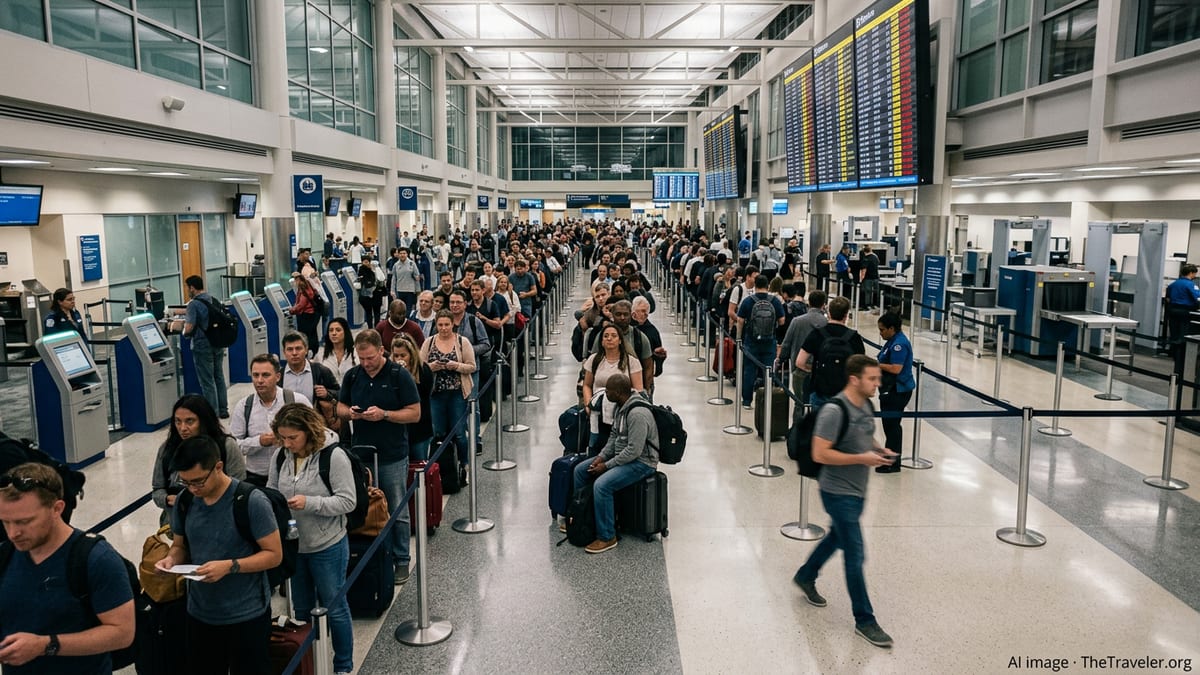
Severe Operational Snarl at a Key Washington Hub
Publicly available tracking data for Ronald Reagan Washington National Airport show a sharp spike in disruption, with the airport recording 101 flight cancellations and 257 delays within a single operating day. The figures reflect one of the more turbulent days of the current travel season at the close-in Washington hub, which sits in some of the most congested and tightly regulated airspace in the United States.
The disruption affected a mix of mainline and regional operators. PSA Airlines and Republic Airways, which operate many American Airlines-branded regional flights, were among the hardest hit, alongside JetBlue and Southwest. Flight logs indicate a cascade of schedule changes, with early-morning disruptions rippling across the afternoon and evening bank of departures and arrivals.
Reagan National is particularly sensitive to small disruptions because of its slot-controlled operations and perimeter rules that tightly manage movements in and out of the airport. When cancellations stack up, aircraft and crew are often left out of position, amplifying the effect across regional networks and causing knock-on delays for connecting passengers throughout the East Coast and Midwest.
Major Carriers and Regional Partners Struggle to Recover
Data from live flight-status dashboards show that the disruption did not center on a single airline. Instead, several carriers operating at Reagan National experienced significant schedule stress. PSA Airlines and Republic Airways, which provide a large share of short-haul services to cities such as Charlotte, Philadelphia, and New York on behalf of larger network airlines, recorded multiple canceled rotations.
JetBlue and Southwest, both of which maintain important point-to-point links from Reagan National to destinations including Boston, Fort Lauderdale, and various Midwest and Southeast cities, also saw a series of cancellations and protracted delays. For many passengers, the result was a lost travel day as rebooking options became scarce, especially for peak-time departures.
Published performance reports from federal transportation authorities show that regional carriers such as PSA and Republic typically operate dense schedules with tight turnaround times, conditions that can magnify the impact of air traffic restrictions or weather disruptions. When several flights on these networks are canceled, crews can quickly exceed duty limits and aircraft can fall out of their planned rotations, making rapid recovery more difficult.
Weather, Airspace Congestion and Traffic Management Pressures
Reagan National’s location along the Potomac River and its proximity to federal airspace around central Washington mean the airport is frequently affected by traffic management initiatives. Publicly accessible delay summaries indicate that days with significant convective weather over the Mid-Atlantic and Northeast often trigger ground delay programs, reroutes, and flow restrictions that slow departures and arrivals into the capital region.
On the day that saw 101 cancellations and 257 delays, live airport condition reports highlighted extended taxi-out and airborne holding times along major East Coast corridors. While no single cause was identified as solely responsible, a mix of scattered storms in key en route sectors and volume-related air traffic controls contributed to a strained operating environment for airlines.
Historical on-time performance data compiled by transportation authorities show that national airspace system constraints, including volume, equipment outages, and en route weather, are among the leading causes of delays and cancellations in the United States. At an airport like Reagan National, where runway capacity is finite and demand remains high, such constraints can quickly translate into a high percentage of disrupted flights.
Nationwide Ripple Effects for Connecting Travelers
The problems at Reagan National were not confined to Washington-area travelers. Because the airport serves as a critical connecting point in several carrier networks, the spike in cancellations and delays created ripple effects across the country. Flights operated by PSA Airlines and Republic Airways from smaller regional cities into DCA feed onward connections to larger hubs, meaning a canceled leg into Washington often disrupts itineraries far beyond the capital.
Travel industry coverage indicates that Virginia was among several states experiencing elevated disruption during the same period, alongside Michigan, New York, Tennessee, and Ohio. With major airports such as New York’s LaGuardia and John F. Kennedy also reporting high levels of delays and cancellations, passengers attempting to connect through multiple congested hubs faced compounding risks of missed flights and overnight stays.
Statistics compiled from national tracking services show that when multiple high-traffic airports in the same region experience heavy disruption simultaneously, airlines have limited flexibility to reroute customers. Available seats on alternate flights rapidly disappear, and rebooking can stretch into subsequent days, particularly on popular business routes into Washington and New York.
What Travelers Can Expect at Reagan National in the Coming Days
With Reagan National operating near capacity on a typical day, aviation analysts frequently caution that even when disruptions ease, residual delays can persist as airlines reposition aircraft and crews. Passengers flying in the days following a major disruption often encounter schedule adjustments, swapped aircraft types, and occasional last-minute gate changes as carriers work through the backlog.
Travel advisories published by airport and airline information channels consistently encourage passengers to monitor flight status before leaving for the airport, use mobile apps for same-day changes when available, and allow additional time for security and boarding during periods of irregular operations. At slot-controlled airports such as Reagan National, strict departure windows also mean late-arriving travelers are at greater risk of missing flights that cannot easily be re-accommodated on subsequent departures.
Longer term, federal data on air travel consumer trends indicate that systemwide cancellations and delays tend to fluctuate seasonally, with summer and peak holiday periods showing the highest pressure on capacity and staffing. For Washington-area travelers who rely on Reagan National for business and government-related trips, the latest wave of 101 cancellations and 257 delays underscores the continued vulnerability of a critical gateway airport to weather, volume, and airspace constraints.