


More news on this day
Phoenix Sky Harbor International Airport has been ranked the least stressful major airport in the United States in a new nationwide analysis, highlighting the Arizona hub’s combination of manageable crowds, relatively short lines and solid on time performance.
Get the latest news straight to your inbox!
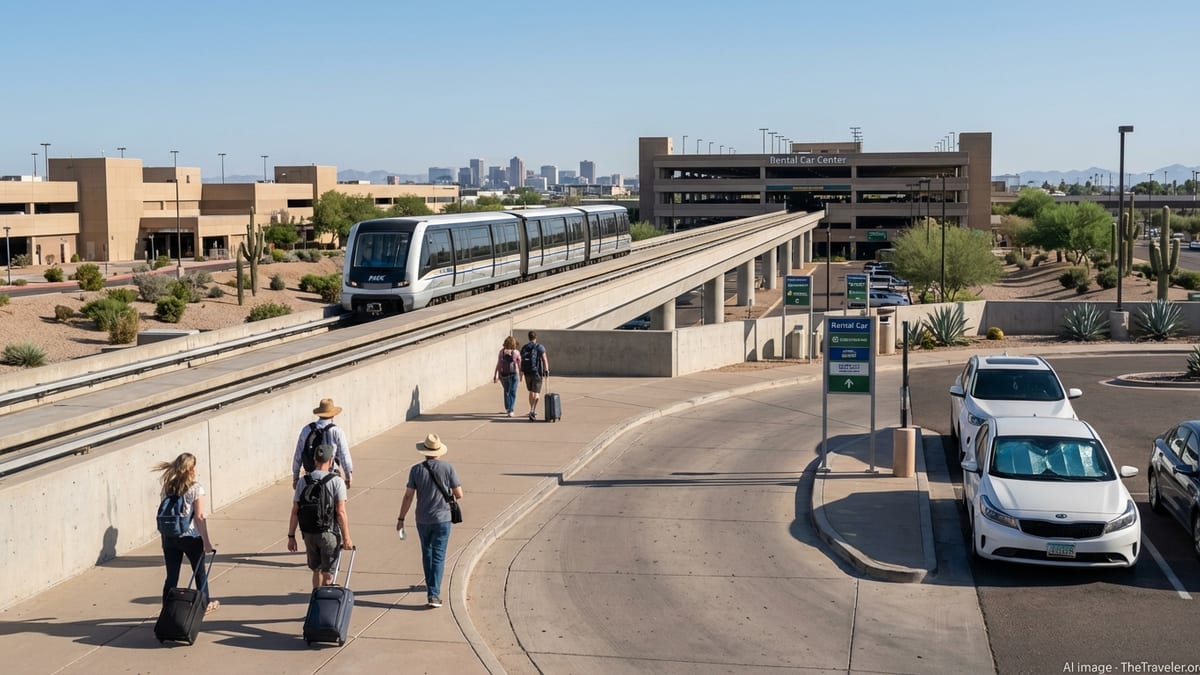
New Report Puts Phoenix on Top for Low Airport Stress
The latest ranking, compiled from publicly available air travel data and consumer indicators, places Phoenix Sky Harbor at the top of a list of the country’s least stressful airports. The report compares large US airports using measures such as on time arrivals and departures, average security wait times, flight cancellation and delay rates, and passenger volumes.
In the stress index cited by recent coverage, Phoenix Sky Harbor posted one of the lowest overall scores among major airports, edging out other large hubs that see comparable or even higher passenger traffic. Analysts note that the airport’s stress score reflects the combined effect of its operational performance, terminal layout and ground access, rather than any single factor.
Recent reporting on the rankings indicates that Phoenix Sky Harbor shares the upper tier of the list with airports such as Minneapolis St Paul and Hartsfield Jackson Atlanta, which also score well on efficiency and reliability. However, Phoenix stands out because it manages these metrics while serving as the primary gateway for one of the country’s fastest growing metro regions.
The recognition aligns with Phoenix Sky Harbor’s long running branding as a customer friendly facility and reinforces its position as a key connecting point in the Southwest. The low stress ranking is likely to feature prominently in regional tourism promotion and airline marketing as carriers look to highlight smoother travel experiences.
How Researchers Measured Airport Stress
Although different organizations use varying formulas, the latest analysis relies heavily on data drawn from federal aviation statistics, transportation security figures and historical flight performance records. These sources track how frequently flights depart and arrive on time, the share of flights canceled, and the average length of security and check in lines.
Security wait times and the consistency of those waits are an important component. According to publicly available information, Phoenix Sky Harbor typically maintains at least one security checkpoint open around the clock in each terminal, while programs such as TSA PreCheck and identity verification options help move travelers through screening more efficiently.
The report also incorporates airport size and passenger volume, since a facility that serves tens of millions of travelers each year faces very different operational pressures than a small regional field. Phoenix Sky Harbor processed more than 50 million passengers in recent years, putting it in the top tier of US airports by traffic. Performing well across reliability and congestion measures at that scale is a key reason the airport ranks as less stressful than many of its peers.
Terminal design, wayfinding and access links are factored in as well, with researchers looking at how easy it is for travelers to navigate between parking, public transit, check in counters and gates. Sky Harbor’s people mover system connecting terminals with the regional light rail network is frequently cited in travel coverage as a contributor to smoother passenger flows.
Passenger Growth and Operations Behind the Ranking
The least stressful designation comes as Phoenix Sky Harbor continues to handle robust demand for both domestic and international travel. City and airport statistics show that the hub has recorded multiple years above the 50 million passenger mark, even as it undergoes phased construction and modernization projects on runways, taxiways and concourses.
Federal aviation construction reports describe recent and upcoming work at Phoenix, including runway maintenance and taxiway improvements intended to preserve capacity and safety without causing extensive daytime disruptions. By scheduling much of this activity overnight or in carefully planned windows, airport managers aim to limit knock on delays that can quickly raise stress levels for travelers.
The airport’s role as a base for several major carriers has also encouraged investment in gate expansions and updated terminal facilities. New and refurbished concourses have introduced additional seating, more power outlets and expanded dining options, providing travelers with more comfortable spaces during layovers or irregular operations.
Operational performance is not immune to national challenges. Phoenix has experienced periods of strain linked to broader federal staffing issues at security checkpoints, which have temporarily lengthened wait times at certain terminals. However, observers note that these episodes tend to be shorter lived at Sky Harbor than at some other large airports, and that the overall data underlying the new report still show a comparatively low disruption rate.
Traveler Experience at Sky Harbor
Travel commentary and user discussions frequently describe Phoenix Sky Harbor as a comparatively straightforward airport to use, particularly for passengers navigating tight connections or early morning departures. Terminals 3 and 4, which handle the bulk of traffic, are laid out in a mostly linear fashion, reducing the need for lengthy backtracking or multiple level changes.
The airport’s automated people mover system connects terminals with economy parking and the regional rail line, offering a predictable transfer time that can lower the anxiety associated with reaching the check in counters. Signage and digital displays are prominent throughout the complex, helping visitors unfamiliar with Phoenix move between ticketing, security, baggage claim and ground transportation with fewer wrong turns.
For travelers needing extra assistance, Phoenix Sky Harbor has introduced a range of accessibility initiatives, including programs designed to help passengers with dementia or cognitive disabilities practice the airport experience in advance. Public communications about these efforts emphasize the goal of reducing uncertainty and stress for both travelers and caregivers.
At the same time, local media reports reflect that passengers still occasionally encounter long lines or delays, particularly during peak holiday periods or weather related disruptions elsewhere in the air traffic network. These instances underscore that even the least stressful airports remain subject to the broader volatility of modern air travel.
What the Ranking Means for Phoenix and Other Hubs
Phoenix’s position at the top of the least stressful airport list adds another distinction to a facility already known for its economic importance to the region. The airport supports tens of billions of dollars in annual economic impact, connecting the Phoenix metropolitan area to key business and leisure markets across North America and beyond.
Travel experts suggest that rankings focused on stress and reliability can influence both airline planning and traveler behavior at the margins. Carriers may highlight lower stress hubs when marketing connecting itineraries, while frequent flyers looking to minimize disruptions could choose routings that pass through airports with stronger performance records.
For competing hubs, Phoenix Sky Harbor’s showing offers a case study in how infrastructure investment, thoughtful terminal design and coordinated operations can reduce traveler friction even as passenger numbers climb. Other airports that perform well on similar lists often share traits such as clear wayfinding, robust public transit links and proactive communication about security and construction impacts.
As travel demand remains strong heading into the second half of 2026, future editions of stress based rankings will reveal whether Phoenix Sky Harbor can maintain its lead. For now, the Arizona hub’s latest recognition provides a data backed endorsement for travelers seeking a smoother start or finish to their journeys.