


More news on this day
Thousands of travelers across the Washington region faced long lines, missed connections and unexpected overnight stays on July 7 as Ronald Reagan Washington National Airport recorded 101 cancellations and 257 delays, snarling operations for PSA Airlines, Republic Airways, JetBlue, Southwest and several other carriers.
Get the latest news straight to your inbox!
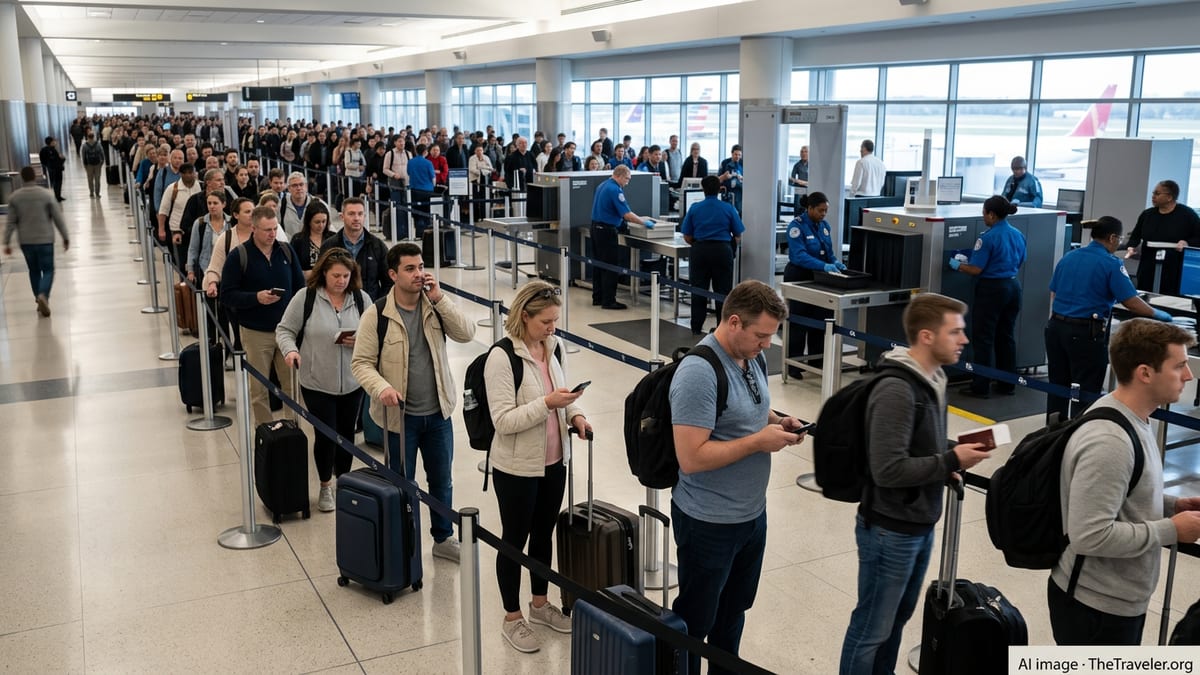
Severe Disruptions Ripple Across Reagan National
Publicly available tracking data for July 7 indicates that Washington Ronald Reagan National recorded 101 canceled flights alongside 257 delayed departures and arrivals, placing the airport among the most heavily disrupted facilities in the United States for the day. The figures highlight the extent to which a single day of operational strain can cascade across a tightly scheduled hub that serves as a primary gateway to the U.S. capital.
The cancellations and delays affected a mix of mainline and regional carriers, including American Airlines affiliates PSA Airlines and Republic Airways, along with JetBlue and Southwest. With Reagan National heavily dependent on regional partners feeding larger domestic networks, disruptions quickly spread to airports along the East Coast and into the Midwest as aircraft and crews fell out of position.
While the specific causes of each cancellation vary, aviation status dashboards and airspace summaries for July 7 point to a combination of congested Northeast airspace, summer weather patterns and knock-on effects from earlier delays. The result for passengers was similar regardless of the trigger: crowded gate areas, long customer service queues and limited same-day rebooking options on already busy summer flights.
Travel-industry coverage notes that Reagan National has experienced recurring strains in recent months as its tightly restricted runway capacity collides with strong post-pandemic demand. The latest wave of cancellations and delays underscores the vulnerability of the airport’s schedule when even modest disruptions occur upstream in the national airspace system.
Regional Carriers at the Center of the Chaos
Among the hardest-hit operators were regional airlines flying under major-brand codes. PSA Airlines and Republic Airways, which operate flights on behalf of American Airlines and other legacy carriers, are central to Reagan National’s short-haul network, linking Washington to smaller and mid-sized cities along the Eastern Seaboard and in the Midwest.
Because these regional flights often operate at high frequency with smaller aircraft, a series of cancellations can quickly disconnect travelers from onward connections. Reports from flight-tracking platforms show that a significant portion of the day’s disruptions at Reagan National involved regional jets, amplifying the impact on passengers attempting to connect to transcontinental or international services from other hubs.
The situation also affected JetBlue, which relies on Reagan National for a portion of its Washington-area schedule, and Southwest, which connects the airport to several of its domestic focus cities. With both airlines already juggling broader system-wide summer challenges, additional cancellations and delays in Washington added pressure to network planners and customer-service teams across multiple time zones.
Industry analyses of recent months point out that regional carriers have faced staffing and scheduling constraints even as demand has rebounded. When combined with weather or airspace restrictions, these limitations can contribute to clusters of cancellations like those seen at Reagan National, particularly during peak travel periods such as early July.
Knock-On Effects Across the Northeast and Beyond
Disruptions at Reagan National rarely remain local. Many flights into and out of the airport connect with busy corridors to New York, Boston, Philadelphia and other Northeast gateways, as well as onward routes to the Midwest and Canada. When departures are canceled or significantly delayed in Washington, the resulting aircraft and crew imbalances can generate secondary disruptions at downline airports.
Flight-status data for July 7 show that carriers affected at Reagan National, including PSA Airlines, Republic Airways, JetBlue and Southwest, were also managing schedule pressures at other airports on the same day. Travel-focused outlets have recently documented similar patterns at hubs such as Indianapolis and at other mid-sized airports, where clusters of cancellations by many of the same regional and low-cost operators have been recorded.
Travel reporting in recent days has further emphasized the broader national context. Across the United States, Virginia and several other states have recorded hundreds of cancellations and thousands of delays on peak days, with airlines such as Southwest, American, PSA, JetBlue, Republic and SkyWest frequently appearing among the most disrupted. Reagan National’s July 7 performance fits squarely within that wider pattern of summer irregular operations.
For passengers, the interconnected nature of airline networks means a localized issue at one airport can have outsized effects. Travelers departing from distant cities may suddenly find itineraries collapsing because their inbound aircraft was delayed or canceled earlier in the day at Reagan National or another constrained East Coast gateway.
What Travelers Experienced on the Ground
Inside Reagan National’s terminals, the statistical story translated into very personal disruptions. With more than 100 cancellations on the board and over 250 flights delayed, thousands of passengers faced missed weddings, lost vacation days and jeopardized business meetings as they scrambled for alternative routes out of the capital region.
Airline counters and help desks typically bear the brunt of such events, as travelers seek rebooking, meal vouchers or hotel accommodation. Summer schedules are already densely packed, and published coverage notes that same-day alternatives can be scarce once irregular operations reach the scale seen at Reagan National on July 7. In many cases, travelers are rebooked a full day or more later, extending their unplanned stay in Washington.
Ground transport providers around the airport also feel the effects, from ride-hailing drivers and taxis handling repeated drop-offs and pick-ups, to airport hotels managing sudden surges in distressed passenger bookings. Local tourism businesses may see mixed impacts: some stranded travelers take the opportunity to explore the region, while others remain focused solely on securing their next flight.
Consumer advocates frequently remind travelers that, depending on the origin, destination and operating carrier, some passengers may be entitled to compensation or support in the event of significant delays or cancellations. Guidance from travel-rights organizations typically encourages flyers to document disruption, retain receipts and submit formal claims once their journeys are complete.
Why Reagan National Remains Vulnerable to Disruption
Experts and aviation analysts regularly identify Reagan National as one of the country’s more fragile airports when it comes to operational resilience. Its location on the banks of the Potomac River, strict slot and perimeter rules, and heavily congested surrounding airspace all limit flexibility when schedules come under strain.
Reagan National operates within one of the busiest air corridors in the United States, sharing crowded skies with Washington Dulles and Baltimore/Washington International, as well as the New York and Philadelphia metropolitan airports. When turbulence in the broader system arises, whether from convective thunderstorms, air traffic control initiatives or crew-availability problems, Reagan National has little spare runway capacity or gate space to absorb the shock.
Recent air travel consumer reports from federal transportation authorities have highlighted how carriers such as PSA Airlines, Republic Airways, JetBlue and Southwest already manage non-trivial cancellation and delay rates across their networks. On days when the national airspace system is constrained, those systemic pressures combine with Reagan National’s structural limitations to heighten the risk of elevated disruption.
For frequent flyers in and out of the capital, the events of July 7 serve as another reminder to build in buffers when connecting through Reagan National, especially during the peak summer and holiday seasons. Even on days when skies appear clear over Washington, distant storms and upstream congestion can still bring the airport’s intricate schedule to a halt, leaving thousands of passengers unexpectedly grounded.