


Once considered just a gateway to the Costa Smeralda, Olbia has quietly become a destination in its own right. Skyscanner now ranks Olbia among the fastest rising Mediterranean hotspots for 2027, with searches from the United States up about 143 percent compared with the previous year’s period. At the same time, Olbia Costa Smeralda Airport has passed 4 million passengers annually, cementing the city as the main door to Sardinia’s glamorous northeast. For travelers, that growth means more flights, more routes and more choice, but also busier beaches and higher demand for rental cars and hotels. This guide explains how to use Olbia as a smart base, from navigating the airport and picking up a car to finding the best nearby beaches and planning unforgettable day trips along the coast and into the interior.
Get the latest updates straight to your inbox!
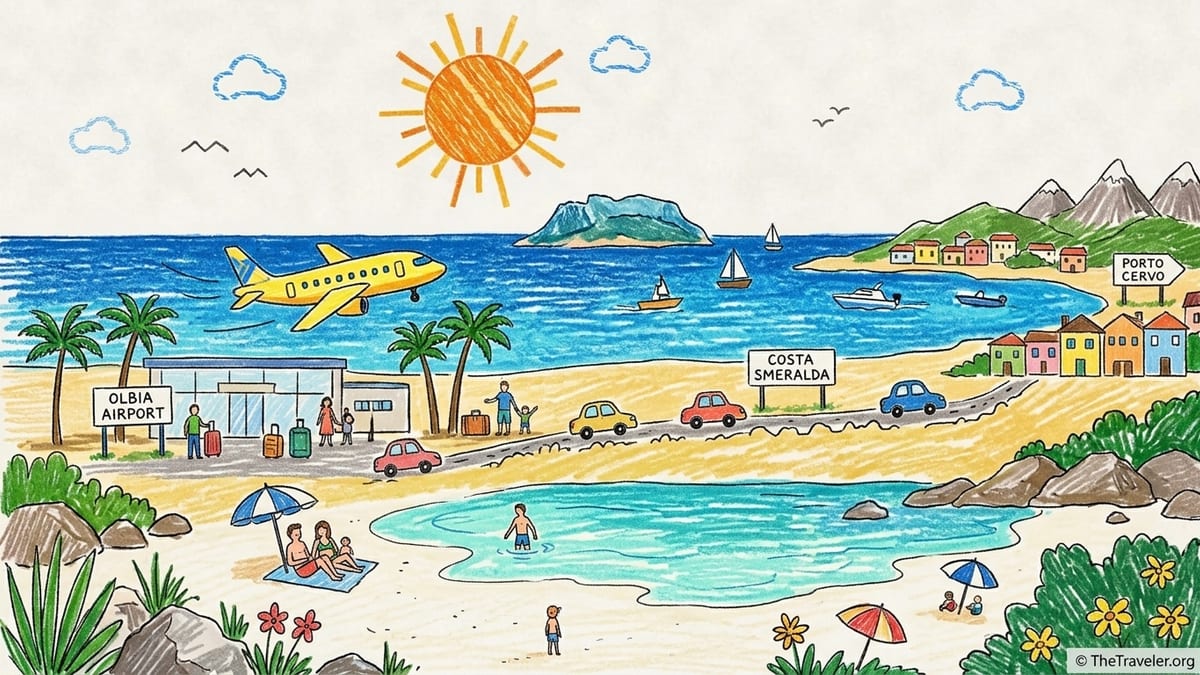
Why Olbia Is Suddenly on Every Flight Search List
In the last few years Olbia has shifted from a little-known airport code to a name that appears near the top of flight search trend reports. Skyscanner’s latest long range outlook for North American travelers lists Olbia in its United States “trending for 2027” picks, with searches up roughly 143 percent compared with the same booking window a year earlier. Behind the headline figure is a simple story: more direct routes from major European hubs, better connections from long haul gateways such as London, Frankfurt and Rome, and a growing awareness that Sardinia offers Caribbean-style water without the long flight times.
Airport statistics tell the same story on the ground. Official data for Olbia Costa Smeralda Airport show around 3.9 million passengers in 2024, an annual increase of more than 18 percent, and the operator reports that 2025 traffic exceeded 4.1 million passengers, a record for the airport. This places Olbia firmly in the top fifteen busiest airports in Italy by passenger numbers. What matters for visitors is not the ranking itself, but the impact: more airlines experimenting with seasonal routes, earlier starts and later finishes to the summer schedule, and a longer shoulder season in April, May and October when the sea is warm and prices are lower than in peak August.
The surge also reflects a broader shift in how travelers use Olbia. Instead of flying in and rushing straight to the marquee resorts at Porto Cervo or Porto Rotondo, many now base themselves in Olbia’s compact center, where hotel rates are typically lower, and then day trip out to the famous coves. For example, in early June 2026, a mid range double room in central Olbia often starts around 120 to 160 euros per night, while similar quality rooms in Costa Smeralda villages can run from 220 euros upward for the same dates. This price gap makes Olbia attractive for longer stays, especially for families and small groups who plan to rent a car and explore.
At the same time, the growth brings challenges. Parking at popular beaches fills earlier in the day, rental car availability tightens in July and August, and some protected beaches now require advance reservations or capped daily visitor numbers. Understanding the local logistics, starting with the airport and transport network, helps turn Olbia from a crowded gateway into a convenient and flexible base.
Arriving in Olbia: Airport Layout, Transfers and Practical Tips
Olbia Costa Smeralda Airport sits just a short distance south of the city, roughly 4 kilometers from the historic center. The terminal is compact and modern, with arrivals, departures, car rental desks and a small shopping and dining area all in one main building. In peak summer the terminal can feel busy during midday waves when several low cost carriers arrive at once, but walking distances remain short: from aircraft door to baggage hall can be under 10 minutes if you disembark via jet bridge and border control queues are light.
Public transport from the airport to Olbia is straightforward. A local bus line connects the terminal to the city center and port area, with daytime departures that, in recent timetables, often run two or three times per hour in high season. Ticket prices are usually only a few euros, and the ride into town takes around 10 to 15 minutes depending on traffic. Taxis wait outside arrivals and operate on a regulated meter; recent examples in summer 2025 show typical fares of about 20 to 25 euros for the short hop into central Olbia, more at night, and additional supplements for luggage or airport pickup may apply.
For visitors staying directly on the Costa Smeralda without renting a car, private transfers are the most convenient. Several local operators and hotel-run services quote fixed prices for common routes such as Olbia Airport to Porto Cervo, with sample one way rates in summer 2026 in the region of 90 to 120 euros for up to three passengers, increasing with distance and vehicle category. While this is expensive compared with the city bus, it can be economical for small groups who prefer a door to door service and plan to stay car free once at their resort.
Practical airport tips focus on timing and seasonal patterns. Security and check in queues grow significantly on Saturdays and Sundays between late June and early September, when many weekly charter and low cost flights turn over. Arriving at the airport at least two hours before departure for intra European flights, and up to three hours for connecting long haul itineraries in peak summer, is a sensible cushion. The airport terminal has a small but pleasant outdoor terrace area overlooking the runway, useful if you arrive early and want a quiet corner with a coffee before your flight.
Car Rentals and Driving the Costa Smeralda
For most travelers who want to explore beyond a single resort, renting a car at Olbia Airport is the most flexible option. The airport hosts a mix of international rental brands such as Hertz, Avis, Europcar and Sixt, alongside local and regional players. Counters are located in or just outside the arrivals hall, and many companies park their vehicles within walking distance, while others shuttle customers to nearby lots. Advance booking is essential in July and August; during those weeks same day walk up renters may face limited choice or elevated prices.
Recent price comparisons for midsize vehicles in summer 2025 indicate that a one week rental in June often ranges from around 350 to 550 euros with basic insurance and a moderate mileage allowance. In late July and early August, similar cars can climb to 650 euros or more for the week, especially when booked at short notice. Adding full coverage insurance or a zero excess package can add another 15 to 30 euros per day, but many travelers consider this worthwhile given the narrow lanes, tight parking and gravel pull outs near some beaches. When budgeting, also factor in fuel costs; petrol prices across Italy in mid 2026 often hover around 1.8 to 2.0 euros per liter.
Driving from Olbia to the main Costa Smeralda villages is straightforward. A well maintained regional road leads north to Porto Rotondo in about 20 to 25 minutes and to Porto Cervo in around 35 to 40 minutes, depending on traffic. The route alternates between dual carriageway and single lane sections, with roundabouts serving turnoffs to beaches and holiday complexes. Signage is clear but there are frequent junctions; many visitors rely on smartphone navigation. Parking in high season becomes the main constraint rather than the drive itself. For example, public lots near Pittulongu and Bados beaches, only a short drive from Olbia, often fill by mid morning in late July, and paid parking rates of roughly 1 to 2 euros per hour are common along this stretch of coast.
Local police periodically check for valid tickets in seafront car parks, and fines for unpaid or incorrectly displayed parking can be substantial. A safe habit is to carry coins or a card-enabled phone for parking machines and to allow enough time when paying, as returning late to the car by even a few minutes can, in some municipalities, result in penalties. Many visitors also underestimate travel times to more remote coves such as Cala Brandinchi or Lu Impostu. Although the distance from Olbia is only about 25 to 30 kilometers, summer traffic, access roads and parking queues can turn an expected 30 minute drive into an hour or more at peak times.
The Best Beaches Within Easy Reach of Olbia
Olbia itself is a port city with a working waterfront rather than a beach town, but a string of sandy bays lies just a short drive to the north and south. For many visitors the first stop is Pittulongu, a long arc of pale sand around 7 to 8 kilometers from the city center. Hotels and local guides often describe it as Olbia’s “city beach” because it is so easy to reach: figure around 15 minutes by car or about 20 minutes by bus on services that, in summer timetables, often run several times an hour. The beach is divided into sections, including La Playa and Lo Squalo, with a mixture of free areas and stabilimenti that rent loungers and umbrellas. A pair of sunbeds and a parasol on a midweek June day can cost in the region of 25 to 35 euros for the day, rising toward peak weekends in August.
Just beyond Pittulongu lies Bados, slightly wilder in feel, with transparent water and views along the coast. It is popular with families because the water remains shallow for some distance, and because several beach bars serve snacks and simple lunches such as grilled fish, salads and pasta dishes. Expect to pay around 10 to 14 euros for a plate of seafood pasta and 3 to 5 euros for soft drinks or coffee at casual spots in summer 2026 prices. Further south, Porto Istana offers spectacular views of the island of Tavolara. Here the sea ranges from turquoise to deep blue, and the sand is powder fine. The access road is narrow and parking strictly controlled, so arriving before 9 am in July and August significantly improves your chances of finding a space close to the path.
For day trips slightly farther from Olbia, two names return again and again in guidebooks and first hand accounts: Cala Brandinchi and Lu Impostu, both near Capo Coda Cavallo. Cala Brandinchi’s shallow, crystalline water often earns it the nickname “Little Tahiti” in Sardinian beach rankings, while Lu Impostu combines sand dunes with a long swimming bay. Both beaches now operate visitor limits and, during parts of the summer season, require paid reservations or capped daily access managed by the local municipality. Fees and systems can change from year to year, but in recent summers beach access tickets have typically cost under 5 euros per person per day, with additional separate charges for parking. Because rules evolve, travelers planning a visit should check the latest information from the relevant commune or tourism office before setting out.
If you are based a little north of Olbia toward the Costa Smeralda, Rena Bianca near Portisco stands out among regional tourism listings for its white sand and views toward the islets of Soffi and Mortorio. Located about 17 kilometers from Olbia, it makes a natural half day trip combined with a stop in the inland village of San Pantaleo, known for its granite peaks and artisan shops. Again, parking is the main bottleneck; arriving in the late afternoon, around 4 pm, when families start packing up, can offer a more relaxed experience than battling for a space at mid morning.
Exploring the Costa Smeralda from an Olbia Base
The Costa Smeralda sprawls to the north of Olbia, blending polished marinas and designer boutiques with small coves that still feel surprisingly wild just a short walk from the road. Many travelers wonder whether to stay directly in resort villages such as Porto Cervo or to base in Olbia and commute. From a practical point of view, Olbia works well as a hub for day trips. The drive to Porto Cervo takes under an hour, cutting inland past granite outcrops and then back to the sea near Liscia di Vacca.
Once in the Costa Smeralda, you can easily combine a stroll around Porto Cervo’s marina with an afternoon on nearby beaches. Spiaggia del Principe and Capriccioli are two of the most photographed bays here, both featuring granite rocks framing shallow emerald waters. Access involves short walks along sandy or rocky paths, which can be crowded in peak weeks. Many regular visitors report that arriving before 9 am or after 4 pm in July and August helps avoid the worst of the crowds and ensures a parking spot. In shoulder months such as late May, June or late September, the same beaches can feel much calmer, with sea temperatures still comfortable for swimming.
Porto Rotondo, closer to Olbia, offers a slightly less formal atmosphere than Porto Cervo, with a compact harbor, promenade and a cluster of restaurants and bars. The village works well as an evening destination after a day on the beach, with plenty of places serving pizza, seafood and aperitivi. A typical pizza in a mid range pizzeria here might cost around 9 to 14 euros in 2025 price examples, while an aperitivo of a spritz with light snacks might be around 7 to 10 euros. Parking in Porto Rotondo’s central lots moves quickly on summer evenings, so allowing a little extra time to circle for a space is wise, especially around weekend markets or events.
For a different perspective on the coast, several companies operate half day and full day boat excursions to the islands of the La Maddalena archipelago, departing from ports such as Palau, La Maddalena town itself and, in some cases, smaller marinas closer to Olbia. Sample prices for shared day cruises in 2025 and 2026 often fall in the band of 60 to 90 euros per adult, including multiple swim stops and a simple lunch on board. Private boat charters, whether small motorboats or sailing yachts, can range from around 350 euros for a basic vessel in low season to well over 800 euros per day in high season, excluding fuel. Booking early for July and August is recommended, as these trips sell out quickly on sunny days with calm seas.
Top Day Trips by Car, Boat and Bus
One of Olbia’s strengths is the variety of day trips that are feasible without changing hotels. To the south, the lively resort town of San Teodoro is about a 30 to 40 minute drive along the coastal road. Many visitors pair a morning at La Cinta, the town’s long main beach, with lunch in San Teodoro and an afternoon stroll through its center. In the evening, particularly in July and August, night markets and open air stalls give the town a holiday atmosphere. Parking at La Cinta often fills early, so drivers frequently park further away and walk, or arrive in late afternoon when spaces free up.
Further down the coast, the area around Orosei and Cala Gonone offers a more dramatic landscape, where limestone cliffs drop straight into the sea. From Olbia, driving to Orosei takes around 1 hour and 30 minutes, while Cala Gonone is slightly farther. Many boat tours to famous coves such as Cala Luna and Cala Mariolu depart from Cala Gonone’s harbor in the morning. Full day shared excursions in summer 2025 have advertised prices in the region of 50 to 80 euros per person, depending on boat size and inclusions, and often sell out in advance during peak season. For travelers who prefer not to drive the twisty roads, some local agencies offer minivan transfers from the Olbia area to Cala Gonone combined with boat tickets, although availability and pricing can vary by year.
Inland, the granite village of San Pantaleo makes a rewarding half day or evening trip from Olbia, reachable in around 25 to 30 minutes by car. On weekly market days between late spring and autumn, stalls line the main square selling textiles, ceramics, food products and crafts. Prices for local specialties such as pecorino cheese or bottles of Cannonau wine tend to be lower here than in coastal boutiques. Another inland destination is the medieval village of Posada, just over an hour by car to the south, where a hilltop castle overlooks the sea and a long sandy beach spreads out below. Combining Posada with a swim at nearby coves creates a full day loop that contrasts history and coastline.
Travelers relying on buses rather than cars can still enjoy several day trips, though schedules are more limited outside high season. Regional bus lines connect Olbia with San Teodoro, Siniscola and other towns along the eastern coast, with increased frequencies in summer months. For example, in a recent high season timetable, morning departures toward San Teodoro left roughly every one to two hours. However, returning in the evening requires attention to the last bus times, which may be around sunset rather than late night. For destinations such as Cala Gonone or inland villages with fewer direct buses, organized excursions from Olbia or neighboring resorts can be a practical alternative.
Making the Most of a Short Stay in Olbia
Although many visitors race through Olbia in less than a day, the city itself rewards a little time. The historic center, located a short walk from the waterfront, features narrow streets, small piazzas and a mix of traditional bakeries, wine bars and boutiques. The Romanesque Basilica of San Simplicio, built in granite on a small rise, provides a striking contrast to the modern port. Entry is modestly priced, often just a few euros, and occasional concerts take place in and around the church in summer evenings.
Food is an easy way to get a feel for the region in a short stay. Local restaurants and agriturismi around Olbia highlight Sardinian specialties such as porceddu (roast suckling pig), culurgiones (filled pasta resembling dumplings) and seadas (fried pastries with cheese and honey). In 2025 menu examples, a plate of culurgiones in a casual trattoria in or near Olbia might cost around 12 to 16 euros, while a set multi course dinner at a countryside agriturismo, including antipasti, pasta, meat, dessert, water and house wine, often runs in the range of 40 to 60 euros per person. Booking is highly recommended in July and August and on weekends, as many of these venues operate with limited seating.
Shopping in Olbia ranges from small independent boutiques to a larger retail complex near the airport that includes fashion brands and a supermarket. The supermarket can be a useful first stop for self catering travelers to stock up on essentials such as bottled water, fruit, snacks and picnic supplies. Prices for basics are similar to other parts of Italy; for instance, a liter and a half bottle of mineral water may cost under 0.50 euros on promotion, and local fruit sold by the kilo often represents good value compared with individual portions at beach kiosks.
Evenings in Olbia are relaxed compared with resort towns further north. Many visitors enjoy a passeggiata along Corso Umberto, stopping for gelato or a drink at outdoor tables. A scoop of artisan gelato in 2025 examples typically costs around 2.50 to 3 euros for a single flavor and 3.50 to 4.50 euros for two flavors in a cone. For travelers catching an early morning flight home, staying the last night in Olbia itself, within a short taxi ride of the airport, can reduce stress compared with driving back along unfamiliar roads before sunrise from more distant resorts.
When to Visit and How to Beat the Crowds
Choosing the right time to visit Olbia and the Costa Smeralda has a big impact on cost and experience. July and especially August bring the warmest sea temperatures and the liveliest atmosphere, but also the highest prices, fullest flights and busiest roads. Hotel rates in prime coastal spots can double compared with May or October, and beach parking lots often display “full” signs by late morning. For travelers with flexible dates, late May, June and late September into early October often offer a sweet spot of pleasant weather, swimmable sea temperatures and more manageable crowds.
Airline and airport data support this trend toward a longer season. The airport operator notes that April, May and October have grown significantly in passenger numbers in recent years, as airlines extend seasonal routes and locals promote shoulder season tourism. This benefits visitors who can travel outside school holidays. For example, routes from northern Europe that once ran only from mid June to early September now sometimes start in late April and continue into October, opening up more options for spring and autumn breaks with lower fares.
Regardless of month, a few strategies help beat the crowds. Starting beach days early, arriving around 8 or 9 am, not only makes parking easier but also brings calmer water and quieter sand before midday winds pick up. Alternately, planning a cultural or inland excursion in the morning and heading to the beach after 4 pm can sidestep the busiest hours. Many families depart in the late afternoon, leaving more space to find a spot and enjoy the softer light. Midweek visits to marquee beaches such as Cala Brandinchi or Spiaggia del Principe are generally less crowded than Saturdays and Sundays, although on peak holiday weeks even weekdays can feel busy.
Booking key elements in advance improves peace of mind, especially in high season. This includes locking in rental cars as soon as flights are confirmed, reserving first choice hotels or apartments, and pre booking boat excursions and any beaches that require online reservations. Where precise 2027 systems are not yet published, checking municipal or regional tourism sites in the months leading up to travel will clarify whether quotas or booking platforms apply to specific coves. When information is unclear or not yet available, having a backup list of alternative beaches with easier access, such as Pittulongu or Bados, ensures that a last minute rule change does not derail the day.
Conclusion: Using Olbia as Your Flexible Sardinian Hub
Olbia’s rapid rise in flight searches and passenger numbers reflects a fundamental change in how travelers approach Sardinia’s northeast. No longer just the runway that delivers holidaymakers to the Costa Smeralda, the city has become a flexible hub in its own right, with easy airport access, car rentals on the doorstep, nearby beaches and a growing shoulder season that rewards those who travel just outside the busiest weeks. Skyscanner’s reported 143 percent leap in searches from the United States for 2027 trips aligns with what the airport statistics already show on the ground: more people than ever are choosing this corner of Sardinia for their Mediterranean break.
For visitors, the key is to harness that growth, not be overwhelmed by it. Landing at Olbia Costa Smeralda Airport, picking up a rental car and reaching sandy bays like Pittulongu or Bados in under half an hour, or driving north to Porto Cervo for a day among yachts and turquoise coves, becomes straightforward with a bit of planning. Day trips stretch south to San Teodoro and Orosei, inland to San Pantaleo and Posada, and out on the water to the islands of La Maddalena. At the same time, Olbia’s own restaurants, markets and historic sights reward those who spend at least a night or two in the city itself.
By choosing travel dates carefully, reserving key services ahead of time and mixing marquee destinations with lesser known coves and villages, you can enjoy the best of both worlds: the cinematic seascapes that made the Costa Smeralda famous and the more relaxed, good value base that Olbia now provides. As flight searches and airport numbers continue to grow, the travelers who benefit most will be those who treat Olbia not merely as an arrival point, but as the starting line for a varied and thoughtful Sardinian itinerary.