


More news on this day
Oman Air passengers are facing delays and schedule changes on select routes as the national carrier adjusts operations in response to temporary regional airspace restrictions and knock-on congestion across Middle East hubs.
Get the latest news straight to your inbox!
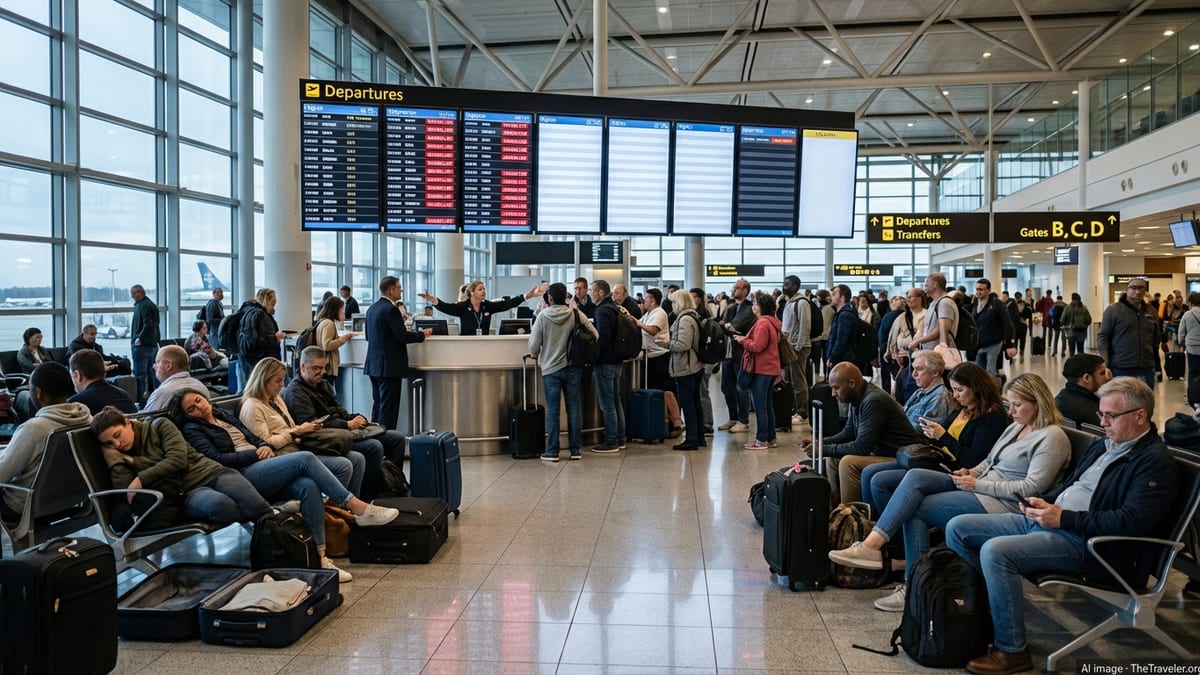
Operational pressures hit schedules as traffic is rerouted
Publicly available aviation and advisory documents indicate that Oman’s airspace, while open, has been handling overflow traffic as neighboring hubs contend with partial shutdowns, damaged infrastructure and shifting conflict-related risk assessments. This has increased complexity for flight planning in and out of Muscat and other Omani airports, adding to ground and airborne holding times.
Analysis of recent regional briefings shows that airspace closures and restrictions in parts of the Gulf have pushed additional traffic into remaining open corridors, including segments managed by Oman’s aviation authorities. As airlines divert around sensitive zones, routes that previously offered direct or near-direct paths between Asia, Africa and Europe are now longer and more congested, heightening the likelihood of delays.
Industry guidance distributed in recent months describes patterns of long ground delays, unplanned diversions to Muscat and flight level constraints at key exit points from Omani airspace. These measures are framed as short-term contingency responses that allow flights to continue operating while prioritizing safety and coordination with neighboring flight information regions.
Specialist analysis from global consultancies further notes that while Oman has kept its national airspace open, earlier temporary constraints at Muscat International Airport combined with overflow traffic from other parts of the region have at times saturated capacity. The resulting congestion has been linked to schedule disruptions for multiple carriers, including Oman Air, as operators navigate a reduced margin for recovery when irregular operations occur.
Regional airspace restrictions reshape Oman Air’s network
Published airline notices and local media coverage show that Oman Air has been forced to revise parts of its regional network as the security situation has evolved. Earlier this year, several flights were cancelled over a defined period to destinations such as Amman, Dubai, Manama, Doha, Dammam, Kuwait City, Copenhagen, Baghdad and Khasab, with airspace closures and restrictions cited as key factors.
Subsequent updates in the same outlets and on aviation tracking platforms point to a gradual resumption of many of these routes, though some remain operating on revised timetables or different routings. The pattern reflects a broader Middle East trend in which airlines are reinstating services in stages as risk assessments change and air navigation service providers adjust restrictions.
Separate coverage indicates that Khasab in northern Oman is a notable example of continuing disruption. Flights there were suspended in early March amid regional airspace concerns, and while test operations have been reported as part of safety and readiness checks, a firm date for a full commercial restart has not yet been widely publicized. For affected passengers, this has meant rebooking via Muscat or alternative gateways.
At the same time, Oman Air has pursued previously planned expansion moves, including additional services within the Gulf and new international routes. Industry observers note that the carrier is attempting to balance strategic growth plans with the day-to-day realities of operating through a region where route availability and preferred flight levels can change at short notice.
Knock-on delays for passengers across the Middle East
Travel reports from passengers and monitoring of regional flight data suggest that Oman Air’s delays are part of a wider pattern affecting multiple airlines across the Gulf and broader Middle East. With several major hubs having experienced temporary suspensions or reduced operating capacity, aircraft have been rerouted, retimed or subject to extended ground waits while traffic flows are reorganized.
Slot coordination data for the region points to a sizable proportion of scheduled takeoff and landing slots being cancelled or reshaped in recent months. Aviation analysts interpret this as evidence of continued instability in timetables, with carriers building in additional buffers where possible and, in some cases, consolidating frequencies to maintain connectivity while reducing operational exposure.
For passengers flying with Oman Air, these dynamics translate into a higher risk of late departures, longer connection times and, occasionally, missed onward flights on multi-sector itineraries. Public commentary collected across traveler forums mentions instances of last-minute rescheduling by several days, as well as delays attributed to congestion and changing airspace permissions along planned routes.
Oman Airports, which operates Muscat International Airport and other gateways, has previously urged travelers via public statements to verify flight status directly with airlines before heading to the airport. Observers view this as an acknowledgment of the fluid operating environment and the potential for schedules to shift even close to departure time.
Airlines navigate safety advisories and constrained corridors
Regulatory and safety advisories issued for the wider Gulf and Gulf of Oman outline the operational backdrop facing Oman Air and its peers. Updated guidance from international aviation safety bodies highlights a high level of risk in certain flight information regions due to the possibility of missiles, drones, combat aircraft and air defense systems, prompting recommendations to avoid or strictly limit operations in those areas.
For Oman, this has practical consequences on route design. Some segments of the Muscat flight information region west of a specified longitude are subject to heightened caution or avoidance in line with published guidance. To maintain service, flight planners are turning to alternative tracks that steer clear of restricted zones, often adding distance and time to previously shorter routings.
Technical presentations submitted to regional air navigation planning groups describe how Oman’s air traffic management has activated contingency arrangements during periods of airspace closure or partial restriction. These include rerouting flows, imposing temporary flight level caps, suspending certain training activities and coordinating with adjacent states to manage a reshaped demand pattern.
Aviation experts note that such measures are designed to be scalable, allowing authorities and airlines to dial restrictions up or down as the situation evolves. For carriers such as Oman Air, that means schedules may be adjusted repeatedly in the coming weeks, with improvements in punctuality likely to track any easing of regional tensions and reopening of key corridors.
What passengers can expect in the coming weeks
According to recent published coverage in regional outlets, Oman Air states that most of its flights continue to operate, but acknowledges that some routes remain affected by airspace restrictions. The airline is encouraging customers, through its public information channels, to monitor flight status and manage bookings using digital tools as services are gradually reinstated and remain subject to short-notice change.
Travel industry commentators advise passengers booked on Oman Air to allow more generous connection times, particularly when connecting in Muscat between long-haul and regional services. Choosing earlier departures in the day, where possible, is also being recommended as a way to reduce the impact of cascading delays that tend to build up over busy peak periods.
As the summer travel season progresses, Oman’s aviation system is also accommodating a significant increase in demand, especially to destinations such as Salalah during the Khareef season. National carriers, including Oman Air, have added capacity and extra flights to meet this surge. While this represents a positive sign of market resilience, it also increases the operational challenge of maintaining punctuality in an already constrained regional airspace environment.
Analysts suggest that the outlook for delays will remain closely tied to developments in regional security and the pace at which temporary airspace restrictions are lifted or relaxed. Until then, travelers flying with Oman Air and other Middle East carriers are likely to continue encountering occasional disruptions, even as airlines work to restore more predictable schedules.