


I used to treat midscale hotel chains as interchangeable: pick the cheapest Hampton Inn, Holiday Inn Express, Fairfield, or Best Western with decent reviews and call it a night. That changed on a rainy Thursday in Arizona, when a road closure pushed me into a last-minute stay at a Best Western I had barely glanced at while scrolling through options. Over the next twelve hours, that unplanned stay quietly rewired how I judge midscale hotels, and especially how I look at Best Western.
Get the latest updates straight to your inbox!
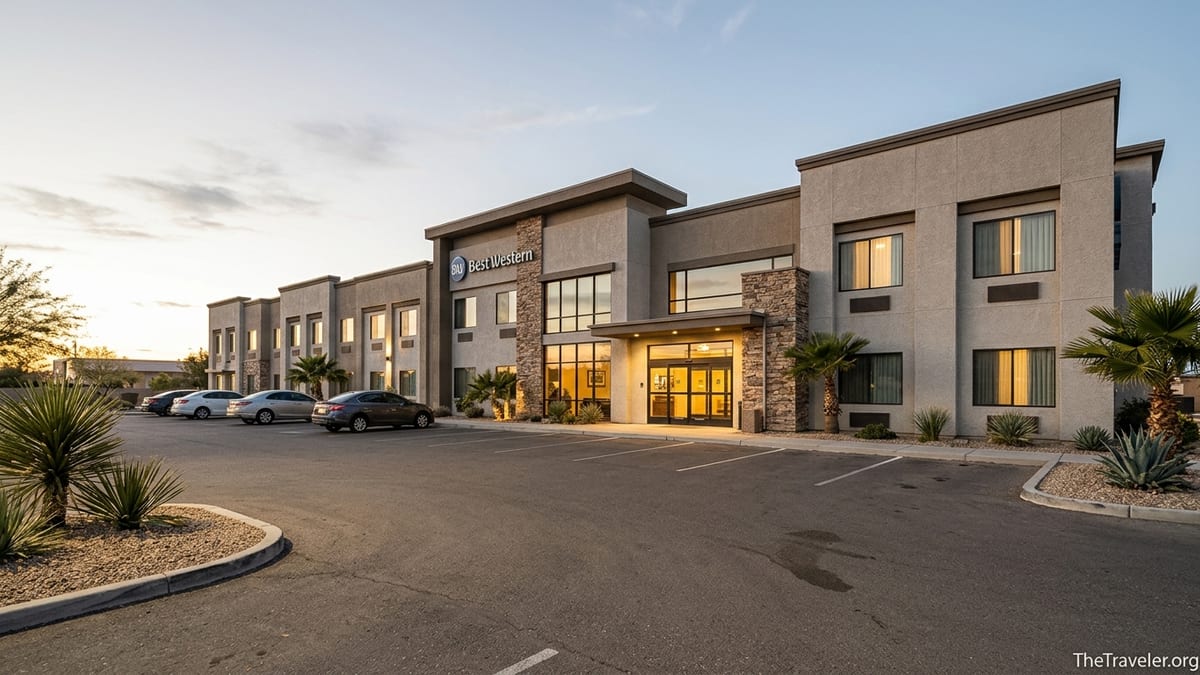
How One Unplanned Night Rewrote My Hotel Assumptions
The night did not start promisingly. A highway accident had turned a three-hour desert drive into a long detour, and by the time I pulled into town it was after 10 p.m. My usual midscale standbys were pricing around 180 to 210 dollars with taxes for that night. A Best Western on the edge of town showed 155 dollars, taxes in, and still had a king room available. In my head, Best Western was a “roadside motel” brand I associated with faded carpets and waffle irons. I booked it mostly out of resignation.
What I walked into was not a luxury hotel, but it was far from the dated picture I had in mind. The lobby looked recently renovated, with muted desert colors and local photography on the walls instead of generic art. The front desk agent checked my ID, saw I had just signed up for Best Western Rewards while booking, and immediately offered a slightly larger corner room on the quieter side of the building. She also volunteered a 1 p.m. late checkout “if I needed to catch up on sleep,” something I often have to beg for at other chains in the same price range.
Upstairs, the room felt closer to a modern Fairfield Inn or Hampton: a firm bed with a crisp white duvet, a large desk with plenty of outlets, and a bathroom that had clearly been retiled in the last couple of years. The air conditioning unit was the newer wall-mounted kind, not the rattling under-window box I expected. It was still a midscale room with basic finishes, but clean, bright, and functional in a way that instantly made me reconsider the mental ranking I had for the brand.
That stay did not just change how I felt about that particular property. It exposed how lazy my thinking had become about midscale chains in general. I was judging entire brands on old reputations and a few bad experiences, instead of looking at how much these portfolios have evolved and diversified in the last decade.
Best Western Today: A Midscale Brand That Is No Longer One-Size-Fits-All
Part of my bias came from treating “Best Western” as one monolithic brand. In reality, the company has spent the last several years segmenting into distinct tiers, much like Marriott or Hilton. The umbrella now includes classic Best Western properties in the midscale category, Best Western Plus and Best Western Premier in the upper midscale and upscale ranges, and separate value brands such as SureStay, plus boutique lines like Vib and Sadie that target more design-conscious travelers.
Industry brand-mapping reports for 2025 and 2026 place Best Western firmly in the midscale segment, with Best Western Plus competing directly with upper midscale offerings like Hampton Inn, Holiday Inn, Country Inn & Suites, and Fairfield Inn. In Canada, for example, a recent chains report ranked Best Western among the top midscale brands by number of hotels and rooms, right alongside Ramada and Quality Inn. In practice, that means the Best Western logo on a highway sign can now represent anything from a basic but solid drive-market property to a more polished business hotel with upgraded amenities.
This matters when you are comparing options on a booking site. On my Arizona night, the property I chose was a standard Best Western, but I had scrolled past a “Best Western Plus” in the next town without fully appreciating what that label meant. Plus usually indicates touches such as larger rooms, more contemporary design, and a more robust breakfast. Premier and BW Premier Collection step up further with more upscale finishes and often better on-site dining or bar options, putting them closer to some of the nicer Holiday Inn or Hilton Garden Inn properties.
Once I began paying attention to those sub-brands, the pattern that emerged was clear: you cannot judge modern Best Western properties purely on the name alone, any more than you can assume every Holiday Inn Express looks the same as a newly built Hampton or a refreshed Fairfield. The real question is which tier you are booking and how recently the individual hotel has been renovated.
The Stay Experience: Where Midscale Details Matter Most
That Arizona Best Western worked because it got the unglamorous details right. The shower had consistent hot water pressure at 11 p.m. and again at 7 a.m. The blackout curtains actually blocked light from the parking lot. The Wi-Fi was fast enough to handle a video call without stuttering. The complimentary breakfast, served in a compact dining area near the lobby, went beyond the bare minimum: scrambled eggs that were not watery, breakfast potatoes that were hot, and a rotation of both yogurt and fresh fruit instead of just pastries.
None of those elements, taken alone, would justify writing about the stay. Together, they added up to something that felt consistently better than what I often encounter at similarly priced midscale chains. I have checked into Holiday Inn Express properties with nicer lobbies but half-asleep service at the front desk, or Fairfield Inns where the eggs and sausage appear on schedule but room cleanliness is hit or miss. I have also stayed at Hampton Inns that absolutely outclass any typical Best Western. The point is not that one brand is always better, but that execution at the property level can swing both ways, and the old stereotypes are no longer reliable.
Pricing is where the contrast can be particularly stark. In suburban and smaller-market locations, I regularly see new-build Hampton Inn or Fairfield properties in the 170 to 220 dollar range per night, where a nearby Best Western or Best Western Plus prices closer to 130 to 170 dollars. In those cases, the “cheaper” option often delivers 85 or 90 percent of the experience for a significantly lower rate, provided you have verified recent reviews and renovation dates. My Arizona stay hit that sweet spot: a rate around 155 dollars for a room and service level that would not have felt out of place at a more expensive, better-known flag.
That night also highlighted how powerful small gestures can be in midscale hotels. Proactive late checkout, a front desk agent who offers local dining advice without being prompted, and a breakfast attendant who keeps items stocked rather than shrugging at empty coffee urns can shift an experience from tolerable to memorable without adding much cost to the hotel. Once you start paying attention to those details, it becomes easier to identify midscale properties that punch above their weight, regardless of the logo on the sign.
Loyalty, Upgrades, and Late Checkout: Underestimated Value in the Midscale Segment
Best Western Rewards turned out to be another blind spot. I had signed up for the loyalty program almost as an afterthought while booking on my phone, mostly to avoid entering my details again next time. Like many frequent travelers, I tend to focus on the big three programs from Marriott, Hilton, and IHG. In practice, though, the benefits from those programs are heavily weighted toward higher-end brands and large city hotels.
Best Western Rewards has five published tiers, from base-level Blue up through Gold, Platinum, Diamond, and Diamond Select. Program guides updated for 2026 emphasize perks that matter for road-trippers and midscale guests: bonus points at higher tiers, the ability to request late checkout or early check-in when available, room upgrades to better room types when possible, and frequent promotions where members earn extra points or free-night vouchers. Recent documents from the brand highlight that new elite-night thresholds and bonus structures are in place for the 2026 calendar year.
Independent analyses of the program note that Best Western’s points can be redeemed across more than four thousand hotels in over one hundred countries, and that award nights still count toward elite status progression. Some co-branded credit cards in the market offer automatic elite status, such as mid-tier or higher levels, which can translate into tangible frontline benefits like a better room category or a more reliable late checkout in the midscale segment.
The important shift for me was this: I started to think of Best Western Rewards as a pragmatic backup program specifically for drive-market stays and secondary cities where a full-service Marriott, Hilton, or Hyatt is either absent or priced at a premium. If you are doing a road trip through the U.S. or Canada, mixing in Best Western properties can mean quicker access to free nights, especially if nightly rates are lower than competing brands. It is not a replacement for the big programs, but for many travelers it can be a useful secondary tool that aligns well with midscale travel habits.
How I Now Evaluate Any Midscale Hotel, Best Western or Otherwise
That one Best Western stay forced me to rewrite my personal checklist for judging midscale chains. Today, instead of defaulting to a name I know best, I start with three filters: brand tier, property age or renovation date, and recent guest reviews that mention cleanliness and noise. For Best Western specifically, I distinguish between standard, Plus, Premier, and value-tier brands like SureStay, knowing that each aims at a different price and quality point. For other chains, I treat Holiday Inn Express differently from Holiday Inn, or Fairfield differently from a full-service Marriott, even if they share a parent company.
I then compare concrete trip-specific factors: Is breakfast included, and do reviews suggest it is more than just packaged pastries. Are parking fees likely to erase any nightly savings. Is there reliable Wi-Fi and a usable workspace in the room if I need to work. Has anyone mentioned issues like thin walls, persistent highway noise, or housekeeping inconsistency in the last six months. For example, if a Best Western Plus at 145 dollars shows recent praise for cleanliness and breakfast, while a nearby older Hampton at 190 dollars shows mixed housekeeping reviews, I am far more inclined now to choose the Best Western, a choice I might not have made before that Arizona night.
The other major change is how I value flexibility. Because midscale rates in the United States often hover between 120 and 220 dollars per night in non-peak periods, a difference of 20 or 30 dollars can matter over a multi-night trip. I now regularly book two refundable options when possible: perhaps a Fairfield Inn and a Best Western Plus in the same exit corridor, then read fresh reviews a few days before arrival and keep whichever seems to be performing better at that moment. That approach works especially well in regions where midscale competition is strong and maintenance standards can change quickly at individual properties.
Finally, I weigh loyalty less dogmatically. If staying at a particular midscale brand purely to earn points requires paying significantly more for a worse experience, the math rarely works. Best Western’s footprint in smaller towns has become a compelling reason to collect some points there, even if most of my urban stays go to other programs. The key is being clear-eyed about the tradeoffs: a free night earned after several good-value Best Western stays can be more satisfying than forcing yourself into underwhelming properties of a preferred chain simply for the sake of familiarity.
When a Best Western Beats the Bigger Names
Since that first stay, I have had several trips where a Best Western, on its own merits, outperformed better-known competitors. On a winter drive through the Rocky Mountain region, a Best Western Plus attached to a small conference center offered spacious rooms with comfortable seating areas, an indoor pool, and a solid hot breakfast for around 160 dollars per night. The nearby Holiday Inn Express was closer to 190 dollars for smaller rooms and a more crowded breakfast area, while a newer Hampton along the same highway was over 200 dollars with similar amenities.
In a secondary Canadian city, I booked a standard Best Western that had recently completed a renovation. The lobby bar served local craft beer on tap, the rooms had large, well-lit desks, and the parking was free. Across town, a chain-branded midscale competitor charged a parking fee that effectively erased its nominal rate advantage. In that case, the Best Western not only came out ahead on price, but also offered a more comfortable working environment during a multi-night stay.
There are also times when the opposite is true. I have checked into older Best Western properties where the layout still screamed 1980s motor lodge, with thin walls and outdated bathrooms, even if the bedding had been refreshed. In those markets, a Holiday Inn Express or Fairfield built within the last five years clearly provided a better overall experience, even if the nightly rate was slightly higher. The point is not that Best Western has suddenly leapfrogged all competitors, but that it now sits alongside them as a legitimate, often underestimated option that deserves to be evaluated property by property.
For travelers who mainly stay in large cities, it is easy to forget just how often Best Western is the only major international flag in smaller markets. That geographical reach, especially across North America and parts of Europe, means the brand frequently appears in places where you might otherwise end up at an independent motel. When those properties have invested in renovations and training, the difference in safety, cleanliness, and overall comfort compared with the local alternatives can be significant.
The Takeaway
One late-night check-in at a Best Western did not magically transform the midscale hotel landscape. What it did do was expose how out of date my assumptions had become. Modern midscale brands, including Best Western, have diversified, improved, and segmented themselves in ways that make quick judgments based on old reputations unreliable. The experience gap between a solid Best Western Plus and a typical Hampton or Holiday Inn Express is often smaller than the price gap, especially outside of major gateway cities.
Today, when I plan a trip, I still consider the familiar names: Hampton for consistency, Holiday Inn Express for simple reliability, Fairfield for the ubiquity of the Marriott ecosystem. But I now give Best Western serious consideration, especially in smaller markets and along long driving routes, and I pay close attention to which sub-brand and which specific property I am choosing. That one Arizona stay changed how I scroll through options: I look less at the logo and more at the value, the recent reviews, and the details that actually shape a night’s sleep.
If you have written off Best Western based on old impressions, it may be worth revisiting the brand with a more nuanced lens. In a midscale world where prices keep creeping upward, quietly competent hotels that deliver clean rooms, helpful staff, and fair rates are worth finding, no matter which sign glows outside the lobby.
FAQ
Q1: Is Best Western considered a midscale or budget hotel chain?
Best Western spans several tiers. Standard Best Western hotels are broadly midscale, while Best Western Plus and Premier compete with upper midscale brands like Hampton Inn and Holiday Inn.
Q2: How does Best Western compare to Hampton Inn or Holiday Inn Express on price?
In many U.S. drive-market locations, Best Western and Best Western Plus often price 10 to 30 dollars per night lower than comparable Hampton Inn or Holiday Inn Express properties, though this varies by market and season.
Q3: Are Best Western hotels independently owned?
Yes. Most Best Western properties are independently owned and operated under a shared brand and standards framework, which is why quality can vary more than in some fully standardized chains.
Q4: What is the difference between Best Western, Best Western Plus, and Best Western Premier?
Standard Best Western hotels target core midscale needs, Plus properties typically offer more contemporary rooms and expanded amenities, and Premier hotels aim for a more upscale experience with upgraded design and services.
Q5: Is Best Western Rewards worth joining for occasional travelers?
Yes. Membership is free, points do not usually expire while there is account activity, and even occasional stays can add up to useful redemptions, especially in smaller markets where other chains have limited presence.
Q6: Do Best Western hotels include free breakfast?
Many midscale Best Western and Best Western Plus properties in North America include complimentary breakfast, but it is not universal. Always check the listing for that specific hotel to confirm what is offered.
Q7: Can you get late checkout at Best Western properties?
Late checkout is often available upon request, and Best Western Rewards elite members have enhanced access to early check-in and late checkout when occupancy allows, though it is not guaranteed at every hotel.
Q8: How can I tell if a particular Best Western is recently renovated?
Look for renovation notes in the property description and scan recent guest reviews for mentions of new decor, updated bathrooms, or refreshed common areas. Photos that show modern finishes and USB outlets are another clue.
Q9: Are Best Western hotels safe for solo travelers?
Safety varies by location and property, but many Best Western hotels cater heavily to business and road-trip guests. Checking recent reviews, lighting around entrances, and 24-hour front desk coverage can help you make an informed choice.
Q10: When should I choose Best Western over other midscale brands?
Best Western can be a smart choice when a specific property shows strong recent reviews, offers lower rates than nearby competitors, includes breakfast or free parking, or is one of the few major-branded options in the area.