


I thought I knew exactly what I was getting when I booked a Best Western on a recent road trip. Instead, I walked into three completely different worlds: a roadside motel with doors opening to the parking lot, a sleek business hotel with a lobby bar and USB outlets everywhere, and a historic boutique full of original brick walls and locally roasted coffee. All carried the same brand in the name. That surprising variety is not an accident. It is baked into how Best Western works and it explains why your experience can swing from pleasantly upscale to just‑okay budget, even within the same city.
Get the latest updates straight to your inbox!
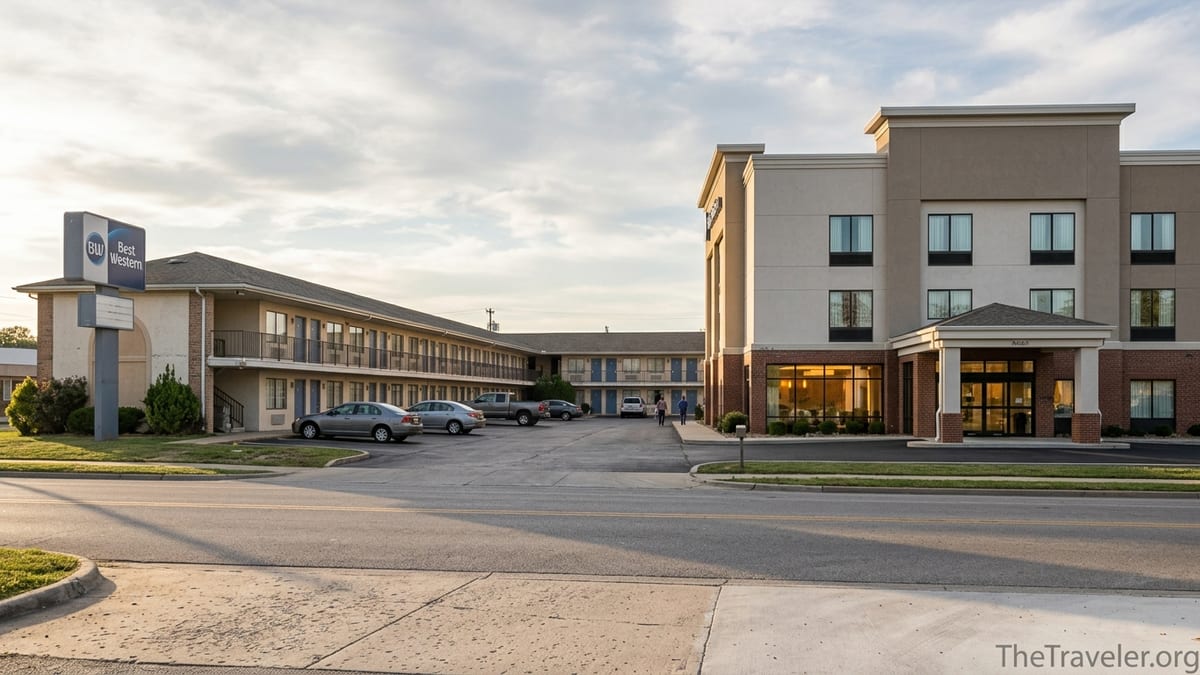
How Best Western Evolved Into a Very Mixed Portfolio
Best Western started in the mid‑20th century as a loose network of independent roadside motels that agreed to share reservations and marketing. That DNA still shows. Unlike tightly standardized brands such as Holiday Inn Express, many Best Westerns remain owner‑operated properties that keep their own character as long as they meet core standards. Over time, the company has leaned into that flexibility rather than trying to smooth it out completely.
Today, Best Western is part of the wider BWH Hotels umbrella, with more than 4,000 properties worldwide spread across roughly 19 different brands ranging from economy to upscale and boutique. You will see classic roadside Best Western signs on small town highways, glass‑and‑steel Best Western Premier towers in city centers, and soft‑brand properties like BW Premier Collection or BW Signature Collection attached to distinctive independent hotels. For a traveler, all of that sits under one loyalty program, but it does not feel like one homogenous chain.
In North America alone there are thousands of BWH‑affiliated properties, with dense clusters in states like California, Texas, and along major interstate corridors. A two‑night stay in a suburban Best Western Plus near Sacramento can feel utterly different from a converted historic hotel flying the BW Premier Collection flag in a downtown district. Understanding that you are dealing with a broad family of brands, not one single product, is the first step toward predicting what you will get.
This evolution means Best Western now competes at several price points at once. In certain small cities you might find a regular Best Western quoting around 110 to 140 dollars per night on a weeknight, a Best Western Plus at 150 to 190 dollars with a fresher look and better amenities, and a fully independent boutique nearby that also participates as a BW Premier Collection property with rates above 220 dollars. The logos may be similar, but the target guest and experience are not.
Brand Tiers: From Economy Roadside to Boutique Retreat
One major reason your Best Western experiences may vary wildly lies in the brand architecture BWH Hotels uses. The "timeless" core includes Best Western, Best Western Plus, and Best Western Premier. Roughly speaking, the plain Best Western flag sits in the midscale space, Best Western Plus bumps up to upper midscale with slightly more generous rooms and amenities, and Best Western Premier aims at full‑service, business‑friendly or leisure‑focused hotels with more design attention.
Alongside that core, there are value brands like SureStay by Best Western and SureStay Plus, which tend to occupy the economy and lower midscale segments. Guests and hotel insiders often describe SureStay as a step below a typical Best Western in terms of finishes and features. When you see that name on a highway exit sign, it usually signals a basic stopover option where price and parking trump decor and extra services.
At the other end of the spectrum, the company has newer boutique‑style flags such as Sadie and Aiden, plus soft brands like BW Premier Collection and BW Signature Collection. These are often conversions of existing hotels that already had strong personalities: a historic brick building in a revived warehouse district, a design‑led downtown property with a craft cocktail bar, or a coastal inn with strong ties to local architecture. They must plug into Best Western’s reservations and standards, but they are not built from a cookie‑cutter prototype.
As a traveler, it helps to read the exact brand name as a shorthand for likely experience. A Best Western Plus near a regional airport is more likely to have an indoor pool, a fitness room with modern equipment, a hot breakfast that goes beyond wrapped muffins, and room finishes like larger desks and better task lighting. A SureStay on the edge of town is more likely to offer outdoor corridors, simpler bedding, and a leaner breakfast in exchange for a lower room rate.
Real‑World Examples of How One Name Hides Very Different Stays
Consider a trip through California wine country. In Healdsburg, a Mediterranean‑style Best Western property completed a renovation that gave one of its buildings an Italianate villa feel, with rustic woods, natural stone, and a landscaped piazza. Rooms there can feel almost resort‑like for a midscale chain, with small balconies, tiled floors, and a sense of place that reflects the surrounding vineyards. Nightly rates in high season often track closer to upscale competitors than to budget roadside motels.
Drive a couple of hours north into the Central Valley, and another Best Western along the interstate may look very different. The building might follow a standard roadside blueprint with exterior corridors, compact bathrooms, and a simple breakfast room off the lobby. The nightly rate is lower, occasionally dipping under 120 dollars midweek, and the clientele skews toward road‑trippers, truck drivers, and families on long drives rather than wine‑country weekenders. Both hotels share the Best Western brand and loyalty benefits, but they answer completely different needs.
Even within the upscale tiers, variety is striking. A BW Premier Collection property housed in a refurbished historic hotel in a Midwestern river town may feature exposed brick walls, original timber beams, and a locally focused restaurant with regional craft beer. Another BW Premier Collection hotel in a Sunbelt suburb might simply be a stylish modern box with a lobby bar and spacious meeting rooms. Both are technically peers in the brand’s hierarchy, but the stay can feel worlds apart depending on how much the owner has invested and how unique the original building was.
This variation also shows up in service. A Best Western Plus in a mid‑sized business city may have a front desk team used to handling airline crews and conference attendees, with early breakfast hours and extended housekeeping staff. A family‑run Best Western in a small mountain town might feel more like an inn, with owners at the desk, limited evening staffing, and a homemade breakfast that varies day to day. Travelers sometimes interpret those differences as inconsistency, but they are a byproduct of independent ownership.
Why Franchise and Conversion Models Lead to Inconsistent Quality
Most Best Western hotels are not owned by the parent company. Instead, local owners sign franchise or affiliation agreements that let them use the brand in exchange for meeting standards and paying fees. This model is common across the industry, but Best Western historically stood out because it was particularly open to conversions of existing motels and hotels that did not fit more rigid chains. That openness is a strength for growth and variety, but it means baseline quality can differ more from property to property.
When an aging roadside hotel converts into a SureStay, the investment required is lower than building a new Best Western Plus from the ground up. Owners might refresh paint and flooring, swap out mattresses, and make basic safety improvements, but the bones of the building remain what they are: room layouts from a previous era, thinner walls, or smaller bathrooms. By contrast, newly built Best Western Plus and Premier hotels tend to follow more modern design guidelines, with thicker sound insulation, USB charging, and better HVAC systems.
The soft brands add another layer. A boutique hotel that joins BW Premier Collection often already has strong personality but may have varying levels of upkeep. One city’s collection property could have luxurious bedding, rain showers, and a destination restaurant, while another operates in a charming but slightly worn historic structure where fixtures feel a step older. Both are allowed some leeway as long as they score adequately on inspections and guest feedback, so your experience depends heavily on the individual owner’s priorities and maintenance budget.
Staffing is another variable. In a tightly controlled chain, corporate might push uniform training programs and operating procedures across all properties. BWH Hotels offers tools and standards, but implementation on the ground can range from polished and professional to more informal. That is part of the reason reviews for Best Westerns in the same metro area can swing from glowing five‑star praise to one‑star frustration about cleanliness or slow front desk responses.
Pricing Surprises: When a Best Western Beats or Trails Its Peers
If you assume Best Western will always be cheaper than Marriott’s Courtyard or Hilton Garden Inn, recent years may surprise you. In some markets, new or renovated Best Western Plus and Premier properties price themselves very close to, or even above, those familiar business brands, especially when they offer extras like free hot breakfast, free parking, and better‑than‑expected room finishes. On certain dates, a well‑rated Best Western Plus near a convention center might quote 210 dollars while the nearby Courtyard sits at 230 dollars before breakfast and parking fees.
In other markets, Best Western plays the value card more aggressively. A two‑star SureStay on the edge of a college town might undercut nearby limited‑service competitors by 30 to 60 dollars per night, especially on weekends when alumni events or sports games push demand to more centrally located hotels. The savings can be substantial if you are mostly looking for a clean, functional room and are willing to accept plainer finishes and a basic breakfast.
Seasonality also magnifies differences. In a popular coastal destination where room supply is tight, a Best Western on the waterfront may charge peak summer rates that rival boutique independents. Meanwhile, an inland Best Western along the highway half an hour away may remain under 150 dollars even in July because it caters more to pass‑through traffic. Without understanding the local market, travelers sometimes assume the chain name alone explains the price, when in reality location and competition play heavier roles.
For loyalty members, promotions can tilt the math. Best Western Rewards often runs seasonal offers such as earning a free night voucher after two qualifying stays or double points during off‑peak months. For frequent road‑trippers, stacking those offers at solid mid‑tier properties can make a slightly inconsistent portfolio worthwhile, as long as you are choosy about which hotels you book within the brand.
How to Decode a Best Western Before You Book
The good news is that you can predict a lot about a given Best Western stay if you know what to look for before you click reserve. Start with the exact brand name: SureStay or SureStay Plus likely signals basic economy. Plain Best Western usually means midscale, often with a mix of older and newer properties. Best Western Plus should indicate more consistent room size and amenities, while Best Western Premier and the boutique or collection flags point toward higher‑touch experiences.
Next, study photos and room descriptions carefully. Interior corridor hotels with recently updated bathrooms, modern headboards, and USB outlets by the bed are more likely to feel contemporary and well maintained. Outdoor corridor properties with air‑conditioner units below the windows and older patterned carpeting tend to indicate a converted motel structure. Satellite images can also reveal whether the building sits in a busy commercial strip, an industrial zone, or a walkable downtown.
Guest reviews are especially important with a brand that spans so many property types. Focus less on the overall score and more on recent comments about cleanliness, noise, and maintenance. If you see multiple mentions of worn carpets, musty smells, or weak Wi‑Fi within the last three months, take them seriously, even if the star rating is middling. Conversely, a property with a long string of praise for friendly staff, comfortable beds, and fresh renovations is often a safer bet, even if a few older reviews paint a different picture.
Finally, compare the rate to local competitors. If a Best Western Plus is pricing at the very top of the midscale pack in a secondary city, look for the reason in photos and location: perhaps it sits next to a major hospital, offers larger suites, or has an especially strong breakfast. If you cannot identify a compelling advantage, that price premium might not be justified for your stay.
The Takeaway
Best Western today is less a single uniform chain and more a spectrum of hotel experiences linked by a loyalty program and a shared logo. That variety can be either a delight or a frustration depending on how you approach it. Travelers who assume every Best Western will feel like the one they stayed at five years ago on a family road trip are almost guaranteed to be surprised, for better or worse.
The key is to treat each property as an individual hotel that just happens to fly the Best Western flag. Pay attention to the sub‑brand, the building’s age and style, recent renovations, and what other guests are saying this year, not three years ago. When you do that, you can uncover standout Best Westerns that punch above their price, skip the ones that are coasting on the name, and use the brand’s breadth to your advantage instead of being blindsided by it.
If you embrace that mindset, Best Western stops being unpredictable and becomes a flexible toolkit. On one trip it might provide an inexpensive SureStay near the interstate when you just need a bed and coffee before an early drive. On another, it could surprise you with a character‑filled Premier or boutique collection hotel that feels far more special than you expected for the price.
FAQ
Q1. Why do Best Western hotels feel so different from one another?
Many Best Western properties are independently owned and operate under different sub‑brands, from economy to boutique, so building style, age, and investment levels vary widely.
Q2. Is Best Western a budget or midrange chain?
It is both. The portfolio spans economy brands like SureStay, classic midscale Best Western hotels, and higher‑tier Best Western Plus, Premier, and boutique affiliates.
Q3. Are Best Western Plus hotels always better than regular Best Westerns?
In general they offer more consistent room standards and amenities, but individual properties can still differ, so recent photos and reviews matter more than the label alone.
Q4. How can I tell if a Best Western is a converted motel or a newer build?
Look at exterior photos and room layouts. Outdoor corridors, window units, and compact bathrooms often signal older conversions, while interior hallways and updated finishes suggest newer builds.
Q5. Are the boutique and collection brands worth the higher price?
Often yes, especially if you value character and design, but quality can still vary. Check photos and reviews to be sure the property is well maintained, not just historic or quirky.
Q6. Why do some Best Westerns cost as much as big‑name business hotels?
Location, renovation level, and demand drive pricing. A newly updated Best Western Plus near a convention center may price close to, or just below, similar Marriott or Hilton brands.
Q7. Is Best Western Rewards useful if properties are so inconsistent?
It can be very useful if you are selective. By choosing well‑reviewed hotels and timing promotions, you can earn free nights quickly across a wide range of destinations.
Q8. Should I avoid SureStay properties completely?
Not necessarily. They are designed as basic economy options. Some are clean and functional, while others feel very dated, so read recent cleanliness and safety reviews before booking.
Q9. What is the safest way to choose a good Best Western in a new city?
Combine the sub‑brand, recent guest reviews, and up‑to‑date photos. Aim for properties that mention recent renovations, high cleanliness scores, and responsive staff.
Q10. Do all Best Westerns include free breakfast and parking?
Many roadside and suburban properties do, but not all urban or boutique hotels. Check each listing, as parking fees and breakfast policies vary by location.