


Best Western has quietly evolved from a classic roadside motel brand into a diverse global hotel group with everything from bare-bones budget properties to full-service business hotels and urban boutiques. That range can make it hard to answer a simple question: how expensive is Best Western, really, and are you getting good value for what you pay? Looking at real-world prices, brand tiers and loyalty perks helps clarify when Best Western is a smart buy and when you might be better off elsewhere.
Get the latest updates straight to your inbox!
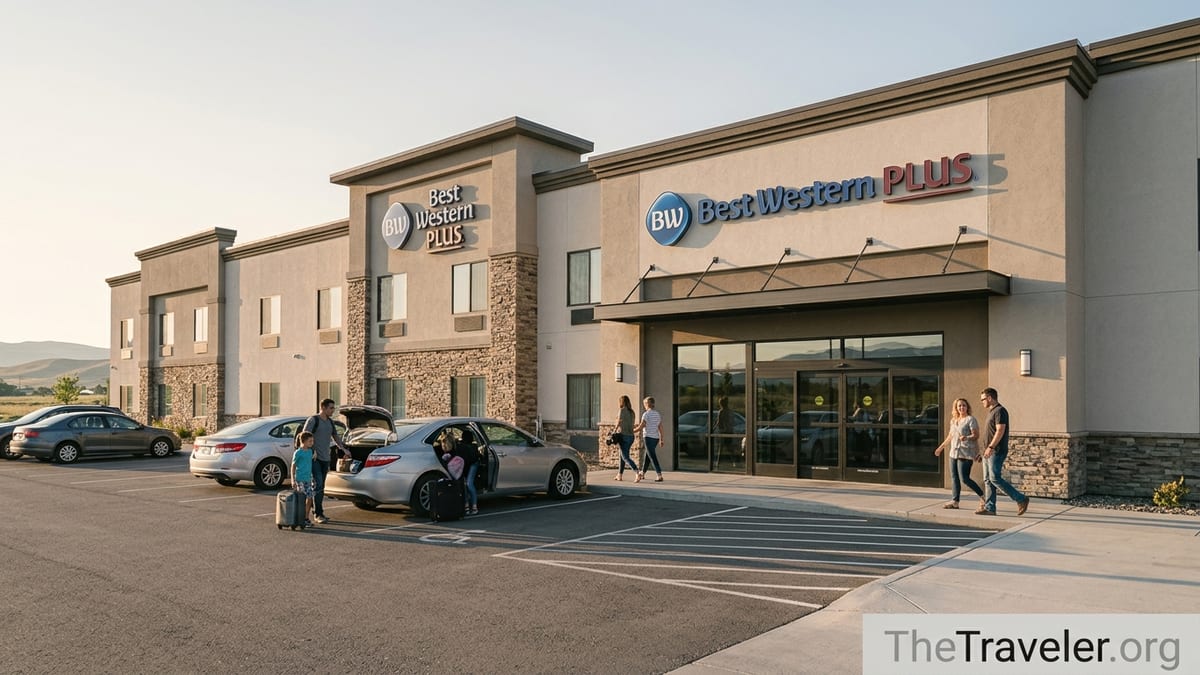
Where Best Western Sits in the Price Landscape
In the United States, a standard Best Western room typically falls into the lower midscale to solid midscale price band. In practical terms, that often means base rates in the region of about 100 to 180 dollars per night before taxes in many secondary cities and suburbs, with prices climbing past 200 dollars in peak summer or during big events in major metros. In smaller towns along interstate highways, it is still common to see nightly rates under 120 dollars outside of holidays, especially at older legacy properties or those positioned toward budget travelers.
Compared with rivals, Best Western’s core “Best Western” and “Best Western Plus” flags often price in the same neighborhood as Holiday Inn Express, Hampton by Hilton and Fairfield by Marriott. In mid-sized Midwestern or Southern cities, for example, you might find a Best Western Plus at roughly 150 dollars on a weeknight while a nearby Hampton and Fairfield price between about 160 and 190 dollars for similar dates. In that context, Best Western is not the absolute rock-bottom option, but it is rarely the priciest chain on the freeway exit sign either.
At the higher end of the portfolio, Best Western Premier and boutique-style concepts can edge into upper midscale pricing, especially in attractive locations such as walkable downtowns, popular national park gateways or European city centers. In those markets, nightly rates can resemble what you would expect from a Courtyard by Marriott, AC Hotels, or Hilton Garden Inn, particularly on high-demand nights. On the flip side, the SureStay family, which Best Western classifies as its value tier, is often directly comparable to brands like Econo Lodge, Super 8 or Days Inn, with nightly rates that can dip under 80 or 90 dollars in low-demand periods in smaller markets.
The end result is a chain that spans a wide price spectrum. When travelers say “Best Western,” they may be picturing a 110-dollar freeway motel in Oklahoma, a 170-dollar business hotel in suburban Denver, or a 220-dollar city-center property in Amsterdam. Understanding which tier you are actually booking is critical to judging whether the price is fair.
Breaking Down Best Western’s Brand Tiers and What You Pay For
Best Western today is part of a larger group that includes multiple sub-brands, roughly organized by style and price. At the heart sit the classic Best Western hotels, which usually offer exterior or interior corridors, a basic breakfast, Wi-Fi and standard rooms aimed at road trippers and value-focused business travelers. These properties tend to be the benchmark for the chain’s pricing, often acting as the mid-range reference point in a given town.
Step up to Best Western Plus and you are paying for more consistent modern standards. Plus properties are typically newer or more extensively renovated, with interiors closer to what you might expect at a Hampton by Hilton or Holiday Inn Express: more polished lobbies, larger or better-equipped fitness rooms, upgraded bedding and often a more generous complimentary breakfast. In practice, that upgrade might add 10 to 30 dollars to the nightly rate compared with an older standard Best Western down the road, especially in small to mid-sized markets where both exist.
Best Western Premier sits above Plus and tends to target guests who might otherwise look at upper midscale business hotels like Courtyard or boutique-style options. At a Premier near a major airport or convention center, you can often expect a full-service restaurant and bar, a more spacious lobby with work areas, conference facilities and slightly larger rooms, often with higher-end finishes. That bump in amenities is usually reflected in rates that can be 20 to 50 dollars higher than nearby standard Best Western properties for the same night, particularly when business demand is strong.
At the value end, the SureStay family by Best Western focuses on essential comfort rather than polish. These hotels often occupy older buildings with simplified amenities and more basic décor. A SureStay or SureStay Plus in a roadside location in the American West might price 10 to 40 dollars less per night than a nearby Best Western Plus, trading down some finishes and extra touches for a lower bill. For budget-conscious travelers who mainly need a clean bed, Wi-Fi and parking, that discount can represent meaningful savings over a multi-night stay.
Real-World Price Examples Across Destinations
To understand whether Best Western is expensive, it helps to look at concrete examples from typical itineraries. Consider a summer road trip along Interstate 10 in Texas and New Mexico. In a smaller city such as Las Cruces, a conventional Best Western on a weeknight in July might price around 130 to 150 dollars before tax, with a SureStay-branded property on the outskirts closer to perhaps 90 to 120 dollars. Compare that with chain competitors at the same exit, where a Holiday Inn Express or Hampton may be listing between roughly 150 and 180 dollars for the same night. In that situation, Best Western often undercuts some big-name rivals by a modest but noticeable margin.
Shift to a business-heavy suburb outside a major U.S. city, such as near Denver Tech Center in Colorado or north of Dallas in Plano. A Best Western Plus catering to corporate travelers during a midweek stay in October might be advertised in the 160 to 200 dollar range, with prices moving higher during trade shows and lower on shoulder-season weekends. The competing Fairfield Inn or Courtyard Marriott nearby will often be similarly priced or slightly higher, while an independent motel down the road might undercut them all but offer fewer amenities and dated rooms.
In city centers or popular leisure destinations, Best Western’s prices can climb but usually still track the broader market. For instance, in a European capital like Rome or Barcelona, a centrally located Best Western or Best Western Plus may charge 200 to 250 euros per night in peak spring and early fall, close to what a midrange boutique or chain competitor in the same district asks. A similar pattern often appears in U.S. tourist hubs such as Orlando or Anaheim, where Best Western properties adjacent to major attractions can easily cross 250 dollars on busy weekends, especially at properties with family suites or resort-style pools aimed at theme-park visitors.
These examples illustrate that Best Western is rarely an outlier for price in any given market. The brand tends to float with local demand, sitting somewhere around the mid-pack of major chain competitors. What determines whether it feels expensive to an individual traveler is less the headline rate and more what you receive for that number compared with alternatives on the same street.
What You Actually Get for the Money
Evaluating whether Best Western is worth the price starts by looking at what the nightly rate typically includes. At many North American Best Western and Best Western Plus properties, complimentary hot breakfast remains a standard perk. Travelers often find items like eggs, breakfast meats, waffles or pancakes, yogurt, fruit and cereal, along with coffee and juice, without an additional fee. If you are comparing a 170-dollar Best Western Plus that includes breakfast for a family of four with a 190-dollar competitor that charges extra for a morning meal, the Best Western bill can work out cheaper in practice.
Free parking is another common inclusion at many suburban and roadside Best Western locations. In contrast, some urban hotels in rival chains have introduced nightly parking charges that can easily add 20 to 40 dollars to the final invoice. For a traveler staying three nights at a Best Western outside a major city where parking is complimentary, the effective nightly cost might undercut a nominally cheaper rate elsewhere once those add-ons are factored in.
Wi-Fi is generally complimentary across the portfolio, and many properties now offer in-room refrigerators and microwaves, which help travelers trim restaurant costs by allowing simple meals or leftovers. In extended-stay or suite-style Best Western properties, kitchenettes let long-stay guests avoid eating out every night. For a business traveler working remotely or a family needing to keep snacks and drinks handy, these features add value that does not always show up in the headline rate.
That said, quality can vary more between individual Best Westerns than at some more standardized chains. Because many properties are independently owned and operated, décor, maintenance and service levels can differ significantly. One Best Western Plus built in the last five years might feel almost indistinguishable from a newly opened midscale Hilton or Marriott. Another older property carrying only the standard Best Western flag might show more wear and tear. For travelers, this means that value for money is tightly linked to the specific hotel’s recent reviews and renovation history rather than the brand name alone.
The Role of Best Western Rewards in Overall Value
Best Western’s loyalty program, Best Western Rewards, can meaningfully tilt the value equation, especially for frequent guests. Members generally earn 10 points per dollar spent on eligible room rates at participating hotels, and points do not expire for active members. Promotions are common, including offers that add fixed bonus points per night or free-night vouchers after a certain number of stays during a promotion window, which can improve the effective return on your spending.
On the redemption side, Best Western advertises free nights beginning at about 5,000 points per night in lower-priced markets, with more typical awards in midrange destinations requiring far higher totals. In practice, a midscale property in a smaller U.S. city might price an award night at roughly 12,000 to 20,000 points, with high-demand urban and resort locations sitting above that band. For a traveler who consistently stays at Best Western and hits promotional bonuses, these redemptions can equate to a discount on future trips that nudges the overall value of the brand upward.
Elite status in Best Western Rewards introduces additional perks that may help justify pricing at the upper end of the chain’s range. Status tiers such as Gold, Platinum, Diamond and Diamond Select offer escalating bonuses on points earnings, along with benefits like room upgrades where available, early check-in and late checkout, and small welcome amenities such as bottled water. For a business traveler who spends dozens of nights per year in mid-priced hotels, these perks can make a 170-dollar Best Western feel more rewarding than a similarly priced independent property that offers no loyalty benefits at all.
It is also worth noting that some travelers use Best Western strategically, choosing the brand in markets where room rates are low relative to the points required for a free night. For example, a road trip route through smaller towns in the American Midwest might allow a traveler to collect points cheaply and then redeem them for a more expensive stay near a national park or in a European city. This sort of arbitrage is most attractive for travelers who plan ahead and are willing to be flexible about where they stay within the Best Western network.
How Best Western Compares to Other Chains on Value
When deciding whether Best Western is worth its price, it can be helpful to compare it to similar hotel families such as Choice Hotels, Wyndham, Hilton’s midscale brands and Marriott’s Courtyard and Fairfield lines. In many markets, a Best Western Plus is positioned directly against Hampton by Hilton, Holiday Inn Express and Fairfield Inn & Suites. All four generally include breakfast and Wi-Fi, and all price within a similar band. If the Best Western in town is newly updated while a rival Holiday Inn Express is older, the Best Western may feel like a better value despite identical rates.
Compared with budget lines like Super 8, Days Inn or Econo Lodge, Best Western’s core and Plus properties usually charge more per night but deliver a noticeable step up in bedding, soundproofing, public spaces and breakfast options. For travelers who place a premium on quiet rooms and sleep quality, that added cost can be easily justified on a long drive. However, if you simply need a few hours of sleep between long interstate segments, a basic SureStay or similar budget motel could be a better financial choice.
Against higher-end limited-service brands like Courtyard or AC Hotels, Best Western Premier often comes in a bit cheaper while offering broadly comparable room quality and business-friendly amenities such as meeting rooms and on-site dining. In a downtown business district, you might see a Premier listing around 230 dollars on a busy weekday while a comparable Courtyard sets its lowest available rate somewhere closer to 260 dollars. For a company watching travel budgets across a large sales team, shifting stays to Best Western in such markets can add up to significant savings over a year.
Where Best Western struggles to stand out is in markets dominated by deeply discounted independent hotels or in destinations where one or two rival chains hold most of the footprint and can aggressively compete on price. If a city has many newer limited-service Hiltons or Marriotts and only a single older Best Western, that Best Western might actually appear comparatively expensive when you account for renovation age and guest ratings. In those specific cases, looking beyond the brand to the individual property reviews is essential.
When Best Western Is and Is Not Worth the Price
Best Western tends to be a good value in roadside and secondary markets where its properties are among the newest or best maintained in town. A Best Western Plus just off an interstate in the Mountain West, with modern rooms, a decent gym, free breakfast and ample free parking, can be an excellent deal at 140 to 160 dollars on a long drive, particularly if rival chains are charging similar rates for older, more worn properties. Families appreciate the ability to include breakfast and parking in the nightly rate, reducing surprises at checkout.
The brand can also be worth the price for travelers who concentrate their stays and make full use of Best Western Rewards. A consultant who spends 40 nights a year on the road, largely in mid-priced towns without many upscale options, might find that a combination of points, periodic free-night promotions and elite perks makes Best Western an efficient choice. Over the course of a year, that traveler may be able to redeem points for a multi-night leisure stay in a high-cost city, turning routine business trips into a future vacation benefit.
On the other hand, Best Western may not always be the best value in dense city centers where a wide range of competitors is available. If a downtown Best Western is pricing at 260 dollars while a newer Hilton Garden Inn, AC Hotel or well-reviewed independent boutique is available at a similar or slightly lower rate, the choice becomes less clear. In such cases, factors like location within the neighborhood, noise levels, and recent renovation dates may matter more than brand loyalty. Similarly, at the very bottom of the price spectrum, a SureStay branded property may not offer sufficiently higher quality to justify a noticeable premium over the least expensive independents in the same area.
Travelers with very specific needs should also weigh alternatives. Those who prioritize design-forward boutique experiences might find better value in dedicated boutique chains or independent hotels, while long-stay guests may prefer specialized extended-stay brands if those exist in the market at similar price points. Best Western participates in the boutique and extended-stay spaces, but the experience can vary widely from property to property due to the group’s franchise model.
The Takeaway
Best Western is neither a bargain-basement brand nor a premium-price chain across the board. Instead, it occupies a flexible middle ground that can represent strong value in many real-world scenarios. In small cities, suburbs and along major highways, its Best Western and Best Western Plus properties frequently offer rates competitive with or slightly below similar chains, while often including breakfast, Wi-Fi and parking in the price. At the upper end, Best Western Premier competes effectively with mid-upscale rivals, especially when you factor in periodic promotions and loyalty rewards.
Whether Best Western is worth the price for you depends on how you travel. If you value consistent midrange comfort, frequently drive rather than fly, and are willing to focus your stays in one network to benefit from the Best Western Rewards program, the chain can deliver a compelling blend of cost and benefits. If you mainly visit large cities packed with alternative options, or you prioritize highly standardized or design-led hotels, you may find that other brands sometimes offer better value at the same price level.
The smartest approach is to treat Best Western like a varied toolbox rather than a single product. Look closely at the specific property, compare total trip costs including extras like breakfast and parking, and consider how quickly you will use any points you earn. When you do that, Best Western often emerges not as the cheapest or the most luxurious choice, but as a reliable, competitively priced option that can make good financial sense in many corners of the world.
FAQ
Q1. Is Best Western generally cheaper than other major hotel chains?
Best Western is often similarly priced to other midscale chains like Holiday Inn Express, Hampton and Fairfield, and can be slightly cheaper in some secondary or roadside markets, though this varies by destination and date.
Q2. Are Best Western Plus hotels worth paying more for than standard Best Western properties?
Best Western Plus hotels usually justify a modest price premium with newer or more recently renovated rooms, better public spaces and generally stronger breakfast offerings, which many travelers find worth the extra nightly cost.
Q3. How much does a typical Best Western room cost per night in the United States?
In many U.S. cities and along major highways, standard Best Western rooms often fall somewhere around 100 to 180 dollars per night, with higher rates in big cities, peak seasons and at upper-tier brands.
Q4. Do Best Western hotels usually include free breakfast?
Many Best Western and Best Western Plus hotels in North America include complimentary breakfast, especially in roadside and suburban locations, though offerings can vary by property and region, so it is important to check details for each hotel.
Q5. Is Best Western Rewards a good loyalty program compared with others?
Best Western Rewards can offer solid value for travelers who stay frequently at the chain, with points that do not typically expire for active members and promotions that boost earnings, though heavy users of luxury or upscale brands may find richer benefits elsewhere.
Q6. Are SureStay by Best Western properties much cheaper than regular Best Western hotels?
SureStay and SureStay Plus properties often price noticeably lower than standard Best Western or Best Western Plus hotels in the same market, reflecting a more basic offering aimed at budget-conscious guests who are willing to trade some polish for a lower rate.
Q7. How does Best Western Premier pricing compare to brands like Courtyard or Hilton Garden Inn?
Best Western Premier hotels are often similarly priced or sometimes slightly cheaper than comparable Courtyard or Hilton Garden Inn properties in the same area, while targeting a similar level of room quality and business-friendly amenities.
Q8. Can staying at Best Western help save money on longer trips?
Yes, especially on road trips or extended itineraries through smaller towns, where competitive nightly rates, free parking and included breakfast can add up to meaningful savings over time, particularly when combined with Best Western Rewards points.
Q9. Is Best Western a good choice for families trying to keep costs down?
For many families, Best Western can be a strong value because of family-friendly room layouts in some properties, complimentary breakfast at many locations and the ability to earn points toward future free nights while keeping nightly rates in the midrange.
Q10. When might Best Western not be worth the price?
Best Western may be less compelling in downtown areas where a similar or lower price secures a newer or better-reviewed hotel from another brand, or in markets where its property is older than nearby competitors and does not offer a clear advantage in amenities or comfort.