


I thought I knew what to expect from the French Riviera: gleaming yachts, tight restaurant bookings and a certain performative glamour. What surprised me most about Beaulieu-sur-Mer, a compact town between Nice and Monaco, was how refined yet relaxed it felt. Here, Belle Époque villas, grand hotels and polished marinas sit beside family-friendly pebble beaches and low-key cafés where locals linger for hours. It is Riviera elegance without the edge of stress.
Get the latest updates straight to your inbox!
A Riviera Address Without the Riviera Attitude
The first hint that Beaulieu-sur-Mer plays by slightly different rules comes as you arrive at its small train station. Trains from Nice take around 10 minutes, yet when you step onto the platform the pace drops dramatically. There is no crush of tour groups, just residents heading home with shopping bags and a handful of visitors rolling modest suitcases toward the sea. Within five minutes on foot, the Mediterranean appears between palm trees, and the town’s refined architecture quietly announces itself in creamy façades and wrought-iron balconies.
Walk along Boulevard Maréchal Leclerc and you pass Belle Époque villas, manicured gardens and classic apartment buildings that would not look out of place in Cannes or Monte Carlo, but the atmosphere is softer. There are luxury cars, yet they share the road with electric bikes and elderly locals pulling grocery trolleys back from the Casino supermarket. You can stop for a coffee at a simple corner bar and pay a few euros for an espresso while, just across town, guests check into five-star suites at La Réserve de Beaulieu & Spa, one of the Riviera’s historic palace hotels overlooking the sea.
That mix sets the tone. In Beaulieu-sur-Mer you can spend the afternoon by the grand marble pool of La Réserve, then wander into the center in flip-flops for a slice of pissaladière from the bakery, and nobody looks twice. On market mornings, residents in linen shirts browse olives and summer fruit a short stroll from the yacht-filled port. It feels like a place that grew into refinement naturally rather than importing it as a performance for visitors.
Beaches That Feel Exclusive Yet Welcoming
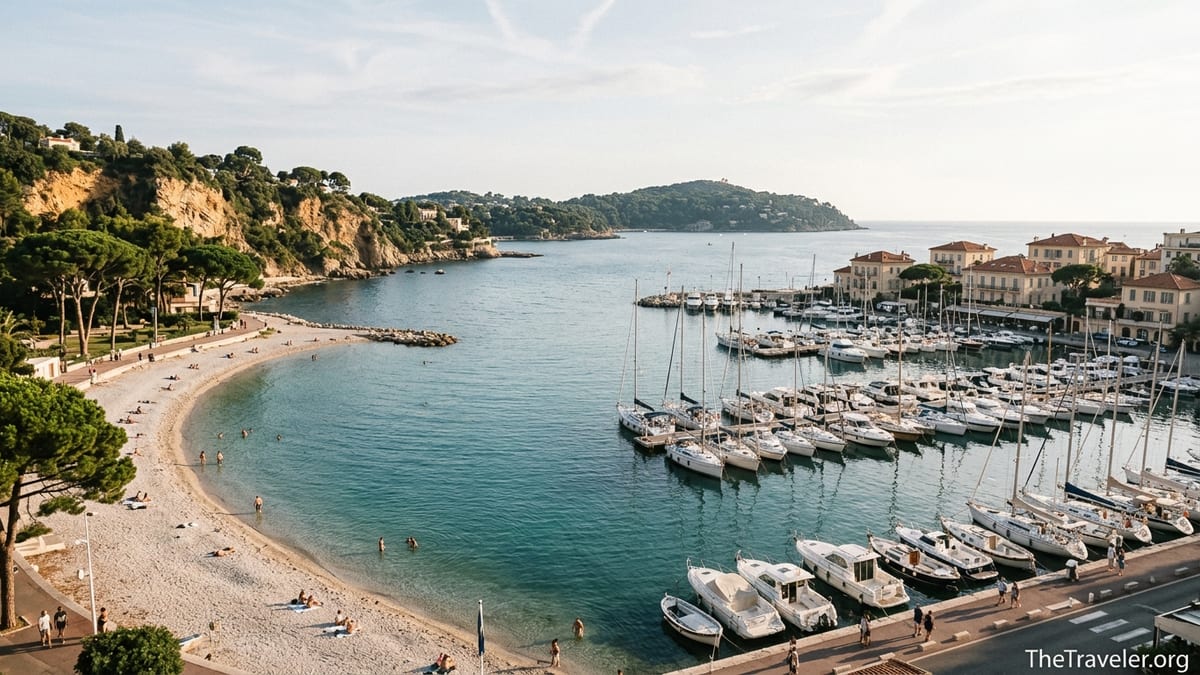
Beaulieu-sur-Mer technically has just two main beaches, but they encapsulate the town’s balance of polish and ease. To the east of the marina lies Plage de la Petite Afrique, the largest beach, tucked under steep ochre cliffs and backed by tall pines that cast much-needed shade in midsummer. The beach is made up of small, smooth pebbles rather than sand, which keeps the water strikingly clear and a deep turquoise on sunny days. Local guides often describe it as one of the most scenic coves on this part of the coast, and when you stand at the water’s edge looking back toward the cliffs and palm trees, it is hard to argue.
What feels surprising is how accessible it all is. Petite Afrique is largely a public beach, popular with families who spread towels in the free zone and bring picnics from town. There are showers, toilets, a children’s play area and even a beach-volleyball court under the pines, so it never feels like a place reserved only for hotel guests. In high season, private operators such as Baia Bella set up neat rows of loungers and parasols on one section of the beach, with waiter service from the restaurant just behind. Here a full day on a lounger typically costs several tens of euros rather than the triple-digit prices sometimes seen in Saint-Tropez, yet you still get chilled rosé and grilled fish served to your sunbed.
On the other side of town, Plage des Fourmis sits in a smaller, more sheltered bay near the border with Saint-Jean-Cap-Ferrat. It frames views of the Royal-Riviera hotel across the water and the lush headland of Cap Ferrat rising behind. The water stays relatively shallow near the shore, which parents appreciate, and paddleboarders drift slowly along the curve of the bay. In late afternoon, when the sun drops behind the villas, the mood becomes especially calm as locals take quick swims after work or stroll the small promenade with ice creams. It feels like beach life designed for everyday enjoyment rather than spectacle.
Dining Between Superyachts and Simple Cafés
For a town of fewer than 4,000 residents, Beaulieu-sur-Mer eats far above its weight in restaurant choice. The port area is the obvious focus, where international yachts line up along the quay and diners settle onto terraces that look straight across to the masts. African Queen, an institution since the late 1960s, is one of the most famous addresses, known for generous Mediterranean plates and a relaxed but professional service style. On a summer evening you might see a local family celebrating a birthday at one table, a group stepping off a yacht at another, and a couple in walking clothes who have just finished the coastal path from Cap Ferrat.
Prices reflect the setting, but they are not as eye-watering as the view suggests. Expect to pay roughly what you would at a good brasserie in central Nice for a main course pasta or grilled fish. Next door and around the basin, other places such as Le 3/4 cater to a similar crowd with fresh seafood, steak frites and well-chosen local wines. Yet a few streets inland, casual pizzerias and bistros offer more modest menus at lower prices, and you can still pick up a takeaway socca or a simple baguette sandwich for a picnic on the beach.
Beach clubs on Petite Afrique, particularly Baia Bella, add another layer to the picture. Their menus lean toward contemporary Mediterranean dishes, salads and seafood, often with a focus on lighter, seasonal plates that suit long afternoons in the sun. What stands out is the mix of guests. You might share the terrace with a group of local friends lingering over coffee, a couple from Paris on a weekend break and a solo traveler with a book and a carafe of water. The dress code is essentially “clean but casual,” and it never feels like a runway show.
That same blend appears at breakfast time in town, when you can sit at a simple café on Avenue des Hellènes with a croissant and café crème and watch hotel guests from La Réserve walk down toward the marina. There is a sense of shared space between visitors at all budget levels, and that keeps the overall atmosphere grounded.
Grand Hotels, Modest Apartments and Everything Between
Accommodation is where Beaulieu-sur-Mer’s refined yet relaxed character becomes particularly tangible. La Réserve de Beaulieu & Spa, perched directly on the waterfront, is the town’s jewel: a legendary five-star property and member of a leading luxury hotel collection, with manicured terraces, an elegant outdoor pool and a spa that draws both hotel guests and day visitors from across the region. Rooms are individually decorated in a classic Riviera style, with sea-facing balconies in higher categories. Staying here is a genuine splurge, often comparable in price to the top addresses in nearby Monaco, and it anchors Beaulieu’s reputation for serious hospitality.
Yet within a 10-minute walk, you find a completely different side of the lodging landscape. Mid-range hotels offer comfortable rooms often under the cost of a single night at the palace, and they tend to be small, family-run properties with limited room counts and a friendly, informal approach. Many visitors book apartments or holiday rentals instead, particularly for longer stays. The town council has noted a wide range of furnished rentals, from compact studios near the station to multi-bedroom flats with sea views. That makes Beaulieu a practical base for travelers combining work and leisure, or families looking for a kitchen and washing machine.
What is interesting is that guests from these very different properties all end up sharing the same public spaces. Everyone walks the same seafront promenade, uses the same train station and swims at the same beaches. A couple staying in a small apartment might book one special afternoon using the spa at La Réserve or a celebratory dinner at African Queen and then spend the rest of the week self-catering. This fluidity lightens the atmosphere compared with resorts where entire stretches of coastline are effectively privatized by hotels.
Even at the top end, service culture tends to be warm rather than intimidating. Staff at higher-end properties are used to day visitors stopping at the bar for a drink or booking a spa treatment without staying overnight. That open-door feeling reinforces the idea that refinement here is something you can step into for a few hours rather than an all-or-nothing commitment.
Easy Access, Gentle Pace
Beaulieu-sur-Mer’s logistics play a big role in how relaxed it feels. The town sits directly on the coastal railway line, with frequent TER trains connecting it to Nice, Villefranche-sur-Mer, Monaco and Menton. From Nice-Ville station the ride is short enough that even day-trippers can factor in a beach afternoon between museum visits. The train station is just a few hundred meters from the seafront, so you do not have the long transfers or traffic bottlenecks that characterise some larger Riviera resorts. For many visitors, this means they can avoid hiring a car and the stress of trying to park along narrow coastal roads.
Bus routes also link Beaulieu with the surrounding towns and with the hilltop village of Èze, though schedules can be irregular in the evenings. The real joy, however, is exploring on foot. Sidewalks are generally wide, crossings are clear and the walk from Petite Afrique to Plage des Fourmis via the port and central streets is manageable for most people. Stretches of the coastal path toward Saint-Jean-Cap-Ferrat start directly from town, letting you stroll right beside the sea, passing rocky coves and small villas, before looping back inland.
Despite this connectivity, Beaulieu-sur-Mer never feels overwhelmed by transit. Train noise is present but not dominant, and the volume of visitors is naturally capped by the town’s compact size and limited hotel capacity. Even in July and August, when loungers fill quickly on the private sections of the beach, you can usually find a corner of the public shore or a shady bench under the pines. Off-season, in spring and autumn, the rhythm slows further. Restaurant terraces remain open, locals reclaim wide sections of the promenade and the beaches are populated by morning swimmers and dog walkers rather than umbrellas.
Compared with nearby Nice, which can feel crowded even shoulder season, Beaulieu-sur-Mer offers a sense of breathing room. You step off a packed city tram or bus and, within half an hour, are sitting under a pine tree watching sailboats on an almost-silent bay.
Everyday Life Beside Extraordinary Scenery
Part of what makes Beaulieu-sur-Mer feel so approachable is the visibility of everyday life. On weekday mornings, schoolchildren walk in small groups along residential streets, shopkeepers hose down sidewalks, and the smell of fresh bread spills from boulangeries. The open-air market that sets up on certain days by the central square deals more in fresh produce, cheeses and cut flowers than in souvenir trinkets. Visitors are welcome, but the stalls clearly cater first to locals stocking up for the week.
At the same time, wherever you look, the scenery is pure Riviera. From the small square outside the town hall, you can see the cliffs that rise behind Petite Afrique, their rock faces glowing warm tones in late afternoon. Palm trees line the main routes down to the sea, and even the local tennis club and supermarket car park sit within sight of bright blue water. Simple routines such as walking to buy fruit or stopping for a coffee feel special because of this constant proximity to the coast.
Travelers who like to blend in often find Beaulieu-sur-Mer unusually comfortable. Dress codes are relaxed; smart shorts and a linen shirt are perfectly acceptable in many restaurants in summer, and beachwear is common on the streets close to the shore. While you will hear English, Italian and German on the promenade, French dominates in small shops and at the market, reinforcing the feeling that this is a living town rather than a vacation set piece. Visitors who make the effort to say a few words in French often find conversations open up quickly, whether it is a stallholder recommending which goat cheese to try or a local explaining the best time of day to swim to avoid strong sun.
For longer stays, that everyday structure becomes part of the appeal. You might settle into a rhythm of morning swims at Plage des Fourmis, lunch on your balcony or at a snack bar, then an afternoon trip by train to Antibes or Monaco. In the evening, instead of seeking a big night out, you wander down to the port for a glass of wine and watch the changing light on the boats. It is refined in its surroundings, but relaxed in its expectations of how you will spend your time.
The Takeaway
Beaulieu-sur-Mer surprised me not because it lacked the classic Riviera ingredients, but because of how quietly and comfortably it arranged them. You still have a grand waterfront hotel, immaculate marinas, handsome villas and chic beach clubs. You still have chilled rosé poured over ice buckets and boats that look like they belong on magazine covers. Yet you also have families picnicking on the pebbles at Petite Afrique, pensioners playing cards under the pines and commuters stepping off the evening train in flip-flops with grocery bags.
For travelers, that balance can be a relief. It means you can experience a taste of high-end Riviera living without needing the budget or the appetite for the high-octane scene of some neighbouring resorts. You can spend an afternoon in a private cabana, an evening in a smart waterfront restaurant and the next day with your feet in the public shallows, sharing space with local kids learning to swim. The same train line that delivers you quickly from Nice will take you back whenever you want more bustle.
If you value both elegance and ease, Beaulieu-sur-Mer is worth more than a quick stop between Nice and Monaco. Give it a few days, walk its promenade at different hours, swim from both of its main beaches and sit on a bench watching the cliffs change color at sunset. You may find, as I did, that the most luxurious thing about this small corner of the Côte d’Azur is how little effort it takes to enjoy.
FAQ
Q1. Where exactly is Beaulieu-sur-Mer located on the French Riviera?
Beaulieu-sur-Mer sits on the coastline between Nice and Monaco in the Alpes-Maritimes department. It is directly on the regional train line, about a 10-minute ride from Nice-Ville station and a short hop from Villefranche-sur-Mer and Èze-sur-Mer.
Q2. How do I get to Beaulieu-sur-Mer without a car?
The easiest option is the local TER train, which connects Beaulieu-sur-Mer with Nice, Monaco and Menton several times an hour in season. Regional buses also run along the coast, and once you arrive, most of the town, beaches and port are comfortably walkable from the station.
Q3. What are the main beaches in Beaulieu-sur-Mer?
The town has two principal beaches: Plage de la Petite Afrique, a larger cove backed by cliffs and pine trees east of the marina, and Plage des Fourmis, a smaller, more sheltered beach near the border with Saint-Jean-Cap-Ferrat. Both are pebble beaches with clear water and public areas.
Q4. Is Beaulieu-sur-Mer suitable for families with children?
Yes. Petite Afrique in particular is popular with families thanks to its relatively gentle entry into the sea, play areas under the pines and seasonal lifeguard presence. The compact size of the town, clear promenades and easy access to amenities also help parents move around with strollers or young children.
Q5. How expensive is Beaulieu-sur-Mer compared with Nice or Monaco?
Beaulieu-sur-Mer is generally more expensive than many parts of Nice for accommodation and dining but often less costly than Monaco or the most exclusive resorts. You can find everything from a five-star palace hotel to modest apartments and simple cafés, which makes it possible to adjust your spending by choosing where you stay and eat.
Q6. Do I need to book restaurants and beach clubs in advance?
In high summer and on weekends, it is wise to reserve popular places such as African Queen on the port or loungers at private sections of Petite Afrique. Outside peak dates and for simpler bistros and cafés, you can often walk in, especially at lunchtime or in the shoulder seasons.
Q7. Is Beaulieu-sur-Mer a good base for exploring the rest of the Riviera?
Yes. With its central position on the coastal rail line, Beaulieu-sur-Mer works well as a quieter base for day trips. You can reach Nice, Antibes, Cannes, Monaco, Menton and hilltop villages like Èze without needing a car, then return each evening to calmer streets and less crowded beaches.
Q8. What is the best time of year to visit Beaulieu-sur-Mer?
Late spring and early autumn are particularly appealing, with warm but not extreme temperatures and fewer crowds. July and August offer the hottest weather and fullest range of beach services, but they also bring higher prices and busier trains. Winter is quieter and cooler, with some beach facilities closed, but the town remains pleasant for walks and day trips.
Q9. Are there walking paths or hikes nearby?
Yes. From Beaulieu-sur-Mer you can join sections of the coastal path around Saint-Jean-Cap-Ferrat, which offers sea views, rocky coves and occasional access points down to small inlets. There are also paths up to the surrounding hills and easy train connections to trails above Èze and Villefranche-sur-Mer.
Q10. What kind of traveler will enjoy Beaulieu-sur-Mer the most?
Beaulieu-sur-Mer tends to suit travelers who appreciate coastal scenery, good food and a polished setting but prefer a calmer pace than in the largest Riviera resorts. Couples, small groups of friends, solo travelers and families who enjoy swimming, gentle walks and relaxed evenings by the port often find it an ideal base.