


More news on this day
Two southbound passenger trains collided near Bedford, north of London, on Friday afternoon, killing at least one person and injuring many others, according to early reports from the scene and rail operator statements.
Get the latest news straight to your inbox!
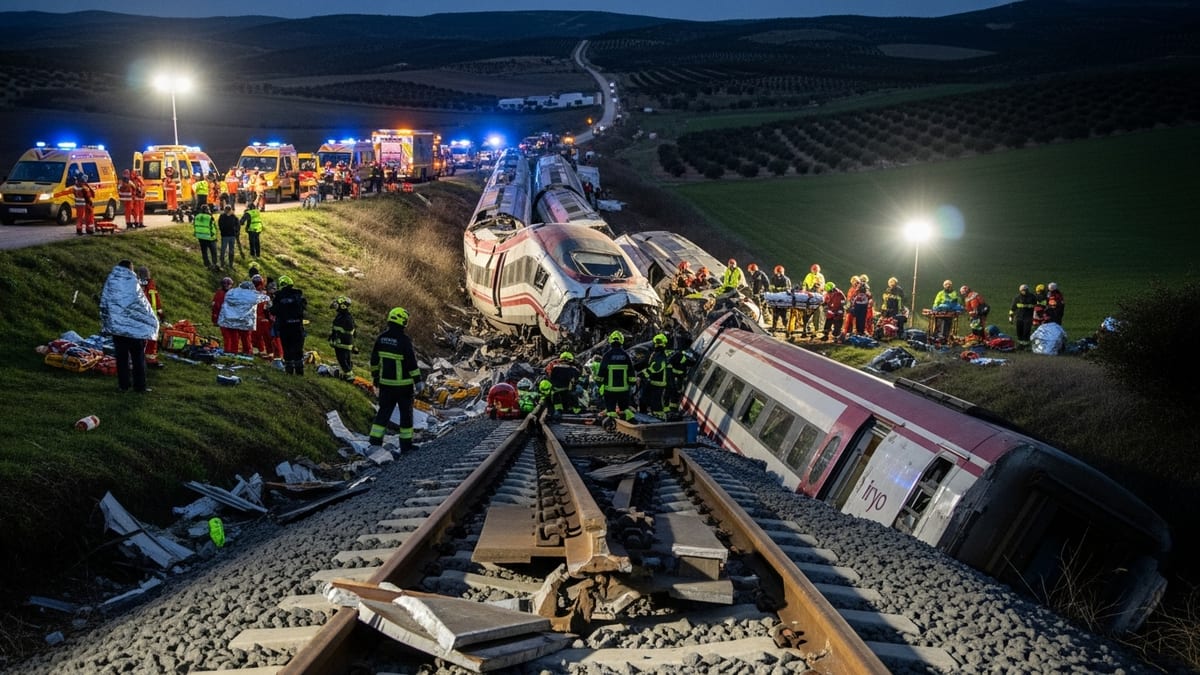
Collision on busy route into London St Pancras
The collision took place on the main line into London St Pancras, a heavily used commuter and intercity route linking the capital with towns and cities across the East Midlands. Publicly available journey data indicates both trains were travelling south when they collided just outside Bedford in the late afternoon peak, shortly after 5 p.m. local time.
According to published coverage, one of the trains was the 4:40 p.m. departure from Corby to London St Pancras and the other was the 3:50 p.m. service from Nottingham to the same terminus, both operated by East Midlands Railway. Rail tracking information shows the trains were approaching the London-bound fast lines when the impact occurred, throwing passengers forward in their seats and filling some carriages with smoke.
Images and video shared on social media show damaged rolling stock at a standstill near the tracks, with passengers evacuated onto an adjacent access road while emergency vehicles line the route. Witness accounts gathered in media reports describe scenes of confusion, with some people suffering visible fractures and head injuries while others walked away apparently unharmed.
Railway safety investigators have opened an inquiry into what caused two in-service trains on the same corridor to collide, an event that is rare on modern British railways given layered signalling and automatic protection systems designed to keep trains separated.
Casualties and large-scale emergency response
According to information reported by national and local outlets, at least one person has died in the collision. Early figures also indicate a significant number of injured passengers, although precise totals were still being established as rescue operations continued into the evening.
Publicly available statements from emergency services show that multiple agencies responded, including regional ambulance teams, specialist hazardous incident units and at least one air ambulance. Photographs from the scene depict paramedics treating people at the roadside and assisting those with suspected fractures and other trauma-related injuries.
Access to the crash site appears to be constrained by the railway embankment and surrounding fields, leading responders to use both trackside routes and nearby roads to reach the carriages. Rescue teams have been seen using ladders and portable steps to help passengers down from the trains, while others guided uninjured travelers to temporary holding areas away from the tracks.
Rail unions and passenger groups have expressed concern over reports of serious injuries to both staff and passengers, highlighting the difficult conditions facing crews who were working on crowded rush-hour services at the time of the crash.
Severe disruption for commuters and long-distance travelers
The incident has caused major disruption across one of the main north–south rail arteries serving London. According to service updates issued by East Midlands Railway, all trains to and from London St Pancras on the Nottingham, Sheffield and Corby routes were cancelled for the remainder of Friday following the collision.
Rail operators have advised passengers not to attempt to travel on affected routes, warning that disruption is likely to continue into the weekend while recovery operations and safety inspections are carried out. Those already en route have been told to expect extended journey times, diversions via alternative lines where possible and heavy crowding on remaining services.
The line through Bedford is not only a vital link for long-distance passengers between London and the East Midlands but also an important corridor for airport-bound travelers and commuters from towns along the route. With trains halted, many people have been forced to complete journeys by road, adding pressure to nearby motorways and local roads as replacement transport struggles to keep up with demand.
Travel industry observers note that the timing of the collision, during the evening rush period, has amplified its impact, leaving thousands of passengers stranded at stations or onboard trains held short of the affected area.
Investigators examine possible causes
The Rail Accident Investigation Branch has dispatched inspectors to the site to begin gathering evidence about how two passenger services on a signalled main line came to collide. According to publicly available information, investigators typically examine signalling records, train data recorders, communication logs and track infrastructure, as well as the condition of the rolling stock.
Specialist teams are expected to map the positions of the trains, assess damage patterns and interview staff and passengers who may be able to provide insight into the events leading up to the crash. Weather conditions, visibility and any previous reports of infrastructure faults in the area are also likely to be reviewed as part of a detailed technical analysis.
While it is too early for any definitive conclusions, rail experts quoted in early coverage have pointed to the generally strong safety record of Britain’s rail network and the rarity of collisions between in-service passenger trains. They note that multiple overlapping systems, including modern signalling and train protection, are intended to prevent precisely this sort of incident.
Any findings from the investigation, once published, are expected to include recommendations for changes to equipment, procedures or staff training if gaps are identified, with the aim of preventing similar crashes on this and other routes.
Renewed scrutiny of rail safety on a key corridor
The Bedford crash comes at a time of heightened public awareness around rail safety, following other recent high-profile rail incidents internationally that have prompted calls for investment in infrastructure and train control systems. For passengers who use the St Pancras corridor daily, Friday’s collision underscores how dependent the region is on a complex network of tracks, signals and timetables operating smoothly.
Advocacy groups focused on passenger rights have already drawn attention to the need for clear communication during major disruptions, including prompt information on alternative routes, refund policies and support for those affected by delays or injuries. Early reports indicate that many travelers learned of the seriousness of the crash only after disembarking and checking news updates or social media.
Local representatives have described the line as a lifeline for communities along the route, suggesting that lessons from the investigation will need to be translated quickly into practical changes where needed. Attention is likely to focus not only on the technical chain of events that led to the impact but also on wider questions about system capacity, maintenance regimes and the resilience of critical rail corridors.
For now, the priority remains care for the injured and safe removal of the damaged trains. As engineers work to reopen the tracks and restore services, many regular passengers are left weighing their dependence on a route that, on most days, carries thousands of people without incident yet has now been the scene of a deadly collision.