


More news on this day
One person has died and at least 89 others were injured after two passenger trains collided near Bedford in eastern England, severely disrupting services on a key route north of London and prompting a large emergency response.
Get the latest news straight to your inbox!
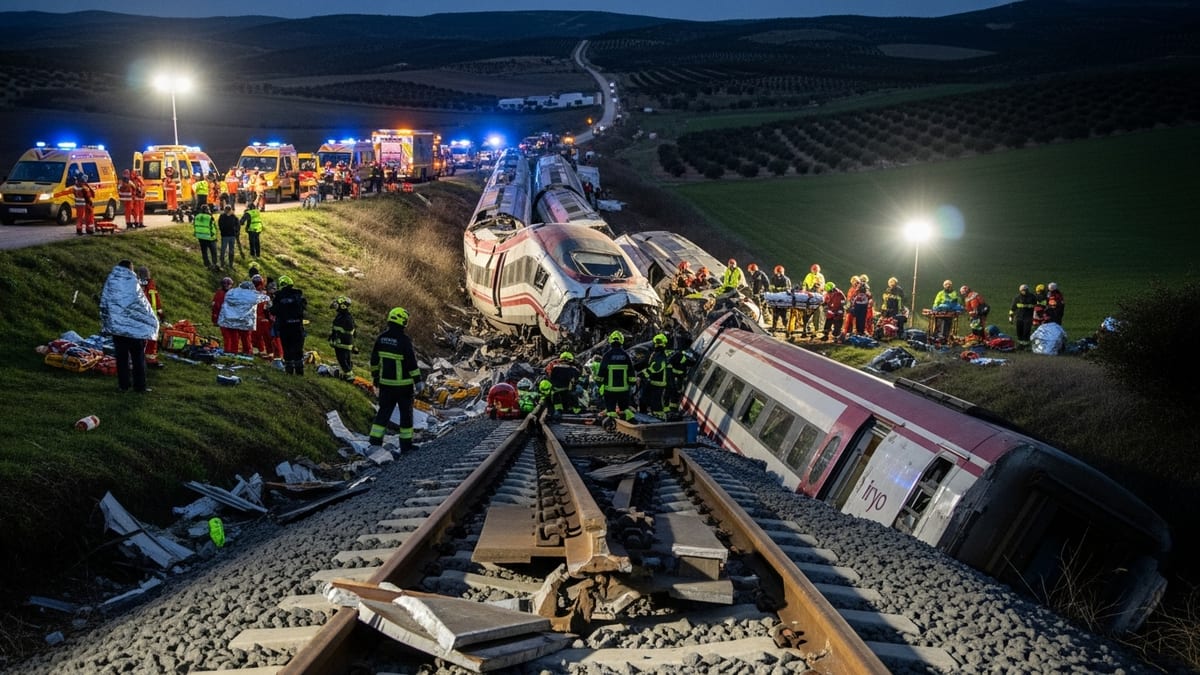
Collision on busy corridor north of London
Publicly available information indicates that the crash occurred on Friday, 19 June 2026, on the main line that connects London with the East Midlands and northern England. The impact took place a few miles south of Bedford, a busy commuter and intercity hub on the Midland Main Line.
Reports describe how one high speed passenger service struck another train on the same stretch of track, leaving several carriages damaged and at least one partially derailed. Initial accounts circulating in British media coverage and eyewitness descriptions suggest that one of the trains may have been stationary or moving slowly at the time of impact.
Images shared via social media and in subsequent news coverage show crumpled metal at the leading carriage of one train, shattered windows and debris scattered along the embankment. Several coaches appear to have remained upright but visibly twisted, underscoring the force of the collision despite relatively low reported speeds compared with some previous rail disasters.
Services on the affected line were immediately suspended, with operators advising passengers not to attempt travel between London and Bedford while emergency teams worked at the scene and safety inspections were carried out on nearby infrastructure.
Casualty figures and emergency response
According to figures cited across multiple published reports, one person died as a result of the collision and at least 89 others sustained injuries. Of those, around a third were described as very serious or serious injuries, including trauma requiring hospital treatment, while a larger group suffered more minor wounds such as cuts, bruises and shock.
Ambulance services for the East of England reported that dozens of patients were transported to hospitals across the region. Coverage of the incident indicates that local hospitals activated major-incident protocols to manage the sudden influx of casualties, with additional staff called in and elective procedures rescheduled where necessary.
Fire and rescue crews, police, rail incident officers and specialist medical teams were all dispatched to the crash site, using access roads and nearby fields as staging areas. Photographs from the scene show lines of ambulances and emergency vehicles along the railway embankment as injured passengers were triaged, treated at the roadside and moved onto stretchers.
Local residents described a heavy presence of emergency helicopters and sirens through the evening, with nearby roads partially closed to create safe corridors for rescue operations and to keep onlookers away from the tracks.
Impact on passengers and rail services
The collision came at a time when trains on the route were reported to be busy with commuters and long distance travelers heading to and from London. Passengers who were uninjured or lightly hurt were guided on foot along the tracks to safe evacuation points, with rail staff and emergency workers assisting those who had difficulty walking or were in visible distress.
Accounts shared publicly by travelers describe a sudden jolt, flying luggage and interior fittings collapsing as the trains came to a halt. Many passengers reported broken glass and partial darkness within the carriages before emergency lighting and public address systems activated.
Rail operators confirmed through service updates that all lines through the Bedford area were temporarily closed while recovery work and inspections were carried out. This resulted in cancellations and diversions affecting services linking London with cities such as Nottingham, Sheffield and Leicester, as well as local commuter routes. Replacement road transport and alternative rail routes were arranged where possible, although widespread delays were still reported.
For many travelers, journeys were extended by several hours, with some stranded at intermediate stations late into the evening as train diagrams and crew schedules were hastily redrawn. Passenger groups highlighted the importance of clear communication, with a mixture of station announcements, social media updates and train crew briefings helping people to re-plan onward travel.
Safety systems under scrutiny
The incident has already prompted renewed scrutiny of Britain’s rail safety systems, which are generally regarded as among the safest in Europe. Early commentary in transport and engineering circles, as reflected in media and specialist forums, has focused on how existing automatic protection systems operated before and during the collision, and whether any weaknesses in signal spacing, train control or human factors played a role.
Rail analysts note that serious collisions between passenger trains in the United Kingdom have become comparatively rare in recent decades, in part because of technological safeguards designed to prevent trains from passing red signals or approaching occupied sections of track at excessive speed. When they do occur, they are often treated as critical tests of how well layered defenses function under unusual circumstances.
Engineers and commentators have also pointed to the apparent performance of modern rolling stock in absorbing the impact. Despite the tragic death and high number of injuries, the survival space preserved in most carriages and the absence of extensive coach overturning are being cited as indications that structural crashworthiness features likely reduced the scale of the disaster.
At the same time, images of the severely damaged leading cab and reports that the driver is among those who died are raising questions about cab protection standards, especially when a moving train collides with another train rather than a static obstacle. These technical issues are expected to be at the center of formal investigations in the months ahead.
Next steps and ongoing investigations
In the wake of the crash, national leaders have publicly expressed condolences to the family of the person who died and support for those injured. Statements reported across major British news outlets describe the collision as deeply concerning and praise the efforts of emergency responders and rail staff who assisted passengers at the scene.
The Rail Accident Investigation Branch and other oversight bodies are expected to conduct detailed inquiries into the circumstances leading up to the collision. Standard practice in such cases includes downloading data from on board recorders, examining signal logs, interviewing train crews and control room staff, and inspecting track and signalling equipment in the affected area.
Investigators typically issue an initial bulletin outlining key facts once urgent safety issues are identified, followed by a more comprehensive report that may recommend technical upgrades, changes to operating procedures or additional training. Rail companies and infrastructure managers are usually required to publish their responses and timetables for implementing any accepted recommendations.
For now, rail users across eastern England and the wider UK network are facing continued disruption as damaged rolling stock is recovered and inspections confirm that lines are safe to reopen. Travel organizations suggest that the Bedford collision is likely to remain a reference point in ongoing debates about capacity, resilience and safety on Britain’s increasingly busy intercity corridors.