


The moment I understood how serious Westin is about comfort did not arrive with a grand lobby, a rooftop pool, or a room upgrade. It came from a surprisingly small detail: the edge of the bed. That single touchpoint, and the quiet design thinking behind it, permanently changed how I evaluate hotel comfort everywhere I travel.
Get the latest updates straight to your inbox!
The Stay That Changed How I Think About Comfort
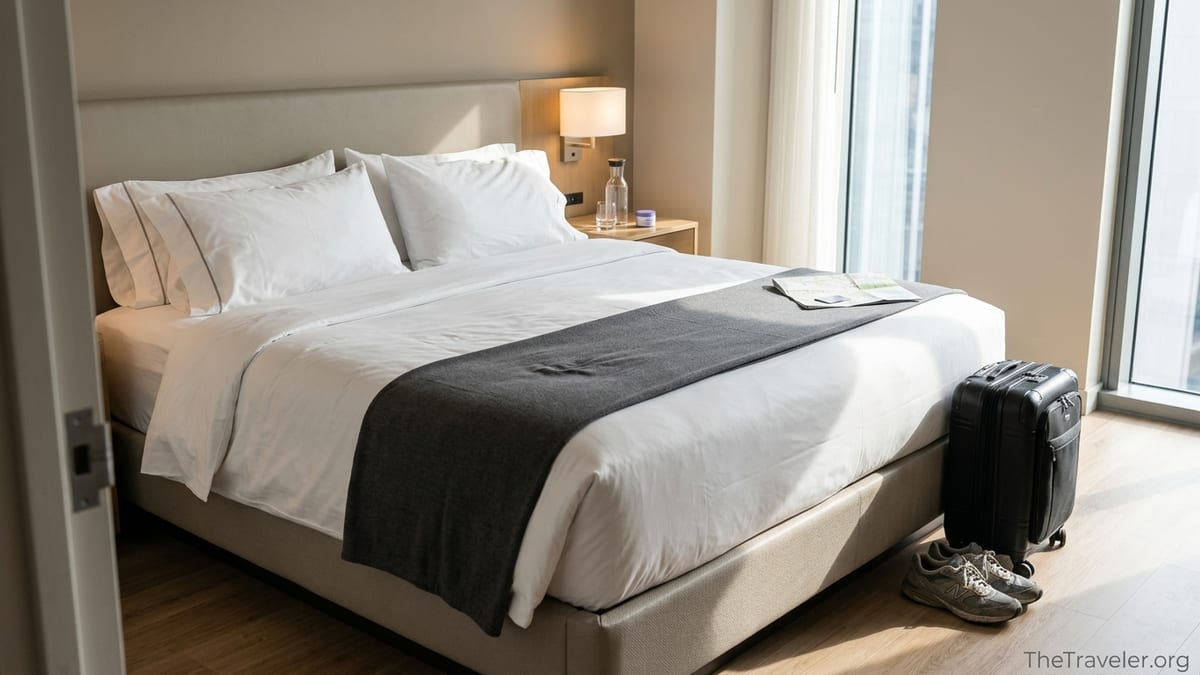
My turning point happened at a Westin on a late arrival after a long-haul flight. It was close to midnight, my legs were heavy, and all I wanted was to sit down and untie my shoes without feeling like I might slide off the mattress. When I perched on the corner of the bed, something felt different. The edge didn’t collapse or tilt me outward. It felt firm, level, and reassuring, like a well-built bench wrapped in plush bedding.
That edge support was not an accident. Westin’s Heavenly Bed, first introduced in 1999 and updated in 2024, uses a perimeter of reinforced pocket coils specifically engineered so you can sit confidently on the sides without sagging. Independent mattress testers who have reviewed the current Heavenly Bed consistently highlight its edge stability as one of its standout traits, rating it at or near the top of their scales for support along the perimeter. In practical terms, it means you can sit to lace your shoes, park a suitcase, or sleep near the edge without feeling like you might roll off.
In that quiet, jet-lagged moment, I realized that what makes a hotel feel truly comfortable is not just the softness of the mattress or the thread count of the sheets. It is how well a room supports all the small, often awkward movements of travel life: balancing on the edge to answer a message, laying out clothes in the morning, or easing yourself out of bed if your knees are sore from a red-eye flight. Westin’s attention to that one detail reframed hotel comfort for me as something architectural and ergonomic, not just luxurious.
Since that stay, I find myself instinctively testing the bed edge whenever I check into a hotel, whether it is a Westin in New York near Times Square, a boutique property in Lisbon, or a budget airport hotel in Denver. I sit, bounce lightly, and notice how much the edge gives. It has become my quick litmus test of whether a property has invested in comfort where it truly matters.
Inside the Heavenly Bed: What Makes the Edge Feel So Different
Westin’s Heavenly Bed was never just a marketing phrase. When the brand debuted the concept at the end of the 1990s, it poured significant research and investment into a mattress that could withstand heavy hotel use while still feeling indulgent to tired travelers. The current “next generation” Heavenly Bed builds on that idea with a 14-inch profile that combines individually wrapped coils, gel-infused comfort layers, and a plush pillow top designed for a medium feel that suits a wide range of sleepers.
The edge, however, is where you most clearly feel the difference. Instead of a uniform spring layout, the perimeter coils are reinforced so they compress less under weight. This is the detail that allows a mattress tester to give the bed a perfect or near-perfect score for edge support, and it is the reason a traveler can comfortably sit to tie sneakers before an early morning run without sliding toward the floor. In a practical sense, it also helps housekeeping staff, who spend their days sitting, kneeling, and lifting along the edges as they change linens.
Westin has also refined the surrounding ecosystem of comfort. The updated Heavenly Bed is dressed in hypoallergenic bedding, with a cotton and lyocell sateen sheet set and a polyester-filled duvet that aims to reduce issues for guests with feather allergies. In some markets and properties, travelers have noticed a move away from down duvets toward fully synthetic fills, partly in response to allergy concerns and easier laundering. The result is a bed that feels lofty and inviting, yet is easier for a wide range of guests to tolerate night after night.
Prices for bringing this experience home are not trivial. As of mid 2026, a queen-size Heavenly Bed typically retails in the neighborhood of 2,400 to 2,600 US dollars before delivery, with occasional sales around major holidays that shave 20 percent or so off the price. Travelers who fall in love with the bed at a Westin in, say, Las Vegas or Seattle often track these sales through the brand’s retail channels or partner retailers so they can recreate that hotel sleep at home. Whether or not you ever buy one, simply understanding the engineering choices behind the bed can sharpen how you assess the comfort level of any hotel room you book.
From Softness to Support: How My Hotel Priorities Shifted
Before that stay, I would have described a comfortable hotel room in terms of softness and aesthetics. Did the pillows feel plush? Were the sheets crisp and white? Did the duvet look as though it belonged in a design magazine? Westin’s Heavenly Bed still delivers on that visual ideal, complete with an all-white ensemble accented on newer models by a charcoal blanket and subtle piping. But once I felt the structural stability of the mattress edge, my definition of comfort became much more functional.
Now, when I check into a hotel, I pay as much attention to support as I do to surface feel. I notice if the mattress holds my spine in a neutral position when I lie on my side, and whether there are distinct zones that keep my hips from sinking too far. I check how the bed handles movement transfer, especially on trips when I am sharing a room. The Heavenly Bed’s innerspring core with individually wrapped coils is designed to localize motion, which means a partner shifting position at 2 a.m. should create less disturbance than on a traditional open-coil mattress.
This focus on support also extends beyond the bed. At some Westin properties, the brand’s wellness positioning shows up in practical details that enhance physical comfort, like adjustable work chairs in the room, in-room standing desks in selected categories, and the WestinWORKOUT Gear Lending program that allows guests to borrow recovery tools such as portable massagers or resistance bands for a small nightly fee. On a recent stay, I watched a frequent business traveler order a recovery kit with compression leg sleeves after a long day of meetings and flights. For her, comfort meant being able to ease muscle soreness before bed, not simply sinking into soft pillows.
Once you begin to think in these terms, you notice how much variation there is across the hotel landscape. A visually striking boutique hotel might offer an ultra-soft mattress that looks luxurious but leaves you with a sore back by morning. A midrange chain property might have a relatively plain-looking bed but excellent support if you lie at the edge. The lesson from Westin’s design choices is straightforward: comfort is not only how something looks and feels in the first five minutes, but also how it supports you across all the small movements of a night’s rest.
Wellness in the Details: Beyond the Mattress
Westin markets itself around the idea of wellness-rich travel, and once you start looking for it, you see that ethos woven through many less obvious touchpoints in the room. The brand’s signature White Tea and Aloe bath amenities, for example, are not just there to smell pleasant. They are specifically chosen to create a consistent sensory experience from property to property, whether you are checking into a beachfront resort or an urban business hotel. That familiar scent can be surprisingly grounding when you are crossing time zones and living out of a suitcase.
Then there are the sleep-focused details that complement the Heavenly Bed. At several Westin hotels, you will find a small sleep balm or lavender oil placed near the bedside, part of a Sleep Well program designed to make it easier to unwind. Some properties offer a late-night room service menu with items such as herbal teas, light grain bowls, or simple proteins thought to be easier to digest before bed. It is a subtle nudge away from heavy, salty snacks and toward choices that support better rest.
Fitness is another area where the brand’s approach to comfort extends well beyond the mattress. The RunWESTIN program provides curated running routes from the hotel lobby, usually in distances like three to five miles, mapped to local neighborhoods or waterfronts. At a Westin in Vancouver, for example, you might be handed a small running map that loops along the seawall, while in a downtown Boston property a route could include stretches along the Charles River. Some hotels even offer a running concierge at set times, so nervous first-timers do not have to navigate alone.
These services do not show up in glossy room photos, but they significantly shape how restorative a stay can feel. If you arrive for a four-night conference and know that you can maintain your morning run safely, stretch with a yoga mat borrowed through the Gear Lending program, and finish the day with a predictable, well-engineered sleep environment, the hotel begins to feel less like an anonymous waystation and more like a temporary wellness retreat.
How to Use Westin’s Example When Choosing Any Hotel
You do not need to be loyal to Westin, or even stay at the brand regularly, to benefit from the lessons embedded in its comfort strategy. The first is to look beyond surface luxury and pay attention to structural details when you evaluate hotels online. Many properties now describe their mattress types openly, using phrases such as “pillow-top mattress with reinforced edge support” or “memory foam with cooling gel and zoned support.” When you see language similar to what Westin uses for the Heavenly Bed, it is often a sign that the hotel has invested in a better-quality sleep surface.
If mattress details are vague, guest reviews can be telling. Look for comments about the bed being “too soft at the edges,” “sagging,” or “supportive all the way across.” Travelers often mention whether they slept near the edge or had trouble sitting comfortably. If multiple reviewers praise the bed in the same way that guests often rave about Westin’s Heavenly Bed, it is usually not a coincidence. Strong, consistent praise suggests that the property has prioritized a particular level of comfort rather than leaving the choice to chance.
Once you arrive, do your own quick assessment before you settle in. Sit on the corner of the bed to see whether it compresses dramatically or holds firm. Lie near the edge to check whether you feel secure. Roll from your back to your side and notice how much effort it takes and whether your shoulders and hips are supported. This simple routine, inspired for me by that first Westin experience, can reveal more about the true comfort of a room than any promotional photo.
It is also worth calling ahead if you have specific needs. Travelers with back pain, for example, may ask whether the hotel offers any rooms with firmer mattresses or mattress toppers that can be added or removed. Guests with allergies can inquire about feather-free bedding, which is increasingly common at wellness-focused brands. Westin’s evolution toward more hypoallergenic materials on the Heavenly Bed is just one example of how chains are adapting; other brands are quietly following with their own combinations of synthetic fills and tightly woven covers designed to reduce irritants.
Bringing a Slice of Westin-Level Comfort Home
For some travelers, that one outstanding night’s sleep at a Westin becomes the start of a very different journey: recreating the hotel experience at home. The Heavenly Bed is available through Westin’s retail channels and select partners, but as with most hotel-branded mattresses, it comes with trade-offs. Pricing for a queen-size model tends to sit in the mid two-thousand-dollar range, there is usually no extended home trial period, and shipping can take several weeks. On the other hand, buyers know exactly what they are getting because they have already slept on a close equivalent in a hotel room.
Even if you never purchase the full bed, you can borrow elements of the Westin approach. Many travelers start with pillows, which are much more affordable and can still dramatically change sleep quality. The brand’s pillows aim for the same balance of loft and support as the mattress: soft at first touch, but with enough structure to keep your head from sinking too far. Others opt for the crisp white bedding sets and duvet covers that mimic the hotel look, pairing them with a more modestly priced but supportive mattress from a reputable brand.
Some guests focus on replicating the sensory environment rather than the exact products. They might choose a white tea and aloe-scented room spray reminiscent of the bath amenities, or keep a small lavender balm on the nightstand to echo the Sleep Well turn-down ritual. A few invest in compact fitness gear such as resistance bands, a yoga mat, or a handheld massager, mirroring the WestinWORKOUT Gear Lending kits. The goal is not to turn a bedroom into a hotel room, but to capture the feeling of being fully supported that the best Westin stays deliver.
In making these changes at home, you start to understand a core truth that Westin’s attention to detail reveals: real comfort is cumulative. It is the sum of many small, thoughtful decisions about support, texture, scent, and routine. Once you have felt how those decisions come together in a carefully designed hotel room, it becomes much easier to identify what is missing in your own space and to fix it.
The Takeaway
The simple act of sitting on the edge of a bed at a Westin reshaped how I evaluate hotel comfort. That secure, supportive feel was the product of deliberate engineering choices in the Heavenly Bed, backed by a broader brand commitment to wellness that touches everything from hypoallergenic bedding to curated running routes and in-room recovery tools.
Today, when I enter any hotel room, I no longer rely on glossy photos or plush-looking duvets to tell me whether I will sleep well. I test the edges, notice the support, and look for the same quiet signs of thoughtful design that first surprised me in that Westin room. Travelers who adopt this mindset, whether or not they stay with Westin, will find themselves better equipped to choose hotels that truly care about how guests feel between check-in and checkout.
In the end, it was not a rooftop bar or a dramatic lobby chandelier that changed my standards. It was a well-built bed edge, a whisper of white tea and aloe in the bathroom, a running map by the elevator, and a room that felt carefully designed for a human body in motion. Once you experience that level of detail, it is very hard to go back.
FAQ
Q1. What exactly is the Westin Heavenly Bed and why is it so well known?
The Westin Heavenly Bed is the brand’s signature mattress and bedding ensemble introduced in 1999, designed to combine durable innerspring support with a plush hotel feel that many travelers try to recreate at home.
Q2. What specific detail at Westin changed how you think about hotel comfort?
The reinforced edge of the Heavenly Bed made the biggest impression, because it allowed me to sit, tie shoes, and sleep near the side without sagging or feeling unstable.
Q3. Are all Westin hotels guaranteed to have the same Heavenly Bed?
Most Westin properties are equipped with a version of the Heavenly Bed, but age, regional variations, and renovation cycles mean the exact feel can differ slightly from hotel to hotel.
Q4. Can regular travelers buy the Heavenly Bed for home use?
Yes, the Heavenly Bed is sold through Westin’s retail channels and select partners, typically starting in the mid two-thousand-dollar range for a queen-size mattress before delivery or promotions.
Q5. How does the Heavenly Bed compare to other luxury hotel mattresses?
While preferences vary, many expert reviewers note that the Heavenly Bed stands out for its strong edge support and balanced medium firmness, whereas some competitors favor either very plush or noticeably firmer feels.
Q6. Is Westin’s focus on wellness really noticeable beyond the bed itself?
Yes, it often appears in details like the White Tea and Aloe bath amenities, sleep-friendly room service menus, the RunWESTIN running routes, and WestinWORKOUT Gear Lending kits for fitness and recovery.
Q7. What should I look for in any hotel if I care about the same kind of comfort?
Check for clear descriptions of the mattress type, read guest reviews that mention bed comfort, and when you arrive, test the edge support and overall feel before unpacking fully.
Q8. I have allergies. Are Westin’s beds suitable for me?
Recent Heavenly Bed updates use hypoallergenic materials, including synthetic duvet fills, but it is still wise to request feather-free bedding and confirm options with each property before arrival.
Q9. Do I need to be a serious runner to benefit from Westin’s wellness programs?
No, even casual walkers can use the mapped routes, and the Gear Lending program often includes yoga mats and light resistance tools suited to stretching, gentle exercise, or post-flight recovery.
Q10. How can I recreate a Westin-like sleep experience at home without buying the full bed?
Start with supportive pillows, breathable white bedding, a consistent evening routine, and perhaps a few sensory cues like a calming scent or a small sleep balm to mimic the feel of a well-designed hotel room.